Why is a Cold Isostatic Press (CIP) required for Sm-Co magnets? Ensure Uniform Density & Peak Magnetic Performance
Updated 5 months ago
Cold Isostatic Pressing (CIP) is the critical bridge between powder orientation and final sintering in Samarium-Cobalt (Sm-Co) magnet production. This process applies uniform, omnidirectional pressure—typically up to 300 MPa—through a liquid medium to powder contained within flexible rubber molds. By ensuring the green body achieves high, consistent density without disturbing the pre-aligned magnetic particles, CIP prevents structural deformation and maximizes the magnetic performance of the finished product.
Core Takeaway: CIP is essential for Sm-Co magnets because it provides the isotropic pressure necessary to achieve uniform density and structural integrity while preserving the magnetic orientation established during the initial pulse-field alignment.
Achieving Isotropic Density and Uniformity
Eliminating Internal Density Gradients
Traditional mechanical or uniaxial pressing often results in uneven pressure distribution due to mold wall friction. This creates density gradients within the green body, where some areas are more compacted than others.
CIP eliminates these gradients by applying pressure equally from all directions. This ensures that the green body density is highly consistent throughout the entire volume, providing a stable foundation for the subsequent sintering phase.
The Role of the Liquid Medium
By using a liquid medium to transmit pressure, the CIP process ensures that every surface of the rubber mold receives the exact same force. This "hydrostatic" approach forces the powder particles to rearrange and bond more tightly without the directional bias found in dry pressing.
The result is a green body with significantly reduced internal pores and air pockets. This high-packing density is a prerequisite for producing high-performance magnets with low shrinkage rates.
Preserving Magnetic Orientation and Performance
Protecting Particle Alignment
In Sm-Co manufacturing, powder particles are first aligned using a magnetic field pulse. If a green body is molded using high-friction uniaxial methods, the mechanical movement can shift these particles, ruining the alignment.
Because CIP applies omnidirectional pressure, it compresses the powder without causing the lateral shifting or shearing that disrupts particle alignment. This stability is vital for maintaining the internal "texture" of the magnet.
Maximizing Remanence and Coercivity
The preservation of magnetic orientation directly impacts the remanence (Br) of the finished magnet. By keeping the particles locked in their optimal orientation during compaction, CIP ensures the magnet reaches its full theoretical energy product.
Uniform density also contributes to consistent magnetic properties across the entire magnet. This prevents "weak spots" and ensures that the finished Sm-Co component meets strict technical specifications.
Preventing Sintering Defects
Uniform Shrinkage Control
During high-temperature sintering (often exceeding 1000°C), materials naturally shrink as they densify. If a green body has uneven density, it will shrink at different rates, leading to warping or dimensional inaccuracy.
CIP provides the high density consistency needed for uniform shrinkage. This allows manufacturers to produce magnets that are closer to their final "near-net" shape, reducing the need for expensive post-sintering machining.
Reducing Cracks and Microstructural Failures
Internal stress distribution imbalances are the primary cause of micro-cracks during the sintering process. By eliminating internal pressure gradients at the molding stage, CIP drastically reduces the risk of structural failure.
The process ensures that the finished ceramic-like structure of the Sm-Co magnet is mechanically robust. This is particularly important for large-sized or complex-shaped components that are more prone to thermal stress.
Understanding the Trade-offs
While CIP is superior for quality, it is generally a slower, batch-oriented process compared to high-speed uniaxial pressing. It requires the use of flexible rubber or elastomer molds, which can be more labor-intensive to load and seal than rigid steel dies.
Additionally, the equipment costs for high-pressure CIP systems are significant, and the process requires careful management of the hydraulic medium to avoid contamination. For simple, low-performance magnets, the cost and time of CIP may not always be justified, but for high-performance Sm-Co applications, it is a non-negotiable requirement.
Making the Right Choice for Your Goal
- If your primary focus is Maximum Magnetic Performance: CIP is mandatory to preserve particle alignment and ensure the highest possible remanence in your Sm-Co magnets.
- If your primary focus is Dimensional Precision: Utilize CIP to ensure uniform shrinkage during sintering, which minimizes warping and reduces the cost of final grinding.
- If your primary focus is Structural Integrity: Implement CIP to eliminate internal density gradients and micro-pores that lead to cracking in large or complex magnetic assemblies.
By utilizing Cold Isostatic Pressing, you ensure that the physical structure of your Samarium-Cobalt magnet is as refined and consistent as its magnetic properties.
Summary Table:
| Feature | Cold Isostatic Pressing (CIP) Benefit | Impact on Sm-Co Magnets |
|---|---|---|
| Pressure Type | Isotropic (Omnidirectional) | Eliminates internal density gradients and wall friction. |
| Particle Alignment | Minimal Mechanical Shearing | Preserves magnetic orientation for higher remanence (Br). |
| Density | High and Uniform | Ensures stable magnetic properties across the entire volume. |
| Sintering Result | Uniform Shrinkage | Prevents warping and reduces post-sintering machining costs. |
| Structural Integrity | Low Internal Stress | Drastically reduces micro-cracks and structural failures. |
Precision Solutions for Your Sm-Co Magnet Production
Achieving peak performance in Samarium-Cobalt magnets requires absolute control over density and orientation. At [Brand Name], we provide complete laboratory sample preparation solutions for material science, specializing in advanced powder processing and compaction equipment.
Our extensive range includes Cold/Warm Isostatic Presses (CIP/WIP), standard lab presses, and vacuum hot presses designed to deliver the high-pressure uniformity your advanced materials demand. To ensure your starting powder is of the highest quality, we also offer specialized crushers, planetary ball mills, jet mills, and sieve shakers.
Partner with us to:
- Eliminate structural defects and improve yield.
- Achieve superior magnetic properties through precise compaction.
- Access expert technical support for complex material shaping.
Ready to enhance your material research or production efficiency? Contact us today to request a quote or consultation!
References
- Leonardo Pierobon, Michalis Charilaou. Unconventional magnetization textures and domain-wall pinning in Sm–Co magnets. DOI: 10.1038/s41598-020-78010-0
Mentioned Products
- 6-Ton Small Single-Punch Tablet Press — Laboratory Powder & Granule Tableting Equipment / Tablet Forming Machine
- Manual Tablet Press with Dual Scale Pressure Gauge for Pharmaceutical Food Chemical Laboratory Sample Preparation
- 5 Ton Single Punch Tablet Press Laboratory Small Batch Production
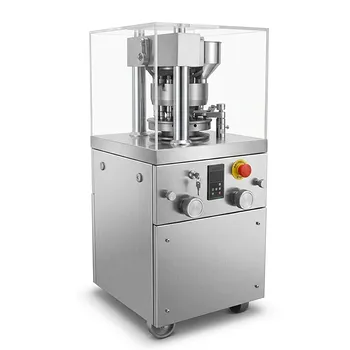
- Ordinary Type Rotary Tablet Press for Pharmaceutical Chemical Food Electronic Industries
People Also Ask
- What is the function of a laboratory press in Cr-Ti alloy evaluation? Quantify Fracture Stress & Strength
- What is the function of a laboratory press in assessing the hydrophobic performance of modified vermiculite fillers?
- What is the core function of a laboratory press in the forming of ceramic filter element green bodies? Maximize Density.
- What is the function of a laboratory press in the preparation of ceramic feed rods? Master Density and Precision
- Why is vacuum sealing and flexible packaging necessary for Aluminum Titanate powders during CIP? Ensure Peak Density

Tech Team · PowderPreparation
Last updated on May 14, 2026
Related Products
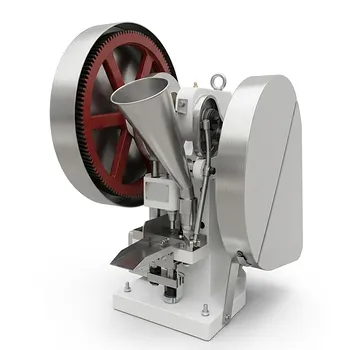
6-Ton Small Single-Punch Tablet Press — Laboratory Powder & Granule Tableting Equipment / Tablet Forming Machine
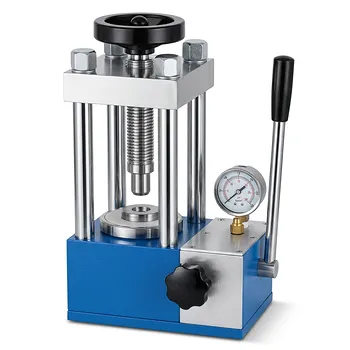
Manual Tablet Press with Dual Scale Pressure Gauge for Pharmaceutical Food Chemical Laboratory Sample Preparation
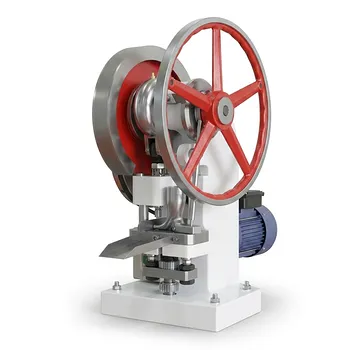
5 Ton Single Punch Tablet Press Laboratory Small Batch Production