Why is a Cold Isostatic Press (CIP) essential for the fabrication of BNSLTMZ ceramic green bodies? Optimize Your Density
Updated 3 months ago
Cold Isostatic Pressing (CIP) is the critical bridge between initial powder shaping and successful high-temperature sintering. For BNSLTMZ ceramics, CIP applies a uniform hydraulic pressure (typically 180-200 MPa) that eliminates internal density gradients caused by mold friction. This ensures the green body possesses the structural homogeneity required to resist deformation and micro-cracking during the final firing process.
By applying omnidirectional pressure, CIP overcomes the inherent limitations of traditional mechanical pressing, creating a high-density, uniform green body. This structural consistency is essential for BNSLTMZ ceramics to achieve precise dimensional accuracy and high mechanical strength during the transition from a powder compact to a finished ceramic tool or component.
The Mechanics of Isotropic Pressure
Eliminating Internal Density Gradients
In BNSLTMZ fabrication, standard dry pressing often results in non-uniform density because pressure is applied from a single direction. A Cold Isostatic Press uses a hydraulic medium to exert equal pressure from all directions simultaneously.
This isotropic approach ensures that every part of the ceramic green body reaches the same level of compaction. Without this, the variation in density leads to internal stresses that manifest during the heating phase.
Overcoming Mold Friction
Mechanical presses suffer from mold wall friction, which absorbs energy and prevents pressure from reaching the center of the powder mass effectively. CIP bypasses this by sealing the powder or pre-formed green body in a flexible mold submerged in fluid.
By removing the rigid interface of a metal die, the force is transmitted directly and evenly to the particles. This eliminates the "pressure shadows" that typically cause structural weaknesses in complex ceramic shapes.
Enhancing Green Body Microstructure
Particle Rearrangement and Bonding
High-pressure environments, often reaching 200 MPa to 300 MPa, force ceramic particles to rearrange into a more efficient packing structure. This intensive compression increases the bonding strength between individual particles, such as talc or granulated spheres.
The result is a "green body" that is significantly more robust than one produced by uniaxial pressing alone. This increased green strength makes the components easier to handle before they are permanently hardened in the kiln.
Reduction of Bridging Voids and Pores
Even well-granulated powders can form bridging voids, where particles arch over empty spaces, leaving internal pores. CIP provides the balanced force necessary to collapse these bridges and fill the gaps.
Reducing these residual internal pores is critical for BNSLTMZ ceramics. It ensures the final product reaches its maximum theoretical density and maintains an ultra-low dielectric constant or high mechanical performance.
The Critical Role in Sintering Success
Preventing Non-Uniform Shrinkage
Ceramics naturally shrink during the sintering process as particles fuse together. If the green body has density gradients, different areas will shrink at different rates, leading to warping or dimensional inaccuracy.
The uniformity provided by CIP ensures that shrinkage is linear and predictable across the entire geometry. This allows engineers to produce high-performance ceramic substrates that meet strict dimensional tolerances without extensive post-sintering machining.
Mitigating Micro-Cracks and Deformation
BNSLTMZ ceramics are often sintered at temperatures between 1030°C and 1080°C. At these temperatures, any internal inconsistency in the green body becomes a focal point for micro-cracks.
By ensuring the green body is perfectly homogenous, CIP prevents the formation of these defects. This is the foundation for producing high-strength ceramic cutting tools and electronic substrates that can withstand high stress.
Understanding the Trade-offs
Process Complexity and Speed
Unlike uniaxial dry pressing, which can be highly automated for rapid production, CIP is typically a slower, batch-oriented process. It requires the additional step of vacuum-sealing the powder or green body in a flexible envelope to prevent fluid contamination.
Secondary Processing Requirements
In many workflows, CIP is a secondary treatment. The powder is often first shaped into a "preform" using a laboratory hydraulic press before being subjected to isostatic pressure. While this adds a step to the manufacturing cycle, the gains in density and reliability are usually considered non-negotiable for high-performance materials.
How to Apply This to Your Project
Making the Right Choice for Your Goal
To achieve the best results with BNSLTMZ ceramic fabrication, consider your primary performance metrics:
- If your primary focus is Dimensional Accuracy: Utilize CIP at 180-200 MPa to ensure uniform shrinkage and prevent warping during the 1030°C-1080°C sintering window.
- If your primary focus is Mechanical Strength: Employ high-pressure CIP (up to 300 MPa) to eliminate bridging voids and maximize particle bonding before firing.
- If your primary focus is Production Throughput: Use axial die pressing for initial shaping, but follow it with a CIP "wash" to correct density gradients before moving to the kiln.
Ultimately, Cold Isostatic Pressing is the essential safeguard that transforms a fragile powder compact into a reliable, high-performance ceramic green body ready for the rigors of sintering.
Summary Table:
| Feature | Benefit | Impact on BNSLTMZ Fabrication |
|---|---|---|
| Isotropic Pressure | Eliminates internal density gradients | Prevents warping and deformation during sintering |
| High Compaction | Collapses bridging voids & pores | Increases mechanical strength and theoretical density |
| Flexible Tooling | Overcomes mold wall friction | Ensures uniform structural integrity in complex shapes |
| Pressure Range | 180 - 300 MPa application | Optimizes particle bonding for robust green bodies |
Elevate Your Ceramic Fabrication with High-Precision Solutions
Achieving the perfect green body is the foundation of high-performance material science. At [Company Name], we provide complete laboratory sample preparation solutions specifically designed for advanced powder processing and compaction.
Whether you are fabricating BNSLTMZ ceramics or developing new composite materials, our extensive equipment line ensures reliability and precision:
- Advanced Compaction: Cold/Warm Isostatic Presses (CIP/WIP), standard lab presses, and vacuum hot presses.
- Material Processing: Jaw/roll crushers, cryogenic grinders, and high-energy mills (planetary ball, jet, and disc).
- Refinement & Mixing: Sieve shakers (vibratory/air-jet), powder mixers, and specialized defoaming mixers.
Ready to eliminate micro-cracks and maximize your sintering success? Contact our experts today to find the ideal equipment for your laboratory and experience the difference in structural homogeneity.
References
- Jiaqi Li, Genshui Wang. Enhanced energy-storage in lead-free multilayer capacitors via entropy-assisted polymorphic domain engineering. DOI: 10.1038/s41467-025-63584-y
Mentioned Products
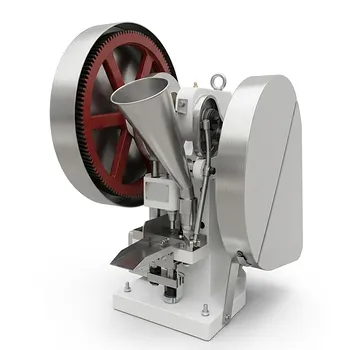
- 6-Ton Small Single-Punch Tablet Press — Laboratory Powder & Granule Tableting Equipment / Tablet Forming Machine
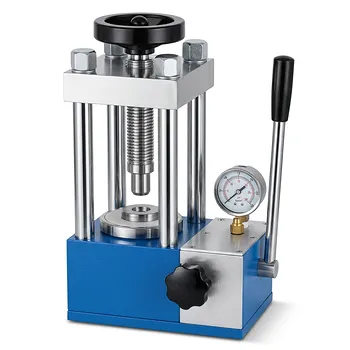
- Manual Tablet Press with Dual Scale Pressure Gauge for Pharmaceutical Food Chemical Laboratory Sample Preparation
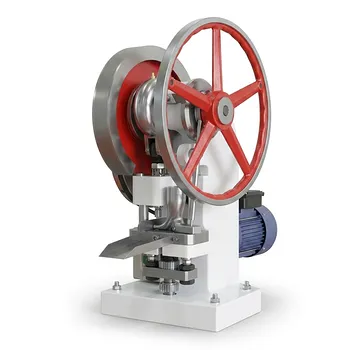
- 5 Ton Single Punch Tablet Press Laboratory Small Batch Production
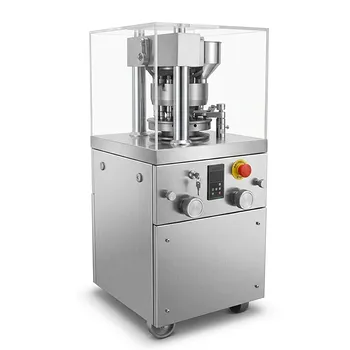
- Ordinary Type Rotary Tablet Press for Pharmaceutical Chemical Food Electronic Industries
People Also Ask
- What is the function of a laboratory press in Cr-Ti alloy evaluation? Quantify Fracture Stress & Strength
- What is the function of a laboratory press in assessing the hydrophobic performance of modified vermiculite fillers?
- What is the core function of a laboratory press in the forming of ceramic filter element green bodies? Maximize Density.
- What is the function of a laboratory press in the preparation of ceramic feed rods? Master Density and Precision
- Why is vacuum sealing and flexible packaging necessary for Aluminum Titanate powders during CIP? Ensure Peak Density

Tech Team · PowderPreparation
Last updated on Jun 03, 2026
Related Products
6-Ton Small Single-Punch Tablet Press — Laboratory Powder & Granule Tableting Equipment / Tablet Forming Machine
Manual Tablet Press with Dual Scale Pressure Gauge for Pharmaceutical Food Chemical Laboratory Sample Preparation
5 Ton Single Punch Tablet Press Laboratory Small Batch Production