Why is a CIP essential for Li6/16Sr7/16Ta3/4Hf1/4O3 ceramic green bodies? Achieve Uniform Density & Crack-Free Sintering
Updated 5 months ago
The necessity of a Cold Isostatic Press (CIP) for Li6/16Sr7/16Ta3/4Hf1/4O3 ceramics lies in its ability to provide omnidirectional pressure. By applying uniform force—typically around 200 MPa—through a liquid medium, a CIP eliminates the internal density gradients and air pockets that traditional uniaxial pressing cannot address. This creates a homogeneous green body capable of withstanding the extreme thermal stresses of 1450 °C sintering without cracking, warping, or deforming.
Core Takeaway: Cold Isostatic Pressing is a critical secondary molding step that ensures isotropic density. By applying equal pressure from all directions, it removes microscopic defects and provides the structural foundation required for high-performance ceramic bodies to survive high-temperature sintering.
Overcoming the Limitations of Uniaxial Pressing
Eliminating Internal Density Gradients
Traditional mechanical presses apply force along a single axis, which often results in uneven pressure distribution due to friction between the powder and the mold walls. This inconsistency creates "soft spots" or density gradients within the ceramic green body.
A CIP uses a liquid medium to exert isotropic pressure, ensuring every surface of the green body receives the same force. This uniformity is essential for Li6/16Sr7/16Ta3/4Hf1/4O3 to prevent non-uniform shrinkage during the cooling and heating phases.
Removing Internal Air Pockets
Residual air pockets or microscopic voids act as failure points during the sintering process. The high-pressure environment of a CIP (often reaching 300 MPa) forces powder particles to rearrange and bond more tightly than mechanical pressing alone.
This intense compaction effectively eliminates internal pores, leading to a significantly higher green density. A denser green body directly correlates to a more robust final ceramic structure with improved mechanical strength.
The Role of Isotropic Pressure in Sintering
Mitigating Thermal Stress at 1450 °C
The sintering process for these specific ceramics occurs at a staggering 1450 °C, where material phases transition and consolidate. If the green body has internal stress gradients, the heat will cause different areas to expand and contract at different rates.
By using a CIP to create a homogeneously packed structure, you ensure that the material responds to heat uniformly. This is the primary defense against the cracking and deformation that often plague complex ceramic oxides during high-temperature cycles.
Achieving High Relative Density
For advanced ceramics, achieving a high relative density (often exceeding 96%) is vital for performance. CIP facilitates a much higher packing density of the powder particles than uniaxial pressing can achieve on its own.
This secondary treatment ensures that the final product reaches its theoretical density potential. Higher density improves the ceramic's dielectric properties and overall structural integrity, making it suitable for technical applications.
Understanding the Trade-offs
Process Complexity and Cost
While CIP is essential for high-quality results, it adds a secondary step to the manufacturing workflow. It requires specialized equipment and a flexible mold or vacuum-sealed bag to protect the powder from the liquid medium.
This increases the total production time and requires higher capital investment compared to simple dry pressing. Manufacturers must balance the need for ultra-high performance against these increased operational costs.
Pre-molding Requirements
A CIP is rarely used on loose powder; it typically requires an initial pre-molding stage using a standard laboratory or hydraulic press. This means the workflow involves two distinct pressing cycles: one to shape the part and one to densify it.
Failure to properly seal the pre-molded body can lead to contamination from the liquid medium. Precision in the vacuum-sealing process is critical to ensure the isotropic pressure is applied effectively without damaging the green body.
How to Apply This to Your Project
When preparing Li6/16Sr7/16Ta3/4Hf1/4O3 or similar ceramic bodies, your pressing strategy should align with your final performance requirements.
- If your primary focus is Maximum Density: Utilize a two-stage process by first uniaxial pressing to shape the body, followed by a CIP cycle at 200-300 MPa to eliminate residual porosity.
- If your primary focus is Preventing Sintering Cracks: Prioritize the CIP step to ensure uniform density, as this is the most effective way to manage the stresses of a 1450 °C sintering environment.
- If your primary focus is Low Shrinkage Rates: Ensure high pressure is maintained during the CIP phase to maximize powder packing, which directly reduces the volume change during the final firing.
By integrating Cold Isostatic Pressing into your workflow, you transform a fragile powder compact into a high-performance ceramic capable of meeting rigorous technical standards.
Summary Table:
| Key Feature | Benefit for Ceramic Green Bodies | Impact on 1450 °C Sintering |
|---|---|---|
| Isotropic Pressure | Eliminates internal density gradients | Prevents warping and deformation |
| 200-300 MPa Force | Removes microscopic air pockets/voids | Increases final relative density (>96%) |
| Uniform Compaction | Creates a homogeneous internal structure | Mitigates thermal stress & cracking |
| Secondary Molding | Rearranges powder particles tightly | Improves mechanical & dielectric properties |
Elevate Your Material Research with Precision Compaction Solutions
Achieving the perfect ceramic green body requires more than just pressure—it requires precision. At [Brand Name], we provide complete laboratory sample preparation solutions tailored for material science. We specialize in high-performance powder processing and compaction equipment designed to meet the rigorous demands of technical ceramics like Li6/16Sr7/16Ta3/4Hf1/4O3.
Our extensive product range supports your entire workflow:
- Powder Processing: High-efficiency crushers (jaw/roll), liquid nitrogen cryogenic grinders, and advanced mills (planetary ball, jet, sand, disc, rotor).
- Sieving & Mixing: Precision sieve shakers (vibratory/air-jet) and specialized powder/defoaming mixers.
- Advanced Compaction: A full spectrum of hydraulic presses, including Cold/Warm Isostatic Presses (CIP/WIP), standard lab presses, XRF pellet presses, and vacuum hot presses.
Whether you need to eliminate density gradients or achieve theoretical density, our equipment provides the reliability and performance your research deserves.
Ready to optimize your lab's efficiency? Contact our technical experts today to find the ideal solution for your material processing needs!
References
- Danyi Sun, Kevin Huang. Synthesis and Characterization of Impurity‐Free Li<sub>6/16</sub>Sr<sub>7/16</sub>Ta<sub>3/4</sub>Hf<sub>1/4</sub>O<sub>3</sub> Perovskite as a Solid‐State Lithium‐Ion Conductor. DOI: 10.1002/ente.202201455
Mentioned Products
- 6-Ton Small Single-Punch Tablet Press — Laboratory Powder & Granule Tableting Equipment / Tablet Forming Machine
- Manual Tablet Press with Dual Scale Pressure Gauge for Pharmaceutical Food Chemical Laboratory Sample Preparation
- 5 Ton Single Punch Tablet Press Laboratory Small Batch Production
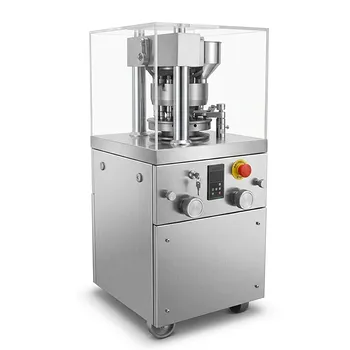
- Ordinary Type Rotary Tablet Press for Pharmaceutical Chemical Food Electronic Industries
People Also Ask
- What is the function of a laboratory press in Cr-Ti alloy evaluation? Quantify Fracture Stress & Strength
- What is the function of a laboratory press in assessing the hydrophobic performance of modified vermiculite fillers?
- What is the core function of a laboratory press in the forming of ceramic filter element green bodies? Maximize Density.
- What is the function of a laboratory press in the preparation of ceramic feed rods? Master Density and Precision
- Why is vacuum sealing and flexible packaging necessary for Aluminum Titanate powders during CIP? Ensure Peak Density

Tech Team · PowderPreparation
Last updated on May 14, 2026
Related Products
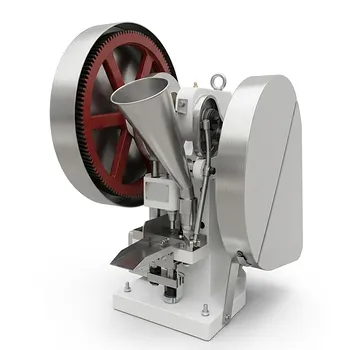
6-Ton Small Single-Punch Tablet Press — Laboratory Powder & Granule Tableting Equipment / Tablet Forming Machine
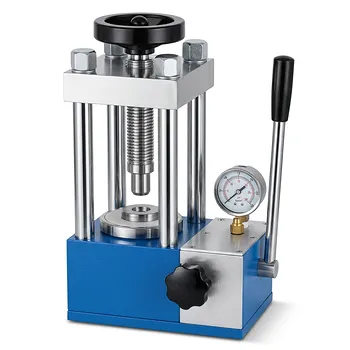
Manual Tablet Press with Dual Scale Pressure Gauge for Pharmaceutical Food Chemical Laboratory Sample Preparation
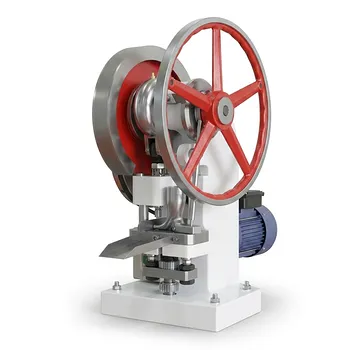
5 Ton Single Punch Tablet Press Laboratory Small Batch Production