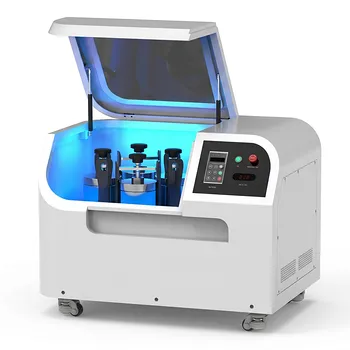
Why is a ball mill required for 3D printing alumina ceramic slurry? Achieve Optimal Dispersion & Print Stability
Updated 3 months ago
Ball milling is the critical mechanical process required to de-agglomerate powders and ensure the uniform distribution of reinforcing fibers within the resin matrix. This process utilizes high-frequency impact and shear forces to transform a raw mixture into a homogeneous, high-viscosity slurry that possesses the fluidity and stability necessary for light-curing 3D printing.
The core function of ball milling in this context is to overcome the physical attraction between micron-sized particles and fibers, ensuring every solid component is fully wetted and dispersed. This results in a stable, high-solid-loading slurry (up to 56 vol%) that exhibits the shear-thinning behavior essential for precise 3D printing layers.
Achieving Deep Dispersion and Homogeneity
Breaking Down Powder Agglomerates
Alumina powders naturally form agglomerates due to van der Waals forces, which can lead to structural defects in the final ceramic. The ball mill uses the mechanical impact of grinding media to physically break these clusters down to the sub-micron level.
Uniform Integration of Reinforcing Fibers
In fiber-reinforced ceramics, the "reinforcement" only works if the short fibers are distributed evenly throughout the slurry. Ball milling provides the continuous shear force required to prevent fibers from clumping, ensuring they are thoroughly mixed with the alumina particles and resin.
Full Encapsulation by the Resin Matrix
For a slurry to be printable and stable, every particle and fiber must be fully encapsulated by the photosensitive resin. The milling process forces the resin into contact with all solid surfaces, displacing air and ensuring a consistent material foundation for the 3D printing process.
Optimizing Rheology for 3D Printing
Supporting High Solid Loading
High-performance ceramics require a high volume fraction of solids (often exceeding 50 vol%) to minimize shrinkage during sintering. Ball milling allows for the successful wet mixing of these dense ratios, which would be impossible to achieve through simple stirring or manual mixing.
Inducing Shear-Thinning Characteristics
3D printing technologies like SLA or DLP require slurries that are stable at rest but flow easily under stress. Ball milling helps develop shear-thinning behavior, where the viscosity drops during the recoating or extrusion process, allowing for smooth, thin layers without nozzle clogging.
Preventing Precipitation and Phase Separation
A well-milled slurry maintains its stability over time, preventing heavier alumina particles or fibers from settling at the bottom of the vat. This consistency ensures that the first layer of the print has the same material properties as the last layer.
Understanding the Trade-offs and Risks
Potential for Material Contamination
The friction between the grinding balls and the jar can introduce impurities into the slurry. To mitigate this, technical advisors recommend using alumina or zirconia media to match the chemistry of the ceramic and maintain high purity levels.
Risk of Fiber Degradation
While milling is necessary for dispersion, excessive milling time or energy can break the short fibers, reducing their aspect ratio. If the fibers are ground too small, they lose their ability to reinforce the ceramic matrix effectively.
Processing Time Requirements
Achieving a truly homogeneous sub-micron dispersion is not instantaneous and often requires extended processing times, sometimes reaching 15 hours or more. This adds a significant lead time to the slurry preparation phase that must be factored into production schedules.
Strategic Implementation for Your Project
How to Apply This to Your Slurry Preparation
- If your primary focus is Maximum Structural Strength: Prioritize shorter milling durations with lower-density media to ensure fibers are dispersed without being fractured.
- If your primary focus is High Printing Precision: Extend the milling time to ensure sub-micron de-agglomeration, which prevents surface defects and ensures smooth layer deposition.
- If your primary focus is Material Purity: Utilize high-purity alumina grinding jars and balls to prevent metallic or foreign ion contamination during the 15-hour mixing cycle.
The ball mill is not merely a mixer, but a precision instrument that dictates the final mechanical integrity and printability of fiber-reinforced alumina ceramics.
Summary Table:
| Feature | Role of Ball Milling | Benefit for 3D Printing |
|---|---|---|
| De-agglomeration | Breaks clusters to sub-micron level | Eliminates structural defects in final parts |
| Fiber Distribution | Provides shear force to separate short fibers | Ensures uniform mechanical reinforcement |
| Solid Loading | Mixes dense ratios (up to 56 vol%) | Minimizes shrinkage during sintering |
| Rheology | Induces shear-thinning behavior | Facilitates smooth recoating and thin layers |
| Stability | Prevents precipitation/settling | Maintains material consistency through the print |
Elevate Your Ceramic Material Research with Precision Equipment
Achieving a stable, high-solid-loading slurry is the foundation of successful 3D-printed ceramics. At [Brand Name], we specialize in providing complete laboratory sample preparation solutions for material science, ensuring your powders and fibers are processed to the highest standards.
Our extensive range of equipment supports every stage of your workflow:
- Advanced Milling & Grinding: Achieve sub-micron dispersion with our planetary ball mills, jet mills, and liquid nitrogen cryogenic grinders.
- Homogeneous Mixing: Eliminate air bubbles and ensure full encapsulation with our powder and defoaming mixers.
- Superior Compaction: Finalize your materials with our full spectrum of hydraulic presses, including Cold/Warm Isostatic Presses (CIP/WIP), vacuum hot presses, and XRF pellet presses.
Don't let slurry instability or fiber clumping compromise your results. Contact our technical experts today to find the perfect milling and compaction solution tailored to your specific material requirements!
References
- XU Xiqing, LI Xin. 3D Printing and Dimensional Accuracy Control of Ceramic Cores Reinforced by Alumina Fibers. DOI: 10.3901/jme.2025.05.323
Mentioned Products
- Vertical Production Planetary Ball Mill for High Throughput Powder Processing
- Vertical Nano Bead Mill for Ceramic Materials with Permanent Magnet Motor and High Efficiency Grinding
- Single Tank High Energy Vibratory Ball Mill for Laboratory Grinding and Mixing
- Heavy Duty Horizontal Planetary Ball Mill for Efficient Industrial Grinding and Sample Preparation
- Nano Laboratory Bead Mill Desktop Sub Micron Sand Mill Screenless Seal Less Powder Grinder
People Also Ask
- What is the function of a high-performance planetary ball mill in AMZ laminates? Master Ceramic Homogenization.
- What is the role of a planetary ball mill in Al–Si3N4 nanocomposite prep? Achieve Uniform Homogenization
- What is the function of a planetary ball mill in lanthanum hexaaluminate synthesis? Master Micron-Level Homogenization
- What role does a planetary ball mill play in the synthesis of Er-doped PMN-PT ceramics? Enhancing Homogeneity & Purity
- What are the advantages of using a planetary ball mill for the fine grinding of barium silicate glass powder? Peak Results

Tech Team · PowderPreparation
Last updated on Jun 03, 2026
Related Products
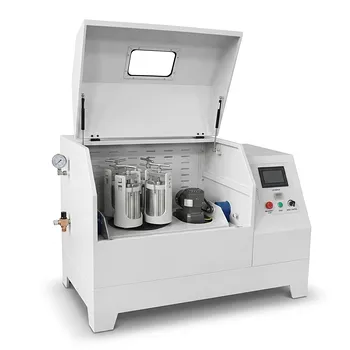
Vertical Production Planetary Ball Mill for High Throughput Powder Processing
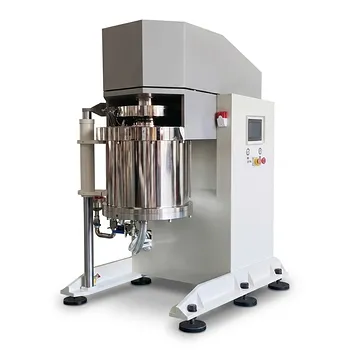
Vertical Nano Bead Mill for Ceramic Materials with Permanent Magnet Motor and High Efficiency Grinding
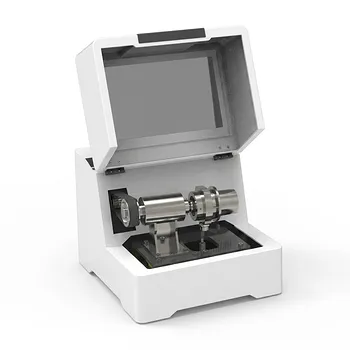
Single Tank High Energy Vibratory Ball Mill for Laboratory Grinding and Mixing
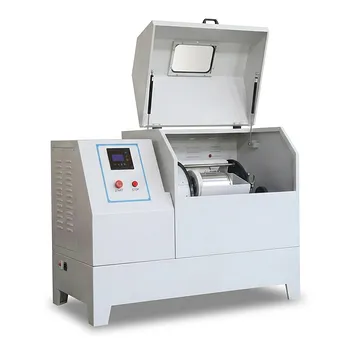
Heavy Duty Horizontal Planetary Ball Mill for Efficient Industrial Grinding and Sample Preparation
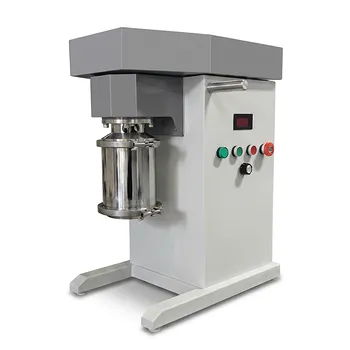
Nano Laboratory Bead Mill Desktop Sub Micron Sand Mill Screenless Seal Less Powder Grinder

Vertical Square Planetary Ball Mill for Laboratory Sample Preparation and Nanoscale Grinding
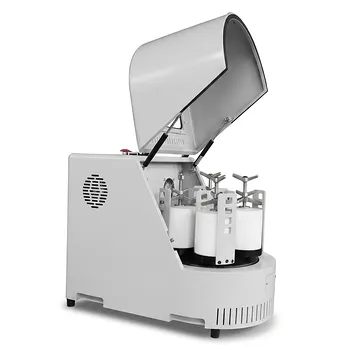
Vertical Semi Circular Planetary Ball Mill for Laboratory Precision Grinding
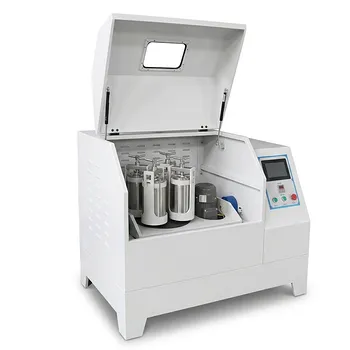
360° Rotating Omnidirectional Laboratory Planetary Ball Mill for Homogeneous Ultra-Fine Grinding and Mixing
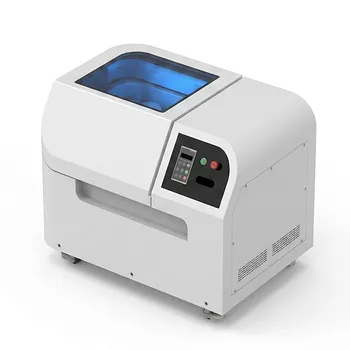
8L Planetary Ball Mill for Laboratory Grinding and Sample Preparation
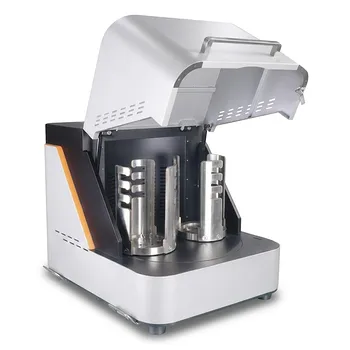
High Energy Laboratory Planetary Ball Mill for Nano Grinding and Colloidal Mixing of Hard and Brittle Materials
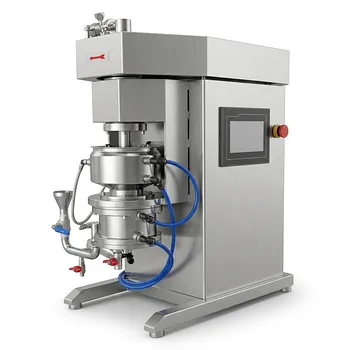
Small Ceramic Structure Laboratory Sand Mill Nanoscale Grinding Dispersion Equipment Seal-less Screen-less Design

High Energy Planetary Ball Mill for Nano Scale Grinding and Mechanical Alloying

High Throughput Micro Ball Mill for Cryogenic Grinding and Laboratory Cell Disruption

Miniature Planetary Ball Mill with Vacuum Grinding and High Efficiency for Laboratory Sample Preparation
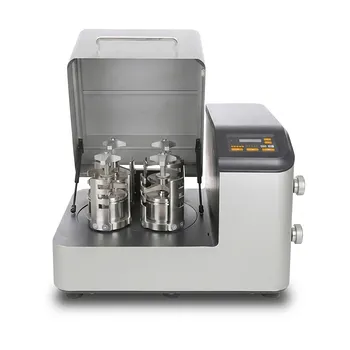
High Energy Planetary Ball Mill for Nano Scale Grinding and Colloidal Mixing in Material Science Research
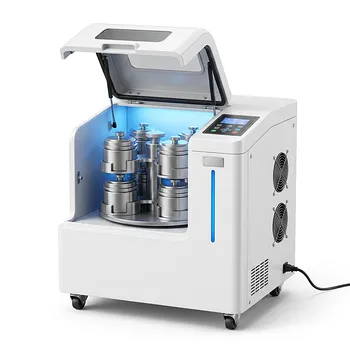
High Energy Omnidirectional Planetary Ball Mill 20L

High Energy Laboratory Planetary Ball Mill for Nano Grinding and Material Science Sample Preparation
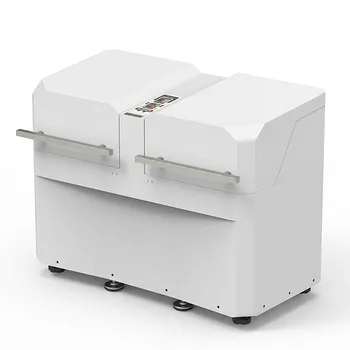
Dual Station Planetary Ball Mill 24L
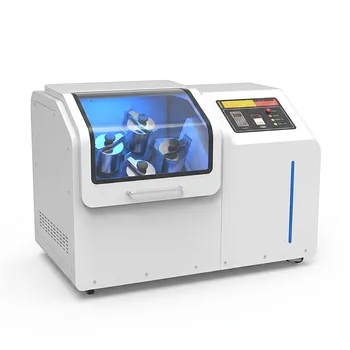
High Energy Omnidirectional Planetary Ball Mill 16L