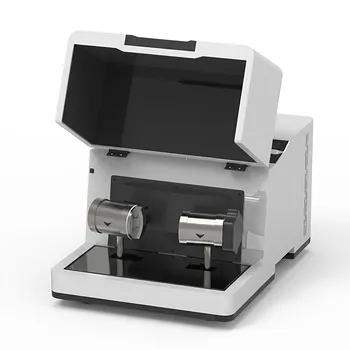
Why are tungsten carbide (WC-Co) grinding balls selected for high-energy ball milling of Nb-Cu composites? Maximize Purity
Updated 5 months ago
Tungsten carbide (WC-Co) grinding balls are the industry standard for milling Nb-Cu composites because they provide the extreme kinetic energy required to process refractory metals while maintaining high chemical purity. These media possess a unique combination of high density and exceptional hardness that enables the efficient mechanical alloying of niobium—a high-melting-point refractory metal—into a copper matrix. This choice ensures that the energy transferred during high-speed impacts is sufficient to refine particles without introducing significant wear-induced debris that could compromise the final material's properties.
Core Takeaway: Tungsten carbide media are selected for their superior density and hardness, which maximize impact energy for refining tough niobium particles while their extreme wear resistance prevents contamination, ensuring the high purity of the resulting Nb-Cu composite.
Maximizing Kinetic Energy for Refractory Processing
The Role of High Density in Impact Force
Tungsten carbide is significantly denser than alternative media like alumina or stainless steel. This high density translates directly into greater kinetic energy during planetary or high-energy ball milling, which is essential for the effective fragmentation of the niobium phase.
Overcoming Niobium’s Material Resistance
Niobium is a refractory metal characterized by a high melting point and significant toughness. The intense impact energy provided by WC-Co balls is necessary to overcome these physical barriers, facilitating the mechanical bonding and alloying required for a uniform Nb-Cu composite.
Efficiency in Particle Refinement
High-hardness media ensure that energy is not lost through the deformation of the grinding balls themselves. Instead, the force is concentrated on the powder, leading to faster particle size reduction and more efficient homogenization of the Cu-AlN or Nb-Cu systems.
Preserving Chemical Purity and Composite Integrity
Exceptional Wear Resistance
During prolonged milling cycles, which can exceed 36 hours, grinding media are subject to intense friction and collision. Tungsten carbide’s superior wear resistance ensures that the media does not shed significant amounts of material into the composite powder.
Minimizing Heterogeneous Impurities
The introduction of foreign metallic impurities can drastically alter the thermal conductivity and electrochemical stability of the final alloy. By using chemically inert WC-Co media, researchers ensure that the final NiPd or Nb-Cu powders maintain their intended compositional accuracy and performance metrics.
Maintaining Microscopic Uniformity
Effective mechanical alloying requires that different components reach a high degree of uniform mixing at the microscopic scale. The consistency of tungsten carbide media prevents the introduction of "soft spots" or irregular debris that could lead to phase separation during the subsequent sintering process.
Understanding the Trade-offs
Cost and Weight Considerations
Tungsten carbide is significantly more expensive than steel or ceramic alternatives. Additionally, its extreme weight requires robust milling equipment capable of handling high rotational loads without premature motor or bearing failure.
Potential for Cobalt Contamination
Most tungsten carbide media use cobalt as a binder (WC-Co). While the wear rate is low, users must consider if trace amounts of cobalt will negatively impact the specific application of their Nb-Cu composite, particularly in sensitive electronic or magnetic environments.
Brittle Fracture Risks
Despite their hardness, WC-Co balls are relatively brittle compared to steel. They can chip or crack if subjected to extreme thermal shock or if the milling jar is under-filled, potentially introducing sharp carbide fragments into the powder batch.
How to Apply This to Your Project
Recommendations Based on Your Objectives
- If your primary focus is Maximum Purity: Utilize high-grade tungsten carbide jars in conjunction with WC-Co media to ensure the entire grinding environment is wear-resistant and chemically consistent.
- If your primary focus is Rapid Alloying: Opt for larger diameter tungsten carbide balls to maximize the individual impact energy delivered to the refractory niobium particles.
- If your primary focus is Cost Management: Reserve tungsten carbide media specifically for the final refinement stages of the milling process, using less expensive media for initial pre-grinding if the purity requirements allow.
By leveraging the density and hardness of tungsten carbide, you ensure that your high-energy milling process transforms raw refractory metals into high-performance, high-purity composites.
Summary Table:
| Feature | Benefit for Nb-Cu Composites | Impact on Material Quality |
|---|---|---|
| High Density | Delivers maximum kinetic energy to fragment refractory niobium. | Ensures efficient mechanical alloying. |
| Extreme Hardness | Prevents energy loss through media deformation. | Accelerates particle size reduction. |
| Superior Wear Resistance | Minimizes debris shedding during long milling cycles. | Maintains high chemical purity. |
| Chemical Inertness | Prevents unwanted reactions with the copper matrix. | Ensures compositional accuracy. |
Elevate Your Material Research with Precision Powder Solutions
Achieving the perfect Nb-Cu composite requires more than just the right media; it requires a complete, integrated approach to sample preparation. At our core, we provide comprehensive laboratory solutions for material science, specializing in advanced powder processing and high-pressure compaction equipment.
Our extensive product range includes:
- High-Energy Mills: Planetary ball mills, jet mills, and cryogenic grinders designed for refractory metals.
- Advanced Pressing Technology: Cold/Warm Isostatic Presses (CIP/WIP), vacuum hot presses, and standard hydraulic lab presses for high-density sintering.
- Processing Tools: Jaw/roll crushers, vibratory sieve shakers, and high-efficiency powder mixers.
Whether you are refining refractory alloys or developing new nanocomposites, our equipment ensures maximum efficiency and purity. Contact us today to discuss your specific application and let our experts help you select the ideal milling and pressing configuration for your laboratory.
References
- Hugo Lima, Uílame Umbelino Gomes. Nb-Cu metallic composite: SPS preparation, microstructure and mechanical properties. DOI: 10.2298/sos250225020l
Mentioned Products
- Vertical Semi Circular Planetary Ball Mill for Laboratory Precision Grinding
- Heavy Duty Horizontal Planetary Ball Mill for Efficient Industrial Grinding and Sample Preparation
- Miniature Planetary Ball Mill with Vacuum Grinding and High Efficiency for Laboratory Sample Preparation
- Low Temperature Water Cooled Continuous Feed Grinder Two Stage Coarse and Fine Grinding System
- Stainless Steel Coarse Crusher for Pharmaceutical Food and Plastic Material Processing
People Also Ask
- What role does a planetary ball mill play in the synthesis of Li6PS5Cl (LPSCl)? Unlock High Ionic Conductivity
- Why is a planetary ball mill essential for SiBCN-rGO wet-spinning? Achieve Superior Dispersion and Spinnability
- Why is an intermittent grinding process required for perovskites in a planetary ball mill? Ensure Stability & Purity
- Why is a planetary ball mill required for PET micronization? Ensure Accurate Chemical Analysis of Reprocessed PET
- How does mechanized planetary ball milling compare to manual agate grinding? Optimize sulfide standard material precision.

Tech Team · PowderPreparation
Last updated on May 14, 2026
Related Products
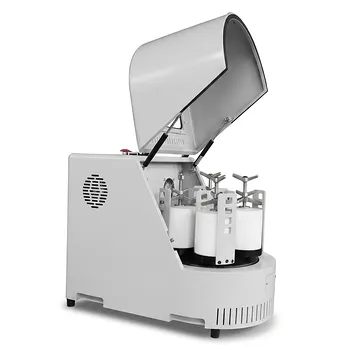
Vertical Semi Circular Planetary Ball Mill for Laboratory Precision Grinding
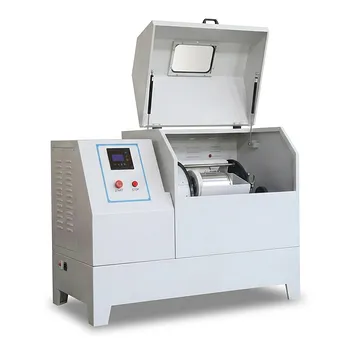
Heavy Duty Horizontal Planetary Ball Mill for Efficient Industrial Grinding and Sample Preparation
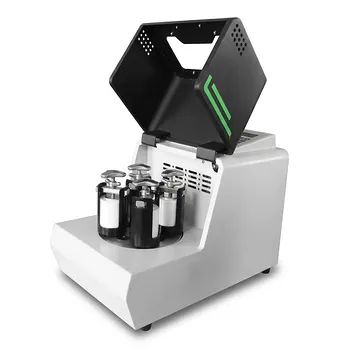
Miniature Planetary Ball Mill with Vacuum Grinding and High Efficiency for Laboratory Sample Preparation
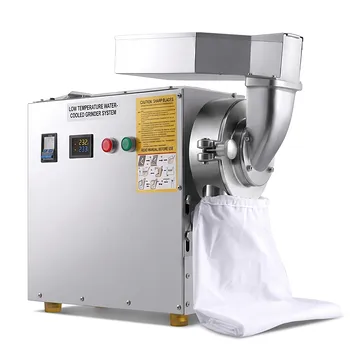
Low Temperature Water Cooled Continuous Feed Grinder Two Stage Coarse and Fine Grinding System
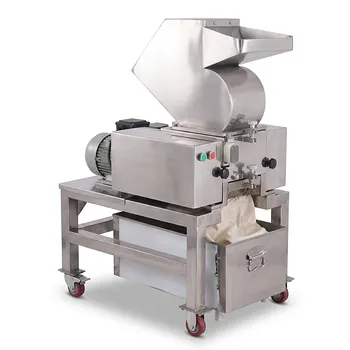
Stainless Steel Coarse Crusher for Pharmaceutical Food and Plastic Material Processing
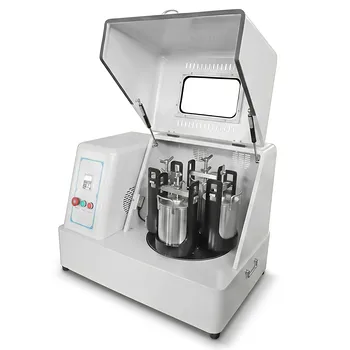
Vertical Square Planetary Ball Mill for Laboratory Sample Preparation and Nanoscale Grinding
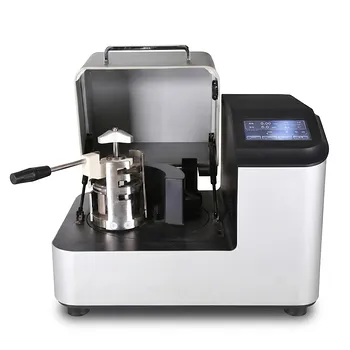
High Energy Laboratory Planetary Ball Mill for Nano Grinding and Material Science Sample Preparation
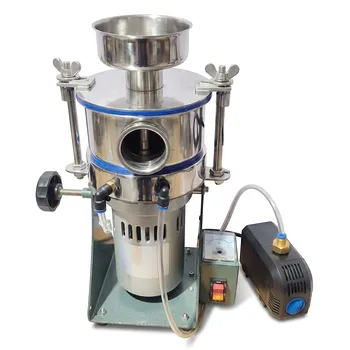
Water Cooled Airflow Ultra Fine Grinder for Low Temperature Material Processing
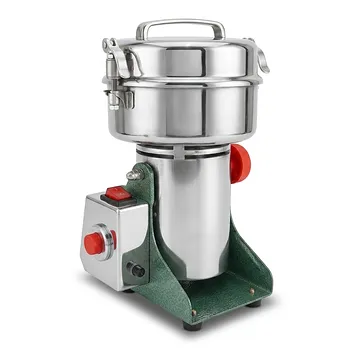
Small High-Speed Laboratory Grinder for Powder Processing
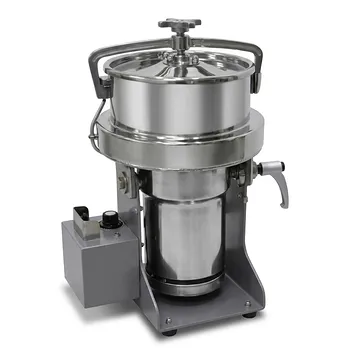
500g Capacity Water Cooled Low Temperature Grinder with Variable Speed and Safety Cover
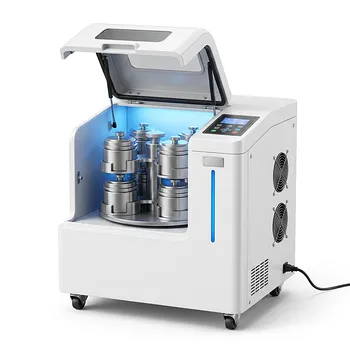
High Energy Omnidirectional Planetary Ball Mill 20L
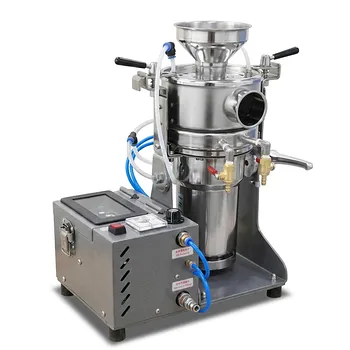
Water Cooled Pulse Jet Ultrafine Grinder