Why are steel-coated ball milling jars selected for high-energy ball milling of ZnFeS? Optimize Durability & Purity
Updated 4 months ago
Steel-coated ball milling jars are selected for ZnFeS processing primarily because they provide the necessary hardness and wear resistance to withstand high-energy mechanical impacts. This material choice ensures the jar can endure the high-frequency collisions required to refine Zinc Iron Sulfide into nanoparticles without the inner walls shedding debris. Consequently, this prevents contamination and maintains the high purity essential for the final nanostructured material.
Core Takeaway: Steel-coated jars offer a critical balance of high density and mechanical durability, enabling the efficient transfer of kinetic energy to Zinc Iron Sulfide while protecting the chemical integrity of the sample from wear-induced impurities.
Superior Mechanical Durability
Resistance to High-Frequency Impact
High-energy ball milling involves violent, high-speed collisions between the milling media and the jar walls. Hardened steel surfaces are specifically engineered to withstand these mechanical stresses without sustaining structural damage or deformation.
Prevention of Material Shedding
Under the intense pressure of high-energy milling, softer materials often flake or "shed" into the sample. Steel-coated jars provide a wear-resistant barrier that prevents these microscopic fragments from entering the ZnFeS powder, ensuring the product remains free of unintended wall-material debris.
Optimizing Kinetic Energy Transfer
The Role of Material Density
The effectiveness of particle refinement depends heavily on the kinetic energy generated during collisions. Because steel is a high-density material, it allows for a more efficient transfer of physical force from the milling media to the ZnFeS particles.
Accelerating Particle Refinement
The high-density collisions facilitated by steel components significantly speed up the particle refinement process. This efficiency is vital for achieving the nanostructured state of Zinc Iron Sulfide within a shorter operational timeframe.
Facilitating Uniform Mixing
High-energy milling is not just about size reduction; it is about creating a high-reactivity environment. The intense shear forces provided by steel media ensure that the precursors are deeply mixed, promoting the phase transformations necessary for high-quality ZnFeS synthesis.
Understanding the Trade-offs
Risk of Metallic Contamination
While steel-coated jars are highly wear-resistant, they are not entirely immune to abrasion during extended milling cycles. In specific applications where even trace amounts of iron or chromium are detrimental, researchers may need to weigh the mechanical strength of steel against the chemical inertness of alternatives like zirconia.
Heat Generation
The high-energy nature of steel-on-steel collisions generates significant thermal energy during the milling process. If the ZnFeS sample is temperature-sensitive, the milling parameters must be carefully controlled to prevent unwanted thermal degradation or premature phase changes.
Applying This to Your Milling Process
Selection of milling hardware should always be dictated by the specific requirements of your end product and the physical properties of your precursor materials.
- If your primary focus is Maximum Purity: Ensure you use high-grade, hardened steel coatings and monitor milling duration to minimize the risk of trace metal leaching into the ZnFeS.
- If your primary focus is Rapid Particle Refinement: Utilize a high ball-to-powder ratio with steel media to maximize collision frequency and kinetic energy transfer.
- If your primary focus is Scalability and Cost-Effectiveness: Hardened steel remains the industry standard due to its longevity and ability to handle high-intensity workloads over multiple cycles.
By prioritizing mechanical integrity and energy efficiency, steel-coated jars remain the definitive choice for producing high-performance Zinc Iron Sulfide nanoparticles.
Summary Table:
| Feature | Advantage for ZnFeS Processing | Impact on Final Material |
|---|---|---|
| High Hardness | Resists high-frequency mechanical impacts | Prevents structural deformation of the jar |
| Wear Resistance | Minimizes material shedding from inner walls | Ensures high chemical purity and low contamination |
| High Density | Optimizes kinetic energy transfer | Accelerates particle refinement to the nano-scale |
| Mechanical Strength | Sustains violent, high-speed collisions | Enables long-term durability over multiple cycles |
| Deep Mixing | Provides intense shear forces | Promotes uniform phase transformation and reactivity |
Elevate Your Material Synthesis with KINTEK SOLUTION
Achieving the perfect nanostructured material requires more than just a process—it requires the right precision tools. At KINTEK SOLUTION, we provide complete laboratory sample preparation solutions for material science, specializing in high-performance powder processing and compaction equipment.
Whether you are synthesizing Zinc Iron Sulfide or advanced alloys, our extensive range includes planetary ball mills, jet mills, and cryogenic grinders, alongside durable steel-coated and specialized milling jars designed for high-energy impacts. Beyond milling, we offer a full spectrum of hydraulic presses (Cold/Warm Isostatic Presses, XRF pellet presses, and vacuum hot presses) and sieve shakers to ensure your samples meet the most rigorous standards.
Don’t settle for sub-optimal results. Contact our technical experts today to discover how our tailored equipment solutions can enhance your laboratory’s efficiency and product purity!
References
- Production and characterization of Zinc Iron Sulphide (ZnFeS) nanoparticles sourced locally from Nigeria prepared by high energy ball-milling. DOI: 10.17148/imrjr.2025.020601
Mentioned Products
- High Energy Omnidirectional Planetary Ball Mill 16L
- Heavy Duty Horizontal Planetary Ball Mill for Efficient Industrial Grinding and Sample Preparation
- 8L Planetary Ball Mill for Laboratory Grinding and Sample Preparation
- Vertical Square Planetary Ball Mill for Laboratory Sample Preparation and Nanoscale Grinding
- High Energy Omnidirectional Planetary Ball Mill 20L
People Also Ask
- What role does an omni-directional planetary ball mill play in brass/cobalt antimonide pretreatment? Achieve Nano-Scale Homogeneity.
- What is the role of a high-energy planetary ball mill in Li2ZrO3 and LBS prep? Achieve Superior Electrolyte Density
- What role does a high-energy planetary ball mill play in processing quenched bioactive glass? Achieve Nano-Scale Precision
- What role does a planetary ball mill play in nano-mineral filler prep? Achieve Sub-100nm Precision & Performance
- What role does a high-energy planetary ball mill play in magnesium-based hydrogen storage alloy preparation?

Tech Team · PowderPreparation
Last updated on Jun 03, 2026
Related Products
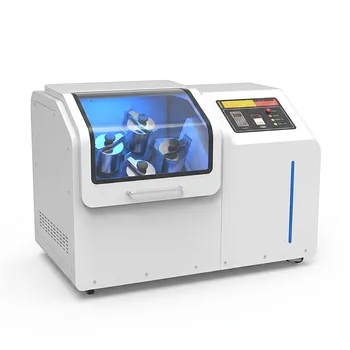
High Energy Omnidirectional Planetary Ball Mill 16L
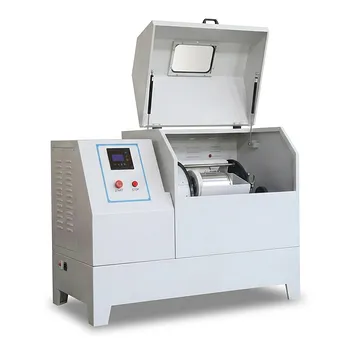
Heavy Duty Horizontal Planetary Ball Mill for Efficient Industrial Grinding and Sample Preparation

8L Planetary Ball Mill for Laboratory Grinding and Sample Preparation
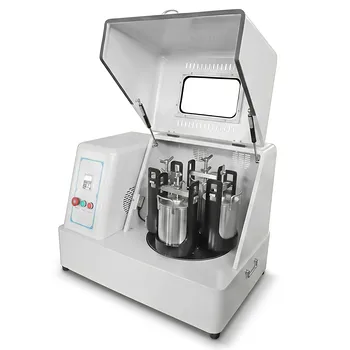
Vertical Square Planetary Ball Mill for Laboratory Sample Preparation and Nanoscale Grinding
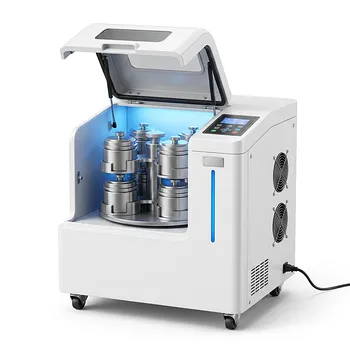
High Energy Omnidirectional Planetary Ball Mill 20L
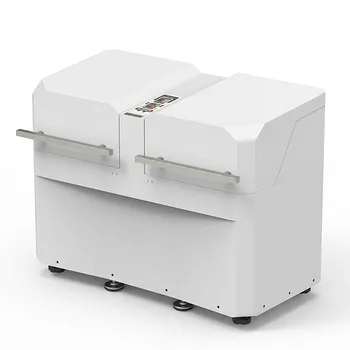
Dual Station Planetary Ball Mill 24L
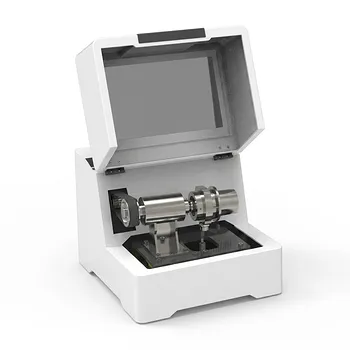
Single Tank High Energy Vibratory Ball Mill for Laboratory Grinding and Mixing
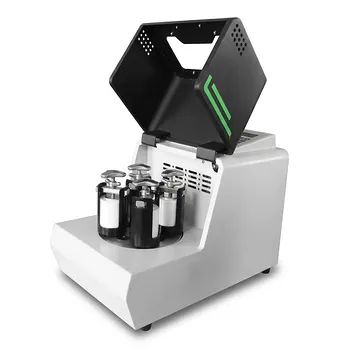
Miniature Planetary Ball Mill with Vacuum Grinding and High Efficiency for Laboratory Sample Preparation
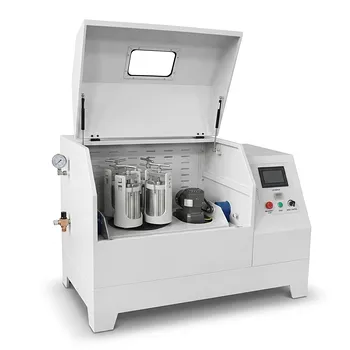
Vertical Production Planetary Ball Mill for High Throughput Powder Processing

High Energy Planetary Ball Mill for Nano Scale Grinding and Mechanical Alloying