Why are specific silica grinding balls selected for the dry milling process of Nsutite ore? Optimize Purity & PSD
Updated 5 months ago
The selection of specific 6mm silica grinding balls for Nsutite ore is a strategic decision to balance mechanical reduction with high chemical purity. By using silica media, processors can achieve the necessary pulverization energy while strictly limiting the introduction of metallic impurities that would otherwise degrade the ore's electrochemical properties. This ensures the resulting powder maintains the integrity required for high-performance applications.
Core Takeaway: Silica grinding balls are chosen for Nsutite ore processing because they provide a precise level of impact energy for uniform particle reduction while preventing the contamination of the active material. This specific media choice is foundational to achieving a particle size distribution that optimizes electrolyte wetting in final battery components.
Ensuring Chemical Purity and Material Integrity
Preventing Metallic Contamination
One of the primary reasons for selecting silica over denser materials like steel is impurity control. Using silica media prevents the introduction of foreign metallic elements that could compromise the chemical phase of the Nsutite ore.
Maintaining Phase Stability
In many mineral processing applications, using media that is chemically compatible—or even compositionally similar—to the matrix material is a standard protocol. This ensures that any trace wear debris from the balls does not negatively impact the microstructural stability of the final product.
Optimizing Impact Energy for Powder Reduction
The Precision of 6mm Media
The choice of a 6mm diameter is specific to the energy requirements of Nsutite ore. This size provides an appropriate level of impact energy to crush hard ore particles into a fine powder without over-processing the material.
Achieving Uniform Pulverization
Silica balls, when used in a dry milling environment, facilitate a uniform pulverization process. This results in a consistent particle size distribution (PSD), which is a critical metric for the quality of the active material.
Managing Mechanical Energy
By managing the mass and size of the media, the dry milling process converts mechanical equipment energy into targeted collision energy. This energy acts directly on the particle surfaces to achieve the desired level of material micronization.
Impact on Downstream Performance
Enhancing Electrolyte Wetting
The primary benefit of the uniform particle size achieved by silica milling is improved electrolyte wetting. A consistent distribution allows the electrolyte to penetrate the electrode surface more effectively, boosting the efficiency of the electrochemical reaction.
Strategic Milling Parameters
The effectiveness of the silica balls is tied to specific operational settings, such as a rotation speed of 300 rpm and a duration of 32 milling cycles. These parameters are calibrated to work in tandem with the silica media to ensure the ore reaches its optimal active state.
Understanding the Trade-offs
Impact Energy vs. Purity
While materials like steel offer higher density and hardness for faster crushing, they carry a high risk of metallic contamination. Silica represents a middle ground, offering sufficient hardness for dry milling while acting as a "clean" media that preserves material chemistry.
Wear Rates and Media Integrity
Silica media may experience different wear rates compared to silicon carbide or steel. Users must monitor the media-to-ore ratio to ensure that the reduction in ball size over time does not alter the energy dynamics of the 32-cycle milling process.
How to Apply This to Your Project
Selecting the right grinding media depends on the specific performance requirements of your final material.
- If your primary focus is Maximum Chemical Purity: Use silica or a media compositionally identical to your ore (like SiC for SiC ceramics) to ensure wear debris does not act as a contaminant.
- If your primary focus is Rapid Micronization of Hard Materials: Consider higher-density media like steel balls, provided your application can tolerate trace metallic elements.
- If your primary focus is Improving Electrochemical Wetting: Prioritize media sizes (like 6mm) and milling cycles that produce a highly uniform particle size distribution rather than just the smallest possible particles.
The correct choice of grinding media transforms a simple crushing process into a precise method for engineering material performance.
Summary Table:
| Parameter | Specification | Key Benefit |
|---|---|---|
| Media Material | Silica | Prevents metallic contamination & maintains phase stability |
| Media Diameter | 6 mm | Optimized impact energy for uniform pulverization |
| Rotation Speed | 300 rpm | Targeted collision energy for effective micronization |
| Process Cycle | 32 cycles | Ensures consistent particle size distribution (PSD) |
| Primary Goal | High Purity | Enhances electrolyte wetting in battery components |
Achieve Superior Material Purity and Precision with Our Solutions
Selecting the right grinding media is critical for maintaining material integrity. At [Our Company Name], we provide complete laboratory sample preparation solutions for material science, specializing in high-performance powder processing and compaction equipment.
From achieving the perfect particle size to final material forming, we support your research and production with:
- Advanced Milling: Planetary ball mills, jet mills, and liquid nitrogen cryogenic grinders for contaminant-free reduction.
- Sieving & Mixing: Precision sieve shakers and high-efficiency mixers for uniform results.
- Full Spectrum Pressing: Standard lab presses, Hot Presses, and Cold/Warm Isostatic Presses (CIP/WIP) for high-density compaction.
Let us help you transform your raw materials into high-performance products. Contact our experts today to discuss your project!
References
- Manika Chaudhary, Rahúl Singhal. Effect of Ball Milling and Annealing Temperature on Electrochemical Properties of Nsutite Materials. DOI: 10.4236/ajac.2025.168009
Mentioned Products
- Vertical Square Planetary Ball Mill for Laboratory Sample Preparation and Nanoscale Grinding
- Single Tank High Energy Vibratory Ball Mill for Laboratory Grinding and Mixing
- Vertical Semi Circular Planetary Ball Mill for Laboratory Precision Grinding
- 8L Planetary Ball Mill for Laboratory Grinding and Sample Preparation
- Heavy Duty Horizontal Planetary Ball Mill for Efficient Industrial Grinding and Sample Preparation
People Also Ask
- What is the function of a planetary ball mill in wollastonite ceramic prep? Achieve Molecular Homogenization & Reactivity
- How does a planetary ball mill contribute to the homogenization of trace elements? Achieve Sub-Micron Uniformity
- Why grind lime-pozzolan specimens for TG/DTA for 3 mins? Master sample prep for high-precision thermal analysis.
- What role does a planetary ball mill play in the synthesis of Li6PS5Cl (LPSCl)? Unlock High Ionic Conductivity
- What role does a planetary ball mill play in KNTO ceramic refinement? Optimize Homogeneity & Reactivity

Tech Team · PowderPreparation
Last updated on May 14, 2026
Related Products

Vertical Square Planetary Ball Mill for Laboratory Sample Preparation and Nanoscale Grinding
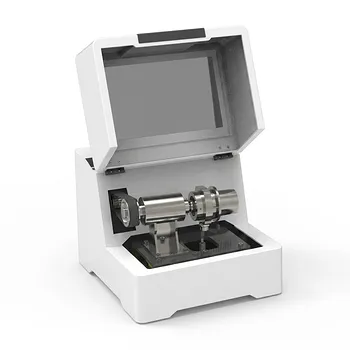
Single Tank High Energy Vibratory Ball Mill for Laboratory Grinding and Mixing
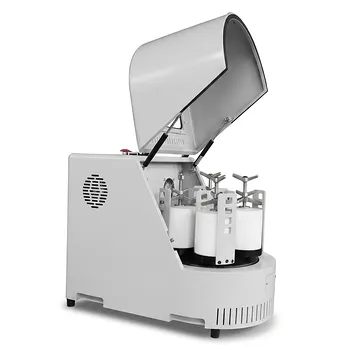
Vertical Semi Circular Planetary Ball Mill for Laboratory Precision Grinding

8L Planetary Ball Mill for Laboratory Grinding and Sample Preparation

Heavy Duty Horizontal Planetary Ball Mill for Efficient Industrial Grinding and Sample Preparation
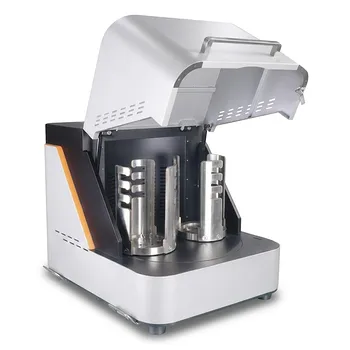
High Energy Laboratory Planetary Ball Mill for Nano Grinding and Colloidal Mixing of Hard and Brittle Materials
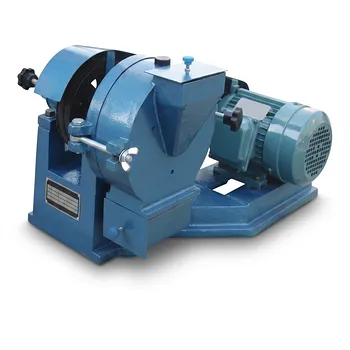
Laboratory Disc Mill for Ore and Mineral Sample Preparation

High Energy Laboratory Planetary Ball Mill for Nano Grinding and Material Science Sample Preparation
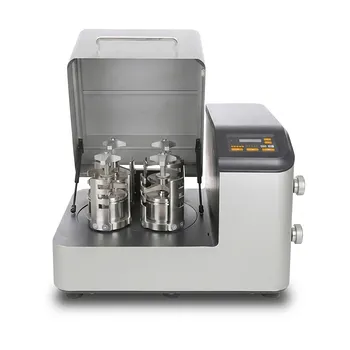
High Energy Planetary Ball Mill for Nano Scale Grinding and Colloidal Mixing in Material Science Research
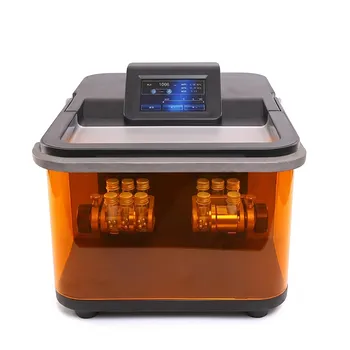
High Throughput Micro Ball Mill for Cryogenic Grinding and Laboratory Cell Disruption
