Why are jaw, cone, and roll crushers used sequentially for gold ore BWI? Achieve Precise Feed Prep
Updated 5 months ago
The sequential use of jaw, cone, and roll crushers is a strategic multi-stage reduction process designed to produce a standardized feed for the Bond Work Index (BWI) test. This configuration ensures that gold ore is reduced from bulk samples to a precise particle size—typically 100% passing a 3.327 mm (#6 Tyler) sieve—without causing equipment damage or excessive over-pulverization. By distributing the reduction ratio across three distinct stages, laboratories achieve the uniform particle size distribution necessary for repeatable and accurate grinding energy calculations.
Core Takeaway: Multi-stage crushing optimizes the reduction ratio at every step, transforming raw gold ore into a calibrated laboratory feed while maintaining material integrity and ensuring the accuracy of the Bond Work Index measurement.
The Mechanics of Multi-Stage Size Reduction
Achieving Optimal Reduction Ratios
Every crushing machine has an optimal reduction ratio, which is the ratio of the feed size to the product size. Attempting to reduce large gold ore chunks to a 3.35 mm powder in a single step would overload the equipment and lead to inconsistent results. Sequential crushing allows each machine to operate within its most efficient range, preserving the mechanical integrity of the sample.
Precision for the Bond Ball Mill Feed
The Bond Work Index requires a specific feed size to ensure the subsequent ball milling phase is standardized and repeatable. Using a sequence of crushers ensures that the final product is not just small enough, but also exhibits a uniform particle size distribution. This uniformity is critical because the BWI calculation depends on the relationship between the energy input and the change in particle size.
The Role of Each Crusher in the Sequence
Jaw Crushers: The Primary Reduction Stage
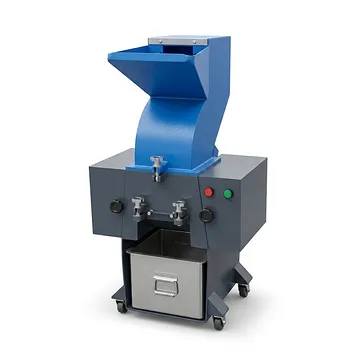
The laboratory jaw crusher handles the initial "coarse" stage, taking raw ore samples (often 5-10 cm) and reducing them to a manageable medium size. It uses a V-shaped cavity and high-manganese steel liners to apply powerful squeezing forces. This stage prepares a consistent feed for the next machine by breaking down the hardest, largest rock structures.
Cone Crushers: Transitioning to Medium Fineness
Once the jaw crusher has completed the primary reduction, the cone crusher performs the secondary or medium crushing. It excels at taking the output of the jaw crusher and further narrowing the size distribution. The gyratory motion of the cone crusher is ideal for creating a product that is ready for the final, most precise stage of reduction.
Roll Crushers: The Final Calibrated Pass
Roll crushers are often used for the final fine-crushing stage because they offer excellent control over the "top size" of the product. By adjusting the gap between the rollers, technicians can ensure the ore passes 100% through the required #6 Tyler standard sieve. This prevents "over-grinding," which would create too many ultra-fine particles and skew the Bond Work Index results.
Understanding the Trade-offs and Constraints
The Risk of Over-Pulverization
While achieving a fine size is the goal, over-pulverization is a significant pitfall in sample preparation. If the ore is crushed too aggressively in a single stage, it generates an excess of "fines" (dust-like particles) that do not accurately represent the ore's resistance to grinding. Multi-stage crushing minimizes this risk by applying graduated force.
Equipment Wear and Maintenance
Using a single machine for the entire reduction process leads to accelerated liner wear and potential mechanical failure. Gold ore can be highly abrasive; distributing the workload across three machines ensures that the high-impact forces are handled by the jaw crusher, while the precision work is left to the roll crusher. This extends the life of laboratory equipment and maintains calibration accuracy.
How to Apply This to Your Laboratory Workflow
Effective Bond Work Index determination depends on the strict adherence to these preparation stages to ensure data reliability.
- If your primary focus is Accuracy of Results: Ensure that the final product passes 100% through the 3.327 mm sieve without excessive fines to maintain the integrity of the BWI calculation.
- If your primary focus is Equipment Longevity: Never skip the primary jaw crushing stage, as feeding oversized ore directly into a cone or roll crusher will cause immediate mechanical strain and uneven wear.
- If your primary focus is Process Repeatability: Standardize the "closed-side settings" of each crusher in the sequence to ensure that every sample batch processed has an identical size distribution before entering the ball mill.
By mastering this sequential crushing process, you establish the physical foundation necessary for precise mineral processing analysis and successful plant design.
Summary Table:
| Crusher Type | Reduction Stage | Role in BWI Preparation | Key Benefit |
|---|---|---|---|
| Jaw Crusher | Primary | Reduces raw ore (5-10 cm) to medium size | Handles high-impact forces |
| Cone Crusher | Secondary | Narrows size distribution for medium fineness | Prepares feed for final precision |
| Roll Crusher | Final | Calibrates to 100% passing 3.327 mm | Prevents over-pulverization |
Elevate Your Sample Preparation with Precision Equipment
Accurate Bond Work Index determination depends on the physical integrity of your sample. At [Brand Name], we provide complete laboratory sample preparation solutions tailored for material science and mineral processing.
Our specialized equipment line ensures your lab achieves the exact particle size distribution required for reliable testing:
- Crushing & Grinding: High-performance jaw and roll crushers, liquid nitrogen cryogenic grinders, and planetary ball mills.
- Sieving & Mixing: Vibratory sieve shakers and high-efficiency powder mixers.
- Compaction Solutions: A full spectrum of hydraulic presses, including Cold/Warm Isostatic Presses (CIP/WIP), vacuum hot presses, and XRF pellet presses.
Whether you are processing abrasive gold ore or advanced technical ceramics, our equipment is engineered for durability and repeatability.
Ready to optimize your laboratory workflow?
Contact Our Technical Experts Today to discuss the ideal configuration for your research and testing needs.
References
- E. O. Oji, Y. H. Onymisi. Ddetermination of bond work index of Bagega gold mineral deposit of Zamfara State, Nigeria. DOI: 10.4314/njt.v42i2.12
Mentioned Products
People Also Ask
- What is the role of industrial crushers and standard test sieves in biomass pyrolysis? Optimize Heat Transfer & Yield
- What is the purpose of using industrial crushers and vibratory sieve shakers in the pretreatment of coal gangue? Ensure Uniformity
- What is the role of a laboratory crusher or grinder in activated carbon preparation? Optimize biomass for high porosity.
- What role do high-precision laboratory crushers play in mineral sample preparation? Ensure Accuracy & Feed Uniformity.
- How do crushers and mills work together in gypsum recycling? Transform drywall waste into reactive ceramic materials.

Tech Team · PowderPreparation
Last updated on May 14, 2026