Why are ZrO2 grinding balls used for ball milling modification of carbonyl iron powder? Achieve High-Purity Flakes
Updated 4 months ago
High-purity zirconia (ZrO2) grinding balls are the industry standard for modifying carbonyl iron powder because they provide the specific mechanical energy required to transform spherical particles into flakes while maintaining strict chemical purity. They are chosen for their extreme hardness and density, which facilitate high-impact collisions that strip away surface oxides and enhance the magnetic properties of the final material.
High-purity zirconia is utilized to leverage its superior hardness and wear resistance, ensuring that the kinetic energy of the milling process is focused on deforming the iron powder and removing oxides rather than degrading the grinding media itself. This dual-action approach maximizes the saturation magnetization of the powder while preventing the introduction of foreign contaminants.
Achieving Morphological Transformation
The primary goal of ball milling carbonyl iron is often to change the particle shape from spherical to flake-like.
High Impact Energy for Flake Formation
Zirconia's high density and hardness allow it to generate significant kinetic energy at high rotational speeds. This energy is essential for the mechanical deformation of spherical carbonyl iron particles into high-aspect-ratio flakes.
Structural Integrity Under Stress
Unlike softer media, zirconia balls maintain their shape and mass under the intense stress of a planetary ball mill. This stability ensures a consistent energy transfer throughout the entire milling cycle, leading to a more uniform final product.
Enhancing Magnetic Performance
The modification process is not merely physical; it fundamentally alters the chemical and magnetic characteristics of the iron powder.
Removing Surface Oxide Layers
The high-energy collisions between the zirconia balls and the iron powder effectively "scrub" the surface of the particles. This process removes insulating oxide layers that naturally form on carbonyl iron, facilitating better metallic contact.
Improving Saturation Magnetization (Ms)
By stripping away oxides and refining the powder structure, zirconia media helps improve the material's saturation magnetization ($M_s$). This is critical for applications in electromagnetic wave absorption and electronic components where magnetic efficiency is paramount.
Maintaining Precursor Purity
Contamination is the greatest risk in high-energy ball milling, as wear from the grinding media can easily integrate into the powder.
Superior Wear Resistance
Zirconia is characterized by an extremely low wear rate and high toughness, making it far more durable than alumina or steel media. This durability ensures that the chemical composition of the carbonyl iron remains untainted by the media itself.
Chemical Inertness and Stability
High-purity zirconia is chemically stable and does not engage in unintended reactions with the iron powder or the milling environment. This inert nature preserves the phase purity of the precursor, which is essential for consistent performance in sensitive industrial applications.
Understanding the Trade-offs
While zirconia is superior in performance, there are practical considerations to keep in mind.
Initial Investment Costs
Zirconia grinding media is significantly more expensive than hardened steel or alumina. However, this cost is usually offset by the media's longevity and the higher value of the high-purity iron flakes produced.
Risks of Brittle Fracture
While zirconia is incredibly hard, it is a ceramic and can be susceptible to thermal shock or brittle fracture if dropped or subjected to extreme, localized temperature spikes. Proper cooling and handling protocols are necessary to prevent ceramic shards from contaminating the batch.
How to Apply This to Your Project
Selecting the right media depends on your specific performance requirements and purity standards.
- If your primary focus is maximizing magnetic saturation: Utilize high-purity zirconia to ensure maximum oxide removal and minimal impurity interference.
- If your primary focus is producing high-aspect-ratio flakes: Leverage the high density of zirconia to provide the necessary impact energy for efficient mechanical deformation.
- If your primary focus is minimizing batch-to-batch contamination: Rely on zirconia’s superior wear resistance to maintain a consistent chemical profile over long milling durations.
By aligning your choice of grinding media with these technical requirements, you ensure a high-performance material that meets the rigorous standards of modern electromagnetic applications.
Summary Table:
| Key Property of Zirconia | Benefit for Carbonyl Iron Modification |
|---|---|
| High Density & Hardness | Provides kinetic energy to transform spherical particles into high-aspect-ratio flakes. |
| Superior Wear Resistance | Minimizes media degradation to prevent chemical contamination of the iron powder. |
| High Impact Energy | Effectively removes surface oxide layers to improve saturation magnetization ($M_s$). |
| Chemical Stability | Maintains precursor phase purity by remaining inert during high-energy milling cycles. |
Elevate Your Material Science Research with Precision Equipment
Achieving superior particle morphology and magnetic efficiency requires more than just the right media—it requires high-performance machinery. At [Your Brand Name], we specialize in providing complete laboratory sample preparation solutions tailored for advanced powder processing.
Our extensive range of equipment is designed to meet the rigorous demands of material science:
- Powder Processing: From planetary ball mills, jet mills, and cryogenic grinders to high-efficiency powder and defoaming mixers.
- Compaction Solutions: A full spectrum of hydraulic presses, including Cold/Warm Isostatic Presses (CIP/WIP), vacuum hot presses, and standard lab presses for XRF pelletizing.
- Sample Preparation: Durable jaw/roll crushers and precision sieve shakers (vibratory/air-jet) for consistent particle size distribution.
Whether you are modifying carbonyl iron or developing next-generation ceramics, our equipment ensures maximum purity and process reliability. Contact our technical experts today to find the ideal solution for your laboratory's needs!
References
- Sicheng Zhai, Qun Wang. Controlled Synthesis, Microstructure Evolution, and Soft Magnetic Properties of Flaky Iron Nitride. DOI: 10.3390/magnetochemistry12010003
Mentioned Products
- High Energy Laboratory Planetary Ball Mill for Nano Grinding and Material Science Sample Preparation
- Vertical Square Planetary Ball Mill for Laboratory Sample Preparation and Nanoscale Grinding
- 8L Planetary Ball Mill for Laboratory Grinding and Sample Preparation
- High Energy Planetary Ball Mill for Nano Scale Grinding and Mechanical Alloying
- Vertical Semi Circular Planetary Ball Mill for Laboratory Precision Grinding
People Also Ask
- How does the size distribution of steel ball grinding media affect ore grindability? Optimize Energy & Lab Accuracy
- What role does a laboratory ball mill play in the study of chalcopyrite mineral liberation? Key for Recovery Success
- What are the primary functions of a laboratory ball mill or powder mixer when synthesizing multi-component standard reference materials?
- What core function does a laboratory ball mill perform during phosphate ore grinding? Achieve Monomer Dissociation
- What role does a laboratory ball mill serve in the Berry and Bruce modified Bond method? Standardizing Ore Analysis

Tech Team · PowderPreparation
Last updated on May 14, 2026
Related Products

High Energy Laboratory Planetary Ball Mill for Nano Grinding and Material Science Sample Preparation

Vertical Square Planetary Ball Mill for Laboratory Sample Preparation and Nanoscale Grinding
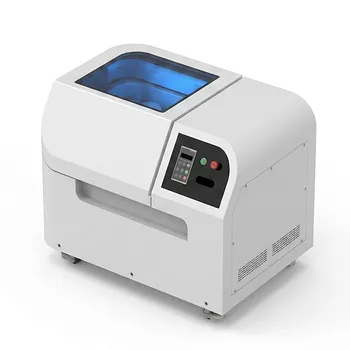
8L Planetary Ball Mill for Laboratory Grinding and Sample Preparation

High Energy Planetary Ball Mill for Nano Scale Grinding and Mechanical Alloying
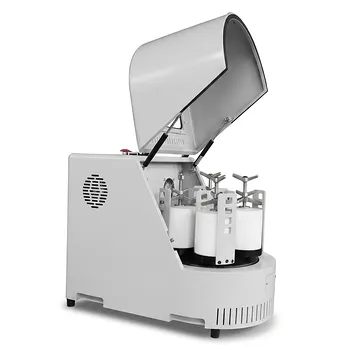
Vertical Semi Circular Planetary Ball Mill for Laboratory Precision Grinding

Miniature Planetary Ball Mill with Vacuum Grinding and High Efficiency for Laboratory Sample Preparation
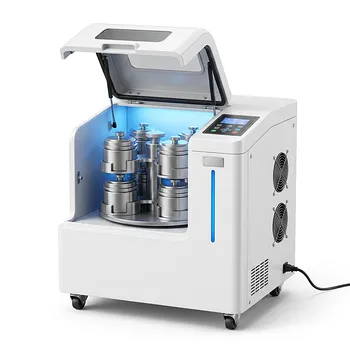
High Energy Omnidirectional Planetary Ball Mill 20L
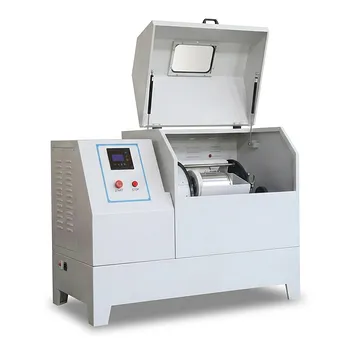
Heavy Duty Horizontal Planetary Ball Mill for Efficient Industrial Grinding and Sample Preparation
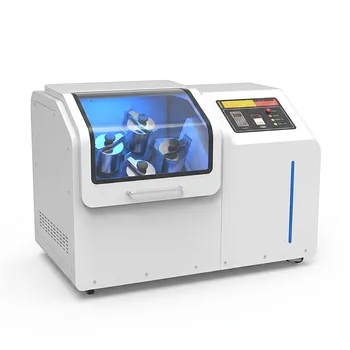
High Energy Omnidirectional Planetary Ball Mill 16L
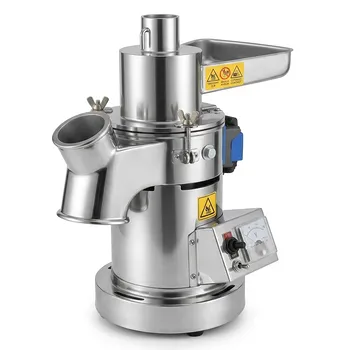
Continuous Feeding Grinder High Efficiency Pulverizer for Lab Sample Preparation
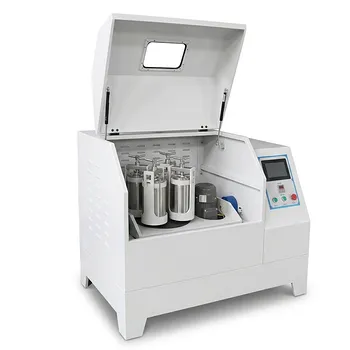
360° Rotating Omnidirectional Laboratory Planetary Ball Mill for Homogeneous Ultra-Fine Grinding and Mixing