Why are high-carbon chrome steel grinding balls necessary for the high-energy ball milling of AA7075 powders?
Updated 4 months ago
The necessity of high-carbon chrome steel grinding balls lies in their unique combination of high density and extreme hardness. These properties are essential to generate the intense mechanical impact energy required to fracture ductile materials like AA7075 aluminum alloy. Without this energy, the milling process would fail to achieve the particle refinement and mechanical alloying necessary for high-performance composite powders.
High-carbon chrome steel provides the critical kinetic energy and wear resistance needed to overcome the ductility of AA7075, ensuring uniform reinforcement distribution and structural consistency. By leveraging high mass and hardness, these media transform rotational speed into the physical force required for particle fracture and cold welding.
The Mechanics of Kinetic Energy Transfer
High Density and Impact Force
High-carbon chrome steel is selected primarily for its high density, which allows it to serve as a powerful medium for kinetic energy transfer. During high-speed rotation, such as at 900 rpm, the mass of the steel balls generates the significant impact force needed to crush aluminum particles.
Hardness and Particle Fracture
The high hardness of these balls ensures they do not deform upon impact, directing the maximum amount of energy into the AA7075 powder. This energy is a prerequisite for triggering particle fracture, which breaks down the initial powder size into refined, sub-micron structures.
Optimizing Collision Frequency
Using a combination of different ball diameters, such as 11 mm and 19 mm, optimizes the grading within the milling jar. This configuration increases the collision frequency and effective contact area, ensuring that the energy is distributed uniformly throughout the powder batch.
Processing Ductile AA7075 Alloys
Overcoming Plastic Deformation
AA7075 is a ductile matrix that tends to undergo severe plastic deformation rather than fracturing when subjected to low energy. High-carbon chrome steel provides the "high-energy" environment necessary to push the material past its deformation limit and into a state of fragmentation.
Facilitating Mechanical Alloying
The intense collisions promote a continuous cycle of cold welding and fracturing. This process is vital for mechanical alloying, where alloy elements and reinforcements are physically forced together to create a homogenous atomic structure.
Uniform Reinforcement Distribution
High-energy collisions are the only way to achieve a uniform distribution of reinforcements, such as SiC or Boron Nitride Nanotubes (BNNTs), within the aluminum matrix. The shear forces generated by the steel media embed these reinforcements into the AA7075 particles, ensuring high interfacial bonding strength.
Maintaining Material Integrity and Precision
Wear Resistance and Impurity Control
High-carbon and high-chromium steel alloys offer superior wear resistance, which is critical during long-duration milling. This durability ensures that the grinding media does not degrade and introduce metallic impurities that could compromise the chemical precision of the AA7075 composite.
Thermal Conductivity and Heat Management
Steel possesses specific thermal conductivity and heat capacity that allow it to capture the instantaneous high temperatures produced during impacts. This property is useful for researchers studying collision heating effects and how energy conversion influences the final powder characteristics.
Structural Stability Under Stress
The mechanical strength of alloy steel ensures the grinding system can withstand high-frequency vibration without failure. This stability allows for a consistent ball-to-powder ratio (such as 10:1) to be maintained, ensuring predictable and repeatable results.
Understanding the Trade-offs
While high-carbon chrome steel is highly effective, it is not without limitations. The primary trade-off is the potential for iron contamination if the milling duration is excessive or if the media is not properly matched to the jar material. Additionally, the very energy that makes these balls effective can lead to excessive heat buildup, which may cause unwanted phase changes in the AA7075 alloy if the process is not carefully monitored or cooled.
How to Apply This to Your Project
Recommendations for High-Energy Milling
- If your primary focus is maximum particle refinement: Use a higher ball-to-powder ratio (e.g., 10:1) with high-carbon chrome steel to maximize the frequency of high-energy fractures.
- If your primary focus is preventing contamination: Ensure that both your grinding balls and the milling jar are made of the same high-hardness alloy steel to minimize differential wear.
- If your primary focus is structural homogeneity: Utilize a mix of ball diameters to increase the effective contact area and ensure the reinforcement phase is evenly dispersed throughout the matrix.
High-carbon chrome steel remains the industry standard for AA7075 milling because it provides the essential physical force required to transform ductile powders into advanced, high-strength composite materials.
Summary Table:
| Key Feature | Benefit for AA7075 Milling |
|---|---|
| High Density | Provides maximum kinetic energy for crushing ductile aluminum alloys. |
| Extreme Hardness | Ensures particle fracture over plastic deformation for sub-micron refinement. |
| Mixed Diameters | Optimizes collision frequency and energy distribution within the milling jar. |
| Wear Resistance | Minimizes metallic impurity contamination during long-duration processing. |
| Thermal Stability | Manages high-frequency vibration and impact heat for structural stability. |
Elevate Your Material Research with Kintek
Achieve superior particle refinement and structural consistency with our high-performance equipment. Kintek provides complete laboratory sample preparation solutions for material science, specializing in advanced powder processing and compaction.
Whether you are processing ductile AA7075 alloys or advanced ceramics, our extensive product line is designed for precision and durability:
- Advanced Milling: Planetary ball, jet, disc, rotor, and liquid nitrogen cryogenic grinders.
- Sample Preparation: Jaw/roll crushers, vibratory sieve shakers, and powder/defoaming mixers.
- Precision Compaction: A full spectrum of hydraulic presses, including Cold/Warm Isostatic Presses (CIP/WIP), XRF pellet presses, and vacuum hot presses.
Ready to optimize your laboratory workflow? Contact our technical experts today to find the perfect solution for your material processing needs!
References
- Wésia Amanda de Oliveira Barbosa, Heronilton Mendes de Lira. Nanostructured Powders of AA7075 - SiC Manufactured by High-Energy Ball Milling in a Bath of Isopropyl Alcohol. DOI: 10.1590/1980-5373-mr-2023-0230
Mentioned Products
- Small High-Speed Laboratory Grinder for Powder Processing
- High Energy Omnidirectional Planetary Ball Mill 20L
- High Energy Planetary Ball Mill for Nano Scale Grinding and Mechanical Alloying
- Heavy Duty Horizontal Planetary Ball Mill for Efficient Industrial Grinding and Sample Preparation
- High Energy Omnidirectional Planetary Ball Mill 16L
People Also Ask
- What role does a laboratory grinder play in the pretreatment of sunflower seed shell-based adsorbents? Boost Efficiency.
- How does a laboratory grinder or mill enhance the adsorption performance of agricultural waste materials? Boost Surface Area
- What is the role of laboratory grinding equipment in the preparation of waste glass powder for eco-friendly red bricks?
- Why is grinding equipment necessary for SnO2-Sb2O3 xerogels? Maximize surface area and photocatalytic activity.
- What is the primary role of grinding equipment in BLA preparation? Enhance Reactivity & Material Uniformity

Tech Team · PowderPreparation
Last updated on Jun 03, 2026
Related Products
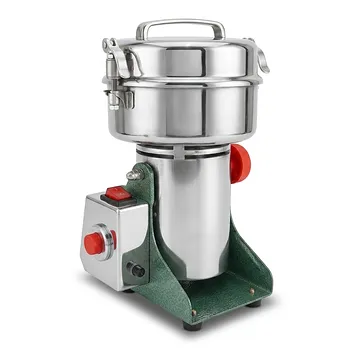
Small High-Speed Laboratory Grinder for Powder Processing

High Energy Omnidirectional Planetary Ball Mill 20L

High Energy Planetary Ball Mill for Nano Scale Grinding and Mechanical Alloying
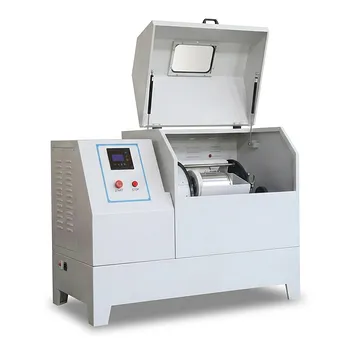
Heavy Duty Horizontal Planetary Ball Mill for Efficient Industrial Grinding and Sample Preparation

High Energy Omnidirectional Planetary Ball Mill 16L

High Energy Laboratory Planetary Ball Mill for Nano Grinding and Material Science Sample Preparation
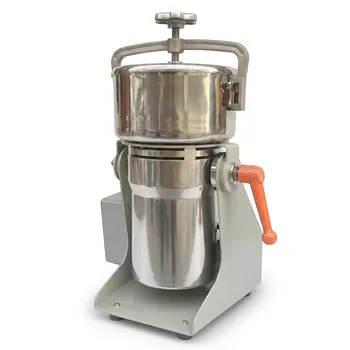
High Speed Laboratory Grinder Efficient Stainless Steel Powder Pulverizer Universal Material Science Mill for Sample Preparation

8L Planetary Ball Mill for Laboratory Grinding and Sample Preparation

Vertical Square Planetary Ball Mill for Laboratory Sample Preparation and Nanoscale Grinding