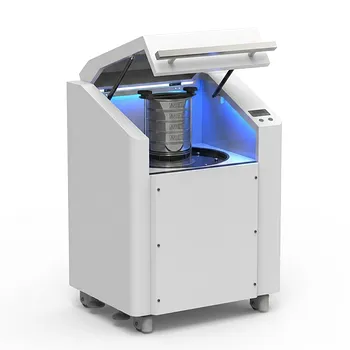
Why are a vibratory sieve shaker and a 200 mesh standard sieve required after the roasting of galena ore? Maximize Yield.
Updated 3 months ago
Achieving optimal lead extraction from roasted galena requires precise particle size control. A vibratory sieve shaker paired with a 200 mesh standard sieve is used to classify the ore powder, ensuring all particles are smaller than 74 microns. This specific refinement increases the specific surface area of the mineral, maximizing contact with leaching agents like acetic or sulfuric acid to significantly improve extraction rates.
Core Takeaway: The combination of a vibratory shaker and a 200 mesh sieve transforms roasted galena into a high-surface-area powder, which is the fundamental requirement for efficient mass transfer and high-yield chemical leaching.
Maximizing Chemical Reactivity and Yield
Increasing Specific Surface Area
Leaching is a surface-dependent chemical reaction. By using a 200 mesh sieve, the galena ore is reduced to a fine powder (under 74 microns), which vastly increases the area available for the leaching agent to attack.
Enhancing Mass Transfer Efficiency
A vibratory sieve shaker ensures that the material is not just crushed, but precisely classified. This precision enhances the mass transfer efficiency at the solid-liquid interface, allowing the lead to transition from the ore into the solution more rapidly and completely.
Achieving Consistent Lead Extraction
Consistency in particle size leads to consistency in results. By limiting the diameter of every particle, technicians ensure that the chemical reaction proceeds uniformly across the entire batch, preventing the "unreacted core" problem common in larger particles.
Controlling Process Kinetics and Stability
Eliminating Diffusion Variables
In metallurgical kinetics, varying particle sizes can cause different diffusion rates, making it difficult to predict reaction times. Using a 200 mesh standard sieve eliminates these variables, ensuring that the resulting data accurately reflects the true reaction mechanisms of the leaching process.
Maintaining Constant Liquid-Solid Ratios
Precise control of the particle size range is fundamental for maintaining a stable liquid-solid ratio. This stability ensures that the chemical environment remains favorable throughout the process, preventing localized fluctuations that could hinder lead recovery.
Determining Mineral Liberation
Beyond simple sizing, the use of a vibratory shaker helps identify the liberation size. This is the specific size fraction where the lead concentration is highest, allowing for the selection of the most efficient feed material for downstream processes like flotation.
Understanding the Trade-offs and Pitfalls
The Risk of Excessively Fine Particles
While fine particles speed up leaching, grinding material too far below 74 microns can cause filtration difficulties. Extremely fine "slimes" can clog filters and slow down the separation of the lead-bearing liquid from the waste solids.
Incomplete Leaching of Oversized Particles
If the sieving process is bypassed or performed incorrectly, oversized particles may enter the leaching tank. These particles often suffer from incomplete leaching because the acid cannot penetrate to the center of the grain within the allotted residence time.
Mechanical Wear and Sieve Blinding
Vibratory shakers must be maintained to prevent sieve blinding, where particles become stuck in the mesh. Without proper high-frequency vibration to keep particles "jumping," the classification becomes inaccurate, leading to an inconsistent feed size.
Applying This to Your Metallurgical Project
Making the Right Choice for Your Goal
To achieve the best results in galena processing, your sieving strategy should align with your primary operational objective.
- If your primary focus is maximum lead recovery: Strictly enforce the 200 mesh limit to ensure no oversized particles escape the leaching process.
- If your primary focus is process speed and throughput: Utilize high-frequency vibratory shakers to maintain a high flow rate through the sieves while preventing mesh clogging.
- If your primary focus is downstream filtration efficiency: Monitor the distribution of "fines" below 400 mesh to ensure they do not reach levels that will impede liquid-solid separation.
Precision in post-roast classification is the bridge between a raw mineral and a high-yield industrial extraction.
Summary Table:
| Key Factor | Requirement/Tool | Impact on Lead Extraction |
|---|---|---|
| Particle Size | < 74 Microns (200 Mesh) | Ensures full chemical penetration and prevents unreacted cores. |
| Surface Area | High Specific Surface Area | Maximizes contact between galena powder and leaching agents. |
| Classification | Vibratory Sieve Shaker | Provides precise, high-frequency separation to prevent mesh blinding. |
| Process Stability | Uniform Particle Range | Maintains a stable liquid-solid ratio and consistent reaction kinetics. |
Optimize Your Mineral Processing Workflow with Precision Equipment
Achieving consistent lead extraction requires more than just a sieve; it demands a comprehensive approach to sample preparation. At [Company Name], we specialize in providing complete laboratory sample preparation solutions for material science and metallurgy.
Our extensive product line is designed to handle every stage of powder processing:
- Size Reduction: High-performance crushers (jaw/roll), planetary ball mills, jet mills, and cryogenic grinders for even the toughest ores.
- Classification: Precision vibratory and air-jet sieve shakers with high-quality test sieves to ensure your material meets the exact 200-mesh standard.
- Mixing & Compaction: Advanced powder mixers, defoaming mixers, and a full spectrum of hydraulic presses, including Cold/Warm Isostatic Presses (CIP/WIP), hot presses, and XRF pellet presses.
Whether you are refining galena ore or developing new materials, our equipment ensures the precision and reliability your research demands. Contact our technical experts today to find the perfect solution for your laboratory needs!
References
- Wiwik Dahani, Ivetta Ivetta. COMPARATIVE STUDY USING LOW COST ACETIC AND SULFURIC ACIDS ON ROASTING AND PEROXIDE FOR LEACHING PROCESS TO EXTRACT PB FROM GALENA. DOI: 10.22441/ijimeam.v4i2.17135
Mentioned Products
- Laboratory Jaw Crusher 200x300mm Opening for Primary Crushing of Ores and Aggregates
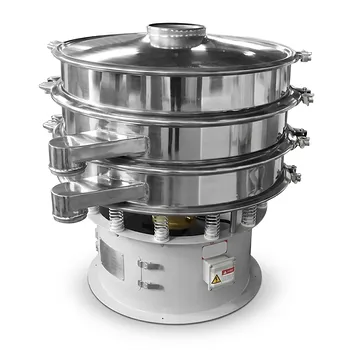
- Stainless Steel Rotary Vibrating Sieve High Precision Circular Vibratory Separator Industrial Powder Grading Machine Multi Layer Sifting Equipment
- Laboratory Air Jet Sieving Machine for Fine Powder Particle Size Analysis and Deagglomeration
- Three Dimensional Rotary Vibrating Sieve
- 250x400mm Jaw Crusher Medium Crushing Equipment for Mining Mineral Sample Preparation
People Also Ask
- What is the primary function of a laboratory jaw crusher? Master Initial Hard Rock Ore Preparation & Feed Sizing
- What is the role of a laboratory jaw crusher in the initial preparation of silicate-type low-grade copper ore?
- What is the primary role of a laboratory jaw crusher in the initial stages of tin and tantalum ore reprocessing? Explained
- What is the primary function of a laboratory jaw crusher in the pretreatment process of galena ore? Initial Prep Guide
- Why is a laboratory jaw crusher necessary for processing biomass materials? Essential Prep for Material Science

Tech Team · PowderPreparation
Last updated on Jun 03, 2026
Related Products
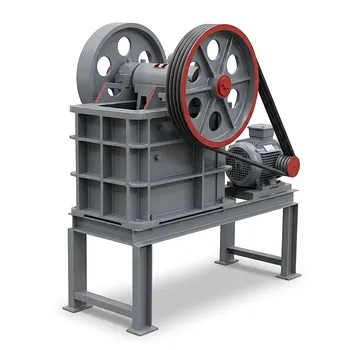
Laboratory Jaw Crusher 200x300mm Opening for Primary Crushing of Ores and Aggregates
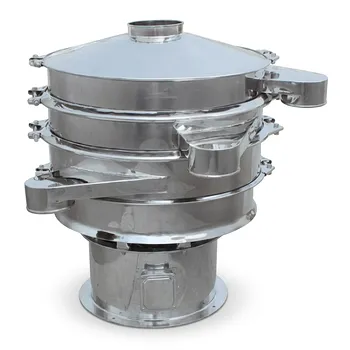
Stainless Steel Rotary Vibrating Sieve High Precision Circular Vibratory Separator Industrial Powder Grading Machine Multi Layer Sifting Equipment
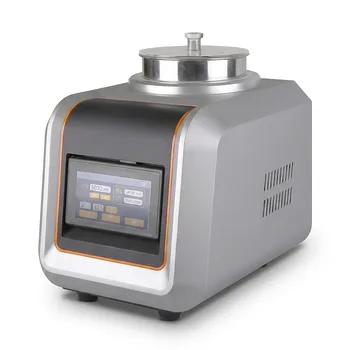
Laboratory Air Jet Sieving Machine for Fine Powder Particle Size Analysis and Deagglomeration
Three Dimensional Rotary Vibrating Sieve
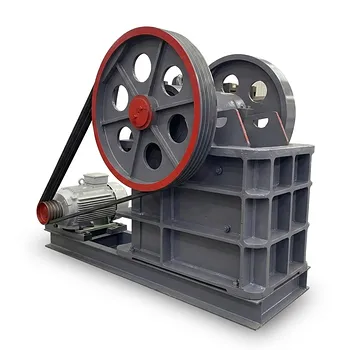
250x400mm Jaw Crusher Medium Crushing Equipment for Mining Mineral Sample Preparation