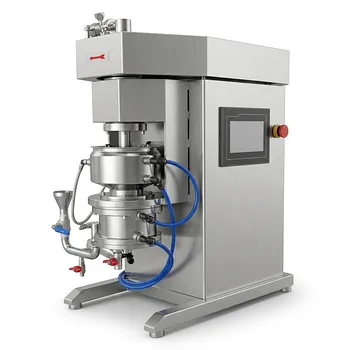
What technical advantages does an ultra-centrifugal mill offer? Achieve Precise 15-20μm Grinding for Refractories
Updated 5 months ago
The ultra-centrifugal mill provides a specialized grinding mechanism that leverages high-speed shearing and impact to reduce tough materials like pyrophyllite and refractory bricks to the micron range. By achieving an average particle size (d50) of 15 to 20 micrometers, this technology ensures a highly uniform particle distribution that is critical for the structural integrity of industrial coatings and resins.
Core Takeaway: The primary technical advantage of an ultra-centrifugal mill lies in its ability to produce ultra-fine, uniform particles with minimal heat generation, directly improving the mechanical strength and density of the final composite material.
Advanced Pulverization Mechanisms
High-Speed Shear and Impact
The ultra-centrifugal mill utilizes a rotor equipped with wedge-shaped teeth that rotate at high velocities.
This configuration subjects materials like pyrophyllite and mullite bricks to intense mechanical impact and shear forces, facilitating the rapid breakdown of crystalline structures.
Primary grinding occurs through centrifugal acceleration, while the final, fine grinding takes place exclusively in the narrow gap between the rotor and the ring sieve.
Precision Particle Size Control
One of the most significant advantages is the ability to achieve a d50 of 15 to 20 micrometers.
The use of precision sieves—often featuring trapezoidal holes—allows for tight control over the final particle size distribution.
This precision is essential for ensuring that the filler particles can form a dense skeletal structure within siloxane resins, which is vital for high-performance refractory applications.
Material-Specific Benefits
Processing Pyrophyllite and Refractories
Pyrophyllite and waste refractory bricks (such as mullite and corundum) are abrasive and physically demanding.
The ultra-centrifugal mill is optimized for these medium-hard materials, providing the necessary energy to disintegrate tough matrices without stalling.
By increasing the specific surface area of these powders, the mill enhances their reactivity and bonding potential when used as fillers in secondary industrial processes.
Thermal Management and Sample Integrity
Because the grinding process involves a short residence time, heat generation is kept to a minimum.
This is particularly beneficial for materials that may be temperature-sensitive or prone to phase changes during prolonged grinding.
Minimal heat ensures that the chemical properties of the waste refractory bricks and pyrophyllite remain stable, preserving their functional value.
Understanding the Trade-offs
Limitations in Feed Size
While excellent at fine grinding, ultra-centrifugal mills generally require pre-crushed materials to function effectively.
Attempting to process large, raw chunks of refractory brick directly can lead to equipment damage or excessive wear on the rotor teeth.
Wear and Maintenance
Processing highly abrasive materials like corundum bricks will lead to faster degradation of the ring sieves and rotors.
Operators must balance the need for fine output with the increased operational costs associated with replacing specialized grinding components.
How to Apply This to Your Project
Recommendations for Material Processing
- If your primary focus is mechanical reinforcement: Prioritize a configuration that achieves a d50 of 15-20 µm to ensure the formation of a dense, high-strength skeletal structure in your resin.
- If your primary focus is thermal stability: Utilize the mill’s short residence time to prevent phase changes in your pyrophyllite or waste brick particles during the grinding phase.
- If your primary focus is cost-efficiency with waste materials: Ensure a robust pre-crushing stage to reduce the load on the ultra-centrifugal mill, extending the life of your precision sieves.
By mastering the high-speed shearing capabilities of the ultra-centrifugal mill, you can transform industrial waste into high-value, high-performance fillers.
Summary Table:
| Technical Feature | Advantage for Pyrophyllite & Refractories | Key Performance Metric |
|---|---|---|
| Grinding Mechanism | High-speed shear & impact via wedge-shaped teeth | Rapid crystalline breakdown |
| Size Control | Precision trapezoidal ring sieves | Average d50 of 15 - 20 μm |
| Thermal Control | Short residence time prevents phase changes | Minimal heat generation |
| Material Fit | Optimized for medium-hard & abrasive matrices | High reactivity & bonding |
| Output Quality | High specific surface area for resins/coatings | Dense skeletal structure |
Elevate Your Material Processing with Expert Solutions
Are you looking to transform industrial waste like refractory bricks into high-value fillers? Our professional team provides complete laboratory sample preparation solutions tailored for material science. We specialize in the entire workflow—from initial reduction using our jaw and roll crushers to achieving ultra-fine precision with our planetary ball, jet, and rotor mills.
Beyond grinding, we support your research with specialized powder mixers and a full spectrum of hydraulic presses, including Cold/Warm Isostatic Presses (CIP/WIP), hot presses, and XRF pellet presses, ensuring your materials achieve maximum density and performance.
Ready to optimize your powder processing workflow? Contact us today to discuss your project requirements!
References
- Marko Pavlović, Enita Kurtanović. Application of waste raw materials as a reinforcement for protective coatings based on pyrophyllite. DOI: 10.2298/ciceq240410029p
Mentioned Products
- Ultra Centrifugal Mill High Speed Laboratory Grinder for Fibrous and Brittle Sample Preparation
- Ultra Centrifugal Mill for Rapid Laboratory Sample Preparation and Fine Powder Grinding
- Laboratory Ultrafine Impact and Airflow Grinder for Precise Particle Size Control
- Vertical Nano Bead Mill for Ceramic Materials with Permanent Magnet Motor and High Efficiency Grinding
- Laboratory Disc Mill for Fine Sample Preparation of Hard and Brittle Materials
People Also Ask
- What is the role of an ultra-centrifugal mill in cork research? Achieve uniform powder for high-precision analysis.
- How Does Sieve Ring Aperture Affect Microplastic Powder Prep? Ensure Precise Particle Size & Reproducibility
- What is the role of a high-speed centrifugal mill in the preparation of microplastic reference materials? Precision Guide
- What is the function of a centrifugal mill in dietary fiber processing? Ensure precise size & preserve fiber integrity
- How does high-speed grinding equipment facilitate the preparation of lignin binders? Optimize Powder for Stronger Bonds

Tech Team · PowderPreparation
Last updated on May 14, 2026
Related Products
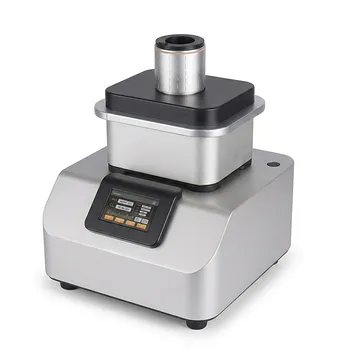
Ultra Centrifugal Mill High Speed Laboratory Grinder for Fibrous and Brittle Sample Preparation
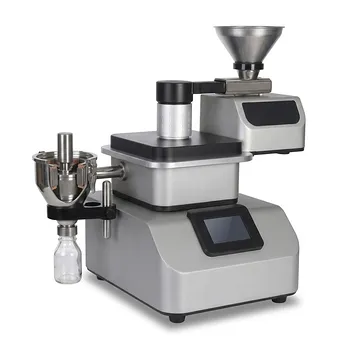
Ultra Centrifugal Mill for Rapid Laboratory Sample Preparation and Fine Powder Grinding
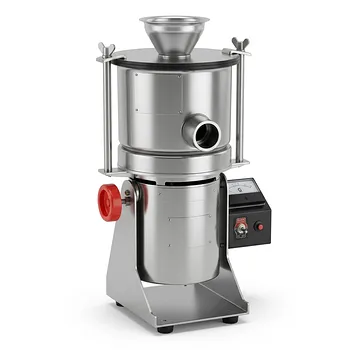
Laboratory Ultrafine Impact and Airflow Grinder for Precise Particle Size Control
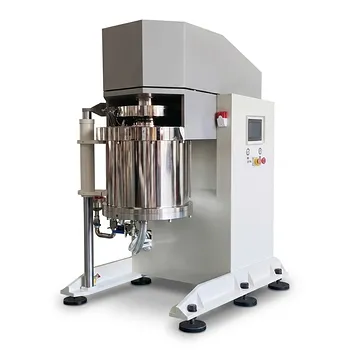
Vertical Nano Bead Mill for Ceramic Materials with Permanent Magnet Motor and High Efficiency Grinding
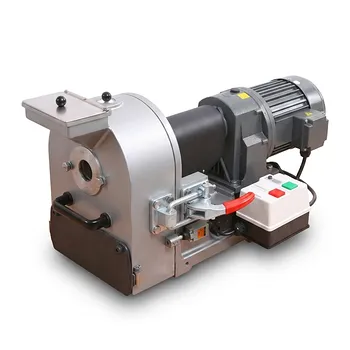
Laboratory Disc Mill for Fine Sample Preparation of Hard and Brittle Materials
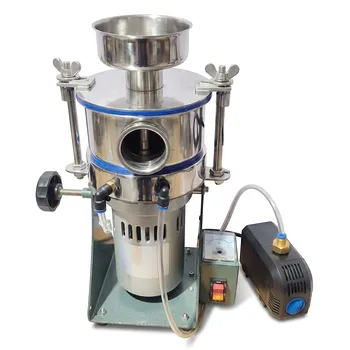
Water Cooled Airflow Ultra Fine Grinder for Low Temperature Material Processing
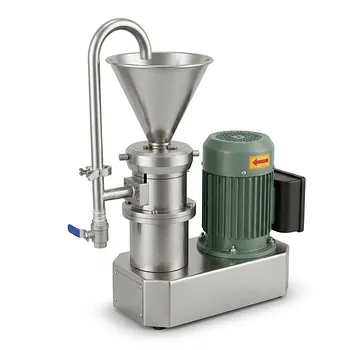
Small Laboratory Colloid Mill for Ultra-Fine Wet Grinding and Emulsification

Vertical Production Planetary Ball Mill for High Throughput Powder Processing
Laboratory Disc Mill for Ore and Mineral Sample Preparation
Laboratory Desktop Ultra Fine Powder Grinder High Speed Micronizing Pulverizer
Small Airflow Ultra-Fine Grinder for Laboratory Sample Preparation
Cross Beater Mill for Brittle Material Grinding and Continuous Fine Crushing Industrial Sample Preparation
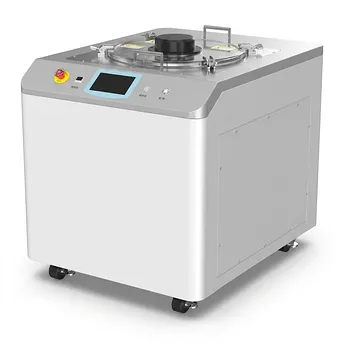
Industrial Planetary Centrifugal Vacuum Defoaming Mixer for High Viscosity Paste and Powder Homogenization
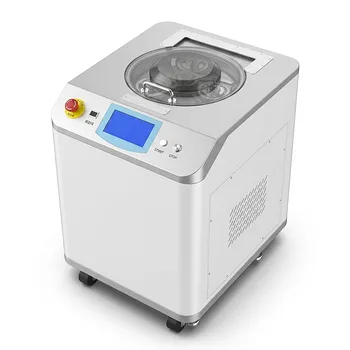
Dual Cup Vacuum Centrifugal Mixer Planetary Paste Defoaming Machine Industrial Material Processor
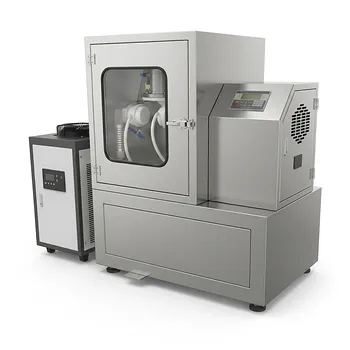
Vibratory Ultra-Low Temperature Ultrafine Grinder for Cryogenic Powder Processing
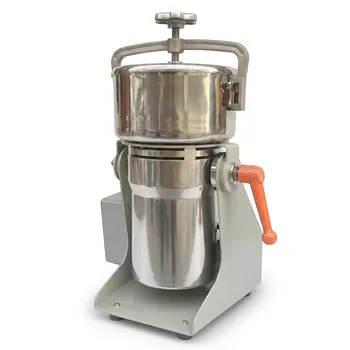
High Speed Laboratory Grinder Efficient Stainless Steel Powder Pulverizer Universal Material Science Mill for Sample Preparation
Vibratory Superfine Grinder for Ultra Fine Laboratory Powder Milling

High Energy Laboratory Planetary Ball Mill for Nano Grinding and Material Science Sample Preparation
High Speed Air Induced Ultrafine Pulverizer Laboratory Superfine Powder Mill for Pharmaceutical and Material Science Sample Preparation