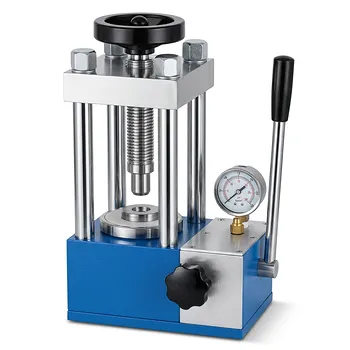
What technical advantages does a Cold Isostatic Press (CIP) offer for IT-SOFC? Ensure Uniform Density & Performance
Updated 5 months ago
Cold Isostatic Pressing (CIP) provides superior technical advantages in IT-SOFC fabrication by ensuring isotropic density and eliminating the internal stress gradients inherent in traditional uniaxial pressing. By applying equal pressure from all directions through a liquid medium, CIP produces green bodies with highly uniform microstructures. This uniformity is critical for preventing cracks, delamination, and warping during high-temperature sintering, ultimately ensuring the structural integrity and electrochemical efficiency of cathodes and electrolytes.
The core advantage of CIP lies in its ability to achieve extreme density consistency and intimate particle contact. This eliminates the "pressure shadows" found in standard pressing, leading to a significant reduction in interface impedance and a dramatic increase in the mechanical reliability of fuel cell components.
Eliminating Pressure Gradients and Friction
Overcoming Uniaxial Limitations
Standard dry pressing is inherently limited by unidirectional force, which creates friction between the powder and the mold walls. This friction leads to density gradients, where the center or edges of the green body are significantly less dense than the surface.
Isotropic Pressure Application
A CIP uses a liquid medium to transmit omnidirectional, balanced pressure to the vacuum-sealed powder. This ensures that every part of the component experiences the same force, resulting in an isotropy ratio that often approaches 1.0.
Uniform Microstructure
By eliminating friction-induced gradients, CIP ensures that the resulting green bodies possess an extremely consistent microstructure. This consistency is the foundation for predictable material behavior during subsequent processing steps.
Enhancing Microstructural Integrity
Reducing Internal Stress Concentrations
In complex structures like Samarium Strontium Cobaltite (SSC) composite cathodes, CIP treatment significantly reduces internal stress. This prevents the formation of micro-cracks that can lead to catastrophic failure during operational thermal cycling.
Preventing Sintering Defects
The uniform density distribution achieved through CIP prevents common sintering issues such as bending or deforming. Materials that are notoriously difficult to densify, such as BaCeZrY (BCZY), benefit from this uniformity to avoid cracking during the high-temperature phase.
Eliminating Delamination
Standard pressing often results in layered density variations that can cause delamination between the electrolyte and cathode. CIP applies pressure so evenly that these layers fuse with high integrity, maintaining their bond even under extreme heat.
Optimizing Electrochemical Performance
Maximizing Compaction Density
CIP systems can apply ultra-high pressures, often ranging from 200 MPa to 380 MPa. This high-level compaction effectively eliminates internal air pockets and voids within the powder, leading to near-theoretical density.
Reducing Interface Impedance
For IT-SOFCs, the contact between the electrolyte and the active material particles is vital. CIP ensures tight physical contact, which significantly reduces interface impedance and provides stable channels for charge transfer.
Improving Ionic Conductivity
Uniform fluid pressure enhances the densification of electrolytes like BaZrO3, helping to overcome grain boundary resistance. This leads to superior ion transmission consistency and ideal performance characteristics in impedance spectroscopy.
Understanding the Trade-offs
Process Complexity and Cost
CIP requires more complex equipment than standard uniaxial presses, including high-pressure vessels and vacuum-sealing systems for the samples. The initial capital investment and operational maintenance costs are generally higher.
Production Throughput
The process is often slower than dry pressing because it involves encapsulating the powder in flexible molds and decompressing the liquid medium. This can be a bottleneck in high-volume manufacturing environments.
Shape Limitations and Post-Processing
While CIP is excellent for achieving density, the resulting "green" part may require secondary machining to reach final precision dimensions. Unlike uniaxial pressing, which uses rigid molds to define the final shape, CIP relies on flexible bags that may deform slightly under pressure.
Making the Right Choice for Your Goal
To determine if Cold Isostatic Pressing is the correct path for your IT-SOFC development, consider your primary objective:
- If your primary focus is Research Accuracy: Utilize CIP to ensure consistency in performance data by eliminating density as a variable in your experimental results.
- If your primary focus is Mechanical Durability: Prioritize CIP for thin-film electrolytes and composite cathodes to prevent delamination and cracking during high-temperature sintering.
- If your primary focus is Electrochemical Efficiency: Use CIP to achieve the highest possible compaction density, which is essential for minimizing interfacial resistance and maximizing ionic conductivity.
While CIP demands a higher initial investment and more complex handling than standard pressing, it is the definitive choice for producing high-reliability, high-performance IT-SOFC components that can withstand the rigors of long-term operation.
Summary Table:
| Feature | Standard Uniaxial Pressing | Cold Isostatic Pressing (CIP) |
|---|---|---|
| Pressure Application | Unidirectional (Single/Double) | Omnidirectional (Balanced/Liquid) |
| Density Distribution | Significant gradients/shadows | High Isotropic Uniformity |
| Internal Stress | High (Internal friction) | Minimal (Reduced micro-cracks) |
| Sintering Result | Risk of warping/delamination | High structural & bond integrity |
| Interface Impedance | Higher (Inconsistent contact) | Significantly Reduced |
| Ionic Conductivity | Variable | Superior & Consistent |
Elevate Your IT-SOFC Research with Precision Compaction Solutions
Achieving the perfect electrolyte-cathode interface requires more than just pressure—it requires precision engineering. At [Your Brand Name], we provide complete laboratory sample preparation solutions tailored for advanced material science. Our expertise in powder processing and compaction equipment ensures your IT-SOFC components achieve near-theoretical density and peak electrochemical efficiency.
Our Specialized Equipment Line Includes:
- Advanced Presses: Cold/Warm Isostatic Presses (CIP/WIP), standard lab presses, XRF pellet presses, and vacuum hot presses.
- Powder Processing: Planetary ball mills, jet mills, and rotor mills for ideal particle size distribution.
- Preparation Tools: Jaw/roll crushers, cryogenic grinders, sieve shakers, and high-performance powder/defoaming mixers.
Whether you are a researcher aiming for data consistency or a manufacturer focused on mechanical durability, our team is ready to support your goals with reliable, high-performance equipment.
Contact our technical experts today to find the ideal CIP solution for your laboratory!
References
- Mohammad Fikrey Roslan, Mohamed Saiful Firdaus Hussin. Comparative Study of SSC Cathode Materials for IT-SOFC Applications: Short Review. DOI: 10.64382/mjii.v3i4.73
Mentioned Products
- Ordinary Type Rotary Tablet Press for Pharmaceutical Chemical Food Electronic Industries
- 6-Ton Small Single-Punch Tablet Press — Laboratory Powder & Granule Tableting Equipment / Tablet Forming Machine
- Manual Tablet Press with Dual Scale Pressure Gauge for Pharmaceutical Food Chemical Laboratory Sample Preparation
People Also Ask
- Why is a laboratory hydraulic press required for FT-IR KBr pellets? Achieve Precise Sample Clarity for ZrC–SiC Analysis
- Why is a laboratory hydraulic press required to compress oyster shell powder before XRF analysis? Improve Data Accuracy.
- Why is vacuum sealing and flexible packaging necessary for Aluminum Titanate powders during CIP? Ensure Peak Density
- What are the advantages of using hardened steel molds and graphite spray for titanium powder? Ensure structural integrity
- What role does a high-strength stainless steel mold kit play in the uniaxial die compaction process? Ensuring Precision

Tech Team · PowderPreparation
Last updated on May 14, 2026
Related Products
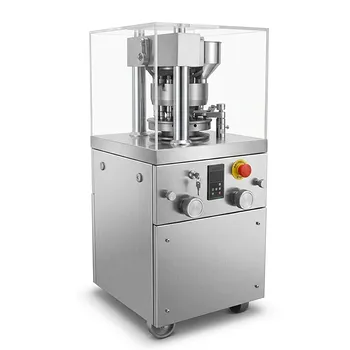
Ordinary Type Rotary Tablet Press for Pharmaceutical Chemical Food Electronic Industries
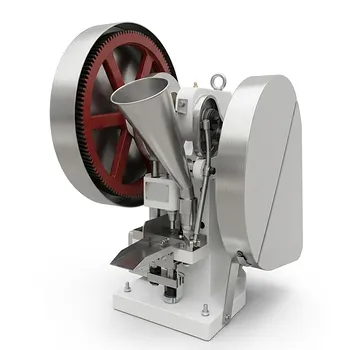
6-Ton Small Single-Punch Tablet Press — Laboratory Powder & Granule Tableting Equipment / Tablet Forming Machine