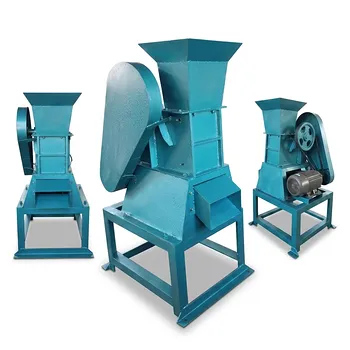
What role does a laboratory manual hydraulic press play in PAM filter cake prep? Key to Structural Density & Strength
Updated 4 months ago
The laboratory manual hydraulic press is the primary tool for structural densification in the preparation of polyacrylamide (PAM) based composite filter cakes. It applies high-intensity static pressure to transform loose mixtures of PAM, activated carbon, and inorganic additives into rigid, standardized filter disks. This mechanical compression is essential for ensuring the composite can withstand the hydraulic stresses of heavy metal water treatment without disintegrating.
The hydraulic press facilitates particle rearrangement and bonding under static loads of up to 20 tons, providing the mechanical integrity and dimensional precision required for functional filtration. By eliminating internal voids and maximizing particle contact, it creates a stable "green body" capable of surviving high-flow environments.
The Mechanism of Consolidation: From Powder to Solid
Particle Rearrangement and Bonding
The press applies high static pressure to force the constituent particles—such as activated carbon and iron oxide—to overcome internal friction. This environment causes particles to rearrange into the most compact configuration possible, facilitating bonding through Van der Waals forces.
Elimination of Internal Porosity
High-pressure molding effectively excludes air bubbles trapped within the PAM and inorganic mixture. Reducing this porosity is critical, as it ensures the polymer matrix fully occupies the interstitial spaces, resulting in a significantly denser filter cake.
Establishing the Physical Foundation
The compression process increases the contact area between particles, which is necessary for mass diffusion. This physical foundation is what allows the different chemical components of the filter cake to function as a single, cohesive unit during the adsorption process.
Defining Physical and Geometric Characteristics
Precise Dimensional Control
The use of a manual hydraulic press in conjunction with precision stainless steel molds allows for standardized geometries. Typical laboratory results produce disks with a diameter of 4 cm and a thickness of 4 mm, ensuring consistency across different experimental batches.
Structural Uniformity and Integrity
Accurate pressure control is vital for eliminating density gradients within the filter cake. Uniform internal structures prevent the specimens from deforming or cracking when subjected to subsequent thermal treatments or high-pressure water flow.
Mechanical Strength for Durability
The primary role of the press is to grant the filter cake the mechanical strength required for industrial application. Without this high-pressure consolidation, the PAM-based composite would lack the structural "backbone" needed to resist the abrasive forces of water flow during heavy metal treatment.
Understanding the Trade-offs and Limitations
Manual Pressure Variance
While effective for laboratory scales, manual operation introduces the risk of human error. Variations in the speed of pressure application or the duration of the "dwell time" (how long the pressure is held) can lead to slight differences in the density of the resulting filter cakes.
Mold Friction and Wall Effects
Friction between the composite powder and the mold walls can lead to uneven pressure distribution. In thicker filter cakes, this may result in a core that is less dense than the outer layers, potentially creating weak points in the structure.
Limits of Mechanical Bonding
Pressure alone cannot compensate for poor chemical formulation. If the ratio of polyacrylamide to additives is incorrect, even extreme pressures will not prevent the filter cake from becoming brittle or failing to bond properly.
How to Apply This to Your Project
Recommendations Based on Your Goal
- If your primary focus is heavy metal treatment efficiency: Ensure the press is set to at least 20 tons to maximize the density of the activated carbon network for better adsorption.
- If your primary focus is mechanical testing and data accuracy: Prioritize a slow, steady increase in pressure and a consistent "hold time" to eliminate internal pores and ensure uniform density.
- If your primary focus is material durability in high-flow systems: Use the press to create thinner, more compressed disks (approx. 4mm) to minimize the risk of structural shear during water bypass.
The laboratory manual hydraulic press is the indispensable bridge between loose chemical components and a functional, durable filtration medium.
Summary Table:
| Function | Mechanism | Impact on Filter Cake |
|---|---|---|
| Consolidation | Static load (up to 20 tons) | Transforms loose powder into a rigid, solid disk. |
| Densification | Particle rearrangement | Maximizes contact area and eliminates internal air bubbles. |
| Standardization | Precision mold usage | Ensures consistent geometry (e.g., 4cm x 4mm disks). |
| Durability | Mechanical bonding | Increases resistance to hydraulic stress in water treatment. |
Optimize Your Composite Material Preparation with Precision Equipment
Achieving the perfect balance of porosity and mechanical strength in PAM-based filter cakes requires precision and reliability. [Your Brand Name] provides complete laboratory sample preparation solutions for material science, specializing in high-performance powder processing and compaction equipment.
Whether you are developing advanced filtration media or conducting structural research, our extensive product line supports every stage of your workflow:
- Advanced Compaction: A full spectrum of hydraulic presses, including Manual Lab Presses, Cold/Warm Isostatic Presses (CIP/WIP), XRF Pellet Presses, and Vacuum Hot Presses.
- Powder Processing: High-efficiency Planetary Ball Mills, jet mills, and crushers (jaw/roll) for consistent particle sizing.
- Homogeneous Mixing: Specialized powder mixers and defoaming mixers to ensure uniform chemical distribution.
- Classification: Sieve shakers (vibratory/air-jet) for precise mesh separation.
Ready to elevate your lab's efficiency and data accuracy?
Contact our experts today to find the ideal solution for your material processing needs!
References
- Mustapha Chabane, B. Dahmani. Synthesis and Evaluation of Polyacrylamide Based Filter Pellets Incorporating GAC, Iron Oxide, Zinc Oxide, and Kaolin for Chromium and Nickel Water Remediation. DOI: 10.18280/rcma.340212
Mentioned Products
- Manual Tablet Press with Dual Scale Pressure Gauge for Pharmaceutical Food Chemical Laboratory Sample Preparation
- 6-Ton Small Single-Punch Tablet Press — Laboratory Powder & Granule Tableting Equipment / Tablet Forming Machine
- 5 Ton Single Punch Tablet Press Laboratory Small Batch Production
- 6 Ton Variable Frequency Single Punch Tablet Press
- Hydraulic Double Shaft Disperser for High Viscosity Liquid Mixing and Dispersion
People Also Ask
- What is the function of a laboratory press in Cr-Ti alloy evaluation? Quantify Fracture Stress & Strength
- What is the function of a laboratory press in assessing the hydrophobic performance of modified vermiculite fillers?
- What is the core function of a laboratory press in the forming of ceramic filter element green bodies? Maximize Density.
- What is the function of a laboratory press in the preparation of ceramic feed rods? Master Density and Precision
- Why is vacuum sealing and flexible packaging necessary for Aluminum Titanate powders during CIP? Ensure Peak Density

Tech Team · PowderPreparation
Last updated on May 14, 2026
Related Products
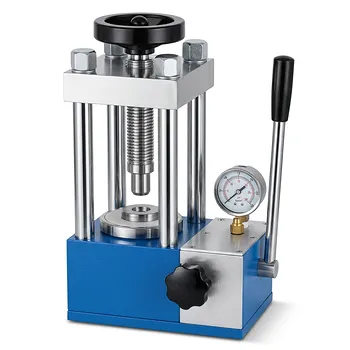
Manual Tablet Press with Dual Scale Pressure Gauge for Pharmaceutical Food Chemical Laboratory Sample Preparation
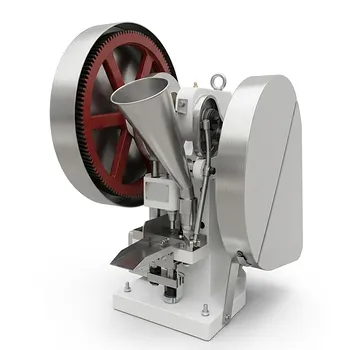
6-Ton Small Single-Punch Tablet Press — Laboratory Powder & Granule Tableting Equipment / Tablet Forming Machine
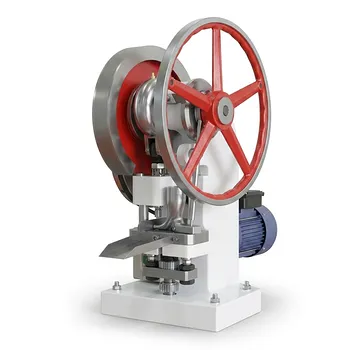
5 Ton Single Punch Tablet Press Laboratory Small Batch Production
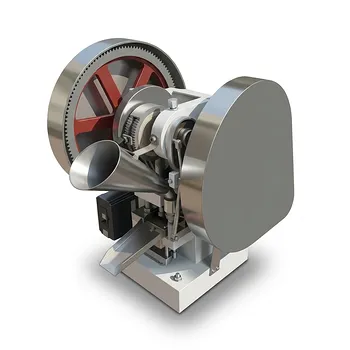
6 Ton Variable Frequency Single Punch Tablet Press
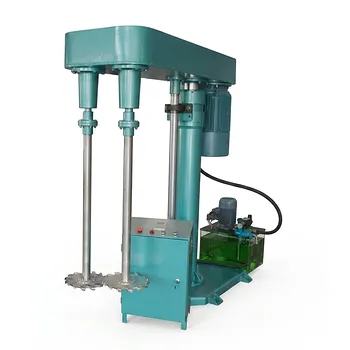
Hydraulic Double Shaft Disperser for High Viscosity Liquid Mixing and Dispersion
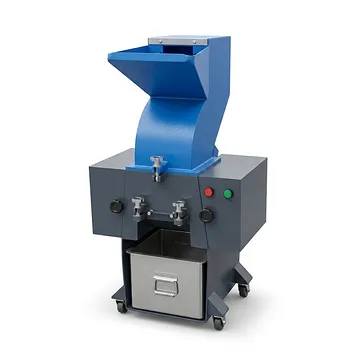
Heavy-Duty Crusher for Laboratory and Industrial Material Size Reduction
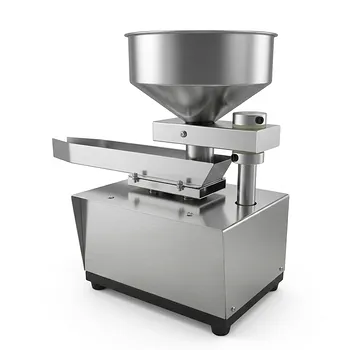
Automatic Vibrating Powder Feeder for Laboratory Material Processing Precision Vibratory Hopper Feeder for Granular and Powder Material Handling Industrial Grade Vibrating Tray Feeder for Consistent Material Sample Preparation
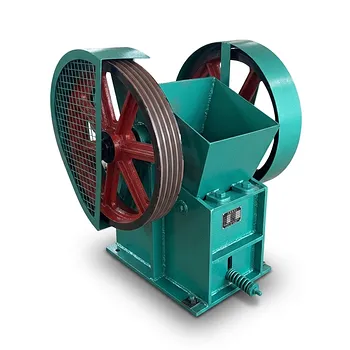
150x250mm Laboratory Jaw Crusher for Medium Hard Material Crushing and Sample Preparation