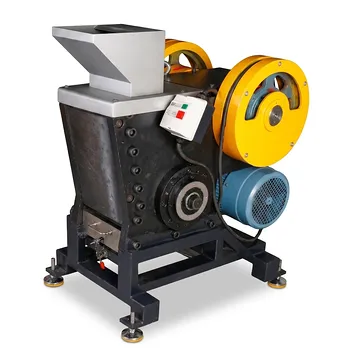
What role does a laboratory jaw crusher play in the pretreatment of magnetite raw materials? Key to Primary Crushing
Updated 3 months ago
The laboratory jaw crusher serves as the critical primary stage of size reduction in the pretreatment of magnetite raw materials. It utilizes reciprocating compression between two jaw plates to fracture large, hard ore fragments into manageable coarse particles, typically reducing them to a scale below one centimeter. This process creates a uniform feed material that is physically compatible with subsequent fine-grinding, milling, or metallurgical testing equipment.
Core Takeaway: The laboratory jaw crusher is the essential "heavy lifter" of sample preparation, transforming raw magnetite ore into a standardized granular feed to ensure the stability and accuracy of downstream experimental processes.
The Mechanics of Primary Size Reduction
Reciprocating Compression and Fracture
The jaw crusher operates by utilizing a V-shaped chamber where one fixed and one moving jaw plate create cyclic compression. As the moving jaw oscillates, it applies intense mechanical pressure to the magnetite ore, causing the large fragments to fracture along natural planes of weakness.
Establishing the Physical Foundation
Magnetite is a dense, relatively hard mineral that requires significant force to break. By reducing the ore to a size typically between -2.8 mm and 10 mm, the jaw crusher establishes the necessary physical state for representative sample splitting and further comminution.
Bridging the Gap to Downstream Processing
Optimizing Feed for Fine Grinding
Most secondary grinding equipment, such as ball mills or high-pressure grinding rolls (HPGR), cannot process large ore chunks directly. The jaw crusher ensures the material meets specific feed requirements, which prevents equipment damage and maintains the continuity of the comminution circuit.
Improving Sample Uniformity
Uniform particle size distribution is vital for accurate metallurgical analysis. By converting irregular ore lumps into a consistent granular form, the jaw crusher allows for more representative sampling, ensuring that subsequent chemical or physical tests reflect the true nature of the raw material.
Understanding the Trade-offs and Limitations
The Risk of Micro-Cracking
A significant trade-off of the jaw crusher’s high-pressure mechanism is the potential for internal structural damage. The intense compression can generate micro-cracks within the magnetite particles, which may artificially accelerate grinding rates in subsequent kinetic tests.
Comparison with Roll Crushers
While jaw crushers are superior for handling large, hard feed sizes, roll crushers are often preferred for secondary fine crushing. Roll crushers tend to preserve the mechanical integrity of the particles better than jaw crushers, which is critical if the experiment focuses on the inherent strength of the magnetite.
Maintenance and Wear
Magnetite is highly abrasive, leading to significant wear on the jaw plates over time. This wear can result in contamination of the sample with iron from the plates or a gradual drift in the output particle size if the discharge gap is not regularly calibrated.
Applying This to Your Magnetite Project
Recommendations for Equipment Selection
- If your primary focus is high-volume sample preparation: Use a jaw crusher as the initial stage to quickly reduce large ore fragments to a uniform -10 mm size for bulk processing.
- If your primary focus is precise grinding kinetics: Use the jaw crusher for the initial break, but consider following it with a roll crusher to minimize micro-cracking before the final grinding stage.
- If your primary focus is avoiding sample contamination: Ensure the jaw plates are made of hardened materials like manganese steel or tungsten carbide to resist the abrasiveness of the magnetite.
By correctly integrating the laboratory jaw crusher into your pretreatment workflow, you ensure that your magnetite samples are perfectly conditioned for rigorous and repeatable metallurgical testing.
Summary Table:
| Stage/Feature | Role in Magnetite Pretreatment | Impact on Downstream Process |
|---|---|---|
| Primary Crushing | Reduces large ore lumps to <10mm particles | Creates compatible feed for fine-grinding mills |
| Size Uniformity | Standardizes granular feed size | Ensures representative sampling and data accuracy |
| Material Strength | Fractures along natural planes | Can introduce micro-cracks that aid grinding kinetics |
| Wear Resistance | Uses hardened plates (Mn Steel/Tungsten) | Minimizes iron contamination in abrasive ore samples |
Optimize Your Mineral Research with Precision Sample Prep
High-quality metallurgical analysis starts with the right pretreatment. At [Your Brand Name], we provide complete laboratory sample preparation solutions for material science, specializing in heavy-duty powder processing and compaction equipment.
From rugged jaw and roll crushers designed to handle abrasive magnetite to advanced planetary ball mills, sieve shakers, and a full spectrum of hydraulic presses (including CIP/WIP and XRF pellet presses), we ensure your samples are perfectly conditioned for repeatable results.
Ready to enhance your lab's efficiency and accuracy?
Contact our experts today to discuss your equipment needs!
References
- Chengfang Yuan, Jingkun Tian. Ceramic Grinding Kinetics of Fine Magnetite Ores in the Batch Ball Mill. DOI: 10.3390/min13091188
Mentioned Products
- Horizontal Jaw Crusher Medium Hard Material Crushing Laboratory Sample Preparation Equipment
- 150x250mm Laboratory Jaw Crusher for Medium Hard Material Crushing and Sample Preparation
- Laboratory Jaw Crusher 200x300mm Opening for Primary Crushing of Ores and Aggregates
- Experimental Jaw Crusher for Laboratory Ore Crushing and Sample Preparation
- 150x250mm Custom Laboratory Jaw Crusher for Coal Ore Mineral Crushing
People Also Ask
- What is the primary role of a laboratory jaw crusher in the initial stages of tin and tantalum ore reprocessing? Explained
- What is the primary function of a laboratory jaw crusher? Master Initial Hard Rock Ore Preparation & Feed Sizing
- What is the role of a laboratory jaw crusher in the initial preparation of silicate-type low-grade copper ore?
- Why is a laboratory jaw crusher necessary for processing biomass materials? Essential Prep for Material Science
- What is the primary function of a laboratory jaw crusher in the pretreatment process of galena ore? Initial Prep Guide

Tech Team · PowderPreparation
Last updated on Jun 03, 2026
Related Products
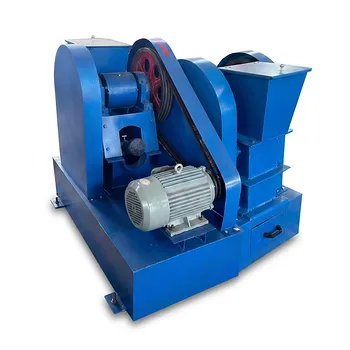
Horizontal Jaw Crusher Medium Hard Material Crushing Laboratory Sample Preparation Equipment
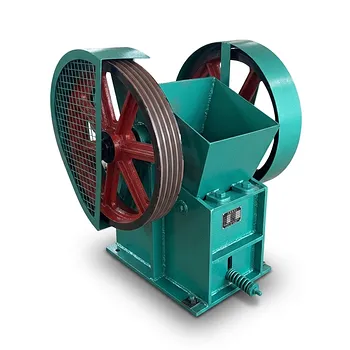
150x250mm Laboratory Jaw Crusher for Medium Hard Material Crushing and Sample Preparation
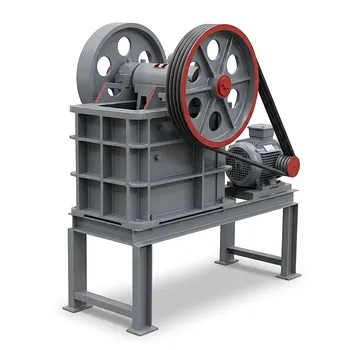
Laboratory Jaw Crusher 200x300mm Opening for Primary Crushing of Ores and Aggregates
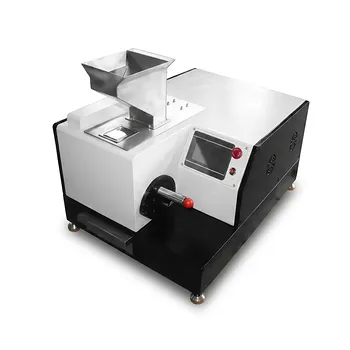
Experimental Jaw Crusher for Laboratory Ore Crushing and Sample Preparation
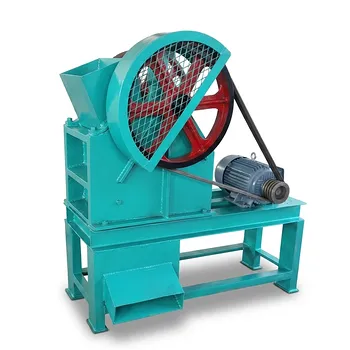
150x250mm Custom Laboratory Jaw Crusher for Coal Ore Mineral Crushing
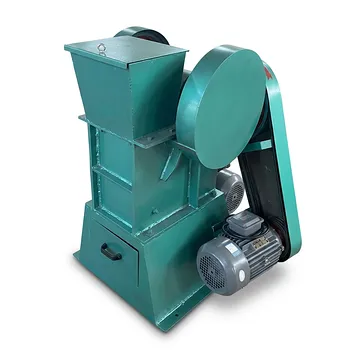
Small Laboratory Jaw Crusher 150x200mm Feed Opening for Sample Preparation and Medium Fine Crushing
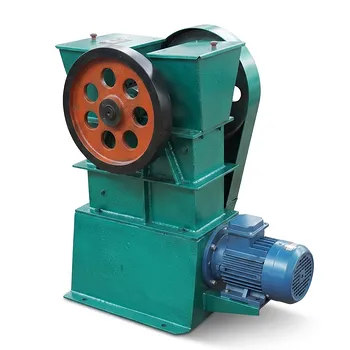
150×125mm Laboratory Jaw Crusher for Medium and Fine Crushing of Brittle Materials
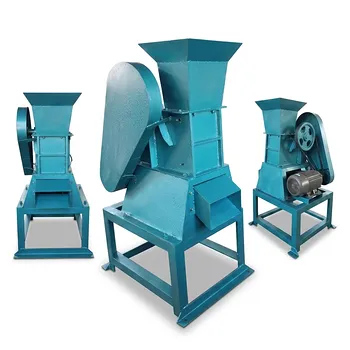
Custom Raised Height Laboratory Jaw Crusher for Precision Sample Preparation in Material Science
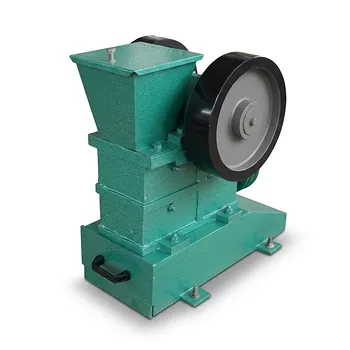
Laboratory Small Jaw Crusher 100x60mm
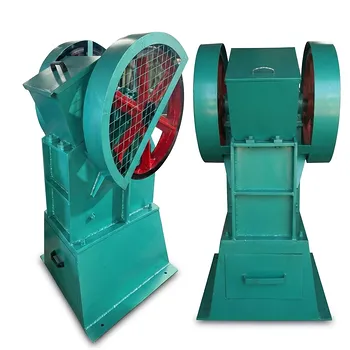
Sealed Jaw Crusher for Laboratory Material Crushing and Sample Preparation
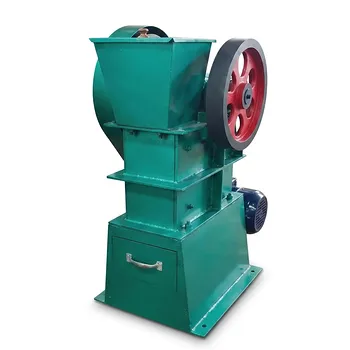
EP Series Small Jaw Crusher for Laboratory Sample Preparation
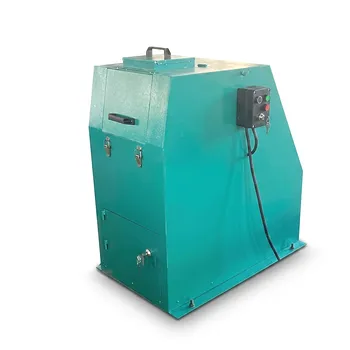
Environmentally Friendly Sealed Jaw Crusher for Laboratory Sample Preparation
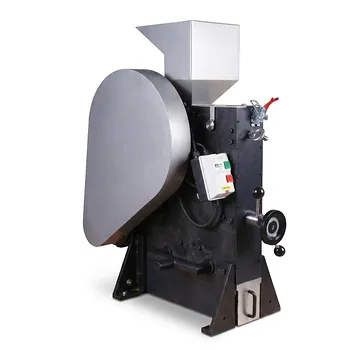
Heavy Duty Industrial Laboratory Jaw Crusher for Primary Sample Preparation and Hard Material Size Reduction
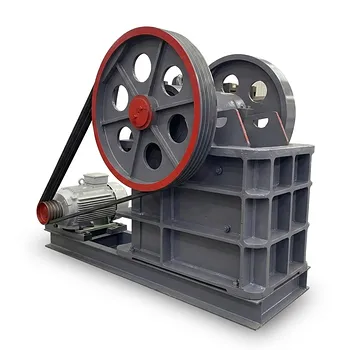
250x400mm Jaw Crusher Medium Crushing Equipment for Mining Mineral Sample Preparation
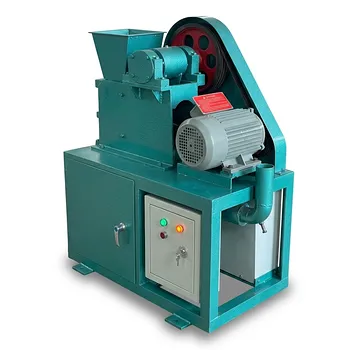
EP-B Type Sealed Jaw Crusher for Laboratory Sample Preparation
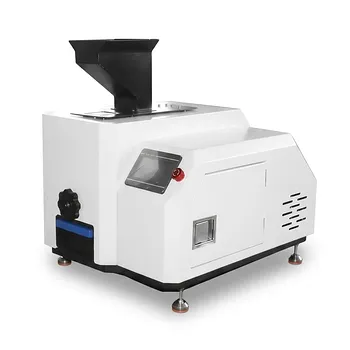
Laboratory Jaw Crusher 2025 Model for Ore and Brittle Material Crushing
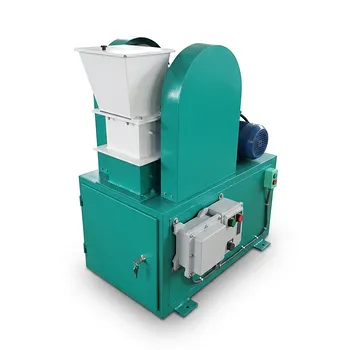
Custom Explosion-Proof Sealed Jaw Crusher for Laboratory and Industrial Sample Preparation
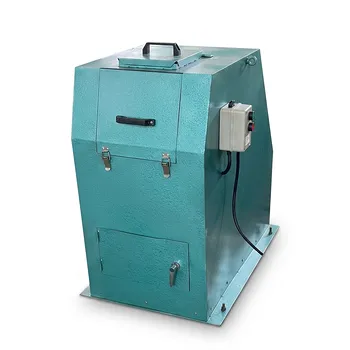
Environmentally Friendly Sealed Laboratory Jaw Crusher for Sample Preparation
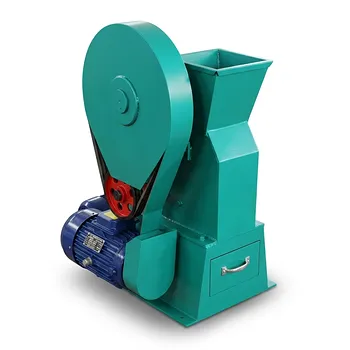
Small Laboratory Jaw Crusher 125x100mm Feed Opening for Sample Preparation