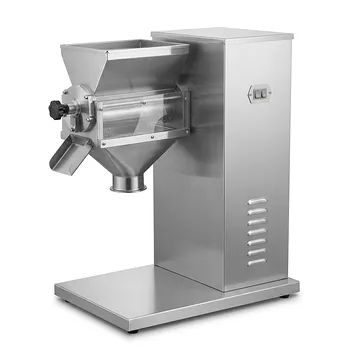
What role does a high-efficiency 3D powder mixer play in preparing WC-Fe powder compacts? Achieve Perfect Homogeneity
Updated 4 months ago
A high-efficiency 3D powder mixer is the critical bridge between raw powders and a high-performance composite. In the preparation of WC-Fe (tungsten carbide and iron) powder compacts, the mixer's primary role is to achieve total homogenization of disparate particles. By utilizing multi-axial motion, it ensures a uniform spatial distribution of high-density WC particles within the Fe flux, preventing the powder segregation that would otherwise compromise the structural integrity of the final metal matrix composite (MMC).
The core function of a 3D powder mixer is to eliminate compositional gradients by ensuring reinforcement particles are evenly dispersed throughout the matrix. This uniform foundation is the single most important factor in achieving a consistent microstructure and stable mechanical properties in the finished casting.
Achieving Microstructural Integrity through Homogenization
Overcoming Density Disparities
Tungsten carbide (WC) is significantly denser than iron (Fe) flux, making the mixture highly susceptible to gravity-induced segregation. A 3D mixer uses complex spatial trajectories to counteract these forces, forcing the heavy WC particles to interlace thoroughly with the iron matrix.
Establishing a Foundation for Stable Properties
Without a uniform mixture, the final locally reinforced casting layer will suffer from "rich" and "lean" zones of reinforcement. Uniform distribution ensures that mechanical properties, such as hardness and wear resistance, are consistent across the entire surface of the component.
The Role of Extended Processing Cycles
Achieving a truly random distribution of high-density particles requires time, often involving cycles of up to 7 hours. This extended duration, combined with high-efficiency motion, ensures that even the smallest clusters of powder are broken down and redistributed.
Mechanical Advantages of 3D Motion
Multi-Axial Tumbling vs. Traditional Mixing
Unlike standard horizontal mixers, 3D mixers employ multi-axis rotation and tumbling. This movement creates a continuous displacement of the powder mass, preventing "dead zones" where particles could remain unmixed or become trapped.
Preservation of Original Grain Size
One of the key advantages of this equipment is its ability to perform dry mixing without the aggressive impact of ball milling. It achieves a macroscopic uniform distribution while preserving the original grain size and morphology of the WC and Fe powders, which is critical for specific comparative studies and sintering profiles.
Prevention of Particle Agglomeration
Fine powders often clump together due to electrostatic forces or moisture. The high-efficiency motion of a 3D mixer provides enough energy to disrupt these agglomerates, ensuring that reinforcement particles like TiB2 or WC remain individual entities within the metal matrix.
Understanding the Trade-offs and Limitations
Mixing Time vs. Throughput
While extended mixing times (e.g., 7 hours) are necessary for maximum homogeneity, they create a bottleneck in industrial production. Manufacturers must balance the "perfect" mix with the practical need for higher throughput in large-scale operations.
Macro-Mixing vs. Micro-Alloying
It is vital to distinguish between a physical mixture and mechanical alloying. A 3D mixer provides a macro-level uniform distribution but does not typically induce the atomic-level changes or cold-welding achieved by high-energy ball milling.
Complexity of Equipment Maintenance
The multi-axial drive systems required for 3D motion are more mechanically complex than standard mixers. This leads to higher initial capital costs and requires a more rigorous maintenance schedule to ensure the seals and drive arms remain precise over time.
How to Apply This to Your Project
When integrating a 3D powder mixer into your MMC fabrication workflow, your approach should depend on your specific material requirements and end-use goals.
- If your primary focus is Maximum Wear Resistance: Prioritize longer mixing durations (6–8 hours) to ensure WC particles are perfectly dispersed, as any clumping will create soft spots in the matrix.
- If your primary focus is Maintaining Particle Morphology: Use the 3D mixer as a standalone "gentle" mixing step to avoid the grain refinement or deformation that occurs in high-energy milling environments.
- If your primary focus is Pre-processing for Milling: Use a short-cycle 3D mix to achieve a preliminary macro-uniformity, which reduces the time and energy required in subsequent ball milling stages.
The precision of your final composite is fundamentally limited by the uniformity of your initial powder mixture.
Summary Table:
| Feature | Impact on WC-Fe Composites |
|---|---|
| Homogenization | Prevents gravity-induced segregation of high-density WC particles within Fe flux. |
| Multi-Axial Motion | Eliminates "dead zones" and compositional gradients for a uniform microstructure. |
| Dry Mixing | Achieves macroscopic uniformity while preserving original grain size and morphology. |
| De-agglomeration | Disrupts clusters caused by electrostatic forces, ensuring individual particle dispersion. |
| Extended Cycles | Ensuring total random distribution of disparate particles for stable mechanical properties. |
Elevate Your Material Science Research with Precision Powder Processing
Achieving microstructural integrity starts with the perfect mix. [Company Name] provides complete laboratory sample preparation solutions tailored for material science and powder metallurgy. Whether you are developing WC-Fe composites or high-performance ceramics, our equipment ensures consistent, repeatable results.
Our comprehensive product line includes:
- Powder Mixing: High-efficiency 3D mixers, powder mixers, and defoaming mixers for total homogenization.
- Milling & Grinding: Planetary ball mills, jet mills, and liquid nitrogen cryogenic grinders for precise particle size control.
- Sample Compaction: A full spectrum of hydraulic presses, including Cold/Warm Isostatic Presses (CIP/WIP), vacuum hot presses, and XRF pellet presses.
- Sizing & Prep: Jaw/roll crushers and vibratory/air-jet sieve shakers.
Ready to eliminate segregation and optimize your sintering profiles? Contact our technical experts today to find the ideal equipment for your laboratory or industrial production needs.
References
- Aida B. Moreira, Manuel F. Vieira. A Study on a Cast Steel Reinforced with WC–Metal Matrix Composite. DOI: 10.3390/ma15186199
Mentioned Products
- Three-Dimensional Motion Mixer for Laboratory Powder and Granule Blending
- Multi Dimensional Universal Mixer for High Uniformity Powder Blending
- Horizontal Trough Mixer for Uniform Powder and Paste Blending
- V-Type Powder Mixer for Uniform Blending of Dry Powders and Granules
- Inclined Mixer for Homogeneous Powder Blending and Grinding
People Also Ask
- Why is a 3D Motion Mixer employed when preparing binary powder mixtures for tableting? Achieve Superior Homogeneity
- What role does an industrial 3D mixer play in the preparation of diamond tool segment raw materials? Achieve Homogeneity
- What is the role of a 3D mixer in Ti2SnC synthesis? Optimize Precursor Homogeneity for High-Purity MAX Phases
- How does a 3D mixer with tungsten balls contribute to magnesium composite mixing? Achieve Superior Macro-Homogeneity
- What are the advantages of using a 3D powder mixer? Boost Tablet Consistency with Advanced Mixing Technology

Tech Team · PowderPreparation
Last updated on Jun 03, 2026
Related Products
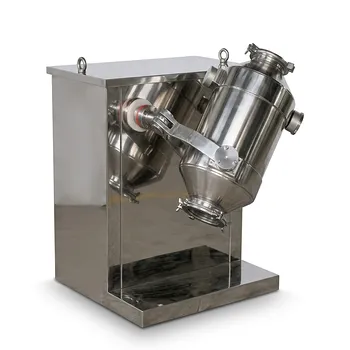
Three-Dimensional Motion Mixer for Laboratory Powder and Granule Blending
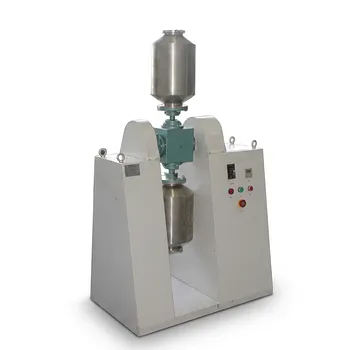
Multi Dimensional Universal Mixer for High Uniformity Powder Blending
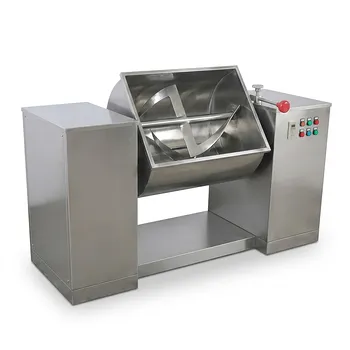
Horizontal Trough Mixer for Uniform Powder and Paste Blending
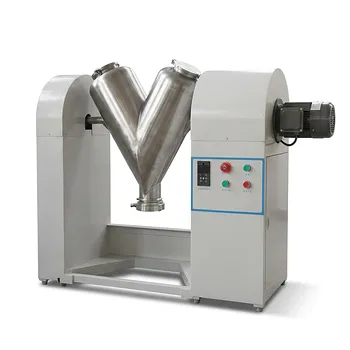
V-Type Powder Mixer for Uniform Blending of Dry Powders and Granules
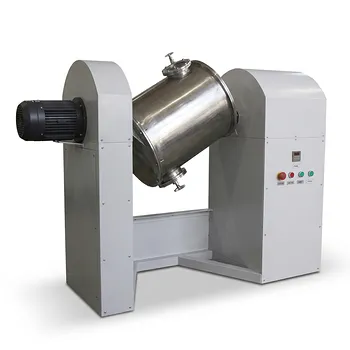
Inclined Mixer for Homogeneous Powder Blending and Grinding
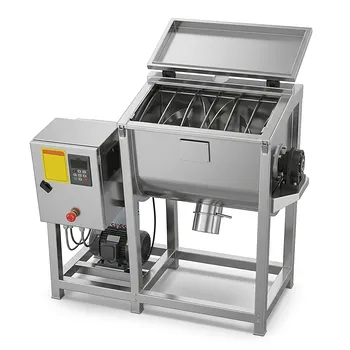
Horizontal Ribbon Mixer for Uniform Powder and Slurry Mixing
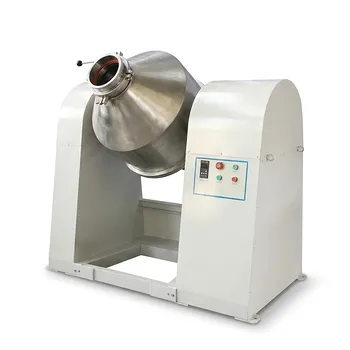
Industrial Double Cone Mixer for Powder Blending and Homogeneous Mixing
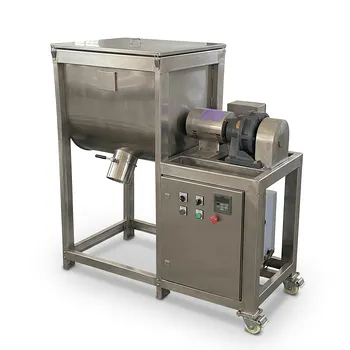
Horizontal Ribbon Mixer for Dry Powder and Slurry Blending

Dry Three Dimensional Vibratory Sieve Shaker
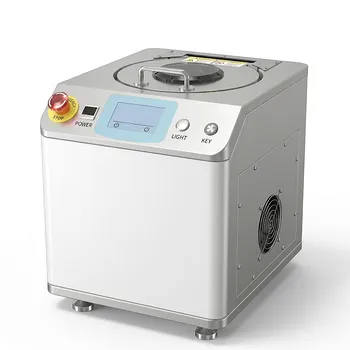
High Efficiency Vacuum Planetary Centrifugal Mixer and Defoaming Machine for Industrial Material Research and Precise Laboratory Powder Dispersion
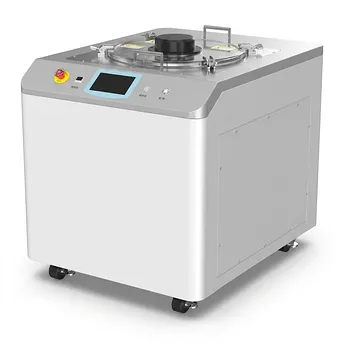
Industrial Planetary Centrifugal Vacuum Defoaming Mixer for High Viscosity Paste and Powder Homogenization
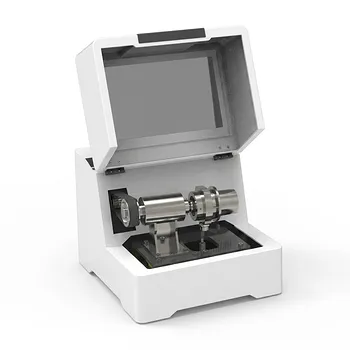
Single Tank High Energy Vibratory Ball Mill for Laboratory Grinding and Mixing
Small High-Speed Laboratory Grinder for Powder Processing
High Speed Laboratory Powder Grinder Small Batch Sample Preparation Mill
Vertical Production Planetary Ball Mill for High Throughput Powder Processing
High Speed Laboratory Grinder Efficient Stainless Steel Powder Pulverizer Universal Material Science Mill for Sample Preparation
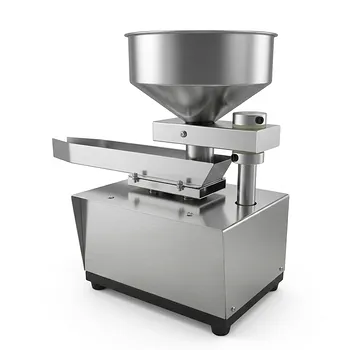
Automatic Vibrating Powder Feeder for Laboratory Material Processing Precision Vibratory Hopper Feeder for Granular and Powder Material Handling Industrial Grade Vibrating Tray Feeder for Consistent Material Sample Preparation
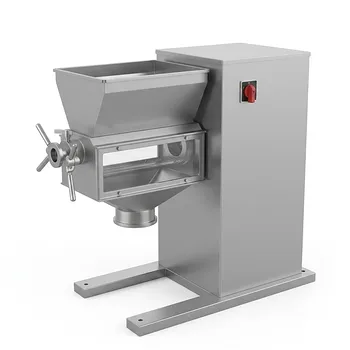
Industrial Swing Granulator for Powder Processing in Pharma Food and Chemical Industries
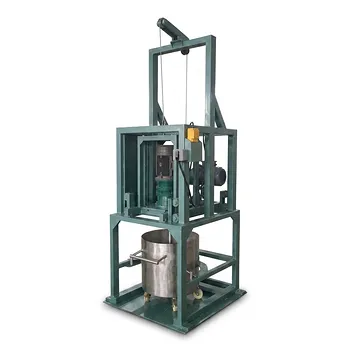
High-Speed Simple Disperser for Efficient Mixing, Dispersion, and Emulsification