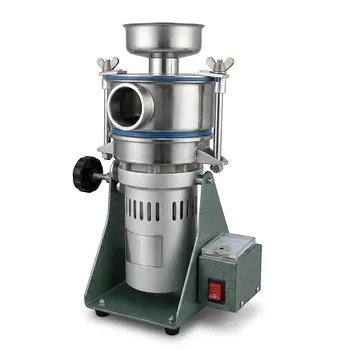
What role does a benchtop micronizing mill play in XRD? Achieve Precise Particle Size for Accurate Analysis
Updated 4 months ago
A benchtop micronizing mill is the critical tool for transforming raw powders into standardized reference materials by reducing particle size to a uniform range of several micrometers. By utilizing high-frequency vibrations to generate intense impacts and friction, these mills ensure that the resulting powder minimizes micro-absorption effects and eliminates preferred orientation, which are the two primary obstacles to achieving accurate diffraction intensities.
Core Takeaway: Micronizing mills are essential for XRD quantitative analysis because they provide the physical foundation for reliable data; they ensure that every crystalline phase is represented by a statistically significant number of randomly oriented grains, which is required for precise Rietveld refinement and the development of high-quality semi-synthetic datasets.
Eliminating Physical Biases in Diffraction
Neutralizing the Preferred Orientation Effect
Many minerals, such as phyllosilicates or certain sulfates, have a natural tendency to align in specific directions when packed into a sample holder.
Preferred orientation causes certain diffraction peaks to appear artificially strong while others disappear, leading to massive errors in quantitative calculations.
A micronizing mill reduces particles to sub-micron or low-micrometer sizes (typically 1–10 $\mu$m), forcing a random arrangement that ensures the X-ray beam interacts with all crystal planes equally.
Minimizing Micro-absorption
In mixtures containing both "heavy" and "light" elements, larger particles of the heavier material can absorb X-rays before they can reach the rest of the sample.
This micro-absorption effect skews intensity data and obscures the true abundance of crystalline phases.
Refining the powder to a uniform, fine fineness ensures that the X-ray path is consistent throughout the sample, producing raw data that accurately reflects the chemical composition.
Enhancing Data Quality and Statistical Validity
Increasing Grains for Statistical Representation
For X-ray diffraction to be accurate, a high number of individual crystal grains must participate in the diffraction process.
By grinding materials to a micron-level fineness, the mill exponentially increases the number of crystallites within the X-ray's "spot size."
This results in sharper, more intense diffraction peaks and highly stable intensities, which are the prerequisites for successful Rietveld refinement and mineral phase identification.
Supporting Complex Quantitative Workflows
Modern quantitative analysis often relies on semi-synthetic datasets and internal standards to measure amorphous content, such as Calcium Silicate Hydrate (C-S-H) in cement.
A micronizing mill allows for the high-intensity mixing and refinement of bulk samples with these internal standards.
This creates an extremely uniform micro-powder that is essential for identifying complex secondary reaction products like ettringite or residual minerals like mullite.
Understanding the Trade-offs
The Risk of Surface Amorphization
While fine grinding is necessary, excessive mechanical energy can damage the underlying crystal structure of a sample.
If a sample is milled for too long, the crystal lattice at the surface can break down, creating an "amorphous halo" that interferes with quantification.
To combat this, many experts utilize wet grinding with media like isopropyl alcohol to dissipate heat and provide a cushioning effect that preserves crystallinity.
Potential for Media Contamination
The intense friction and impact within a micronizing mill can lead to wear on the grinding elements (such as corundum or agate).
Over time, small amounts of the grinding media may incorporate into the reference powder, potentially introducing trace impurities.
Selection of media material must be carefully matched to the sample hardness to ensure the purity of the reference standard remains intact.
How to Apply This to Your Project
Making the Right Choice for Your Goal
The role of the micronizing mill is to bridge the gap between a raw geological or industrial sample and a high-fidelity digital model.
- If your primary focus is Rietveld refinement of minerals: Use a micronizing mill with wet grinding to achieve a 1–5 $\mu$m size, as this provides the highest grain statistics for complex phase identification.
- If your primary focus is analyzing delicate hydration products (e.g., cement): Opt for shorter milling cycles with chemically inert liquids to prevent the dehydration or phase transformation of secondary minerals like ettringite.
- If your primary focus is creating semi-synthetic reference sets: Ensure the mill is used to blend internal standards into the matrix at the same time as the final micronization to guarantee perfect homogeneity.
By mastering the particle size distribution through micronization, you ensure that your XRD data is a true physical representation of your sample rather than an artifact of preparation.
Summary Table:
| Key Role | Physical Impact | Benefit for XRD Analysis |
|---|---|---|
| Particle Size Reduction | Reduces grains to 1–10 μm | Eliminates preferred orientation and peak distortion |
| Homogenization | Ensures uniform mineral distribution | Minimizes micro-absorption for accurate phase abundance |
| Statistical Increase | Multiplies the number of crystallites | Produces sharper peaks and stable diffraction intensities |
| Internal Standardization | High-intensity mixing with standards | Enables precise quantification of amorphous content |
Elevate Your Material Analysis with Precision Sample Preparation
High-quality XRD data starts with perfect sample preparation. [Your Brand Name] provides complete laboratory sample preparation solutions for material science, specializing in high-performance powder processing and compaction equipment.
Whether you are refining complex minerals or developing semi-synthetic datasets, our extensive product line is designed to ensure accuracy and repeatability:
- Advanced Milling: Planetary ball mills, jet mills, disc mills, and liquid nitrogen cryogenic grinders for sub-micron fineness.
- Powder Processing: Sieve shakers (vibratory/air-jet), powder mixers, and defoaming mixers for perfect homogeneity.
- Compaction Solutions: A full spectrum of hydraulic presses, including Cold/Warm Isostatic Presses (CIP/WIP), vacuum hot presses, and XRF pellet presses.
Don't let sample preparation artifacts compromise your research. Contact our experts today to find the right equipment for your lab!
References
- N. Döbelin. Validation of XRD phase quantification using semi-synthetic data. DOI: 10.1017/s0885715620000573
Mentioned Products
- Benchtop Micro Air Jet Mill for Ultrafine Grinding of High Value Powders
- Small Laboratory Colloid Mill for Ultra-Fine Wet Grinding and Emulsification
- Laboratory Desktop Ultra Fine Powder Grinder High Speed Micronizing Pulverizer
- Small Hammer Crusher for Brittle Material Crushing in Mining Metallurgy and Lab Sample Preparation
- Nano Laboratory Bead Mill Desktop Sub Micron Sand Mill Screenless Seal Less Powder Grinder
People Also Ask
- How does an air-jet mill enhance the performance of Mo2N when used as an electrocatalyst? Optimize Electrode Efficiency
- Why is secondary jet milling necessary for products processed through HME? Achieve Precision for Inhalation Delivery
- Why is a jet mill used for the co-milling of inhalable Itraconazole microparticles? Optimize Pulmonary Drug Delivery
- What are the advantages of a jet mill vs. a ball mill for high-purity ceramics? Achieve superior purity and precision.
- What are the advantages of using a jet mill compared to a ball mill for Sm-Co magnets? Purity vs. Performance

Tech Team · PowderPreparation
Last updated on May 14, 2026
Related Products
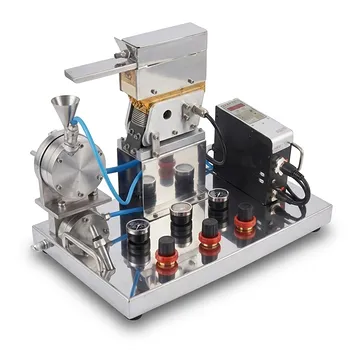
Benchtop Micro Air Jet Mill for Ultrafine Grinding of High Value Powders
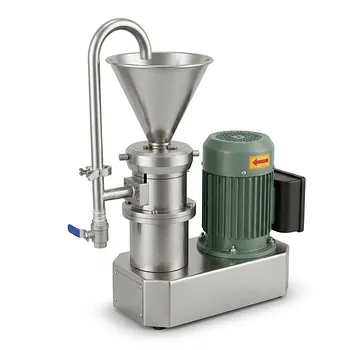
Small Laboratory Colloid Mill for Ultra-Fine Wet Grinding and Emulsification
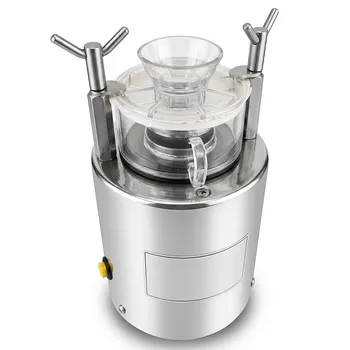
Laboratory Desktop Ultra Fine Powder Grinder High Speed Micronizing Pulverizer
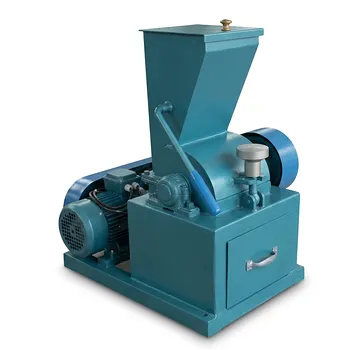
Small Hammer Crusher for Brittle Material Crushing in Mining Metallurgy and Lab Sample Preparation
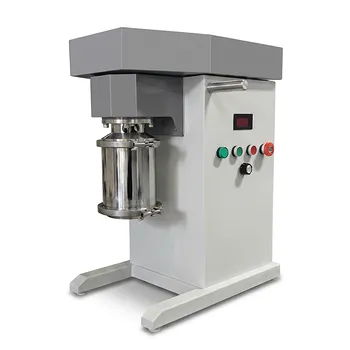
Nano Laboratory Bead Mill Desktop Sub Micron Sand Mill Screenless Seal Less Powder Grinder
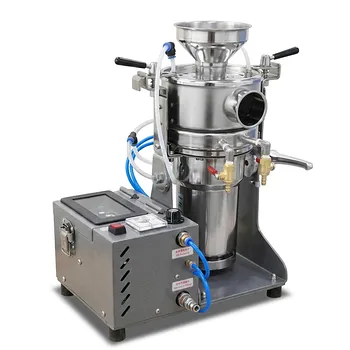
Water Cooled Pulse Jet Ultrafine Grinder
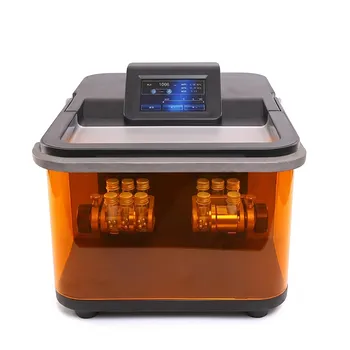
High Throughput Micro Ball Mill for Cryogenic Grinding and Laboratory Cell Disruption
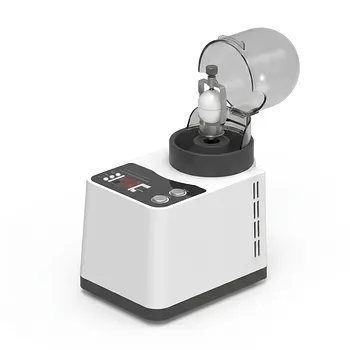
Laboratory Micro Vibration Grinding Mill for Trace Sample Preparation
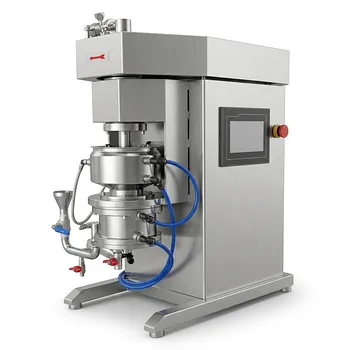
Small Ceramic Structure Laboratory Sand Mill Nanoscale Grinding Dispersion Equipment Seal-less Screen-less Design
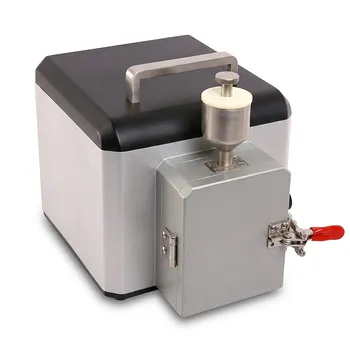
Portable Cutting Mill for Laboratory Sample Preparation and RoHS WEEE Compliance Testing
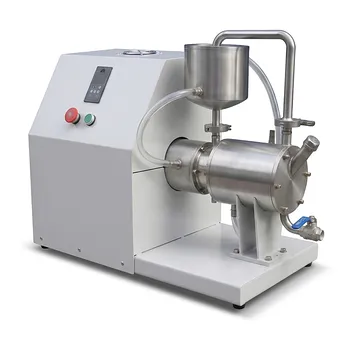
Laboratory Small Horizontal Sand Mill for Nano Materials Wet Grinding
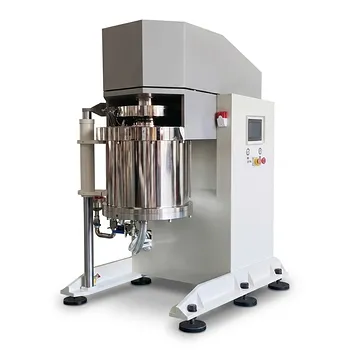
Vertical Nano Bead Mill for Ceramic Materials with Permanent Magnet Motor and High Efficiency Grinding

High Energy Planetary Ball Mill for Nano Scale Grinding and Mechanical Alloying
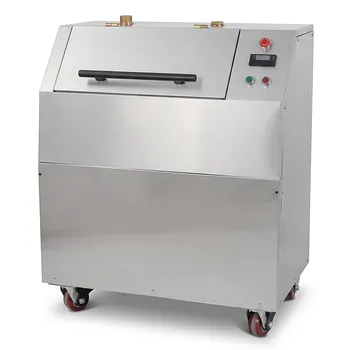
Vibratory Disc Mill for Rapid Fine Grinding and High Throughput Sample Preparation of Hard and Brittle Materials

Miniature Planetary Ball Mill with Vacuum Grinding and High Efficiency for Laboratory Sample Preparation