What role does a benchtop electric pellet press play in GDC fabrication? Ensure uniform density and sintering success.
Updated 3 months ago
A benchtop electric pellet press is the critical bridge between raw GDC powder and a viable ceramic substrate. It applies controlled axial pressure to transform loose, calcined Gadolinium-doped Ceria (GDC) particles into a cohesive "green body" with the structural integrity and density distribution required for high-temperature sintering.
The primary role of the pellet press is to facilitate uniform particle rearrangement and initial bonding, creating a structural prototype that minimizes internal stress and prevents catastrophic cracking or deformation during subsequent thermal processing.
Particle Rearrangement and Initial Consolidation
Achieving Uniform Green Density
The press applies precise axial pressure to calcined GDC powder held within a precision mold. This force compels individual particles to slide and rotate into microscopic voids, significantly increasing the packing fraction of the material.
This initial densification is vital because it establishes a consistent green density across the entire substrate. Without this uniformity, the material would densify at different rates during firing, leading to internal warping.
Establishing Mechanical Integrity
Through continuous pressure, GDC particles undergo initial bonding via mechanical interlocking and van der Waals forces. This transforms the loose powder into a "green body," a solid form robust enough to be handled, measured, and transferred to a sintering furnace.
The use of an electric press allows for more consistent application of force compared to manual methods. This consistency ensures that every green body produced meets the same mechanical threshold for downstream processing.
Foundation for High-Temperature Sintering
Mitigating Non-Uniform Shrinkage
A dense, well-pressed green body acts as a stable foundation for the sintering process. By ensuring a uniform starting density, the press effectively prevents the uneven shrinkage and macro-cracking that typically occur when GDC is heated to high temperatures.
Controlled compression reduces the distance between particles, which promotes faster solid-state diffusion. This leads to a more efficient sintering cycle and a higher final theoretical density in the finished electrolyte or substrate.
Defining Geometric Precision
The pellet press defines the final geometric shape of the green body through the dimensions of the mold. Precise pressure application ensures that the GDC substrate maintains its intended dimensions, reducing the need for expensive post-sintering machining.
This precision is especially important for GDC substrates used in Solid Oxide Fuel Cells (SOFCs), where flat, uniform surfaces are required for the subsequent deposition of electrode layers.
Understanding the Trade-offs and Pitfalls
Pressure Gradients and Wall Friction
A common challenge in uniaxial pressing is the development of pressure gradients. Friction between the GDC powder and the mold walls can cause the edges of the pellet to be denser than the core, potentially leading to "hourglassing" or distortion during sintering.
Air Entrapment and Delamination
Applying pressure too rapidly can lead to air entrapment within the powder mass. When the pressure is released, this trapped air expands, which can cause the green body to "cap" or delaminate into thin layers, rendering the substrate useless.
Over-Compaction Risks
While high pressure (up to 110 MPa) increases density, exceeding the material's limits can cause plastic deformation of the particles or mold damage. It is critical to identify the "saturation point" where additional pressure no longer improves green density but increases the risk of internal micro-cracks.
How to Apply This to Your Fabrication Process
Depending on your specific research or production goals, the way you utilize the pellet press will vary.
- If your primary focus is maximum final density: Utilize higher axial pressures (in the 50–110 MPa range) and consider a double-action press to minimize density gradients.
- If your primary focus is preventing delamination: Use an electric press with a programmable "dwell time" to allow air to escape and particles to settle before reaching peak pressure.
- If your primary focus is geometric consistency: Ensure all GDC powder is calcined and sieved to a uniform particle size before pressing to ensure even mold filling.
By mastering the transition from powder to green body, you ensure that the GDC substrate possesses the necessary microstructural foundation to withstand the rigors of high-temperature densification.
Summary Table:
| Key Role | Impact on GDC Green Body | Technical Benefit |
|---|---|---|
| Axial Compaction | Increases packing fraction and density | Minimizes internal stress and warping |
| Initial Consolidation | Establishes mechanical integrity | Enables safe handling and transfer |
| Geometric Definition | Defines precise final shape/dimensions | Reduces need for post-sintering machining |
| Uniform Pressure | Eliminates voids and density gradients | Promotes faster solid-state diffusion |
| Electric Control | Allows for programmable dwell times | Prevents air entrapment and delamination |
Elevate Your Material Research with High-Precision Compaction
Achieving the perfect GDC green body requires more than just force—it requires precision. At our core, we provide complete laboratory sample preparation solutions for material science, specializing in professional-grade powder processing and compaction equipment.
Our extensive product line is designed to support every stage of your workflow, including:
- Advanced Mills & Crushers: Jaw/roll crushers, planetary ball mills, jet mills, and cryogenic grinders for ideal powder fineness.
- Sieve & Mixers: Sieve shakers, powder mixers, and defoaming mixers for material homogeneity.
- Full Spectrum Hydraulic Presses: Benchtop electric presses, Cold/Warm Isostatic Presses (CIP/WIP), XRF pellet presses, and vacuum hot presses for superior density control.
Whether you are a researcher optimizing SOFC electrolytes or a distributor seeking reliable OEM/ODM support, we deliver the reliability and performance your projects demand. Contact us today to find the perfect solution for your lab!
References
- Yuanyuan Liu, Shengli An. Superior Electrochemical Performance of a Ce<sub>0.8</sub>Gd<sub>0.2</sub>O<sub>2−δ</sub>/Zr<sub>0.8</sub>Sc<sub>0.2</sub>O<sub>2−δ</sub> Thin Bilayer-Protected Gadolinium-Doped Ceria Electrolyte in Intermediate-Temperature Solid Oxide Fuel Cells. DOI: 10.1021/acsomega.2c07855
Mentioned Products
- Benchtop Micro Air Jet Mill for Ultrafine Grinding of High Value Powders
- Laboratory Benchtop Jaw Crusher for Hard Brittle Materials Primary Size Reduction and Sample Preparation
- 150×125mm Laboratory Jaw Crusher for Medium and Fine Crushing of Brittle Materials
- Small Laboratory Colloid Mill for Ultra-Fine Wet Grinding and Emulsification
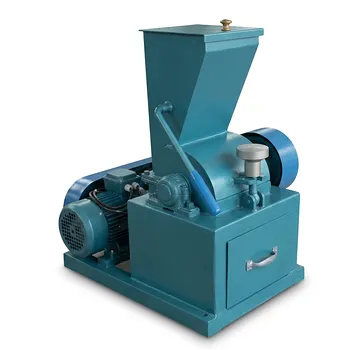
- Small Hammer Crusher for Brittle Material Crushing in Mining Metallurgy and Lab Sample Preparation
People Also Ask
- How does an air-jet mill enhance the performance of Mo2N when used as an electrocatalyst? Optimize Electrode Efficiency
- Why is secondary jet milling necessary for products processed through HME? Achieve Precision for Inhalation Delivery
- Why is a jet mill used for the co-milling of inhalable Itraconazole microparticles? Optimize Pulmonary Drug Delivery
- What are the advantages of a jet mill vs. a ball mill for high-purity ceramics? Achieve superior purity and precision.
- What are the advantages of using a jet mill compared to a ball mill for Sm-Co magnets? Purity vs. Performance

Tech Team · PowderPreparation
Last updated on Jun 03, 2026
Related Products
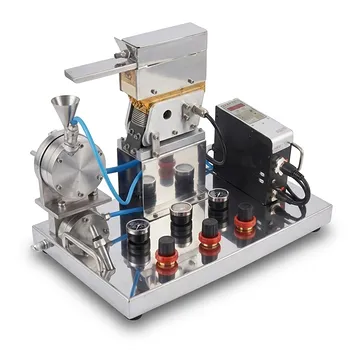
Benchtop Micro Air Jet Mill for Ultrafine Grinding of High Value Powders
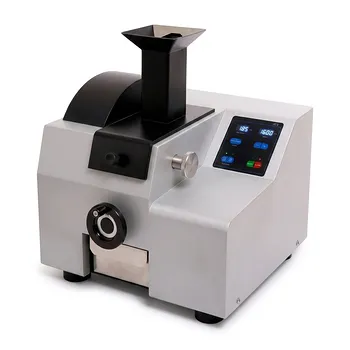
Laboratory Benchtop Jaw Crusher for Hard Brittle Materials Primary Size Reduction and Sample Preparation
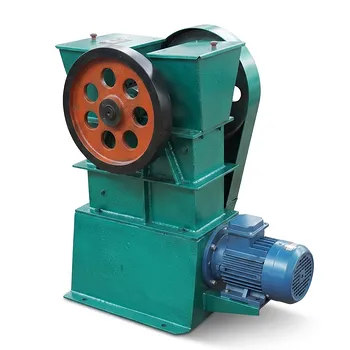
150×125mm Laboratory Jaw Crusher for Medium and Fine Crushing of Brittle Materials
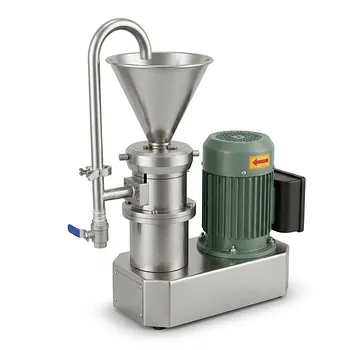
Small Laboratory Colloid Mill for Ultra-Fine Wet Grinding and Emulsification