What role does a 3D powder mixer play in alumina fiber ceramic cores? Achieve Precise Homogeneity for 3D Printing
Updated 3 months ago
The 3D powder mixer is the critical technological bridge between raw materials and a viable ceramic component. In the preparation of alumina fiber-reinforced ceramic cores, it performs the uniform dry mixing of fused silica, mullite, and alumina powders with alumina fibers to ensure a random, non-agglomerated distribution. This homogenization is the essential prerequisite for formulating the high-solid-loading, stable slurries required for precision 3D printing.
A 3D powder mixer utilizes multi-axial motion to achieve microscopic homogeneity and uniform fiber dispersion without altering the physical morphology of the particles. This process eliminates component segregation, providing the structural foundation necessary for stable sintering and consistent mechanical properties.
Achieving Multi-Dimensional Homogeneity
Randomizing High-Aspect-Ratio Fibers
The primary challenge in reinforced ceramics is the tendency of alumina fibers to clump due to their high aspect ratios. The multi-directional movement of a 3D mixer forces these fibers into a random distribution within the powder matrix.
This spatial randomness is vital because it ensures the reinforcement is isotropic, meaning the final ceramic core will have uniform strength in all directions.
Preparing the Matrix for 3D Printing
For 3D printing to be successful, the resulting slurry must have a high solid loading while remaining fluid and stable.
The 3D mixer creates a perfectly blended dry precursor of fused silica, mullite, and alumina. This uniformity prevents "pockets" of varying density, which would otherwise cause the slurry to destabilize or the 3D printer nozzle to clog.
Preserving Material Integrity and Reactivity
Low-Shear Multi-Axial Motion
Unlike high-energy milling, a 3D powder mixer uses unique spatial rotation trajectories to blend materials under relatively low shear forces.
This is critical for maintaining the original particle size and morphology of the powders and the structural integrity of the alumina fibers. If the fibers were crushed or the powder shapes altered during mixing, the reinforcement capabilities and sintering behavior would be compromised.
Optimizing Solid-State Reactions
Homogeneity at the macroscopic and microscopic levels ensures that different chemical components are in ideal contact with one another.
During the subsequent sintering phase, this intimate contact facilitates efficient solid-state reactions. This prevents the formation of unwanted impurity phases that typically occur when components segregate into concentrated "islands."
Understanding the Trade-offs
Mixing Duration vs. Material Degradation
While extended mixing times—sometimes up to 24 hours—ensure maximum homogeneity, they can also lead to subtle fiber degradation. Finding the "sweet spot" is essential to avoid reducing the fibers' reinforcement potential through mechanical fatigue.
Equipment Complexity and Maintenance
3D powder mixers are more mechanically complex than traditional tumbling mixers or ribbon blenders. The multi-axial drive systems require precise calibration and regular maintenance to ensure the motion remains consistent across large batches.
Limitations with Wet Agglomerates
While 3D mixers are excellent for dry powders, they may struggle if the raw materials have high moisture content or pre-existing hard agglomerates. In these cases, a pre-drying or de-clumping step is often necessary to prevent the mixer from simply moving clumps around rather than breaking them down.
How to Apply This to Your Process
Recommendations for Optimal Mixing
To achieve the best results when preparing alumina fiber-reinforced ceramic cores, consider your primary manufacturing objective.
- If your primary focus is fiber reinforcement integrity: Use lower rotation speeds over a longer duration to prevent mechanical breakage of the high-aspect-ratio alumina fibers.
- If your primary focus is slurry stability for 3D printing: Prioritize the microscopic blending of the fused silica and mullite powders to ensure a consistent viscosity during the liquid-phase formulation.
- If your primary focus is preventing sintering defects: Ensure the mixer is loaded to its optimal volume (typically 60-80%) to allow for maximum multi-axial tumbling and the elimination of dead zones.
Consistent material homogenization is the single most important factor in transitioning from laboratory-scale ceramic composites to reliable, industrial-grade 3D-printed cores.
Summary Table:
| Key Mixing Function | Technical Benefit | Impact on Ceramic Core |
|---|---|---|
| Fiber Randomization | Prevents fiber clumping/agglomeration | Ensures isotropic strength and uniform reinforcement |
| Matrix Homogenization | Uniformly blends fused silica, mullite, and alumina | Provides high-solid-loading stability for 3D printing |
| Low-Shear Motion | Preserves particle morphology and fiber integrity | Maintains structural reinforcement and sintering behavior |
| Microscopic Contact | Optimizes solid-state reactions during sintering | Eliminates impurity phases and prevents sintering defects |
Elevate Your Ceramic Research with Precision Sample Preparation
Achieving the perfect blend for alumina fiber-reinforced ceramics requires more than just mixing—it requires a partner who understands the nuances of material science. [Our Brand Name] provides complete laboratory sample preparation solutions, specializing in high-performance powder processing and compaction equipment.
From achieving microscopic homogeneity with our 3D powder mixers and defoaming mixers to fine-tuning particle sizes with our planetary ball, jet, and rotor mills, we offer the tools necessary for superior material integrity. Our extensive product line also includes:
- Crushers & Sieve Shakers: Jaw/roll crushers and vibratory/air-jet sieves for precise size control.
- Advanced Hydraulic Presses: A full spectrum of Cold/Warm Isostatic Presses (CIP/WIP), vacuum hot presses, and XRF pellet presses.
Don't let material segregation or fiber degradation compromise your 3D printing results. Contact us today to discover how our specialized equipment can optimize your workflow and help you produce industrial-grade ceramic components.
References
- XU Xiqing, LI Xin. 3D Printing and Dimensional Accuracy Control of Ceramic Cores Reinforced by Alumina Fibers. DOI: 10.3901/jme.2025.05.323
Mentioned Products
- Three-Dimensional Motion Mixer for Laboratory Powder and Granule Blending
- Multi Dimensional Universal Mixer for High Uniformity Powder Blending
- Horizontal Trough Mixer for Uniform Powder and Paste Blending
- V-Type Powder Mixer for Uniform Blending of Dry Powders and Granules
- Inclined Mixer for Homogeneous Powder Blending and Grinding
People Also Ask
- Why is a 3D Motion Mixer employed when preparing binary powder mixtures for tableting? Achieve Superior Homogeneity
- What role does an industrial 3D mixer play in the preparation of diamond tool segment raw materials? Achieve Homogeneity
- What is the role of a 3D mixer in Ti2SnC synthesis? Optimize Precursor Homogeneity for High-Purity MAX Phases
- How does a 3D mixer with tungsten balls contribute to magnesium composite mixing? Achieve Superior Macro-Homogeneity
- What are the advantages of using a 3D powder mixer? Boost Tablet Consistency with Advanced Mixing Technology

Tech Team · PowderPreparation
Last updated on Jun 03, 2026
Related Products
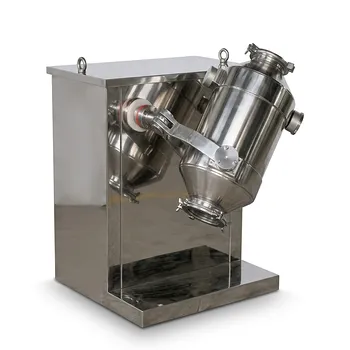
Three-Dimensional Motion Mixer for Laboratory Powder and Granule Blending
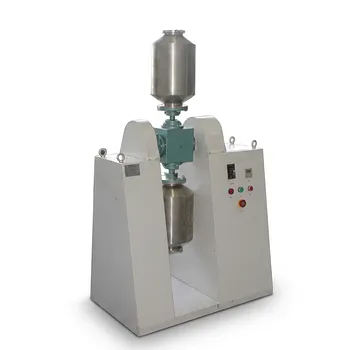
Multi Dimensional Universal Mixer for High Uniformity Powder Blending
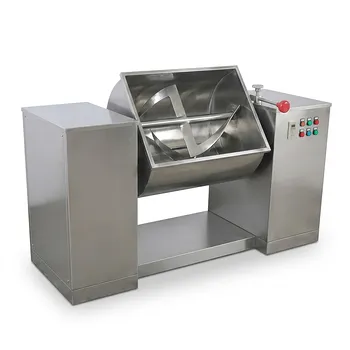
Horizontal Trough Mixer for Uniform Powder and Paste Blending
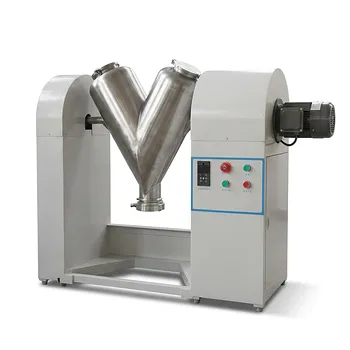
V-Type Powder Mixer for Uniform Blending of Dry Powders and Granules
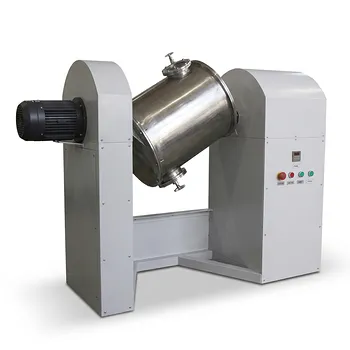
Inclined Mixer for Homogeneous Powder Blending and Grinding
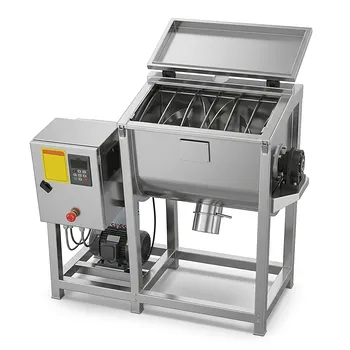
Horizontal Ribbon Mixer for Uniform Powder and Slurry Mixing
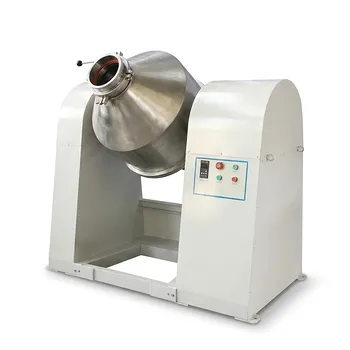
Industrial Double Cone Mixer for Powder Blending and Homogeneous Mixing
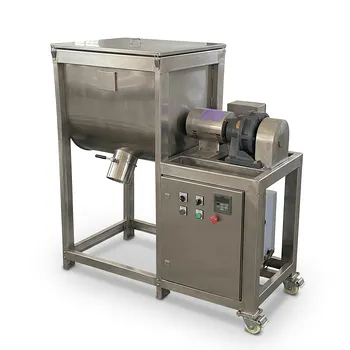
Horizontal Ribbon Mixer for Dry Powder and Slurry Blending
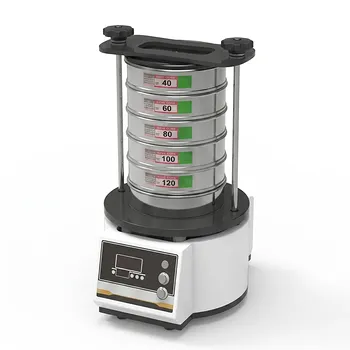
Dry Three Dimensional Vibratory Sieve Shaker
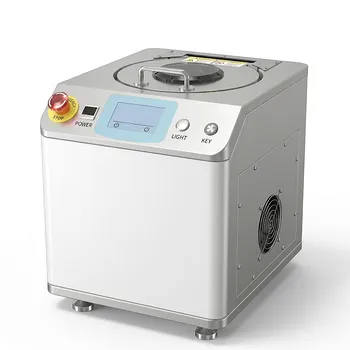
High Efficiency Vacuum Planetary Centrifugal Mixer and Defoaming Machine for Industrial Material Research and Precise Laboratory Powder Dispersion
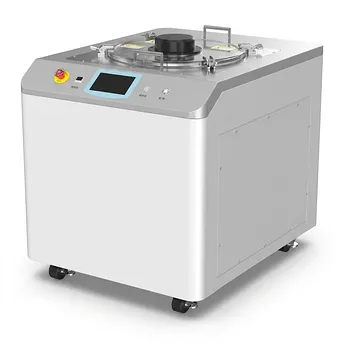
Industrial Planetary Centrifugal Vacuum Defoaming Mixer for High Viscosity Paste and Powder Homogenization
Single Tank High Energy Vibratory Ball Mill for Laboratory Grinding and Mixing
Small High-Speed Laboratory Grinder for Powder Processing
High Speed Laboratory Powder Grinder Small Batch Sample Preparation Mill

Vertical Production Planetary Ball Mill for High Throughput Powder Processing
High Speed Laboratory Grinder Efficient Stainless Steel Powder Pulverizer Universal Material Science Mill for Sample Preparation
Automatic Vibrating Powder Feeder for Laboratory Material Processing Precision Vibratory Hopper Feeder for Granular and Powder Material Handling Industrial Grade Vibrating Tray Feeder for Consistent Material Sample Preparation
Industrial Swing Granulator for Powder Processing in Pharma Food and Chemical Industries
High-Speed Simple Disperser for Efficient Mixing, Dispersion, and Emulsification