What role does a 36 µm standard test sieve play in wollastonite ceramics? Ensure Material Uniformity & Quality
Updated 4 months ago
The 36 µm standard test sieve serves as a critical quality control gate for wollastonite ceramic raw materials. By strictly limiting particle size to the micron range, this sieve removes secondary agglomerates formed during drying and ensures a uniform powder distribution. This precision directly translates to higher packing density in the green compact and significantly reduces non-uniform shrinkage during the sintering process.
The primary role of the 36 µm sieve is to transition raw wollastonite from an inconsistent, dried powder into a refined, micron-scale precursor. By standardizing particle distribution, it eliminates the structural defects that arise from oversized particles and hard agglomerates.
Ensuring Material Uniformity
Elimination of Secondary Agglomerates
During the drying of wollastonite powders, individual particles often bond together to form secondary agglomerates. These clumps behave like single large particles, which can create structural voids if not removed. The 36 µm sieve acts as a mechanical filter to break down or isolate these clusters, ensuring only fine, discrete particles proceed to the next stage.
Micron-Range Distribution Control
Achieving a specific particle size distribution is essential for high-performance ceramics. Utilizing a 36 µm aperture ensures that the bulk of the material remains within a narrow micron range. This level of control allows for predictable behavior during the forming process, making the raw material easier to handle and press.
Impact on the Production Cycle
Optimization of Green Body Packing Density
The "green body"—the unfired ceramic shape—relies on particles fitting together as tightly as possible. When particles are standardized via a 36 µm sieve, they fill the mold more efficiently, increasing the packing density. A higher initial density results in a stronger unfired component that is less prone to damage during handling.
Mitigation of Sintering Defects
Sintering, or the heating process that fuses particles together, is highly sensitive to particle size. Non-uniform sizes lead to differential shrinkage, where some areas of the ceramic contract faster than others, causing cracks or warping. By ensuring a 36 µm limit, manufacturers can achieve a uniform rate of contraction and reduce residual porosity.
Micro-Tuning of Mechanical Properties
Refining the powder to a 36 µm threshold allows for the structural micro-tuning of the final ceramic. This precision influences the final membrane porosity and mechanical strength of the wollastonite product. It enables researchers and engineers to hit specific targets for pore size distribution by controlling the aggregate size of the raw material.
Understanding the Trade-offs
Process Throughput vs. Precision
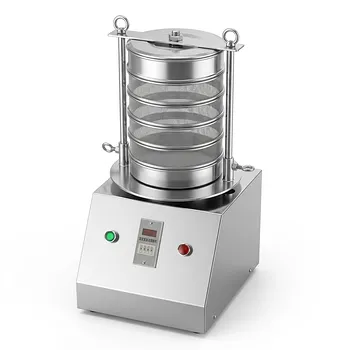
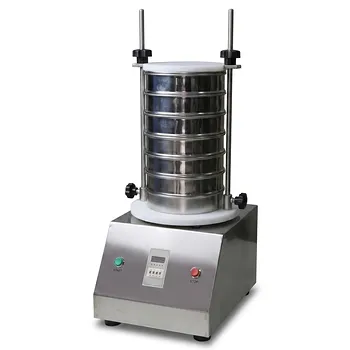
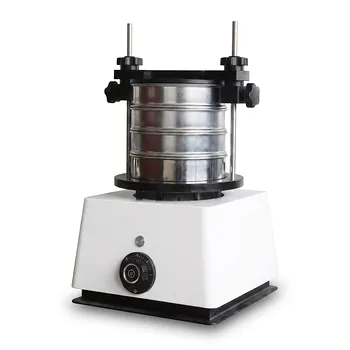
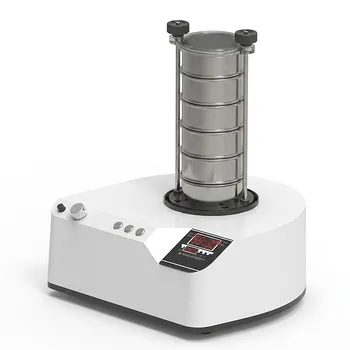
While a 36 µm sieve provides exceptional control, it can become a bottleneck in high-volume production. The fine mesh size is susceptible to blinding or clogging, particularly if the material retains any residual moisture. This requires the use of high-frequency vibratory shakers to maintain flow and ensure the sieve does not become a point of failure in the supply chain.
Risk of Material Loss
Strict sieving at the 36 µm level inevitably leads to the rejection of oversized material. If the preceding ball milling or grinding process is inefficient, a significant percentage of the wollastonite may be discarded. To maintain cost-effectiveness, the milling stage must be perfectly calibrated to produce the maximum volume of particles just below the 36 µm threshold.
How to Apply This to Your Project
When integrating 36 µm sieving into your wollastonite processing workflow, consider your primary objective for the final ceramic component:
- If your primary focus is maximizing mechanical strength: Ensure the sieve is used immediately after drying to remove all hard agglomerates, as these are the leading cause of internal stress fractures.
- If your primary focus is controlling porosity/permeability: Use the 36 µm sieve in conjunction with a vibratory shaker to isolate specific particle intervals, allowing for precise "tuning" of the ceramic’s internal structure.
- If your primary focus is reducing manufacturing waste: Calibrate your upstream ball milling process to target a median particle size of 25-30 µm to minimize the volume of material rejected by the sieve.
By mastering the application of the 36 µm sieve, you ensure that the physical properties of your wollastonite ceramic are governed by design rather than by the inconsistencies of the raw material.
Summary Table:
| Function | Impact on Raw Material | Key Production Benefit |
|---|---|---|
| Agglomerate Removal | Eliminates secondary clusters | Increases green body packing density |
| Size Distribution | Maintains strict micron-range | Ensures predictable forming & pressing |
| Shrinkage Control | Reduces differential contraction | Prevents sintering cracks and warping |
| Micro-Tuning | Refines pore size distribution | Enhances final mechanical strength |
Elevate Your Material Research with Precision Solutions
At [Your Brand Name], we provide complete laboratory sample preparation solutions tailored for material science. Whether you are refining wollastonite or developing advanced composites, our specialized equipment ensures your powders meet the strictest standards.
Our extensive product line includes:
- Size Reduction: Jaw/roll crushers, planetary ball mills, jet mills, and cryogenic grinders.
- Classification: High-precision vibratory and air-jet sieve shakers with a full range of test sieves.
- Compaction & Processing: Standard lab presses, Hot Presses, Vacuum Hot Presses, and Isostatic Presses (CIP/WIP).
- Mixing: Advanced powder and defoaming mixers for uniform precursor preparation.
Ready to eliminate structural defects and optimize your sintering process? Contact our experts today to find the perfect equipment for your powder processing and compaction needs.
References
- Emad M.M. Ewais, H. El-Didamony. Cement kiln dust/rice husk ash as a low temperature route for wollastonite processing. DOI: 10.14382/epitoanyag-jsbcm.2014.14
Mentioned Products
- Stainless Steel Laboratory Vibratory Test Sieve Shaker
- Laboratory Vibratory Test Sieve Shaker for Precision Particle Size Analysis and Powder Grading
- Small Laboratory Vibrating Sieve Shaker for Precise Particle Size Analysis
- 三维电磁微量振动筛分仪
People Also Ask
- What function does a laboratory vibratory sieve shaker serve in the production process of metakaolin? Optimize Reactivity
- Why is a precision laboratory vibratory sieve shaker necessary for particle size control? Optimize Biomass Carbonization
- What is the function of a laboratory vibratory sieve shaker? Enhance Coal Particle Size Distribution (PSD) Analysis
- What role do laboratory vibratory sieve shakers and test sieves play before the molding of Nb-Cu composite powders?
- What is the primary function of a laboratory vibratory sieve shaker in the evaluation of sand liquefaction potential?

Tech Team · PowderPreparation
Last updated on Jun 03, 2026