What role does a 100-mesh sieve play in cordierite powder processing? Ensure Uniformity & Sintering Quality
Updated 3 months ago
Refining dried cordierite pre-mix powder with a 100-mesh standard test sieve is essential for eliminating lump-like agglomerates and ensuring a narrow, consistent particle size distribution. This uniformity is the primary factor in achieving a consistent fill density during the mold-loading stage of laboratory hydraulic presses. By standardizing the powder size, technicians directly reduce the risk of structural deformation and density gradients during the subsequent sintering process.
The 100-mesh sieve serves as a critical quality control gate that transforms dried, clumped powder into a homogenized precursor. By limiting the maximum particle size to approximately 150 microns, it ensures the structural integrity and repeatable performance of the final ceramic body.
Agglomerate Mitigation and Particle Size Uniformity
Eliminating Drying-Induced Lumps
During the drying stage of cordierite processing, particles often bond together to form lump-like agglomerates. A 100-mesh sieve mechanically breaks down or removes these clusters to restore the powder’s flowability.
Standardizing the Particle Aperture
A 100-mesh sieve features an aperture of approximately 149 to 150 micrometers. This specific threshold ensures that all material entering the next phase meets a baseline fineness required for high-performance ceramics.
Narrowing Size Distribution
By removing oversized particles and aggregates, the sieve creates a narrow particle size distribution. This consistency is vital for the predictability of the material's behavior during thermal expansion and contraction.
Enhancing the Molding and Sintering Lifecycle
Improving Green Body Fill Density
In laboratory hydraulic pressing, the uniformity of the green body filling density depends on how well the powder packs into the mold. Refined powder prevents the formation of voids or "bridge" structures that lead to internal weak points.
Reducing Post-Sintering Deformation
Non-uniform powder distribution causes uneven shrinkage during heat treatment. Using a 100-mesh sieve ensures a more isotropic density, which significantly minimizes deformation after the sintering process is complete.
Preventing Stress Concentration
Oversized particles can act as stress concentrators within the ceramic matrix. Removing these through sieving enhances the microstructural stability of the cordierite, preventing macroscopic defects or cracks in the finished product.
Quality Control and Process Efficiency
Evaluating Pulverization Efficiency
Technicians use the sieve to measure the mass of material that passes through relative to the total input. This data allows for the quantitative evaluation of ball milling parameters and grinding efficiency.
Media Separation and Contamination Control
The sieve serves as a physical barrier to separate grinding media, such as Zirconia balls, from the cordierite powder. It also blocks coarse impurities that could interfere with subsequent chemical or thermogravimetric analysis.
Ensuring Experimental Repeatability
Strict particle size control ensures that every batch of cordierite powder possesses the same surface area and reactivity. This precision is necessary for achieving accurate and repeatable results in advanced ceramic research.
Understanding the Trade-offs and Limitations
The Risk of Mesh Blinding
Highly cohesive or slightly damp powders can cause mesh blinding, where particles clog the sieve openings. This reduces screening efficiency and may require ultrasonic cleaning or mechanical agitation to resolve.
Sieve Limitation vs. Advanced Analysis
While a 100-mesh sieve is excellent for removing coarse defects, it cannot provide a detailed breakdown of the sub-micron range. It should be viewed as a preliminary classification tool rather than a substitute for laser diffraction particle size analysis.
Material Loss and Processing Time
Strict sieving can lead to material loss if the preceding ball milling stage was inefficient. Additionally, manual sieving adds a processing step that must be carefully managed to prevent environmental contamination of the high-purity powder.
Applying Sieving Standards to Your Project
Recommendations for Implementation
- If your primary focus is structural reliability: Use the 100-mesh sieve immediately before mold filling to ensure maximum density uniformity and minimal sintering warp.
- If your primary focus is process optimization: Utilize the sieve to benchmark different milling durations, ensuring the powder meets the 150-micron threshold before proceeding to energy-intensive analysis.
- If your primary focus is analytical accuracy: Implement sieving to remove all coarse impurities that could cause outliers in thermogravimetric or chemical composition testing.
By integrating the 100-mesh sieve as a standard checkpoint, you ensure that the cordierite pre-mix powder is perfectly conditioned for precision engineering.
Summary Table:
| Key Function | Technical Mechanism | Impact on Final Ceramic |
|---|---|---|
| Agglomerate Mitigation | Breaks down drying-induced lumps | Restores powder flowability and mold consistency |
| Size Standardization | Limits particles to ~150 microns | Ensures a narrow, predictable size distribution |
| Density Optimization | Improves green body fill density | Prevents internal voids and structural weak points |
| Sintering Control | Promotes isotropic density | Minimizes post-sintering deformation and cracking |
| Quality Assurance | Media & impurity separation | Prevents contamination and ensures repeatability |
At [Brand Name], we provide complete laboratory sample preparation solutions for material science, specializing in high-precision powder processing and compaction equipment. Whether you are refining cordierite precursors or advanced ceramics, our extensive product line—including vibratory sieve shakers, planetary ball mills, jet mills, and a full spectrum of hydraulic presses (CIP/WIP, Hot Presses, and XRF Pellet Presses)—is designed to ensure maximum structural integrity and experimental repeatability. Achieve superior density uniformity and eliminate sintering defects with our professional-grade tools. Contact our experts today to optimize your laboratory workflow!
References
- Jae-Seung Lee, Heesoo Lee. The Effect of the MgO/Al2O3 Ratio on the Thermal and Refractory Behaviors of Cordierite Ceramics. DOI: 10.3390/ma18010168
Mentioned Products
- Stainless Steel Laboratory Vibratory Test Sieve Shaker
- Laboratory Vibratory Test Sieve Shaker for Precision Particle Size Analysis and Powder Grading
- Small Laboratory Vibrating Sieve Shaker for Precise Particle Size Analysis
- Small Laboratory Jaw Crusher 125x100mm Feed Opening for Sample Preparation
- Small Laboratory Vibratory Sieve Shaker for Powder Gradation and Particle Size Analysis
People Also Ask
- What function does a laboratory vibratory sieve shaker serve in the production process of metakaolin? Optimize Reactivity
- Why is a precision laboratory vibratory sieve shaker necessary for particle size control? Optimize Biomass Carbonization
- What is the function of a laboratory vibratory sieve shaker? Enhance Coal Particle Size Distribution (PSD) Analysis
- What role do laboratory vibratory sieve shakers and test sieves play before the molding of Nb-Cu composite powders?
- What is the primary function of a laboratory vibratory sieve shaker in the evaluation of sand liquefaction potential?

Tech Team · PowderPreparation
Last updated on Jun 03, 2026
Related Products
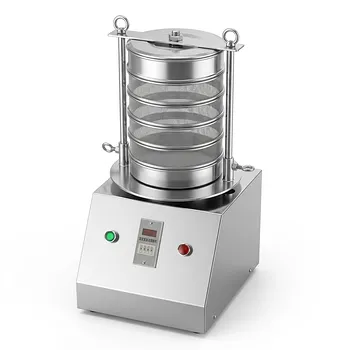
Stainless Steel Laboratory Vibratory Test Sieve Shaker

Laboratory Vibratory Test Sieve Shaker for Precision Particle Size Analysis and Powder Grading

Small Laboratory Vibrating Sieve Shaker for Precise Particle Size Analysis
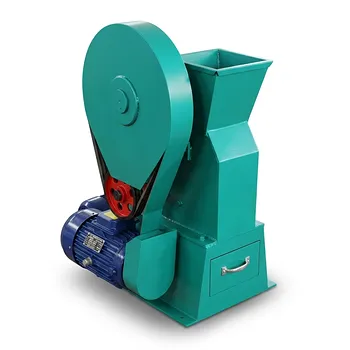
Small Laboratory Jaw Crusher 125x100mm Feed Opening for Sample Preparation

Small Laboratory Vibratory Sieve Shaker for Powder Gradation and Particle Size Analysis
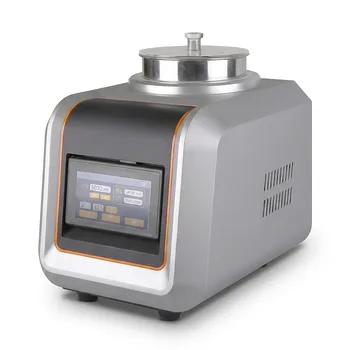
Laboratory Air Jet Sieving Machine for Fine Powder Particle Size Analysis and Deagglomeration
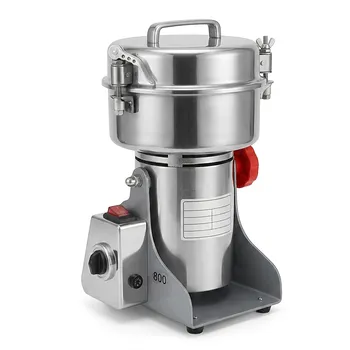
Small High-Speed Laboratory Grinder for Rapid Sample Preparation

三维电磁微量振动筛分仪
