What problem is solved by using a vacuum degassing system before the molding of quartz-polyester mixtures? Boost Strength
Updated 5 months ago
Vacuum degassing systems solve the critical problem of internal porosity by removing trapped air bubbles and adsorbed gases from the quartz-polyester mixture. This process prevents structural defects such as voids, ensuring the finished composite achieves its maximum theoretical density while significantly increasing its compressive and flexural strength.
Vacuum degassing is the essential bridge between a raw mixture and a high-performance composite. By eliminating microscopic air pockets, it transforms a potentially brittle material into a dense, structurally sound product capable of withstanding heavy mechanical loads.
Eliminating Internal Voids and Porosity
The Source of Contamination
When resin and quartz fillers are agitated during the mixing phase, tiny air bubbles are inevitably folded into the viscous liquid. Without intervention, these bubbles remain suspended in the mixture as it enters the mold.
Impact on Mechanical Integrity
Internal voids act as "stress concentrators" within the cured material. These microscopic gaps weaken the bond between the polyester resin and the quartz filler, which can lead to premature structural failure under tension or pressure.
Adsorbed Gases and Surface Contact
Beyond visible bubbles, gases can also be adsorbed directly onto the surfaces of individual powder particles. Vacuum degassing pulls these gases away, allowing the resin to fully wet every grain of quartz for a superior chemical bond.
Enhancing Material Performance
Achieving Uniform Density
A primary goal of degassing is to ensure the finished product has a uniform density throughout its entire volume. This consistency is vital for industrial applications where predictable material behavior is required across the entire component.
Boosting Compressive and Flexural Strength
By removing the "air gaps" within the matrix, the material's ability to resist deformation increases. Degassing specifically enhances compressive strength (resistance to crushing) and flexural strength (resistance to bending).
Preventing Oxidation at High Temperatures
In processes involving heat, such as hot press molding, removing oxygen is critical to prevent oxidation. Vacuum environments protect the chemical integrity of the polyester and quartz during high-temperature compression.
Understanding the Trade-offs
Process Time and Throughput
Implementing a degassing stage adds a dedicated step to the manufacturing timeline. Depending on the viscosity of the resin, achieving a high vacuum (up to 10^-4 Pa) may require extended cycle times, which can limit total production output.
Equipment Complexity and Cost
Vacuum systems require specialized chambers, high-performance pumps, and airtight seals. This increases the initial capital investment and necessitates a more rigorous maintenance schedule compared to atmospheric molding.
Resin Volatility Issues
Extremely high vacuum levels can occasionally cause "boiling" of certain volatile components within the polyester resin. Careful calibration is required to ensure you are removing trapped air without stripping away essential chemical additives.
How to Apply This to Your Project
Recommendations for Material Success
- If your primary focus is Maximum Load Bearing: Prioritize a high-vacuum degassing stage to eliminate all internal voids, as this is the only way to reach peak compressive strength.
- If your primary focus is Aesthetic Clarity: Use degassing to remove micro-bubbles that can cause cloudiness or visible "pits" on the surface of the finished quartz composite.
- If your primary focus is High-Volume Throughput: Consider a multi-stage degassing approach or lower-viscosity resins to reduce the time required in the vacuum chamber.
By effectively removing trapped gases before the curing process begins, you ensure the long-term durability and reliability of the quartz-polyester composite.
Summary Table:
| Problem Solved | Mechanism of Action | Key Benefit |
|---|---|---|
| Internal Porosity | Removes trapped air and bubbles | Increases structural density and load capacity |
| Weak Adhesion | Eliminates adsorbed gases on particles | Enhances resin-to-filler chemical bonding |
| Material Failure | Removes stress concentrators (voids) | Significantly boosts flexural and compressive strength |
| Surface Defects | Prevents micro-bubble formation | Ensures aesthetic clarity and smooth surface finish |
| Oxidation | Creates an oxygen-free environment | Protects chemical integrity during hot pressing |
Elevate Your Material Quality with KINTEK
Ready to eliminate porosity and maximize the strength of your composite materials? KINTEK provides complete laboratory sample preparation solutions for material science, specializing in high-precision powder processing and compaction equipment.
Our extensive product line is designed to optimize every stage of your workflow, featuring:
- Powder Processing: Crushers (jaw/roll), liquid nitrogen cryogenic grinders, and various mills (planetary ball, jet, sand/bead, disc, rotor).
- Sieving & Mixing: Sieve shakers (vibratory/air-jet) and advanced powder/defoaming mixers.
- Compaction Excellence: A full spectrum of hydraulic presses, including Cold/Warm Isostatic Presses (CIP/WIP), standard lab presses, XRF pellet presses, and vacuum hot presses.
Whether you are refining quartz-polyester mixtures or developing advanced ceramics, our expertise ensures your samples meet the highest industrial standards.
Contact KINTEK today to find your perfect solution!
References
- Przemysław Pączkowski, Karolina Głogowska. Preparation and Characterization of Quartz-Reinforced Hybrid Composites Based on Unsaturated Polyester Resin from Post-Consumer PET Recyclate. DOI: 10.3390/ma17051116
Mentioned Products
- 非介入式材料均质机真空脱泡行星搅拌高粘度混合设备
- High Viscosity Planetary Centrifugal Mixing and Vacuum Defoaming Machine for Laboratory Material Preparation
- Industrial Planetary Centrifugal Vacuum Defoaming Mixer for High Viscosity Paste and Powder Homogenization
- Industrial Planetary Centrifugal Vacuum Defoaming Mixer for High Viscosity Paste and Advanced Material Science
- High Efficiency Vacuum Planetary Centrifugal Mixer and Defoaming Machine for Industrial Material Research and Precise Laboratory Powder Dispersion
People Also Ask
- How does a planetary vacuum defoaming mixer help magnesium calcium phosphate slurries? Achieve Flawless 3D Printed Bone
- Why is vacuum defoaming necessary for PDMS mixtures before microwave irradiation curing? Key to Structural Integrity
- What role does a vacuum defoaming mixer play in BNT MLCC slurry? Ensure High Dielectric Strength & Pinhole-Free Prep
- Why is a vacuum defoaming mixer essential for DLP 3D printing ceramic slurries? Key to Structural Integrity
- What is the purpose of using a high-vacuum defoaming mixer for SiC/Cf composites? Optimize Density and Strength

Tech Team · PowderPreparation
Last updated on May 14, 2026
Related Products
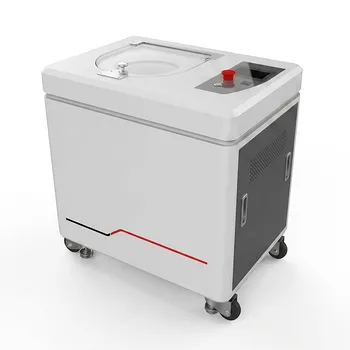
非介入式材料均质机真空脱泡行星搅拌高粘度混合设备
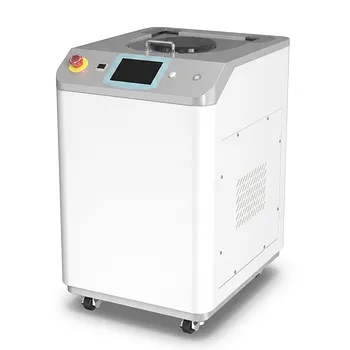
High Viscosity Planetary Centrifugal Mixing and Vacuum Defoaming Machine for Laboratory Material Preparation
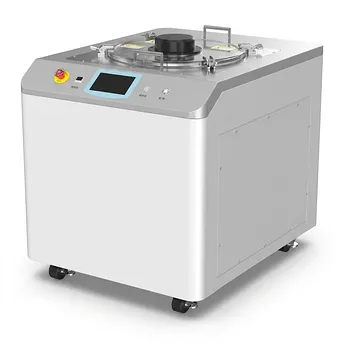
Industrial Planetary Centrifugal Vacuum Defoaming Mixer for High Viscosity Paste and Powder Homogenization
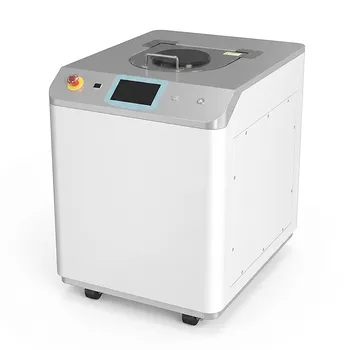
Industrial Planetary Centrifugal Vacuum Defoaming Mixer for High Viscosity Paste and Advanced Material Science
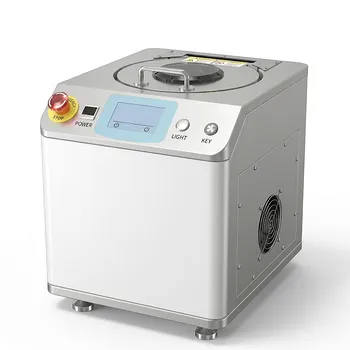
High Efficiency Vacuum Planetary Centrifugal Mixer and Defoaming Machine for Industrial Material Research and Precise Laboratory Powder Dispersion
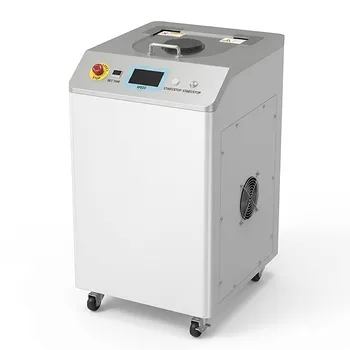
High Viscosity Planetary Centrifugal Vacuum Mixer for Material Defoaming and Uniform Mixing
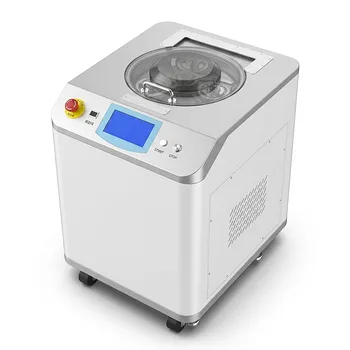
Dual Cup Vacuum Centrifugal Mixer Planetary Paste Defoaming Machine Industrial Material Processor
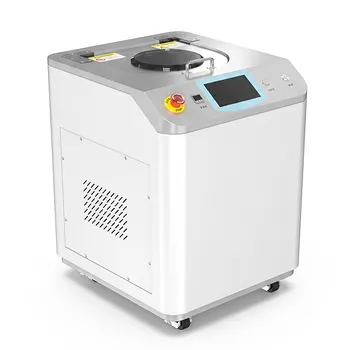
High Speed Vacuum Planetary Centrifugal Mixer and Defoamer for Industrial Paste Processing