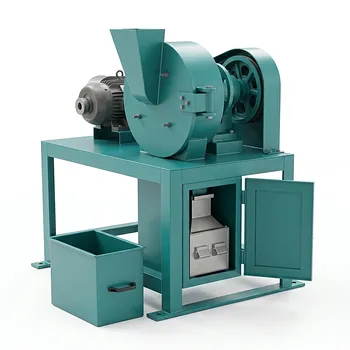
What key function does a mechanical pulverizer perform for CRSS? Achieve Superior Fillers with Fine Grinding
Updated 4 months ago
Mechanical pulverization is the critical refinement stage that transforms coarse Carbonized Rubber Seed Shell (CRSS) particles into an ultra-fine powder through high-speed grinding. This process is essential for maximizing the specific surface area of the filler, which directly influences the mechanical performance and structural integrity of the final rubber composite.
The mechanical pulverizer acts as the definitive processing step that converts carbonized waste into a functional industrial filler. By achieving extreme particle fineness, it enables superior interfacial bonding between the filler and the rubber matrix, which is the primary driver of enhanced material strength.
From Coarse Fragments to Functional Fillers
The Mechanics of High-Speed Grinding
After the initial carbonization of rubber seed shells, the resulting material is often too coarse for direct integration into rubber compounds. The mechanical pulverizer utilizes high-speed impact and shearing actions to break these fragments down into a consistent, ultra-fine powder.
Achieving Particle Uniformity
Unlike the initial crushing stage—which merely breaks bulk shells into processable chunks—pulverization ensures a high degree of refinement. This uniformity is vital for ensuring that the filler disperses evenly throughout the rubber matrix without creating weak points.
Increasing Specific Surface Area
The most significant technical outcome of the pulverizing process is the dramatic increase in the specific surface area of the CRSS. A higher surface area provides more contact points for the rubber polymer chains to interact with the carbonized particles.
Optimizing the Rubber-Filler Interface
Facilitating Physical Embedding
At the microscopic level, the fine powder produced by the pulverizer allows for physical embedding within the rubber matrix. This "interlocking" effect is what allows the CRSS to transition from a simple additive to a reinforcing agent.
Enhancing Interfacial Interaction
The increased surface area promotes stronger interfacial interaction between the filler and the matrix. This interaction ensures that mechanical loads are distributed more effectively across the composite material, rather than focusing stress on the rubber alone.
Maximizing Mechanical Strength
The ultimate goal of the pulverization process is the enhancement of mechanical strength. By refining the CRSS to an optimal fineness, the pulverizer ensures the final composite can withstand greater tension, compression, and wear.
Understanding the Trade-offs and Technical Limits
Energy Consumption vs. Particle Fineness
While ultra-fine particles offer the best reinforcement, achieving extreme fineness requires significantly higher energy consumption. Manufacturers must balance the cost of prolonged pulverization against the marginal gains in material performance.
Managing Heat Generation
High-speed mechanical grinding generates substantial frictional heat, which can potentially alter the chemical properties of the CRSS if not managed. Overheating during the powdering process can lead to degradation or oxidation, negatively impacting the filler's quality.
Equipment Wear and Maintenance
The hard, abrasive nature of carbonized shells places high stress on the grinding components of the pulverizer. Regular maintenance and the use of wear-resistant materials are necessary to prevent contamination of the CRSS powder by metal particulates.
How to Apply This to Your Production Goal
When integrating a mechanical pulverizer into your CRSS processing workflow, your technical parameters should align with your specific material requirements.
- If your primary focus is Maximum Reinforcement: Operate the pulverizer at its highest speed settings to maximize specific surface area and interfacial bonding.
- If your primary focus is Cost Efficiency: Optimize the grinding duration to reach the minimum required fineness for your application without incurring excess energy costs.
- If your primary focus is Material Purity: Utilize abrasion-resistant grinding media and cooling systems to prevent metallic contamination and thermal degradation.
By precisely controlling the pulverization stage, you transform agricultural waste into a high-value engineering component that defines the performance of the final composite.
Summary Table:
| Key Process Stage | Technical Action | Material Impact | Final Benefit |
|---|---|---|---|
| Pulverization | High-speed impact/shear | Drastic increase in surface area | Stronger interfacial bonding |
| Refinement | Particle size reduction | Enhanced uniformity & distribution | Eliminated structural weak points |
| Optimization | Controlled grinding | Enabled physical embedding | Maximized composite mechanical strength |
Elevate Your Material Science Research with Precision Powder Solutions
Transforming raw carbonized materials into high-performance fillers requires precision equipment. At [Company Name], we provide complete laboratory sample preparation solutions tailored for material science and powder processing.
Whether you are refining Carbonized Rubber Seed Shells (CRSS) or developing new composites, our extensive product line supports every stage of your workflow:
- Advanced Milling: Planetary ball mills, jet mills, rotor mills, and cryogenic grinders for achieving ultra-fine particle sizes.
- Crushing & Sieving: Jaw/roll crushers and vibratory/air-jet sieve shakers for precise size control.
- Compaction & Pressing: A full spectrum of hydraulic presses, including Cold/Warm Isostatic Presses (CIP/WIP), vacuum hot presses, and XRF pellet presses.
- Mixing: High-efficiency powder and defoaming mixers for uniform filler distribution.
Ready to optimize your powdering process? Contact our technical experts today to find the ideal equipment for your laboratory and production goals.
References
- Munirah Onn, Zafryll Amir Zulkifly. Performance evaluation of carbonized rubber seed shell (CRSS) filler as reinforcer in rubber binder. DOI: 10.11113/mjfas.v14n3.1098
Mentioned Products
- Continuous Feeding Grinder High Efficiency Pulverizer for Lab Sample Preparation
- Micro Solid Sample Grinder High Speed Pulverizer for Laboratory Small Batch Grinding
- Laboratory Desktop Ultra Fine Powder Grinder High Speed Micronizing Pulverizer
- Medium Hardness Material Disc Pulverizer for Coal Ore Sample Preparation
- Laboratory Disc Pulverizer for Coal Coke Ore and Medium Hard Materials Sample Preparation
People Also Ask
- Why must soil samples be ground before XRD or XRF analysis? Ensure Precision & Homogeneity in Lab Results
- What is the function of a laboratory blender for mixed fuels? Achieving Microscopic Uniformity for Accurate Analysis
- What is the function of a laboratory pulverizer in Boerhavia diffusa-based adsorbent prep? Maximize Surface Area
- What are the technical advantages of using a high-speed laboratory pulverizer for grinding tablets into powders? 20K RPM
- What is the function of laboratory-scale pulverizing equipment in bio-adsorptive film prep? Maximize Surface Area

Tech Team · PowderPreparation
Last updated on May 14, 2026
Related Products
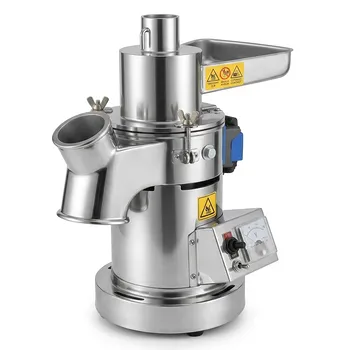
Continuous Feeding Grinder High Efficiency Pulverizer for Lab Sample Preparation

Micro Solid Sample Grinder High Speed Pulverizer for Laboratory Small Batch Grinding
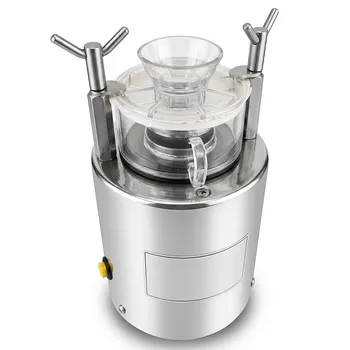
Laboratory Desktop Ultra Fine Powder Grinder High Speed Micronizing Pulverizer
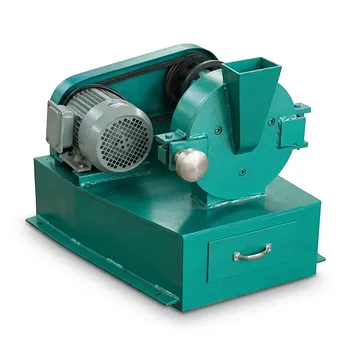
Medium Hardness Material Disc Pulverizer for Coal Ore Sample Preparation
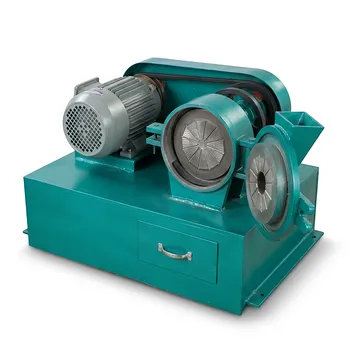
Laboratory Disc Pulverizer for Coal Coke Ore and Medium Hard Materials Sample Preparation