What is the significance of a water-cooling system for a planetary ball mill? Optimize HEA Powder Thermal Stability
Updated 3 months ago
A water-cooling system is the primary mechanism for maintaining thermal stability during the high-energy production of High-Entropy Alloy (HEA) powders. It actively removes the intense heat generated by collisions between grinding balls, powders, and jar walls. Without this system, the internal temperature of the mill would rise to levels that trigger powder oxidation, material agglomeration, or uncontrolled phase transformations.
The water-cooling system acts as a critical thermal regulator that preserves the chemical and physical integrity of HEA powders during high-energy milling. It ensures that the mechanical energy is used for particle refinement and alloying rather than causing detrimental thermal damage to the material or the equipment.
Thermal Management and Material Integrity
Preventing Oxidation and Chemical Degradation
High-Entropy Alloys are often composed of elements like Al, Cr, Fe, Ni, and Ti, which can be highly reactive at elevated temperatures. The water-cooling system circulates liquid to promptly remove heat, preventing the powder from reaching its oxidation threshold. This ensures the final micron powder remains chemically pure and suitable for subsequent processes like laser cladding.
Controlling Powder Agglomeration and Sticking
Excessive heat often causes metal powders to become soft or tacky, leading to agglomeration where particles fuse together prematurely. This "sticking" effect can cause the material to adhere to the grinding jar walls or the balls, reducing milling efficiency. Effective cooling maintains the powder in a brittle state, which is necessary for the fragmentation and grain refinement required in HEA production.
Maintaining Phase Stability
HEAs rely on the formation of stable solid solution structures, such as body-centered cubic (bcc) lattices, through mechanical alloying. Uncontrolled temperature spikes can trigger unintended phase transitions or the formation of brittle intermetallic compounds. The cooling system ensures the environment remains within the temperature range required for proper atomic-level uniform distribution.
Equipment Longevity and Process Efficiency
Protecting Precision Components
The high-speed rotation of a planetary ball mill generates significant friction within its internal drive systems. Heat from the grinding jars can transfer to the precision bearings and motors, potentially causing thermal expansion or lubricant failure. A water-cooling system mitigates this risk, ensuring the mill can operate for extended durations without mechanical breakdown.
Eliminating the Need for Frequent Downtime
In systems without active cooling, operators must implement periodic cooling breaks (e.g., 20 minutes of downtime for every hour of milling). Active water cooling allows for continuous operation, significantly increasing the throughput of the laboratory or production line. This constant temperature control also leads to more predictable and repeatable results across different batches.
Understanding the Trade-offs
While water-cooling systems provide superior thermal control, they introduce system complexity and higher initial costs compared to air-cooled models. Users must manage water connections and ensure the cooling lines are free of leaks to prevent contamination of the milling environment.
However, the alternative—relying on ambient air or manual breaks—often results in inconsistent powder quality. For materials as sensitive as HEAs, the risk of "thermal overshoot" during long milling cycles usually outweighs the simplicity of a non-cooled system.
Making the Right Choice for Your Goal
To achieve the best results with HEA micron powders, your cooling strategy should align with your specific material requirements and production scale.
- If your primary focus is material purity: You must use a water-cooling system to strictly prevent oxidation and ensure the chemical composition of the HEA remains unchanged.
- If your primary focus is fine grain refinement: Active cooling is essential to keep the powder brittle enough for repeated fragmentation and to prevent the particles from welding together.
- If your primary focus is equipment lifespan: Prioritize water-cooled jars to protect the mill’s internal bearings and motors from the high thermal energy generated during high-speed HEA synthesis.
The integration of a water-cooling system is not merely an upgrade, but a fundamental requirement for the reliable high-energy milling of advanced High-Entropy Alloys.
Summary Table:
| Key Feature | Impact on HEA Powder | Equipment Benefit |
|---|---|---|
| Thermal Regulation | Prevents oxidation and chemical degradation | Protects precision bearings and motors |
| Anti-Agglomeration | Prevents particle sticking; ensures brittle fragmentation | Eliminates the need for manual cooling breaks |
| Phase Control | Maintains stable solid solution structures | Increases process repeatability |
| Active Heat Removal | Ensures atomic-level uniform distribution | Enables continuous, high-speed operation |
Elevate Your HEA Research with Precision Thermal Control
Producing high-quality High-Entropy Alloy (HEA) powders requires rigorous thermal management to prevent oxidation and ensure phase stability. At [Your Brand Name], we provide complete laboratory sample preparation solutions tailored for material science. Our expertise in powder processing and compaction equipment ensures your research achieves the highest standards of purity and grain refinement.
Our extensive product line includes:
- Advanced Milling: Planetary ball mills, jet mills, and cryogenic grinders.
- Sizing & Mixing: Sieve shakers, powder mixers, and defoaming mixers.
- Compaction Excellence: Cold/Warm Isostatic Presses (CIP/WIP), standard lab presses, and vacuum hot presses.
Don't let thermal damage compromise your materials. Contact us today to discover how our specialized equipment can optimize your HEA synthesis and laboratory efficiency!
References
- Robert Stuckert, Christoph Rehbock. Amorphization of laser-fabricated ignoble high-entropy alloy nanoparticles and its impact on surface composition and electrochemistry. DOI: 10.1039/d5fd00087d
Mentioned Products
- Vertical Square Planetary Ball Mill for Laboratory Sample Preparation and Nanoscale Grinding
- Miniature Planetary Ball Mill with Vacuum Grinding and High Efficiency for Laboratory Sample Preparation
- Planetary Ball Mill 12L
- 8L Planetary Ball Mill for Laboratory Grinding and Sample Preparation
- High Energy Omnidirectional Planetary Ball Mill 20L
People Also Ask
- How does a planetary ball mill contribute to the homogenization of trace elements? Achieve Sub-Micron Uniformity
- What is the function of a planetary ball mill in wollastonite ceramic prep? Achieve Molecular Homogenization & Reactivity
- Why grind lime-pozzolan specimens for TG/DTA for 3 mins? Master sample prep for high-precision thermal analysis.
- What role does a planetary ball mill play in KNTO ceramic refinement? Optimize Homogeneity & Reactivity
- What is the primary purpose of using a planetary ball mill during the raw material mixing stage of cerium-doped bioactive glass? - Goal

Tech Team · PowderPreparation
Last updated on Jun 03, 2026
Related Products

Vertical Square Planetary Ball Mill for Laboratory Sample Preparation and Nanoscale Grinding

Miniature Planetary Ball Mill with Vacuum Grinding and High Efficiency for Laboratory Sample Preparation
Planetary Ball Mill 12L
8L Planetary Ball Mill for Laboratory Grinding and Sample Preparation

High Energy Omnidirectional Planetary Ball Mill 20L
Dual Station Planetary Ball Mill 24L

High Energy Omnidirectional Planetary Ball Mill 16L
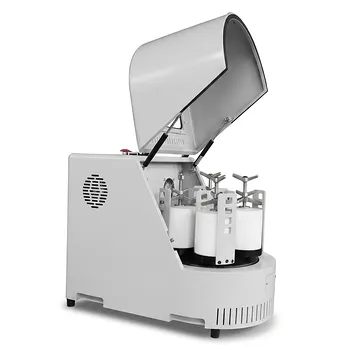
Vertical Semi Circular Planetary Ball Mill for Laboratory Precision Grinding

High Energy Planetary Ball Mill for Nano Scale Grinding and Mechanical Alloying

High Energy Laboratory Planetary Ball Mill for Nano Grinding and Material Science Sample Preparation
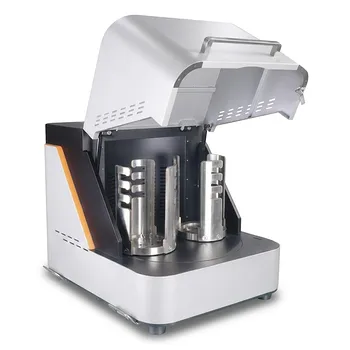
High Energy Laboratory Planetary Ball Mill for Nano Grinding and Colloidal Mixing of Hard and Brittle Materials

Vertical Production Planetary Ball Mill for High Throughput Powder Processing
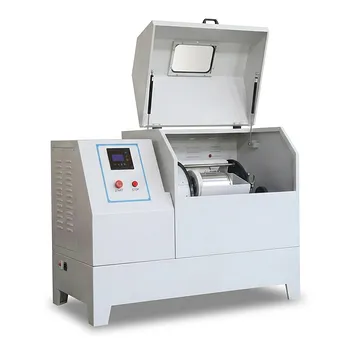
Heavy Duty Horizontal Planetary Ball Mill for Efficient Industrial Grinding and Sample Preparation
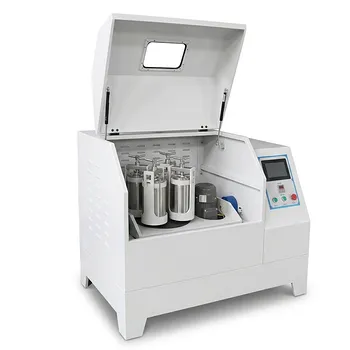
360° Rotating Omnidirectional Laboratory Planetary Ball Mill for Homogeneous Ultra-Fine Grinding and Mixing
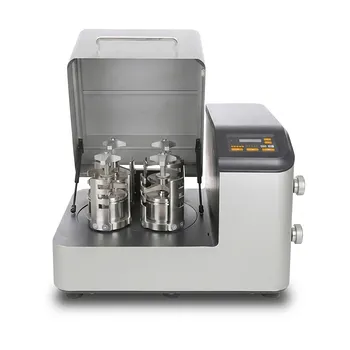
High Energy Planetary Ball Mill for Nano Scale Grinding and Colloidal Mixing in Material Science Research
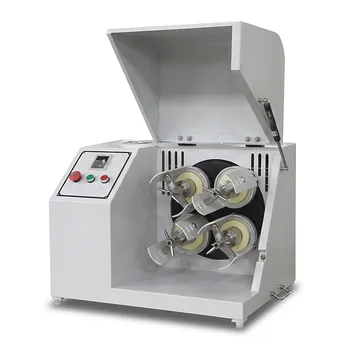
Horizontal Light Duty Planetary Ball Mill for Laboratory Sample Preparation
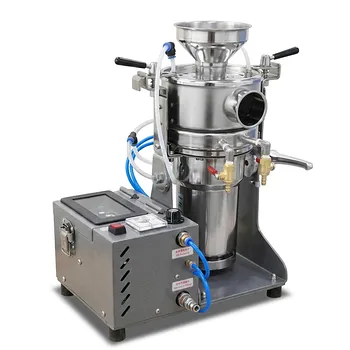
Water Cooled Pulse Jet Ultrafine Grinder
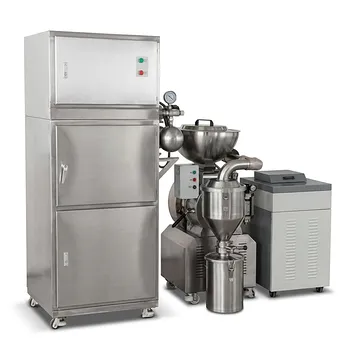
Water-Cooled Pulse Dust Removal Air Classifying Ultrafine Grinder
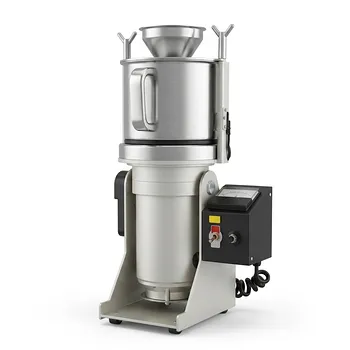
Water Cooled Pulse Jet Ultra Fine Pulverizer for Continuous Grinding