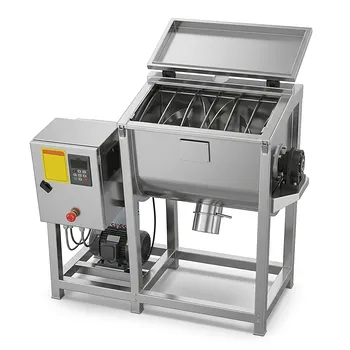
What is the role of a planetary gravity mixer in Al2O3-BN/EP prep? Achieve Uniform Dispersion & Bubble-Free Matrices
Updated 5 months ago
The role of a planetary gravity mixer in preparing $Al_2O_3-BN/EP$ composite binder systems is to achieve a molecular-level uniform distribution of the resin, curing agents, and silane coupling agents. By utilizing high-speed revolution and rotation, the mixer generates powerful centrifugal forces that blend high-viscosity components in a very short time. This process creates a high-quality, bubble-free matrix environment that is essential for the subsequent integration of $Al_2O_3$ and $BN$ fillers.
Core Takeaway: The planetary gravity mixer serves as the foundation for composite integrity by ensuring the epoxy matrix is chemically homogeneous and physically dense. This bladeless mixing technology eliminates air bubbles and micro-voids, which is critical for maximizing the thermal and mechanical properties of the final material.
The Mechanics of Planetary Mixing in Binder Preparation
Dual-Axis Rotation and High-Energy Shear
The planetary gravity mixer operates through a simultaneous revolution and rotation mechanism. This dual-axis motion generates intense centrifugal forces and shear stress within the mixing vessel.
Unlike traditional mixers that use blades, this method moves the entire container. This ensures that even high-viscosity bisphenol F epoxy resins are thoroughly agitated without the "dead zones" common in mechanical stirring.
Molecular-Level Dispersion of Matrix Components
In the initial stage of preparation, the goal is to mix the epoxy with curing agents and silane coupling agents. The high-energy environment facilitates a molecular-level distribution of these reactive components.
This level of uniformity is vital for the silane coupling agent to effectively bridge the interface between the organic resin and the inorganic $Al_2O_3-BN$ fillers later in the process.
Enhancing Composite Performance through Degassing
Elimination of Micro-bubbles and Voids
The planetary gravity mixer is frequently classified as a defoaming mixer. The same centrifugal forces that mix the material also drive air bubbles to the surface, where they collapse.
Removing micro-bubbles from the binder system is critical. In $Al_2O_3-BN/EP$ composites, any remaining air pockets act as thermal insulators and structural weak points, significantly reducing thermal conductivity and mechanical strength.
Breaking Down Particle Agglomerates
While the primary focus is the binder, the mixer is also essential for handling the $Al_2O_3$ and $BN$ powders. The intense shear forces help break down nanoparticle agglomerates that naturally form due to surface tension.
By ensuring particles are individually wetted by the resin, the mixer helps construct continuous heat conduction pathways. This is the key to achieving the superior performance required in thermal interface materials.
Understanding the Trade-offs and Constraints
Heat Generation During Mixing
The high-speed rotation required for effective dispersion generates significant internal friction. This can lead to a rapid increase in the temperature of the resin system.
If the temperature is not monitored, it may trigger premature curing or degrade heat-sensitive components. Users must often balance mixing speed with cooling cycles or use specialized vacuum-jacketed containers.
Capacity and Batch Consistency
Planetary gravity mixers are typically designed for small to medium-scale batches. While they provide unparalleled quality, scaling to industrial volumes requires careful consideration of container sizes and cycle times.
Maintaining batch-to-batch consistency requires precise control over RPM and duration. Even slight variations in mixing energy can alter the rheology and final density of the composite "green body."
How to Apply This to Your Project
Making the Right Choice for Your Goal
- If your primary focus is maximizing thermal conductivity: Prioritize the vacuum defoaming mode to ensure a void-free matrix that allows for uninterrupted heat pathways between $Al_2O_3$ and $BN$ particles.
- If your primary focus is structural integrity: Use high-speed rotation phases to ensure the silane coupling agent is uniformly distributed, which strengthens the bond between the resin and the ceramic fillers.
- If your primary focus is high-viscosity handling: Ensure your mixer settings provide enough shear force to break down $BN$ agglomerates, which are notoriously difficult to disperse in thick epoxy systems.
By mastering the high-speed centrifugal forces of the planetary gravity mixer, you ensure that the binder system provides a stable, dense, and homogeneous foundation for high-performance composite materials.
Summary Table:
| Key Role | Impact on Composite | Mechanism |
|---|---|---|
| Molecular Dispersion | Ensures chemical homogeneity of resin/curing agents | Dual-axis high-speed revolution and rotation |
| Vacuum Defoaming | Eliminates micro-voids to boost thermal conductivity | Centrifugal force driving air bubbles to the surface |
| De-agglomeration | Breaks down nanoparticle clusters for better wetting | Intense high-energy shear stress without blades |
| Viscosity Handling | Blends thick bisphenol F epoxy resins efficiently | Bladeless mixing eliminates material 'dead zones' |
Elevate Your Material Science Research with Precision Mixing
At [Brand Name], we provide complete laboratory sample preparation solutions tailored for advanced material research. Whether you are developing high-thermal conductivity Al2O3-BN/EP composites or specialized ceramics, our planetary defoaming mixers ensure a void-free, perfectly dispersed matrix every time.
Our extensive equipment line supports your entire workflow:
- Powder Processing: Planetary ball mills, jet mills, and jaw/roll crushers.
- Mixing & Dispersion: Advanced powder mixers and centrifugal defoaming mixers.
- Compaction & Pressing: Manual and automatic hydraulic presses, including Cold/Warm Isostatic Presses (CIP/WIP) and vacuum hot presses.
- Sieving: Vibratory and air-jet sieve shakers for precise particle size control.
Ready to optimize your binder systems and maximize composite performance? Contact our technical experts today to find the right equipment for your lab!
References
- William Anderson Lee Sanchez, Chih‐Wei Chiu. Enhanced Thermal Conductivity of Epoxy Composites Filled with Al2O3/Boron Nitride Hybrids for Underfill Encapsulation Materials. DOI: 10.3390/polym13010147
Mentioned Products
- High Efficiency Vacuum Planetary Centrifugal Mixer and Defoaming Machine for Industrial Material Research and Precise Laboratory Powder Dispersion
- High Viscosity Planetary Centrifugal Vacuum Mixer for Material Defoaming and Uniform Mixing
- High Viscosity Planetary Centrifugal Mixing and Vacuum Defoaming Machine for Laboratory Material Preparation
- Industrial Planetary Centrifugal Vacuum Defoaming Mixer for High Viscosity Paste and Powder Homogenization
- Industrial Planetary Centrifugal Vacuum Defoaming Mixer for High Viscosity Paste and Advanced Material Science
People Also Ask
- Why is a planetary centrifugal mixer recommended for geopolymer slurries? Achieve high-shear, air-free homogenization.
- What core functions does a planetary centrifugal mixer perform? Optimize Hard Carbon Anode Slurry & Degassing
- Why is a planetary centrifugal mixer utilized for wood powder and HPMC? Achieve uniform dispersion & rapid defoaming.
- What role does a planetary centrifugal mixer play in flexible sensor inks? Achieve Nano-Scale Homogenization
- What is the role of a planetary centrifugal mixer in preparing DCPD resin-based matrices? Ensure Flawless Homogeneity

Tech Team · PowderPreparation
Last updated on May 14, 2026
Related Products
High Efficiency Vacuum Planetary Centrifugal Mixer and Defoaming Machine for Industrial Material Research and Precise Laboratory Powder Dispersion
High Viscosity Planetary Centrifugal Vacuum Mixer for Material Defoaming and Uniform Mixing
High Viscosity Planetary Centrifugal Mixing and Vacuum Defoaming Machine for Laboratory Material Preparation
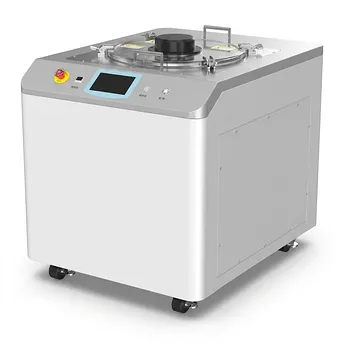
Industrial Planetary Centrifugal Vacuum Defoaming Mixer for High Viscosity Paste and Powder Homogenization
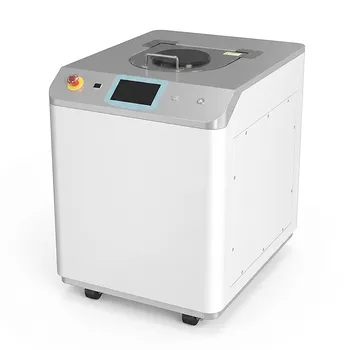
Industrial Planetary Centrifugal Vacuum Defoaming Mixer for High Viscosity Paste and Advanced Material Science
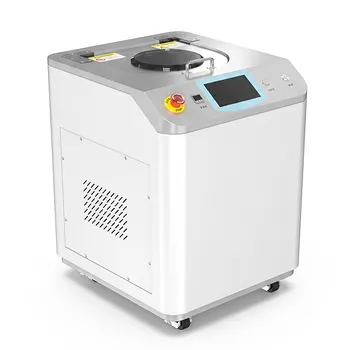
High Speed Vacuum Planetary Centrifugal Mixer and Defoamer for Industrial Paste Processing
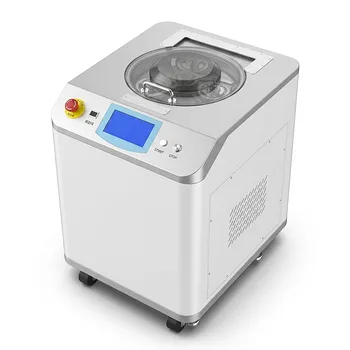
Dual Cup Vacuum Centrifugal Mixer Planetary Paste Defoaming Machine Industrial Material Processor
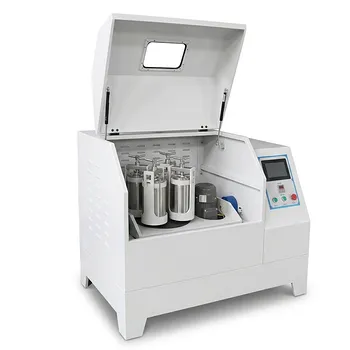
360° Rotating Omnidirectional Laboratory Planetary Ball Mill for Homogeneous Ultra-Fine Grinding and Mixing
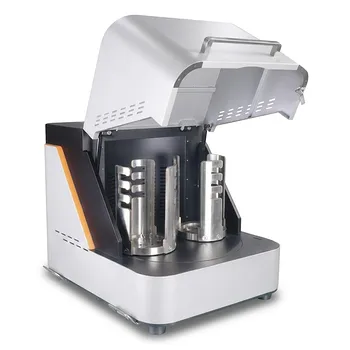
High Energy Laboratory Planetary Ball Mill for Nano Grinding and Colloidal Mixing of Hard and Brittle Materials
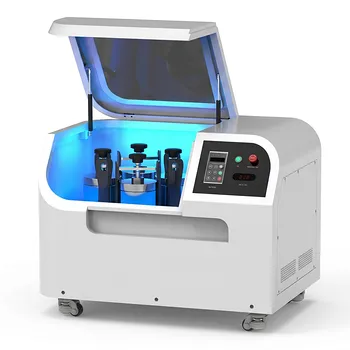
Planetary Ball Mill 12L
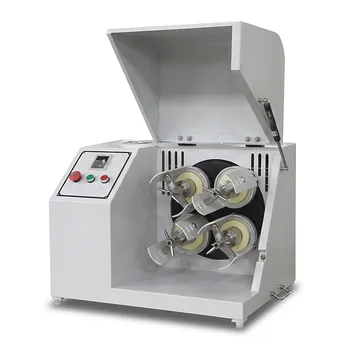
Horizontal Light Duty Planetary Ball Mill for Laboratory Sample Preparation

High Energy Omnidirectional Planetary Ball Mill 20L

High Energy Omnidirectional Planetary Ball Mill 16L

Miniature Planetary Ball Mill with Vacuum Grinding and High Efficiency for Laboratory Sample Preparation

Vertical Production Planetary Ball Mill for High Throughput Powder Processing
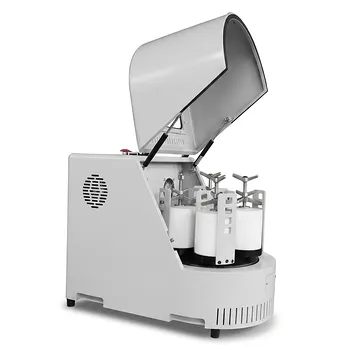
Vertical Semi Circular Planetary Ball Mill for Laboratory Precision Grinding
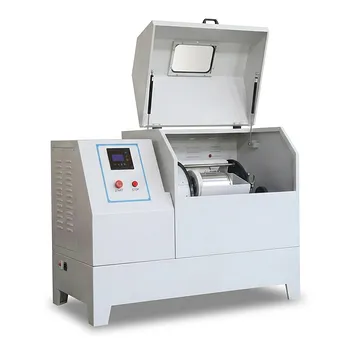
Heavy Duty Horizontal Planetary Ball Mill for Efficient Industrial Grinding and Sample Preparation

High Energy Planetary Ball Mill for Nano Scale Grinding and Mechanical Alloying

Vertical Square Planetary Ball Mill for Laboratory Sample Preparation and Nanoscale Grinding