What is the role of a planetary centrifugal mixer in 3D printing CeZrLa catalysts? Achieve Bubble-Free Slurry Precision
Updated 5 months ago
The planetary centrifugal mixer is the critical bridge between raw catalyst components and a printable slurry. In the manufacturing of CeZrLa composite oxide catalysts, this equipment uses simultaneous revolution and rotation to achieve high-precision dispersion of nanopowders into polymer solutions while eliminating air bubbles. This dual-action process ensures the resulting "ink" has the exact rheological properties required for consistent fiber extrusion and structural integrity during 3D printing.
Core Takeaway: The planetary centrifugal mixer functions as a blade-free, high-shear processor that creates a perfectly uniform, bubble-free catalyst slurry. By optimizing the dispersion of nanopowders and binders at a microscopic scale, it enables the 3D printing of dense, defect-free catalytic structures without the need for organic solvents.
Achieving High-Precision Micro-Dispersion
The Physics of Revolution and Rotation
The mixer operates by rotating the material container while it simultaneously revolves around a central axis. This dual-motion mechanism generates intense centrifugal and shear forces that interact with the high-viscosity components of the CeZrLa slurry. Unlike traditional blade mixers, this method ensures that the nanopowders, methylcellulose polymer solutions, and lubricating additives are blended with extreme uniformity at the microscopic level.
Solvent-Free Component Integration
One of the primary advantages of this mixing technology in catalyst production is its ability to handle high-concentration solids without organic solvents. The powerful shear forces are sufficient to break down particle agglomerates of CeZrLa nanopowders, ensuring they are evenly distributed throughout the aqueous polymer matrix. This capability simplifies the manufacturing process and reduces the environmental footprint of the catalyst production.
The Critical Role of Vacuum Defoaming
Eliminating Micro-bubbles and Internal Pores
During the mixing process, air can easily become trapped in the viscous slurry, leading to micro-bubbles. If left unaddressed, these bubbles cause "pitting" or internal pores in the 3D-printed fibers, which compromises the mechanical strength and surface area of the final catalyst. The planetary centrifugal mixer performs simultaneous vacuum defoaming, using centrifugal sedimentation to force air out of the mixture before it ever reaches the printer nozzle.
Ensuring Dense and Defect-Free Structures
By removing even the smallest micro-bubbles, the mixer ensures that the extruded catalyst fibers are dense and continuous. For CeZrLa composite oxides, structural integrity is paramount for maintaining performance in high-temperature or high-pressure reactor environments. Defoaming guarantees that the final 3D-printed geometry matches the digital design without structural failures caused by hidden voids.
Optimizing Rheology for 3D Printing
Creating Stable Extrusion Profiles
The "printability" of a catalyst slurry depends entirely on its rheological properties—specifically its viscosity and shear-thinning behavior. The planetary centrifugal mixer ensures a homogenous distribution of lubricating additives and binders, which stabilizes the flow of the material. This consistency allows for steady fiber extrusion, preventing the nozzle clogging or "surging" that occurs with unevenly mixed pastes.
Maintaining Shape Fidelity Post-Printing
Because the mixer achieves a high degree of filler dispersion, the resulting CeZrLa slurry exhibits better structural "memory" once extruded. This means the printed layers can support their own weight without deforming before the drying or calcination stages. The uniformity provided by the mixer is what allows complex, high-surface-area 3D architectures to be realized.
Understanding the Trade-offs
Heat Generation and Material Sensitivity
While the high-speed revolution/rotation is efficient, it generates significant kinetic heat within the slurry. For some temperature-sensitive binders or volatile additives, this rise in temperature can alter the viscosity prematurely or trigger early gelation. It is often necessary to use cooling systems or intermittent mixing cycles to protect the chemical integrity of the CeZrLa mixture.
Scalability and Batch Constraints
Planetary centrifugal mixers are typically batch-processing machines with specific weight and volume limits. While they offer unparalleled precision for high-value catalyst slurries, scaling to mass production requires larger, more expensive industrial units or a parallel processing strategy. This makes them ideal for specialized catalyst manufacturing but potentially a bottleneck in high-volume, low-margin applications.
How to Apply This to Your Project
Making the Right Choice for Your Goal
To maximize the effectiveness of your 3D-printed CeZrLa catalysts, align your mixing parameters with your specific structural requirements:
- If your primary focus is mechanical durability: Prioritize the vacuum defoaming function to ensure a high-density, pore-free final structure.
- If your primary focus is catalytic activity: Focus on maximizing the rotation speed to ensure the finest possible dispersion of CeZrLa nanopowders for maximum surface area exposure.
- If your primary focus is complex geometry: Optimize the ratio of methylcellulose to lubricant and use the mixer to ensure a perfectly homogenous rheological profile for thin-wall extrusion.
Mastering the interaction between centrifugal force and material rheology is the most effective way to transition from a theoretical catalyst powder to a high-performance 3D-printed structure.
Summary Table:
| Feature | Function in Catalyst Prep | Impact on 3D Printing Output |
|---|---|---|
| High-Shear Dispersion | Breaks down nanopowder agglomerates | Ensures uniform catalytic activity and fiber density |
| Vacuum Defoaming | Eliminates micro-bubbles and trapped air | Prevents internal pores and mechanical failure |
| Rheology Optimization | Stabilizes viscosity and shear-thinning | Enables smooth extrusion without nozzle clogging |
| Blade-Free Mixing | Achieving uniformity without contamination | Maintains high purity for sensitive oxide catalysts |
Optimize Your Catalyst Preparation Workflow
Achieving the perfect 3D-printed structure starts with superior material preparation. We provide complete laboratory sample preparation solutions for material science, specializing in precision powder processing and compaction equipment tailored for advanced research.
Our extensive line includes planetary centrifugal mixers and defoaming mixers designed to create the uniform, bubble-free slurries required for high-performance catalyst manufacturing. To complement your workflow, we also offer:
- Advanced Milling: Planetary ball mills, jet mills, and cryogenic grinders for precise nanopowder synthesis.
- Sieving & Mixing: Vibratory/air-jet sieve shakers and high-efficiency powder mixers.
- Compaction Excellence: A full spectrum of hydraulic presses, including Cold/Warm Isostatic Presses (CIP/WIP), vacuum hot presses, and XRF pellet presses.
Whether you are refining CeZrLa composite oxides or developing next-generation materials, our equipment ensures shape fidelity and structural integrity. Contact our experts today to find the right solution for your laboratory and enhance your material performance!
References
- Aryane A. Marciniak, Michael North. Heterogeneous catalysts for cyclic carbonate synthesis from carbon dioxide and epoxides. DOI: 10.1016/j.cogsc.2020.100365
Mentioned Products
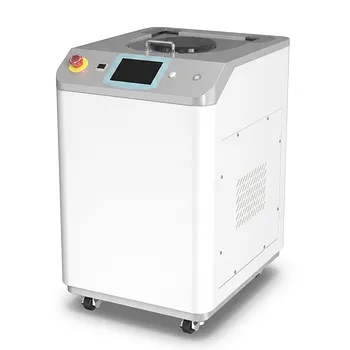
- High Viscosity Planetary Centrifugal Mixing and Vacuum Defoaming Machine for Laboratory Material Preparation
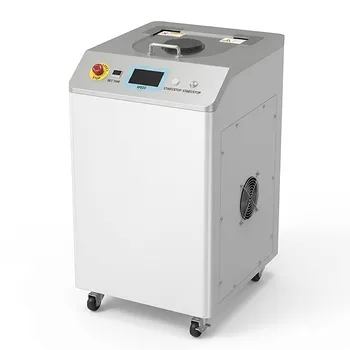
- High Viscosity Planetary Centrifugal Vacuum Mixer for Material Defoaming and Uniform Mixing
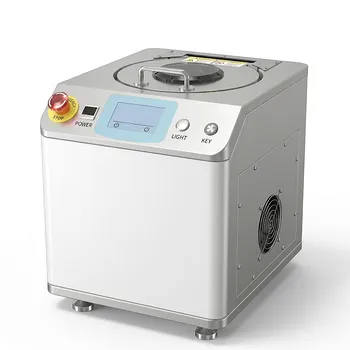
- High Efficiency Vacuum Planetary Centrifugal Mixer and Defoaming Machine for Industrial Material Research and Precise Laboratory Powder Dispersion
- Industrial Planetary Centrifugal Vacuum Defoaming Mixer for High Viscosity Paste and Powder Homogenization
- Industrial Planetary Centrifugal Vacuum Defoaming Mixer for High Viscosity Paste and Advanced Material Science
People Also Ask
- What are the primary advantages of planetary centrifugal mixers? Master Bladeless Mixing & Vacuum Defoaming
- How does a planetary centrifugal mixer address key challenges in Tyr-CDs@EVA optical films? Ensure Optical Clarity.
- How does the tilt angle of the container influence fluid flow within a planetary centrifugal mixer? Master 3D Convection
- Why is an industrial-grade planetary centrifugal mixer used for secondary stirring? Achieve Void-Free Filler Dispersion
- Planetary Centrifugal Mixer vs. Manual Mixing for Eu2O3 Resins: Achieving Superior Dispersion & Deaeration

Tech Team · PowderPreparation
Last updated on May 14, 2026
Related Products
High Viscosity Planetary Centrifugal Mixing and Vacuum Defoaming Machine for Laboratory Material Preparation
High Viscosity Planetary Centrifugal Vacuum Mixer for Material Defoaming and Uniform Mixing
High Efficiency Vacuum Planetary Centrifugal Mixer and Defoaming Machine for Industrial Material Research and Precise Laboratory Powder Dispersion
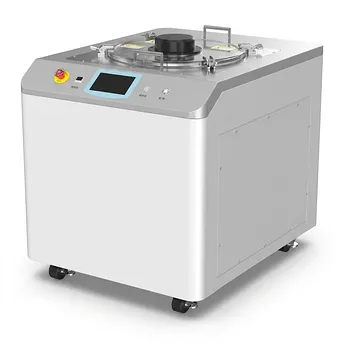
Industrial Planetary Centrifugal Vacuum Defoaming Mixer for High Viscosity Paste and Powder Homogenization
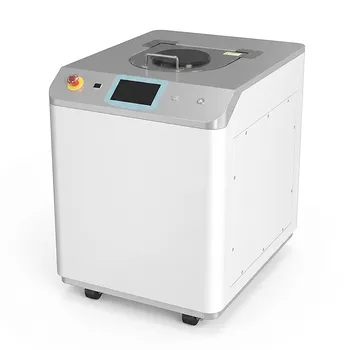
Industrial Planetary Centrifugal Vacuum Defoaming Mixer for High Viscosity Paste and Advanced Material Science
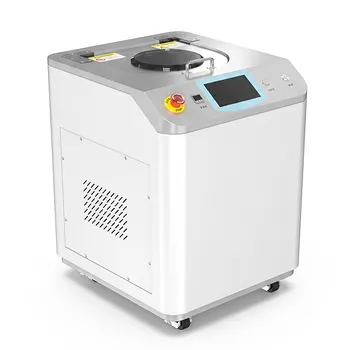
High Speed Vacuum Planetary Centrifugal Mixer and Defoamer for Industrial Paste Processing
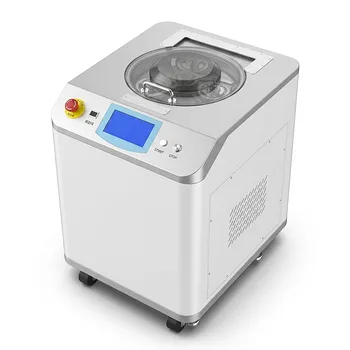
Dual Cup Vacuum Centrifugal Mixer Planetary Paste Defoaming Machine Industrial Material Processor
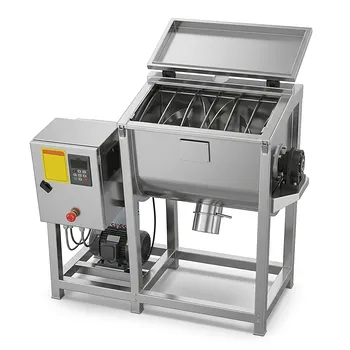
Horizontal Ribbon Mixer for Uniform Powder and Slurry Mixing
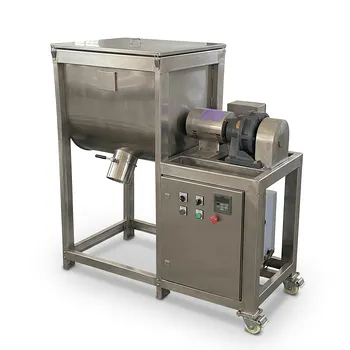
Horizontal Ribbon Mixer for Dry Powder and Slurry Blending
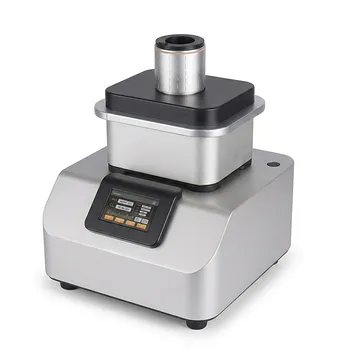
Ultra Centrifugal Mill High Speed Laboratory Grinder for Fibrous and Brittle Sample Preparation
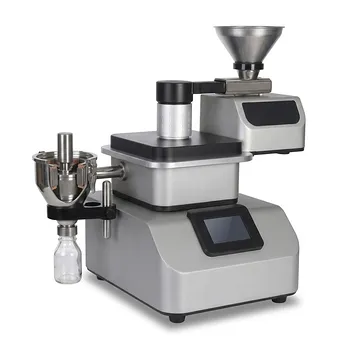
Ultra Centrifugal Mill for Rapid Laboratory Sample Preparation and Fine Powder Grinding
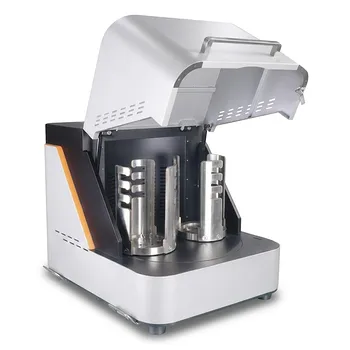
High Energy Laboratory Planetary Ball Mill for Nano Grinding and Colloidal Mixing of Hard and Brittle Materials