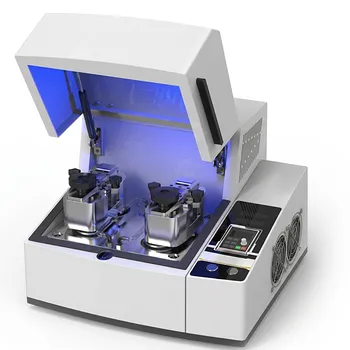
What is the role of a planetary ball mill in SiC/Al composite powder preparation? Optimize Cold Spray Performance
Updated 4 months ago
Achieving coating density in cold spraying depends on the precise integration of ceramic and metal phases. The planetary ball mill serves as the primary mechanism for homogenizing hard silicon carbide (SiC) powder with a ductile aluminum (Al) binder. This process ensures the aluminum phase is evenly distributed between ceramic particles, providing the necessary plastic deformation for particle bonding upon substrate impact.
The planetary ball mill facilitates high-energy mechanical mixing that embeds a ductile metallic binder into a hard ceramic matrix. This creates a uniform, composite powder capable of achieving high densification and structural integrity during the cold spray process.
High-Energy Mechanical Integration
The Role of Impact and Shear Forces
The planetary ball mill utilizes high-speed rotation to generate intense mechanical impact and shear forces. These forces are essential for achieving deep, micron-level mixing of the SiC matrix and the aluminum binder.
Breaking Down Agglomerates
Raw ceramic powders often form clusters that can lead to structural defects. The high-energy motion effectively breaks down powder agglomerates, ensuring that every ceramic particle is individually available for coating with the binder.
Mechanical Activation of Particles
Beyond simple mixing, the mill provides mechanical activation by accumulating energy within the powder. This process increases particle reactivity and alters crystallinity, which can enhance the bonding characteristics of the composite during impact.
Preparing the Matrix for Cold Spray Impact
Introducing the Plastic Phase
Cold spraying relies on the plastic deformation of particles to form a bond upon impact with a substrate. Because SiC is a hard ceramic that does not deform, the ball mill must force the aluminum binder into the spaces between SiC particles.
Creating a Deformable Composite
The mill ensures the aluminum phase is distributed so thoroughly that it acts as a ductile carrier. When the composite powder hits the substrate at supersonic speeds, the aluminum deforms, "locking" the hard SiC particles into a dense, cohesive coating.
Optimizing Powder Flowability
The milling process can be tuned to achieve a specific particle size distribution and improve the Hausner ratio. This optimization ensures consistent flowability and high packing density, which are critical for stable powder feeding in industrial cold spray systems.
Understanding the Trade-offs
Balancing Refinement and Oxidation
While high-energy milling refines particle size, excessive milling can lead to the creation of nanopowders. Smaller particles have a higher specific surface area, which significantly increases the risk of metallic oxidation and can impede the cold spray bonding process.
Grinding Media Contamination
The intense forces inside the mill cause wear on the grinding media and jars. If the media material is not carefully selected to match the chemistry of the SiC/Al composite, impurities can be introduced that weaken the final coating’s mechanical properties.
Energy Consumption vs. Homogeneity
Achieving molecular-level uniformity requires longer milling times and higher speeds. Engineers must balance the need for microstructural consistency against the energy costs and the potential for "over-milling," which can degrade the initial characteristics of the raw materials.
Making the Right Choice for Your Goal
To achieve the best results with your SiC/Al composite, your milling strategy should align with your specific performance requirements.
- If your primary focus is Maximum Coating Density: Prioritize longer milling times at moderate speeds to ensure the aluminum binder is fully and uniformly distributed between all SiC particles.
- If your primary focus is Deposition Efficiency: Focus on optimizing the rotational speed to improve powder flowability and packing density without over-refining the particle size.
- If your primary focus is Material Purity: Utilize grinding media made of the same material as the matrix (e.g., SiC media) to prevent the introduction of foreign contaminants during high-energy cycles.
By mastering the mechanical dynamics of the planetary ball mill, you ensure your composite powder is perfectly engineered for the unique demands of cold spray deposition.
Summary Table:
| Process Function | Mechanism | Impact on Cold Spray Coating |
|---|---|---|
| Homogenization | High-energy impact & shear | Ensures even distribution of ductile Al binder around hard SiC. |
| De-agglomeration | Breaking powder clusters | Eliminates structural defects and ensures uniform particle size. |
| Mechanical Activation | Energy accumulation in particles | Increases reactivity and enhances bonding upon substrate impact. |
| Flowability Control | Particle size distribution tuning | Improves powder feeding stability and deposition efficiency. |
Elevate Your Material Research with Precision Powder Solutions
Achieving the perfect SiC/Al composite requires equipment that delivers consistent, high-energy performance without compromising purity. At [Brand Name], we provide complete laboratory sample preparation solutions designed specifically for the rigorous demands of material science.
Our specialized equipment range includes:
- Advanced Milling: High-performance planetary ball mills, jet mills, and liquid nitrogen cryogenic grinders for ultra-fine homogenization.
- Powder Processing: Precision sieve shakers (vibratory/air-jet), powder mixers, and defoaming mixers to optimize flowability.
- Compaction Excellence: A full spectrum of hydraulic presses, including Cold/Warm Isostatic Presses (CIP/WIP), vacuum hot presses, and XRF pellet presses.
Whether you are developing next-generation metal-matrix composites or optimizing industrial coatings, our expertise in powder processing and compaction ensures your materials meet the highest standards of densification and structural integrity.
Ready to optimize your sample preparation? Contact our technical experts today to find the perfect solution for your lab!
References
- Damilola Isaac Adebiyi, Ionel Botef. Experimental Verification of Statistically Optimized Parameters for Low-Pressure Cold Spray Coating of Titanium. DOI: 10.3390/met6060135
Mentioned Products
- Vertical Square Planetary Ball Mill for Laboratory Sample Preparation and Nanoscale Grinding
- Vertical Production Planetary Ball Mill for High Throughput Powder Processing
- Miniature Planetary Ball Mill with Vacuum Grinding and High Efficiency for Laboratory Sample Preparation
- 8L Planetary Ball Mill for Laboratory Grinding and Sample Preparation
- Heavy Duty Horizontal Planetary Ball Mill for Efficient Industrial Grinding and Sample Preparation
People Also Ask
- What is the function of a planetary ball mill in wollastonite ceramic prep? Achieve Molecular Homogenization & Reactivity
- How does a planetary ball mill contribute to the homogenization of trace elements? Achieve Sub-Micron Uniformity
- Why grind lime-pozzolan specimens for TG/DTA for 3 mins? Master sample prep for high-precision thermal analysis.
- What role does a planetary ball mill play in the synthesis of Li6PS5Cl (LPSCl)? Unlock High Ionic Conductivity
- What role does a planetary ball mill play in KNTO ceramic refinement? Optimize Homogeneity & Reactivity

Tech Team · PowderPreparation
Last updated on Jun 03, 2026
Related Products
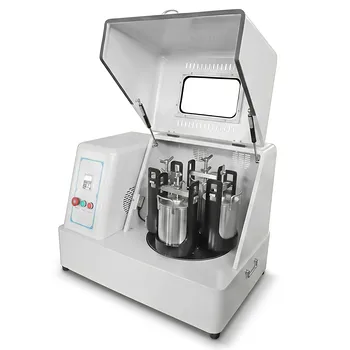
Vertical Square Planetary Ball Mill for Laboratory Sample Preparation and Nanoscale Grinding
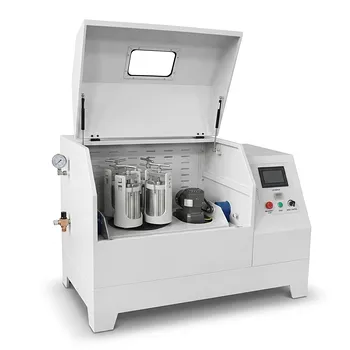
Vertical Production Planetary Ball Mill for High Throughput Powder Processing
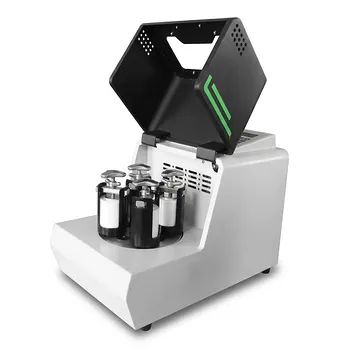
Miniature Planetary Ball Mill with Vacuum Grinding and High Efficiency for Laboratory Sample Preparation

8L Planetary Ball Mill for Laboratory Grinding and Sample Preparation
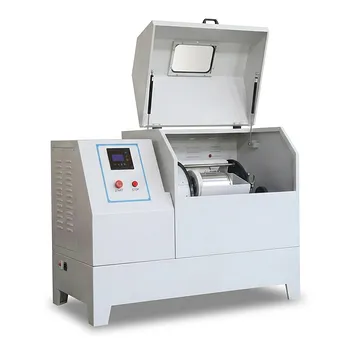
Heavy Duty Horizontal Planetary Ball Mill for Efficient Industrial Grinding and Sample Preparation

High Energy Laboratory Planetary Ball Mill for Nano Grinding and Material Science Sample Preparation
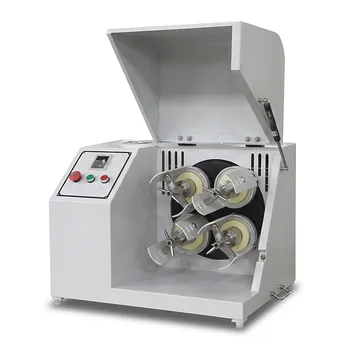
Horizontal Light Duty Planetary Ball Mill for Laboratory Sample Preparation
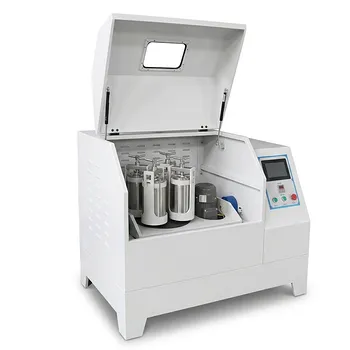
360° Rotating Omnidirectional Laboratory Planetary Ball Mill for Homogeneous Ultra-Fine Grinding and Mixing
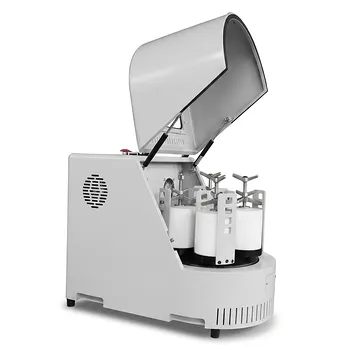
Vertical Semi Circular Planetary Ball Mill for Laboratory Precision Grinding

High Energy Planetary Ball Mill for Nano Scale Grinding and Mechanical Alloying
Planetary Ball Mill 12L
High Energy Omnidirectional Planetary Ball Mill 16L
High Energy Planetary Ball Mill for Nano Scale Grinding and Colloidal Mixing in Material Science Research
High Energy Laboratory Planetary Ball Mill for Nano Grinding and Colloidal Mixing of Hard and Brittle Materials
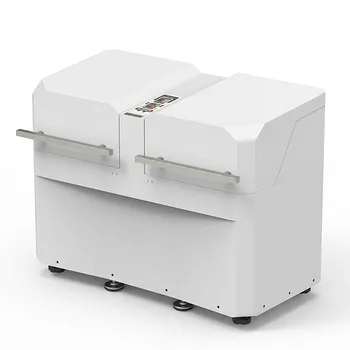
Dual Station Planetary Ball Mill 24L
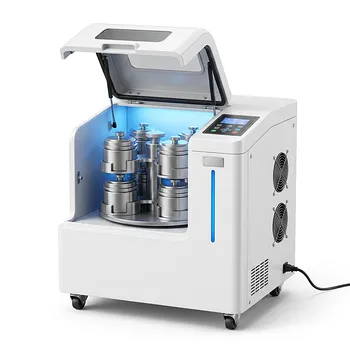
High Energy Omnidirectional Planetary Ball Mill 20L
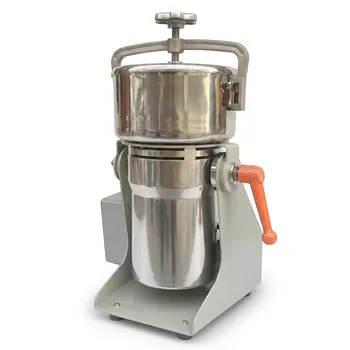
High Speed Laboratory Grinder Efficient Stainless Steel Powder Pulverizer Universal Material Science Mill for Sample Preparation
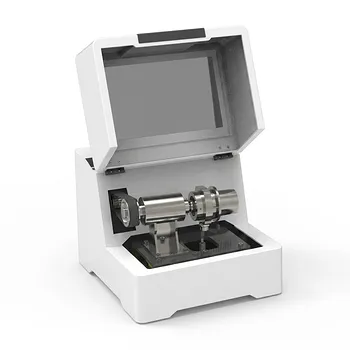
Single Tank High Energy Vibratory Ball Mill for Laboratory Grinding and Mixing
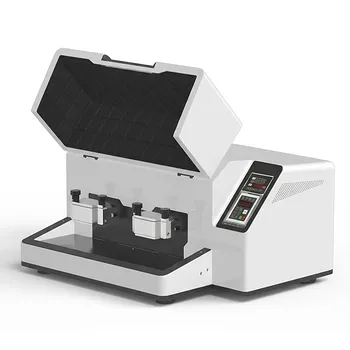
Nanoscale High-Energy Vibratory Ball Mill for Laboratory Sample Preparation, Mechanochemistry, and Mechanical Alloying