What is the role of a Cold Isostatic Press (CIP) in Zirconia forming? Ensure Uniform Density & Prevent Sintering Cracks
Updated 4 months ago
Cold Isostatic Pressing (CIP) is the definitive method for achieving structural uniformity in Zirconia ceramics. This process applies equal, omnidirectional pressure to Zirconia powder via a hydraulic medium, compressing it into a "green body" with a highly consistent density distribution. By eliminating the internal stress gradients common in traditional pressing, CIP ensures that the material remains dimensionally stable and free of cracks during subsequent high-temperature sintering.
The core role of a CIP is to transform loosely formed powder into a high-density green body by removing microscopic defects and density gradients. This provides the necessary foundation for Zirconia to reach its theoretical density and maximum mechanical strength without deforming under heat.
Achieving Superior Density and Uniformity
Overcoming the Limits of Uniaxial Pressing
Traditional dry pressing often creates "pressure gradients" due to friction between the powder and the mold walls. This results in uneven compaction, where some areas of the Zirconia part are denser than others.
The Advantage of Isotropic Pressure
CIP utilizes a fluid medium to transmit pressure—typically between 200 MPa and 250 MPa—equally from every direction. This isotropic force ensures that the Zirconia particles rearrange and bond with total uniformity across the entire volume of the part.
Reaching Higher Green Density
By forcing particles into an extremely tight arrangement, CIP significantly increases the density of the green body (often reaching 2.2 to 2.4 Mg·m⁻³). A higher initial green density is a critical prerequisite for achieving a dense, erosion-resistant structure in the final ceramic product.
Ensuring Stability During Sintering
Eliminating Internal Micropores
High-pressure isostatic treatment effectively collapses micro-cracks and large pores that are often left behind by initial mold-shaping. Removing these voids prevents them from acting as failure points or expanding when the material is subjected to the intense heat of a kiln.
Facilitating Isotropic Shrinkage
When a green body has a uniform density, it shrinks at the same rate in all directions during sintering. This consistent shrinkage is what prevents the Zirconia from warping, bowing, or developing structural cracks as it densifies.
Enhancing Final Mechanical Strength
The structural integrity provided by CIP allows Zirconia to achieve its full potential for hardness and toughness. Without this uniform forming process, the ceramic would likely retain internal stress imbalances that compromise its long-term reliability.
Understanding the Trade-offs
Process Complexity and Cost
CIP systems require specialized flexible molds and hydraulic equipment, making them more expensive and time-consuming than simple mechanical pressing. This often necessitates a two-stage process: initial shaping followed by isostatic compaction.
Geometry and Surface Finish
Because CIP uses flexible molds submerged in fluid, achieving precise surface details can be more challenging than with rigid metal molds. Parts often require secondary machining or grinding after the CIP process to reach final dimensional tolerances.
Strategic Implementation of CIP
The decision to use Cold Isostatic Pressing depends on the required performance and geometry of the final Zirconia component.
- If your primary focus is maximizing mechanical strength: Use CIP as a secondary compaction step to eliminate internal micro-pores and reach near-theoretical density.
- If your primary focus is preventing deformation in complex shapes: Prioritize CIP to ensure isotropic shrinkage, which maintains dimensional accuracy during high-temperature sintering.
- If your primary focus is cost-sensitive prototyping: Consider starting with uniaxial pressing but remain aware that internal density gradients may lead to cracking in larger Zirconia parts.
Utilizing Cold Isostatic Pressing is the definitive method for producing high-performance, erosion-resistant Zirconia ceramics that remain stable under extreme conditions.
Summary Table:
| Key Aspect | Role of CIP in Zirconia Processing | Primary Benefit |
|---|---|---|
| Pressure Delivery | Isotropic (200-250 MPa) from all directions | Eliminates internal stress and density gradients |
| Green Density | Compresses powder to 2.2 - 2.4 Mg·m⁻³ | Foundation for near-theoretical final density |
| Pore Management | Collapses micro-voids and cracks | Prevents failure points during high-heat sintering |
| Shrinkage Control | Facilitates uniform volumetric contraction | Ensures dimensional stability and prevents warping |
| Final Properties | Maximizes particle bonding and rearrangement | Achieves superior mechanical hardness and toughness |
Achieve Superior Structural Integrity in Zirconia Ceramics
Are you looking to eliminate deformation and internal defects in your high-performance materials? At [Your Brand Name], we provide complete laboratory sample preparation solutions for material science, specializing in precision powder processing and compaction equipment.
Our extensive range of Cold and Warm Isostatic Presses (CIP/WIP) is engineered to provide the uniform pressure needed to reach maximum green density and structural stability. Beyond isostatic pressing, we offer a full spectrum of equipment to support your entire workflow, including:
- Advanced Compaction: Standard lab presses, XRF pellet presses, and vacuum hot presses.
- Size Reduction: Jaw/roll crushers, planetary ball mills, and cryogenic grinders.
- Classification & Mixing: Vibratory sieve shakers and high-efficiency powder mixers.
Maximize your material's potential today—Contact our technical experts for a custom solution tailored to your research and production needs!
References
- Pratik A. Shukla, Phillip D. Swanson. Biocompatibility and Surface Integrity of Zirconia Ceramics Treated by Laser-plasma Driven Shock-waves. DOI: 10.21926/rpm.2204025
Mentioned Products
- 6-Ton Small Single-Punch Tablet Press — Laboratory Powder & Granule Tableting Equipment / Tablet Forming Machine
- Manual Tablet Press with Dual Scale Pressure Gauge for Pharmaceutical Food Chemical Laboratory Sample Preparation
- 5 Ton Single Punch Tablet Press Laboratory Small Batch Production
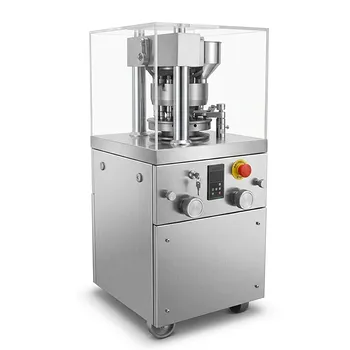
- Ordinary Type Rotary Tablet Press for Pharmaceutical Chemical Food Electronic Industries
People Also Ask
- What is the function of a laboratory press in Cr-Ti alloy evaluation? Quantify Fracture Stress & Strength
- What is the function of a laboratory press in assessing the hydrophobic performance of modified vermiculite fillers?
- What is the core function of a laboratory press in the forming of ceramic filter element green bodies? Maximize Density.
- What is the function of a laboratory press in the preparation of ceramic feed rods? Master Density and Precision
- Why is vacuum sealing and flexible packaging necessary for Aluminum Titanate powders during CIP? Ensure Peak Density

Tech Team · PowderPreparation
Last updated on Jun 03, 2026
Related Products
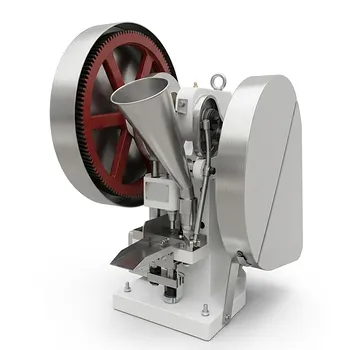
6-Ton Small Single-Punch Tablet Press — Laboratory Powder & Granule Tableting Equipment / Tablet Forming Machine
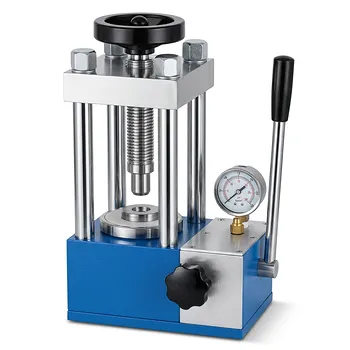
Manual Tablet Press with Dual Scale Pressure Gauge for Pharmaceutical Food Chemical Laboratory Sample Preparation
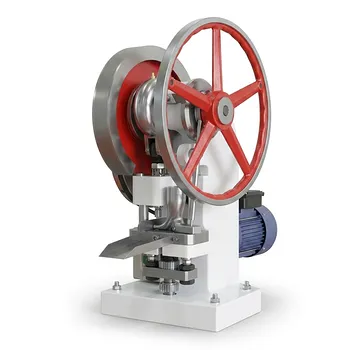
5 Ton Single Punch Tablet Press Laboratory Small Batch Production