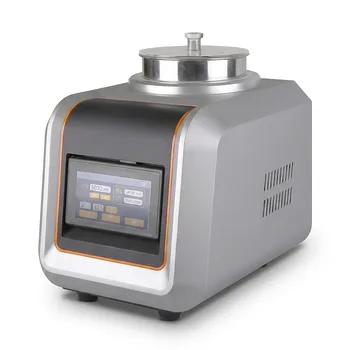
What is the role of a 90-micron standard test sieve in modified concrete? Optimize Bakelite powder for max strength.
Updated 4 months ago
The 90-micron standard test sieve is a precision instrument used to calibrate the particle size distribution and fineness of raw materials in modified concrete. In Bakelite-modified mixtures, it ensures that both the cement and the Bakelite powder particles are graded correctly to maintain structural density. This process directly dictates the hydration rate, the efficiency of particle packing, and the final compressive strength of the resulting material.
The 90-micron sieve serves as a critical quality control gate that ensures the fineness of powders and the gradation of aggregates are optimized for dense packing. By precisely managing particle size, it allows Bakelite powder to effectively replace natural sand without compromising the concrete's mechanical integrity.
Precision Grading for Bakelite Integration
Controlling Particle Size Distribution
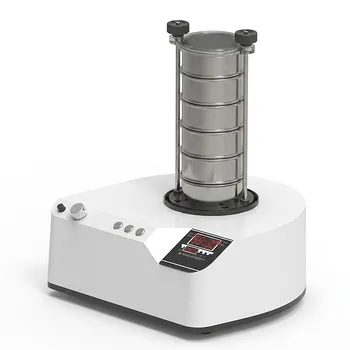
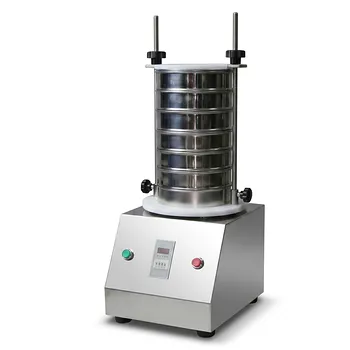
In modified concrete, the 90-micron sieve is used in conjunction with a vibratory shaker to determine the particle size distribution (PSD) of cement and fine aggregates. This is vital when Bakelite powder is used to replace natural sand, as it ensures the stability of the material grading.
Monitoring Cement Fineness
The sieve is essential for the dry sieving method used to determine cement fineness. By measuring the residue left on the 90-micrometer mesh, technicians can verify if the cement meets specific grade standards, such as 53-grade ordinary Portland cement.
Ensuring Material Comparability
The 90-micron mesh allows researchers to verify that the fineness of alternative additives is comparable to ordinary Portland cement. This ensures that the replacement materials, such as stone powder or Bakelite, will behave predictably within the concrete matrix.
Enhancing the Concrete Matrix
Increasing Specific Surface Area
Using standard sieves for physical screening increases the specific surface area of the powder materials. A higher surface area leads to a more uniform distribution of particles, which is a decisive factor in achieving high concrete strength.
Improving Interfacial Bonding
Proper particle refinement enhances the interfacial bonding between the cement paste and the aggregates. By ensuring the Bakelite powder is sufficiently fine, the material can better fill internal voids, leading to a denser internal structure.
Optimizing Hydration and Early Strength
The fineness determined by the 90-micron sieve dictates the hydration rate and the effective contact area of the cement. This allows engineers to predict the early strength development and ensure the concrete reaches its target axial compressive strength during the curing period.
Understanding the Trade-offs
Limitations of Single-Sieve Analysis
While the 90-micron sieve is a standard benchmark, it only provides a single data point regarding material residue. It cannot characterize the distribution of particles that are significantly smaller than 90 microns, which also impact rheology.
Mechanical vs. Manual Variability
Accuracy depends heavily on the method of agitation. While manual shaking is possible, vibratory sieve shakers are preferred to eliminate human error and ensure that the material is thoroughly processed through the mesh.
Impact of Particle Shape
The sieve measures the second-smallest dimension of a particle, but it does not account for the aspect ratio or shape of Bakelite fragments. Irregularly shaped particles may pass through or be retained inconsistently, potentially affecting the predicted packing density.
Applying Sieve Analysis to Your Project
Recommendations Based on Your Project Goals
- If your primary focus is Maximum Compressive Strength: Use the 90-micron sieve to ensure the Bakelite powder reaches a fineness comparable to cement to maximize the filling effect and hydration efficiency.
- If your primary focus is Mix Workability and Flow: Use a full range of sieve sizes (from 3/8 inch down to No. 100) to ensure a continuous gradation curve that minimizes friction between particles.
- If your primary focus is Cost Reduction: Utilize the sieve to monitor the quality of lower-cost quarry mud or recycled powders, ensuring they are refined enough to reduce the total volume of expensive cement required.
By rigorously applying 90-micron sieve analysis, you ensure that the physical foundation of your modified concrete is scientifically sound and capable of meeting high-performance structural requirements.
Summary Table:
| Application Phase | Role of 90μm Sieve | Key Performance Impact |
|---|---|---|
| Material Grading | Calibrates particle size distribution (PSD) | Ensures structural density and stability |
| Quality Control | Monitors cement and Bakelite powder fineness | Predictable hydration and early strength |
| Interfacial Bonding | Minimizes voids via precise powder integration | Enhances bonding between paste and aggregate |
| Matrix Optimization | Increases specific surface area of additives | Maximizes axial compressive strength |
Optimize Your Material Research with Precision Sample Preparation
Achieve unmatched accuracy in your laboratory workflows with professional-grade equipment. At [Brand Name], we provide complete laboratory sample preparation solutions tailored for material science and civil engineering research.
Whether you are refining Bakelite powder or testing the compressive strength of modified concrete, our extensive product line supports every stage of your process:
- Powder Processing: High-efficiency crushers (jaw/roll) and precision mills (planetary ball, jet, rotor) for material refinement.
- Sieving & Analysis: Vibratory and air-jet sieve shakers with standard 90-micron and custom meshes for perfect gradation.
- Compaction & Testing: A full spectrum of hydraulic presses, including Cold/Warm Isostatic Presses (CIP/WIP), XRF pellet presses, and vacuum hot presses for superior sample density.
Ready to enhance your lab's efficiency and material performance?
Contact our technical experts today to discuss your specific powder processing and compaction requirements!
References
- Gyandeep Gupta, Sriramkumar. BAKELITE POWDER AS AN ALTERNATIVE TO NATURAL SAND IN CONCRETE FOR IMPROVING ITS PROPERTIES. DOI: 10.56726/irjmets29977
Mentioned Products
- Stainless Steel Laboratory Vibratory Test Sieve Shaker
- Laboratory Vibratory Test Sieve Shaker for Precision Particle Size Analysis and Powder Grading
- Small Laboratory Vibrating Sieve Shaker for Precise Particle Size Analysis
- 三维电磁微量振动筛分仪
- Small Laboratory Vibratory Sieve Shaker for Powder Gradation and Particle Size Analysis
People Also Ask
- What function does a laboratory vibratory sieve shaker serve in the production process of metakaolin? Optimize Reactivity
- Why is a precision laboratory vibratory sieve shaker necessary for particle size control? Optimize Biomass Carbonization
- What is the function of a laboratory vibratory sieve shaker? Enhance Coal Particle Size Distribution (PSD) Analysis
- What role do laboratory vibratory sieve shakers and test sieves play before the molding of Nb-Cu composite powders?
- What is the primary function of a laboratory vibratory sieve shaker in the evaluation of sand liquefaction potential?

Tech Team · PowderPreparation
Last updated on Jun 03, 2026
Related Products
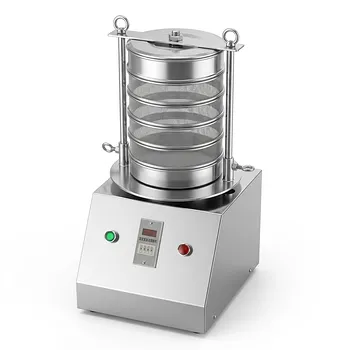
Stainless Steel Laboratory Vibratory Test Sieve Shaker
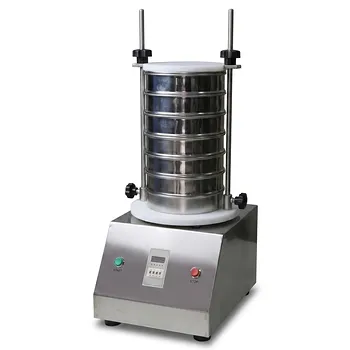
Laboratory Vibratory Test Sieve Shaker for Precision Particle Size Analysis and Powder Grading
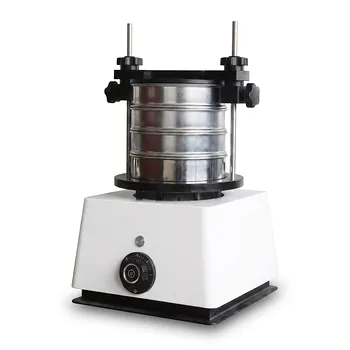
Small Laboratory Vibrating Sieve Shaker for Precise Particle Size Analysis
三维电磁微量振动筛分仪
Small Laboratory Vibratory Sieve Shaker for Powder Gradation and Particle Size Analysis