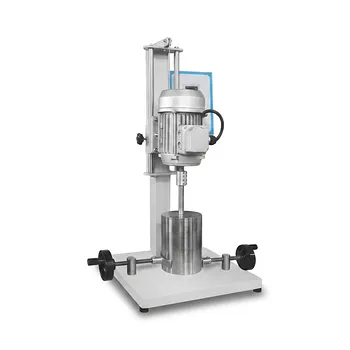
What is the purpose of changing belt pulley sets of different diameters in milling equipment? Master Speed Control
Updated 5 months ago
Altering belt pulley diameters is the fundamental mechanism for controlling the spindle speed of milling equipment. By changing the diameter ratio between the driving and driven pulleys while maintaining a constant motor speed, operators can precisely calibrate the rotational velocity of the shaft. This allows the equipment to achieve specific spindle speeds—such as 2400, 3000, or 4000 rpm—required for different stages of material processing.
Changing pulley sets serves as a mechanical gear system that translates constant motor output into variable shaft speeds. This control is essential for optimizing milling performance indicators like throughput, particle fineness, and reduction ratios.
The Mechanics of Speed Adjustment
The Driving and Driven Relationship
The motor provides a constant input speed to the driving pulley. By swapping to a pulley set with a different diameter ratio, you change how many times the spindle rotates for every single rotation of the motor.
Achieving Specific RPM Targets
Standard milling operations often require precise speeds to maintain consistency across batches. Adjusting pulley diameters allows researchers and operators to hit exact targets like 2400 or 4000 rpm without needing expensive variable-frequency drives.
Maintaining Constant Motor Efficiency
Because the motor speed remains constant, the motor can continue to operate at its optimal torque and efficiency curve. The pulley system handles the speed transformation mechanically, preserving the longevity of the electrical components.
Impact on Milling Performance Indicators
Influence on the Reduction Ratio
The rotational speed directly dictates the force applied to the material being milled. Higher speeds often lead to a higher reduction ratio, which is the ratio of the size of the feed material to the size of the finished product.
Optimizing Hourly Throughput
Speed is a primary driver of hourly throughput, or the volume of material processed over time. Finding the "sweet spot" in pulley diameter ensures the machine is processing material as fast as possible without overloading the system.
Defining the Fineness Modulus
The fineness modulus indicates the average particle size of the milled output. By swapping pulley sets to increase or decrease speed, operators can fine-tune the granularity of the final product to meet strict quality standards.
Understanding the Trade-offs
Mechanical Stress vs. Speed
While increasing speed via a smaller driven pulley can improve fineness, it also increases the mechanical stress on the bearings and belts. Operating at the maximum rpm (e.g., 4000 rpm) for extended periods may require more frequent maintenance intervals.
Heat Generation
Higher spindle speeds naturally generate more friction and heat within the milling chamber. If the material being processed is heat-sensitive, a pulley set that produces a lower rpm may be necessary, even if it reduces the overall throughput.
Setup Time and Manual Labor
Unlike electronic speed controls, changing pulley sets is a manual process that requires equipment downtime. This trade-off between the simplicity of a mechanical system and the time required for manual adjustment must be factored into production schedules.
Applying Pulley Adjustments to Your Process
Making the Right Choice for Your Goal
To select the appropriate pulley set, you must align the mechanical configuration with your specific production or research objectives.
- If your primary focus is Maximum Fineness: Utilize a pulley ratio that produces higher spindle speeds (e.g., 4000 rpm) to increase the impact energy on the material.
- If your primary focus is High Volume Throughput: Experiment with mid-range speeds to find the balance where material flows through the equipment fastest without clogging.
- If your primary focus is Material Sensitivity: Opt for larger driven pulleys to lower the rpm, reducing heat generation and preserving the integrity of volatile materials.
By mastering the relationship between pulley diameters and spindle velocity, you gain full control over the physical properties of your milled output.
Summary Table:
| Feature | Purpose of Changing Pulley Sets | Key Benefit |
|---|---|---|
| Spindle Speed | Calibrates RPM (e.g., 2400–4000) | Precise control for specific material needs |
| Fineness Modulus | Adjusts rotational velocity | Achieves target granularity and particle size |
| Reduction Ratio | Modifies impact force on material | Enhances the ratio of feed size to finished product |
| Motor Efficiency | Maintains constant motor speed | Preserves optimal torque and extends equipment life |
Optimize Your Material Processing with Expert Solutions
Precision in milling and sample preparation is critical for research success. At our core, we provide complete laboratory sample preparation solutions for material science, specializing in high-performance powder processing and compaction equipment.
Whether you need to achieve extreme fineness or high-volume throughput, our extensive product line is designed to meet your exact specifications:
- Milling & Grinding: Planetary ball mills, jet mills, rotor mills, and liquid nitrogen cryogenic grinders.
- Crushing & Sieving: Jaw/roll crushers and vibratory/air-jet sieve shakers.
- Advanced Compaction: A full spectrum of hydraulic presses, including Cold/Warm Isostatic Presses (CIP/WIP), hot presses, and XRF pellet presses.
- Mixing: High-efficiency powder mixers and defoaming mixers.
Ready to enhance your lab's efficiency? Our technical experts are here to help you select the perfect equipment configuration for your specific material challenges.
Contact us today to request a quote or technical consultation!
References
- SN Singh, M. G. Varma. Effect of moisture content and pulley shaft speed on grinding characteristics of wheat (Triticum aestivum). DOI: 10.33545/26174693.2024.v8.i3g.775
Mentioned Products
- High Speed Laboratory Grinder Efficient Stainless Steel Powder Pulverizer Universal Material Science Mill for Sample Preparation
- Water Cooled Pulse Jet Ultrafine Grinder
- Sealed Disc Pulverizer Customized Model
- Medium Hardness Material Disc Pulverizer for Coal Ore Sample Preparation
- Industrial High Speed Small Sample Pulverizer Swing Type Laboratory Grinder for Powder Processing
People Also Ask
- What role does a laboratory grinder play in the pretreatment of sunflower seed shell-based adsorbents? Boost Efficiency.
- How does a laboratory grinder or mill enhance the adsorption performance of agricultural waste materials? Boost Surface Area
- What is the function of a laboratory high-speed pulverizer in the preparation of eggshell powder? Essential Pretreatment
- What are the technical advantages of using a high-speed laboratory pulverizer for grinding tablets into powders? 20K RPM
- Why must soil samples be ground before XRD or XRF analysis? Ensure Precision & Homogeneity in Lab Results

Tech Team · PowderPreparation
Last updated on May 14, 2026
Related Products
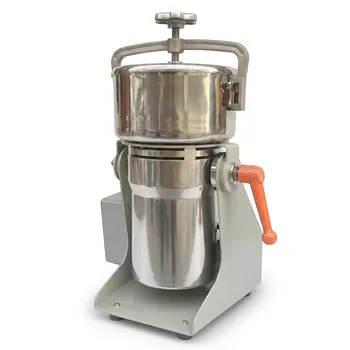
High Speed Laboratory Grinder Efficient Stainless Steel Powder Pulverizer Universal Material Science Mill for Sample Preparation
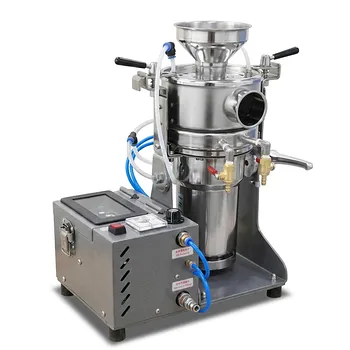
Water Cooled Pulse Jet Ultrafine Grinder
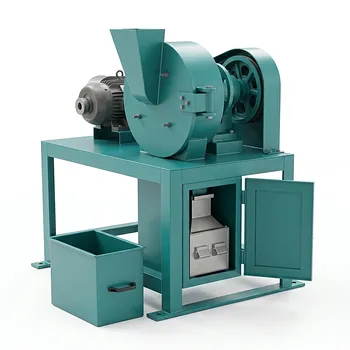
Sealed Disc Pulverizer Customized Model
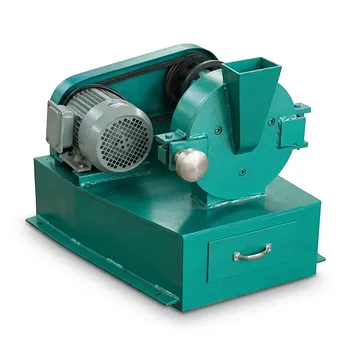
Medium Hardness Material Disc Pulverizer for Coal Ore Sample Preparation
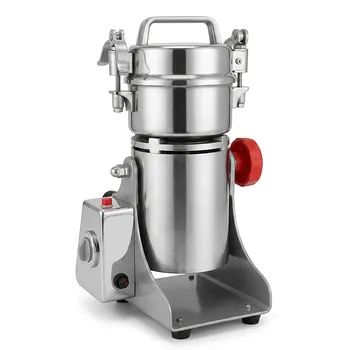
Industrial High Speed Small Sample Pulverizer Swing Type Laboratory Grinder for Powder Processing
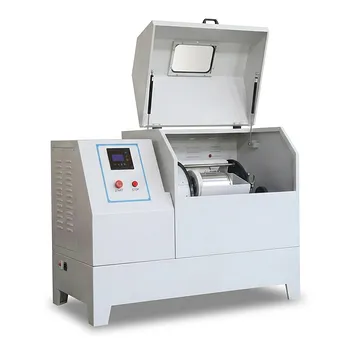
Heavy Duty Horizontal Planetary Ball Mill for Efficient Industrial Grinding and Sample Preparation
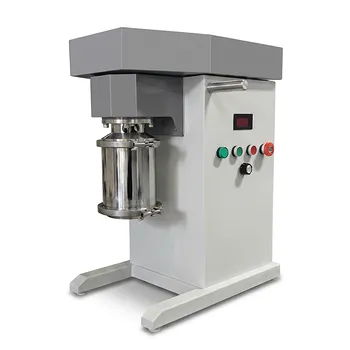
Nano Laboratory Bead Mill Desktop Sub Micron Sand Mill Screenless Seal Less Powder Grinder
360° Rotating Omnidirectional Laboratory Planetary Ball Mill for Homogeneous Ultra-Fine Grinding and Mixing
High Energy Planetary Ball Mill for Nano Scale Grinding and Mechanical Alloying
Vertical Production Planetary Ball Mill for High Throughput Powder Processing
High Energy Omnidirectional Planetary Ball Mill 16L
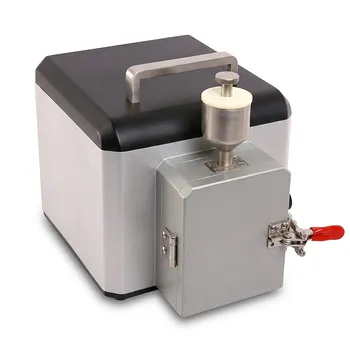
Portable Cutting Mill for Laboratory Sample Preparation and RoHS WEEE Compliance Testing
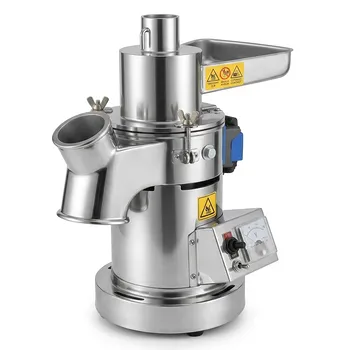
Continuous Feeding Grinder High Efficiency Pulverizer for Lab Sample Preparation
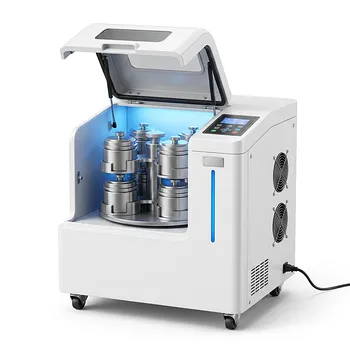
High Energy Omnidirectional Planetary Ball Mill 20L
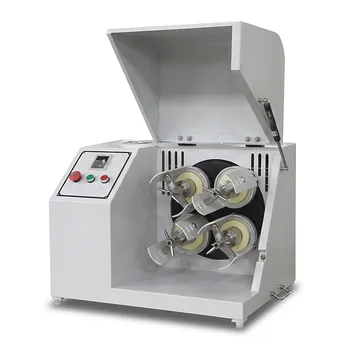
Horizontal Light Duty Planetary Ball Mill for Laboratory Sample Preparation
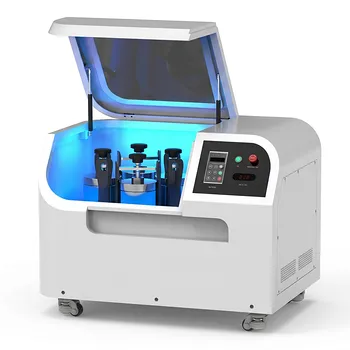
Planetary Ball Mill 12L
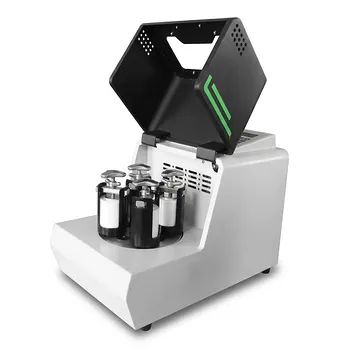
Miniature Planetary Ball Mill with Vacuum Grinding and High Efficiency for Laboratory Sample Preparation