What is the purpose of adding ethanol as a milling medium during the wet milling of cemented carbide? Key Benefits.
Updated 3 months ago
Ethanol serves as a critical multi-functional agent in the wet milling of cemented carbide. It acts as a dispersing medium to prevent powder agglomeration, a coolant to manage high-energy thermal loads, and a protective barrier against oxidation. By transforming the powder mixture into a fluid slurry, ethanol ensures a uniform distribution of components at the microscopic level, which is essential for the structural integrity of the final sintered product.
The primary purpose of adding ethanol is to stabilize the physical and chemical state of ultrafine powders during high-energy milling. It achieves this by reducing surface energy to prevent sticking and providing a thermal buffer that inhibits unintended chemical reactions or phase changes.
Preventing Powder Agglomeration and Ensuring Uniformity
Reducing Surface Energy and Electrostatic Forces
Ultrafine powders, such as tungsten carbide and cobalt, possess high surface energy that naturally leads to severe agglomeration. Ethanol acts as a surfactant, adsorbing onto the particle surfaces to weaken Van der Waals forces and electrostatic adsorption.
This mechanism ensures that particles remain individual and discrete rather than forming large clusters. This results in a mixed powder with a uniform particle size distribution and significantly improved flowability for subsequent processing stages.
Facilitating Microscopic Contact
In cemented carbide production, the hard phase and the metal binder must be perfectly blended. Ethanol creates a liquid phase environment that allows components like carbon black and metal powders to achieve thorough contact at the microscopic level.
By transforming the mixture into a slurry with high fluidity, ethanol ensures that the binder phase is distributed evenly around the hard carbide grains. This uniformity is a prerequisite for achieving consistent hardness and toughness in the final material.
Thermal Management and Chemical Stability
Heat Dissipation and Phase Preservation
High-energy planetary ball milling generates significant localized heat through friction and impact. Ethanol serves as an effective coolant, dissipating thermal energy and preventing localized overheating that could trigger unwanted phase changes.
By maintaining a stable temperature, the milling process preserves the original crystalline structure of the precursor powders. This thermal control is vital for maintaining the predictable performance of the carbide mixture during sintering.
Protection Against Atmospheric Oxidation
Nanostructured and ultrafine powders are highly reactive and prone to thermal oxidation when exposed to air. Ethanol coats the powder particles, acting as a physical barrier that prevents direct contact with oxygen during the milling cycle.
This protective layer maintains the chemical purity of the carbide mixture. By inhibiting the formation of surface oxides, ethanol ensures that the chemical composition of the precursor remains stable and reactive only when intended.
Managing Material Interaction and Cold Welding
Balancing Fracturing and Welding
During the milling of ductile components like the cobalt binder, particles tend to "cold weld" back together after being fractured. Ethanol acts as a Process Control Agent (PCA), adsorbing onto the surfaces to balance the rates of cold welding and fracturing.
This balance is essential for achieving true particle size reduction rather than simply cycling the material through various shapes. It allows the milling process to successfully reach the nanometer range for specialized carbide grades.
Preventing Adhesion to Milling Hardware
Without a liquid medium, fine powders frequently stick to the inner walls of the grinding jars and the surfaces of the grinding balls. This "caking" reduces milling efficiency and can lead to non-uniform batches.
Ethanol provides essential lubrication, significantly reducing the adhesion of the powder to the hardware. This ensures that the entire charge remains in the active milling zone, leading to higher efficiency and easier recovery of the material.
Understanding the Trade-offs
Grinding Efficiency vs. Particle Uniformity
While wet milling with ethanol produces a more uniform and protected powder, it generally has a lower refinement efficiency than dry milling. The liquid medium buffers the impact forces of the grinding media, which can slow down the rate of particle size reduction.
Processing Risks and Evaporation
Ethanol is highly volatile and flammable, requiring strict safety protocols and specialized equipment to manage explosion risks. However, its low boiling point is also an advantage, as it allows for easy and complete removal during low-temperature drying steps without leaving behind residues.
How to Apply This to Your Milling Process
When determining the role of ethanol in your specific workflow, consider the following objectives:
- If your primary focus is maximizing chemical purity: Use anhydrous ethanol to provide the most robust barrier against oxidation and prevent hydration reactions.
- If your primary focus is achieving the finest possible particle size: Accept the longer milling times associated with wet milling to benefit from the reduced cold welding and agglomeration that ethanol provides.
- If your primary focus is ease of post-processing: Leverage ethanol's high volatility to ensure rapid drying and a residue-free powder mixture ready for pressing.
The strategic use of ethanol transforms the high-energy milling process from a simple size-reduction task into a controlled synthesis of a high-performance composite slurry.
Summary Table:
| Function | Mechanism | Key Benefit |
|---|---|---|
| Dispersant | Reduces surface energy & Van der Waals forces | Prevents powder agglomeration; ensures uniformity |
| Coolant | Dissipates heat from friction and impact | Prevents unwanted phase changes & structural damage |
| Protective Barrier | Physically blocks atmospheric oxygen | Inhibits oxidation; maintains chemical purity |
| Process Control | Balances cold welding and fracturing | Enables effective particle size reduction to nano-scale |
| Lubricant | Reduces adhesion to jars and balls | Prevents 'caking'; increases milling efficiency |
Optimize Your Carbide Powder Processing Today
Achieving the perfect cemented carbide mixture requires precision at every stage—from high-energy milling to final compaction. Our brand provides complete laboratory sample preparation solutions designed specifically for material science and powder metallurgy.
We specialize in high-performance equipment to help you achieve superior material integrity:
- Advanced Milling: Planetary ball mills, jet mills, and cryogenic grinders for optimal particle size reduction.
- Homogeneous Mixing: High-efficiency powder and defoaming mixers.
- Precision Compaction: A full spectrum of hydraulic presses, including Cold/Warm Isostatic Presses (CIP/WIP), hot presses, and XRF pellet presses.
Whether you are refining ultrafine powders or scaling up production, our expertise in powder processing and compaction ensures your materials meet the highest standards of hardness and toughness.
Contact our technical team today to find the right equipment for your lab!
References
- Victor Ioan Stanciu, Fabienne Delaunois. Reactive Sintering of Cemented Carbides. DOI: 10.3390/alloys4030015
Mentioned Products
- Laboratory Small Horizontal Sand Mill for Nano Materials Wet Grinding
- Small Laboratory Colloid Mill for Ultra-Fine Wet Grinding and Emulsification
- Horizontal Bead Mill for Nanoscale Grinding and Advanced Material Powder Processing
- Laboratory Basket Sand Mill for Wet Grinding and Dispersion of Viscous Slurries
- Vertical Square Planetary Ball Mill for Laboratory Sample Preparation and Nanoscale Grinding
People Also Ask
- Why is a sand mill used to process solid carbon-forming agents like PPVA and PER? Enhance Dispersion & Flame Retardancy
- What role does a laboratory mill play in the study of lignite coal co-combustion? Optimizing Fuel Blends and Reactivity
- What is the function of a laboratory mill in Cassia tora L. seed analysis? Master Precision Thermal Data Prep.
- What is the purpose of using a laboratory mill to grind dried precipitates? Optimize TiO2/AuNRs Catalyst Homogeneity
- What function does a laboratory mill serve in corn starch saccharification experiments? Optimize Surface Area & Reactions

Tech Team · PowderPreparation
Last updated on Jun 03, 2026
Related Products
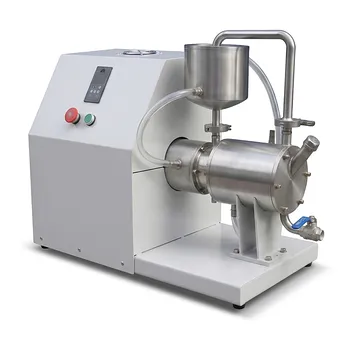
Laboratory Small Horizontal Sand Mill for Nano Materials Wet Grinding
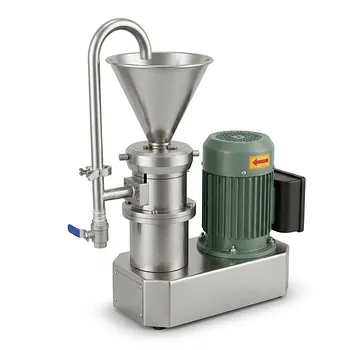
Small Laboratory Colloid Mill for Ultra-Fine Wet Grinding and Emulsification
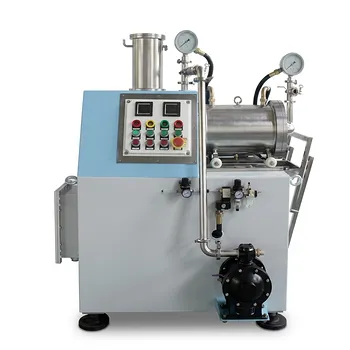
Horizontal Bead Mill for Nanoscale Grinding and Advanced Material Powder Processing
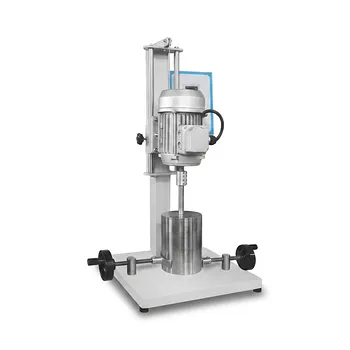
Laboratory Basket Sand Mill for Wet Grinding and Dispersion of Viscous Slurries
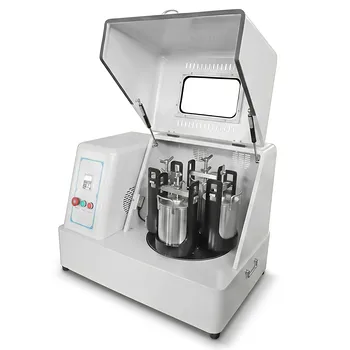
Vertical Square Planetary Ball Mill for Laboratory Sample Preparation and Nanoscale Grinding
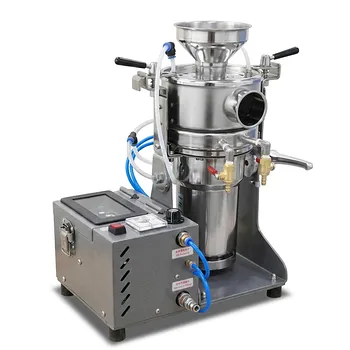
Water Cooled Pulse Jet Ultrafine Grinder
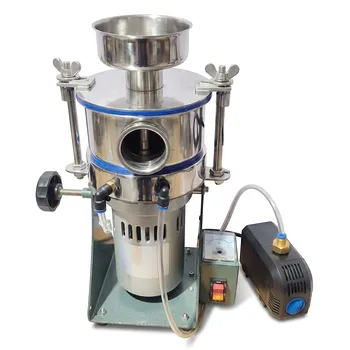
Water Cooled Airflow Ultra Fine Grinder for Low Temperature Material Processing
Continuous Feeding Grinding Mill for Dry Fibrous Tough and Hard Materials in Laboratory and Small Production