What is the purpose of a laboratory manual hydraulic press in the initial forming stage of composite materials? Achieve High-Density Green Bodies
Updated 5 months ago
The laboratory manual hydraulic press is the primary instrument used to convert loose composite powders into a stabilized, geometric "green body." It applies precise axial pressure to force particle rearrangement and initiate initial bonding, creating a structural foundation that is essential for all subsequent densification and thermal processing stages.
The purpose of a manual hydraulic press in composite forming is to eliminate internal voids and establish a uniform, cohesive structure (the green body) through controlled mechanical force. This initial stage ensures the material has sufficient integrity to withstand further processing, such as sintering or isostatic pressing, without cracking or deforming.
Transforming Raw Powders into Structural Preforms
Facilitating Particle Rearrangement
At the start of the forming stage, composite materials often exist as loose, ball-milled powders or resin-filler mixtures. The hydraulic press applies a designated axial load (frequently ranging from 10 kN to 20 kN) to force these particles to slide past one another and fill macroscopic gaps.
This rearrangement is the first step in moving from a bulk material to a dense specimen. Without this mechanical intervention, the material would remain too porous for functional use or testing.
Establishing Initial Bonding
As the press increases pressure, the particles are forced into such close proximity that Van der Waals forces begin to bond them together. This transforms the loose powder into a "green body," a temporary solid state that is strong enough to be handled and moved to the next production phase.
In some specialized composites, such as self-lubricating powders, this pressure causes plastic deformation. This further increases the contact area between particles, ensuring the solid lubricants remain stably distributed within the matrix.
Enhancing Specimen Integrity and Data Accuracy
Eliminating Trapped Air and Porosity
One of the most critical functions of the press is the expulsion of air bubbles trapped within the powder or resin mixture. In resin-based composites, the pressure ensures the liquid polyester or epoxy fully occupies the interstitial spaces between reinforcement particles, such as basalt.
Eliminating these voids is vital because internal pores act as stress concentrators. If air is not removed during this initial stage, the final specimen will likely suffer from premature failure during mechanical testing.
Reducing Internal Density Gradients
A laboratory press allows for precise pressure-holding, which is the practice of maintaining a constant load over a specific duration. This duration allows the internal stresses within the powder bed to equalize.
By achieving a uniform internal structure, the press prevents density gradients. This uniformity ensures that the final product does not warp, shrink unevenly, or crack during subsequent high-temperature heat treatments or sintering.
Preparing for Advanced Secondary Processing
Creating a Foundation for Isostatic Pressing
In many advanced manufacturing workflows, the manual press is used to "pre-press" bulk powders into disc-shaped or cylindrical forms. This provides the sample with enough structural strength to withstand the much higher pressures of Cold Isostatic Pressing (CIP).
Standardizing Geometry for Mechanical Testing
Precision steel molds used in conjunction with the press ensure that every specimen has standardized dimensions. This is essential for calculating properties like Young's modulus, hardness, and tensile strength, which rely on exact cross-sectional area measurements.
The press also allows for precise thickness control (e.g., 2mm plates). This level of repeatability is necessary for scientific validation and comparing results across different material batches.
Understanding the Trade-offs
Manual Variability vs. Automated Precision
Because the press is operated manually, the rate at which pressure is applied can vary between users. This operator dependency can lead to slight variations in green body density if the pumping speed is not strictly standardized.
Limitations of Axial Pressure
Manual hydraulic presses typically apply unidirectional (axial) force, which can sometimes lead to uneven compaction in very tall specimens. For complex geometries, the friction between the powder and the mold walls may result in the bottom of the sample being less dense than the top.
Pressure-Holding Challenges
Maintaining a perfectly static load manually requires constant monitoring of the pressure gauge. If the pressure "bleeds off" during the holding phase and is not corrected, the resulting green body may have micro-cracks or insufficient bonding strength.
How to Apply This to Your Project
Making the Right Choice for Your Goal
- If your primary focus is Preparing for Sintering: Ensure you use a long pressure-holding duration to eliminate density gradients that cause cracking during thermal expansion.
- If your primary focus is Resin-Matrix Composites: Focus on slow, steady pressure application to allow trapped air bubbles enough time to migrate out of the mold cavity.
- If your primary focus is Accurate Mechanical Data: Use high-precision stainless steel molds to ensure the specimen dimensions are standardized for stress and strain calculations.
- If your primary focus is High-Volume Pre-forming: Use a manual press to create stable green bodies that can be batched together for simultaneous processing in a Cold Isostatic Press.
By mastering the initial forming stage with a manual hydraulic press, you ensure that your composite materials possess the structural integrity required for high-performance applications.
Summary Table:
| Stage/Function | Key Mechanism | Benefit to Composite |
|---|---|---|
| Particle Rearrangement | 10-20 kN Axial Load | Eliminates macroscopic gaps and bulk porosity |
| Initial Bonding | Van der Waals Forces | Creates a handleable "green body" preform |
| Air Elimination | Mechanical Expulsion | Prevents internal stress concentrators and failure |
| Density Uniformity | Precise Pressure-Holding | Reduces gradients to prevent warping during sintering |
| Standardization | Precision Steel Molds | Ensures exact geometry for accurate mechanical testing |
Elevate Your Material Research with Precision Compaction
Maximize the structural integrity of your composite specimens with our industry-leading laboratory solutions. We provide complete laboratory sample preparation solutions for material science, specializing in high-performance powder processing and compaction equipment.
Whether you are in the initial forming stage or moving toward advanced densification, our extensive product line supports your entire workflow:
- Compaction Excellence: Standard lab presses, XRF pellet presses, and manual/automatic hydraulic systems.
- Advanced Processing: Cold/Warm Isostatic Presses (CIP/WIP), hot presses, and vacuum hot presses for superior density.
- Preparation Tools: Crushers, cryogenic grinders, and planetary ball mills to ensure optimal powder characteristics.
- Post-Processing: Vibratory sieve shakers and high-efficiency powder mixers.
Ready to eliminate internal defects and standardize your specimen quality? Contact our technical team today to find the ideal equipment for your specific material challenges!
References
- Henry E. Mgbemere, Chiedozie Oluigbo. The synthesis and characterization of alkaline niobate-based ceramic composites containing L-lysine Hydrochloride. DOI: 10.26701/ems.1497079
Mentioned Products
- Manual Tablet Press with Dual Scale Pressure Gauge for Pharmaceutical Food Chemical Laboratory Sample Preparation
- 6-Ton Small Single-Punch Tablet Press — Laboratory Powder & Granule Tableting Equipment / Tablet Forming Machine
- 5 Ton Single Punch Tablet Press Laboratory Small Batch Production
- 6 Ton Variable Frequency Single Punch Tablet Press
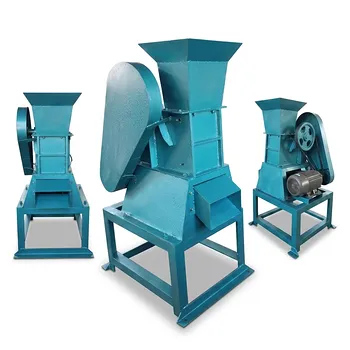
- Heavy-Duty Crusher for Laboratory and Industrial Material Size Reduction
People Also Ask
- What is the function of a laboratory press in Cr-Ti alloy evaluation? Quantify Fracture Stress & Strength
- What is the function of a laboratory press in assessing the hydrophobic performance of modified vermiculite fillers?
- What is the core function of a laboratory press in the forming of ceramic filter element green bodies? Maximize Density.
- What is the function of a laboratory press in the preparation of ceramic feed rods? Master Density and Precision
- Why is vacuum sealing and flexible packaging necessary for Aluminum Titanate powders during CIP? Ensure Peak Density

Tech Team · PowderPreparation
Last updated on May 14, 2026
Related Products
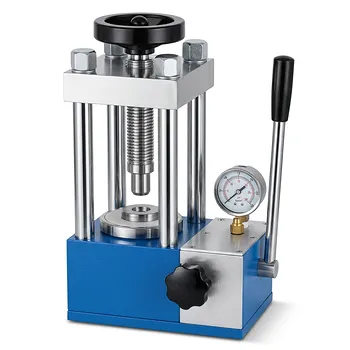
Manual Tablet Press with Dual Scale Pressure Gauge for Pharmaceutical Food Chemical Laboratory Sample Preparation
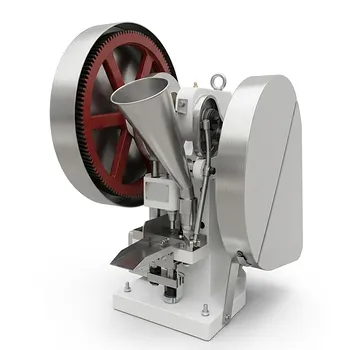
6-Ton Small Single-Punch Tablet Press — Laboratory Powder & Granule Tableting Equipment / Tablet Forming Machine
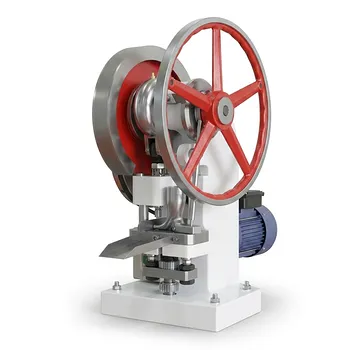
5 Ton Single Punch Tablet Press Laboratory Small Batch Production
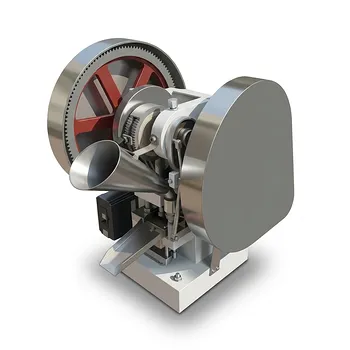
6 Ton Variable Frequency Single Punch Tablet Press
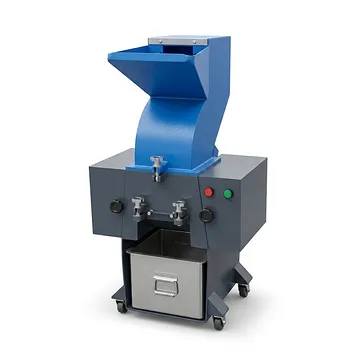
Heavy-Duty Crusher for Laboratory and Industrial Material Size Reduction
Hydraulic Double Shaft Disperser for High Viscosity Liquid Mixing and Dispersion
Automatic Vibrating Powder Feeder for Laboratory Material Processing Precision Vibratory Hopper Feeder for Granular and Powder Material Handling Industrial Grade Vibrating Tray Feeder for Consistent Material Sample Preparation
150x250mm Laboratory Jaw Crusher for Medium Hard Material Crushing and Sample Preparation