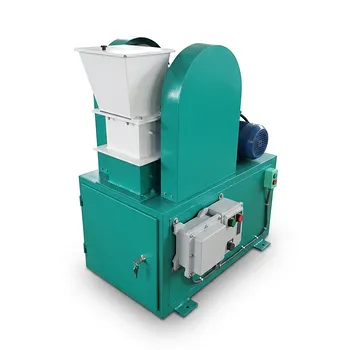
What is the primary role of an industrial crusher in the initial processing of hop bine biomass? Boost Efficiency
Updated 4 months ago
The primary role of an industrial crusher in the initial processing of hop bine biomass is to physically fragment long-strand materials into manageable pieces smaller than 10 cm. This reduction in size is the critical first step in transforming raw agricultural waste into a viable feedstock for industrial applications.
By reducing long-strand biomass into uniform fragments, the crusher significantly increases the specific surface area of the material. This physical transformation is fundamental to improving dehydration efficiency and ensuring the precision of subsequent milling and processing stages.
Optimizing Downstream Processing Efficiency
Accelerating the Dehydration Cycle
Raw hop bines contain significant moisture that must be removed to prevent degradation and prepare the material for further refinement. By crushing the biomass into fragments under 10 cm, the surface area-to-volume ratio is greatly increased, allowing moisture to escape more rapidly during the drying phase.
Facilitating High-Precision Fine Milling
Directly processing long, fibrous hop bines in fine-milling equipment often leads to mechanical clogs and inconsistent particle sizes. The initial crushing stage acts as a pre-treatment that standardizes the material, enabling secondary mills to achieve the high-precision fine powder required for specialized applications.
Improving Material Handling and Flow
Bulky, long-strand biomass is notoriously difficult to transport via conveyor systems or store in silos. Fragmentation converts a chaotic raw material into a flowable medium, which stabilizes the throughput of the entire production line and reduces manual intervention.
The Technical Impact of Increased Surface Area
Enhancing Heat and Mass Transfer
The increase in specific surface area is not merely a physical change but a thermodynamic advantage. In processes involving heat—such as drying or eventual pyrolysis—smaller fragments ensure uniform heat penetration, preventing the core of the material from remaining damp or unprocessed while the exterior is over-treated.
Ensuring Chemical and Physical Uniformity
Whether the biomass is destined for chemical extraction, carbonization, or pelletization, uniformity is paramount. A consistent fragment size ensures that any subsequent chemical reagents or thermal treatments interact with the biomass predictably, leading to a more homogenous final product.
Optimizing Intermolecular Bonding
In applications such as pellet or briquette production, the physical refinement provided by crushing is essential for mechanical durability. Uniform particles allow for tighter bonding and reduced internal porosity, which directly impacts the structural integrity and energy density of the resulting biofuel.
Understanding Technical Trade-offs
Energy Consumption vs. Particle Size
There is a diminishing return on energy investment when crushing biomass; the energy required to reduce size increases exponentially as the target fragment size decreases. Operators must balance the energy costs of the crusher against the efficiency gains in the drying and milling stages to maintain a profitable operation.
Management of Fines and Dust
Aggressive crushing can produce "fines"—extremely small particles or dust—that can be lost in the exhaust of drying systems or pose explosion hazards. Effective crushing must be controlled and targeted to produce fragments within the desired 10 cm range while minimizing the production of unusable or dangerous dust.
Mechanical Wear and Feedstock Contamination
The tough, fibrous nature of hop bines can cause significant wear on crusher blades or rollers over time. Frequent maintenance is required to ensure that the cutting edges remain sharp; otherwise, the machine will tear rather than cut, leading to inconsistent fragment sizes and potential metallic contamination in the biomass stream.
Applying This to Your Processing Goal
How to Optimize Your Industrial Setup
To achieve the best results from your hop bine processing line, your crushing strategy should align with your ultimate product requirements.
- If your primary focus is maximizing drying speed: Prioritize a crusher that achieves high surface area exposure through consistent, smaller fragments (closer to the 5–10 cm limit) to minimize residence time in the dryer.
- If your primary focus is producing high-density pellets: Focus on fragment uniformity during the crushing stage to ensure that the secondary fine-milling process produces a powder with the ideal particle size distribution for high-strength bonding.
- If your primary focus is minimizing operational costs: Utilize a lower-speed jaw or roller crusher to reduce energy consumption and equipment wear, provided the resulting fragments meet the minimum requirements for your downstream equipment.
Effective initial crushing transforms raw hop bines from a bulky agricultural byproduct into a high-value, standardized industrial precursor.
Summary Table:
| Processing Stage | Primary Action | Key Industrial Benefit |
|---|---|---|
| Initial Crushing | Size reduction to <10 cm | Increases surface area; improves material flow |
| Dehydration | Rapid moisture release | Accelerates drying cycles; reduces energy costs |
| Secondary Milling | Pre-treatment | Prevents mechanical clogs; ensures fine powder precision |
| Final Shaping | Structural refinement | Enhances intermolecular bonding for high-density pellets |
Optimize Your Biomass Processing with Expert Solutions
Transform your raw agricultural waste into high-value industrial feedstock with precision and efficiency. At [Company Name], we provide complete laboratory sample preparation solutions for material science, specializing in high-performance powder processing and compaction equipment.
Our extensive product line is designed to support every stage of your workflow:
- Size Reduction: Heavy-duty crushers (jaw/roll), liquid nitrogen cryogenic grinders, and versatile mills (planetary ball, jet, sand/bead, disc, rotor).
- Classification & Mixing: Sieve shakers (vibratory/air-jet) and advanced powder/defoaming mixers.
- Material Compaction: A full spectrum of hydraulic presses, including Cold/Warm Isostatic Presses (CIP/WIP), standard lab presses, XRF pellet presses, and vacuum hot presses.
Whether you are refining biomass for biofuels or developing new materials, our equipment ensures the uniformity and quality your project demands.
Ready to upgrade your lab's capabilities? Contact our technical team today to find the perfect solution for your specific application!
References
- Nicole Harder, Amar K. Mohanty. Hop natural fiber-reinforced poly(butylene succinate-<i>co</i>-butylene adipate) (PBSA) biodegradable plastics: effect of fiber length on the performance of biocomposites. DOI: 10.1039/d2ma00831a
Mentioned Products
- Versatile Industrial Crusher for Laboratory Crushing and Material Processing
- Heavy Duty Industrial Jaw Crusher for Primary Ore Crushing and High Capacity Mineral Material Size Reduction
- Heavy-Duty Jaw Crusher for Medium-Hard Ore and Industrial Mineral Crushing
- Heavy-Duty Crusher for Laboratory and Industrial Material Size Reduction
- Industrial Sealed Hammer Knife Crusher for Mining Ore and Coal Sample Preparation
People Also Ask
- What is the purpose of using industrial crushers and vibratory sieve shakers in the pretreatment of coal gangue? Ensure Uniformity
- What is the role of industrial crushers and standard test sieves in biomass pyrolysis? Optimize Heat Transfer & Yield
- What is the function of industrial crushers in the initial preparation of silicate minerals? Enhance Sample Uniformity
- What is the function of an industrial crusher in CRSS filler preparation? Essential Size Reduction for Carbonization
- How do crushers and mills work together in gypsum recycling? Transform drywall waste into reactive ceramic materials.

Tech Team · PowderPreparation
Last updated on Jun 03, 2026
Related Products
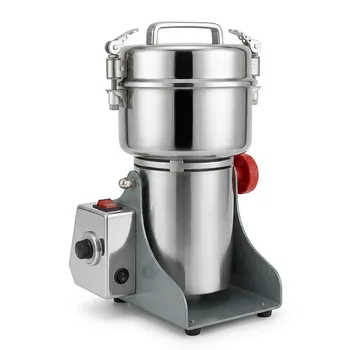
Versatile Industrial Crusher for Laboratory Crushing and Material Processing
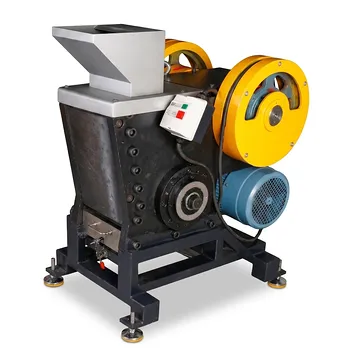
Heavy Duty Industrial Jaw Crusher for Primary Ore Crushing and High Capacity Mineral Material Size Reduction
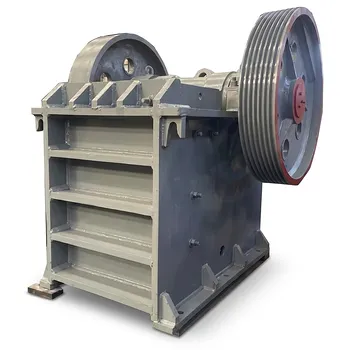
Heavy-Duty Jaw Crusher for Medium-Hard Ore and Industrial Mineral Crushing
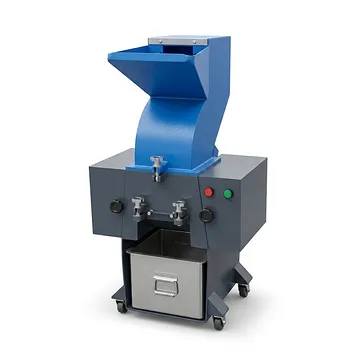
Heavy-Duty Crusher for Laboratory and Industrial Material Size Reduction
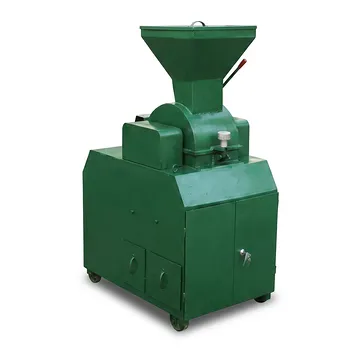
Industrial Sealed Hammer Knife Crusher for Mining Ore and Coal Sample Preparation
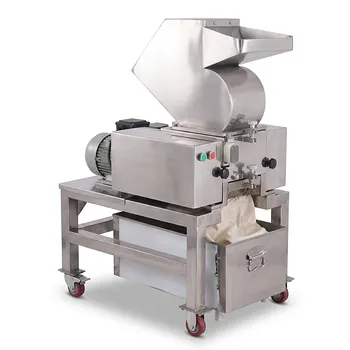
Stainless Steel Coarse Crusher for Pharmaceutical Food and Plastic Material Processing