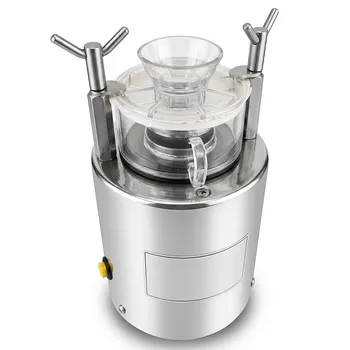
Purpose of <10mm grinding balls in ball milling? Maximize Collisions for Nano-Scale Refinement
Updated 3 months ago
Small-diameter grinding balls are primarily used to maximize the number of contact points and the frequency of collisions within the milling chamber. This increase in media density allows for the refinement of material particles to the nanometer scale by providing greater total shear force and higher grinding efficiency than larger media.
By shifting the grinding mechanism from high-impact crushing to high-frequency attrition, small-diameter media enable ultra-fine particle refinement and de-agglomeration while significantly reducing the process's total energy consumption.
The Mechanics of Increased Surface Area
Maximizing Contact Point Density
The primary advantage of reducing ball diameter is the exponential increase in the number of individual media units per unit volume. More grinding balls result in a higher density of contact points, ensuring that a larger percentage of the material is being processed simultaneously.
Enhancing Collision Frequency
As the number of balls increases, the frequency of collisions per second rises dramatically. This high-frequency interaction is essential for rapid de-agglomeration, allowing the media to break down clusters of fine powder in a fraction of the time required by larger, fewer balls.
Shift Toward Shear and Attrition
Large balls rely on kinetic energy and impact force to "crush" material, whereas small-diameter balls provide greater total shear force. This friction-based approach, known as attrition, is the dominant mechanism required to reach sub-micron and nanometer particle sizes.
Achieving Precision and Purity
Nanometer-Scale Refinement
When the target particle size is in the nanometer range, large media become ineffective because they cannot physically interact with such small dimensions. Small balls provide the precision necessary to capture and fracture fine particles, leading to a narrower and more uniform particle size distribution.
Minimizing Structural Damage
In specialized applications, such as processing nanotubes or fragile composite powders, smaller media are preferred to minimize mechanical damage to delicate structures. They provide enough energy for dispersion and mixing without the destructive impact force associated with heavier media.
Ensuring Material Purity
Using small-diameter balls made of the same material as the feedstock (such as alumina or zirconia) helps maintain chemical purity. Because small balls increase efficiency and reduce milling time, there is less opportunity for media wear to introduce foreign contaminants into the final product.
Understanding the Trade-offs
The Impact Energy Deficit
Small-diameter balls possess significantly less mass, meaning they cannot generate the high impact energy required to break down coarse feedstocks. If the starting material consists of large, hard particles, small media will lack the momentum to initiate the first stage of size reduction.
The Capture-Size Constraint
Effective grinding requires a specific ratio between the media and the material; grinding balls should generally be at least three times larger than the largest particle in the feed. If the media is too small relative to the feedstock, it will simply float between the particles rather than fracturing them.
Increased Media Separation Complexity
While smaller balls improve grinding kinetics, they can be more difficult to separate from the finished slurry or powder. This often requires specialized fine-mesh screens or downstream processing steps that can add complexity to the manufacturing workflow.
Strategic Media Selection for Your Process
How to Apply This to Your Project
To achieve the best balance of efficiency and particle quality, your media selection should be dictated by your specific output requirements and starting material size.
- If your primary focus is nanometer-scale refinement: Use small-diameter media (typically under 10mm, and often under 1mm) to maximize shear force and contact frequency.
- If your primary focus is processing coarse raw materials: Start with larger-diameter balls (20mm to 40mm) to provide the necessary impact energy for initial fracture.
- If your primary focus is a uniform particle size distribution: Utilize a mixed ratio of large and small diameters to combine high-impact crushing with fine-powder attrition.
- If your primary focus is preserving fragile morphologies: Opt for small zirconia or alumina media to achieve dispersion through gentle shear rather than high-velocity impact.
By matching the media diameter to the specific stage of the grinding process, you can achieve superior material consistency while optimizing energy usage.
Summary Table:
| Feature | Large Media (>10mm) | Small Media (<10mm) |
|---|---|---|
| Primary Mechanism | Impact & Crushing | Shear & Attrition |
| Contact Point Density | Low | High |
| Optimal Particle Size | Coarse Feedstock | Nanometer/Sub-micron |
| Main Advantage | High Kinetic Energy | Frequency & Precision |
| Application | Primary Crushing | De-agglomeration & Nano-milling |
Elevate Your Material Research with [Brand Name]
Achieve precision at the nanometer scale with our comprehensive laboratory sample preparation solutions. We specialize in high-performance planetary ball mills, jet mills, and cryogenic grinders designed to maximize grinding efficiency and material purity.
Beyond milling, we offer a full spectrum of compaction and processing equipment, including Cold/Warm Isostatic Presses (CIP/WIP), vacuum hot presses, and advanced powder mixers tailored for material science professionals.
Unlock superior consistency in your powder processing—contact our experts today to find the ideal solution for your lab!
References
- Josny Joy, Sesha S. Srinivasan. Recent Developments on the Synthesis of Nanocomposite Materials via Ball Milling Approach for Energy Storage Applications. DOI: 10.3390/app12189312
Mentioned Products
- Micro Solid Sample Grinder High Speed Pulverizer for Laboratory Small Batch Grinding
- Miniature Planetary Ball Mill with Vacuum Grinding and High Efficiency for Laboratory Sample Preparation
- Small High-Speed Grinder for Efficient Laboratory Sample Preparation
- Laboratory Micro Vibration Grinding Mill for Trace Sample Preparation
- Small High-Speed Laboratory Grinder for Rapid Sample Preparation
People Also Ask
- What is the function of a laboratory high-speed pulverizer in the preparation of eggshell powder? Essential Pretreatment
- What role does a laboratory grinder play in the pretreatment of sunflower seed shell-based adsorbents? Boost Efficiency.
- How does a laboratory grinder or mill enhance the adsorption performance of agricultural waste materials? Boost Surface Area
- What are the technical advantages of using a high-speed laboratory pulverizer for grinding tablets into powders? 20K RPM
- Why is grinding equipment necessary for SnO2-Sb2O3 xerogels? Maximize surface area and photocatalytic activity.

Tech Team · PowderPreparation
Last updated on Jun 03, 2026
Related Products
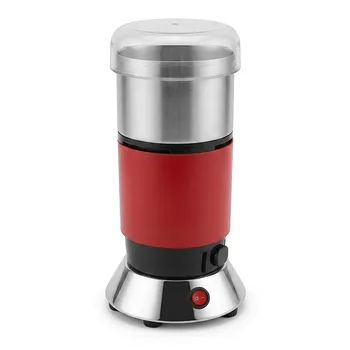
Micro Solid Sample Grinder High Speed Pulverizer for Laboratory Small Batch Grinding

Miniature Planetary Ball Mill with Vacuum Grinding and High Efficiency for Laboratory Sample Preparation
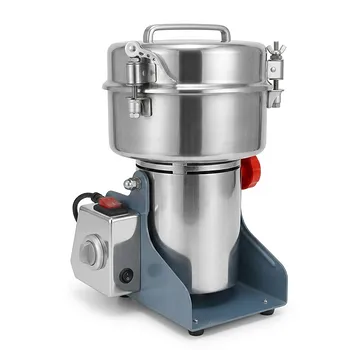
Small High-Speed Grinder for Efficient Laboratory Sample Preparation
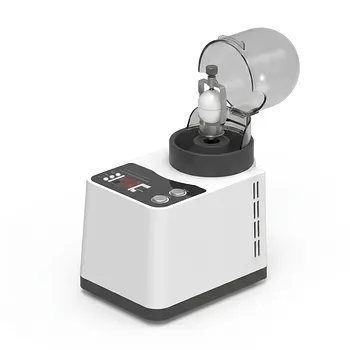
Laboratory Micro Vibration Grinding Mill for Trace Sample Preparation
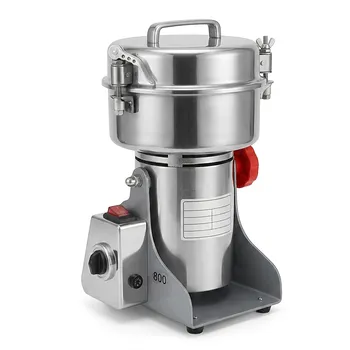
Small High-Speed Laboratory Grinder for Rapid Sample Preparation
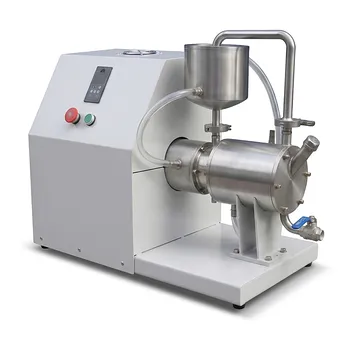
Laboratory Small Horizontal Sand Mill for Nano Materials Wet Grinding

Vertical Square Planetary Ball Mill for Laboratory Sample Preparation and Nanoscale Grinding
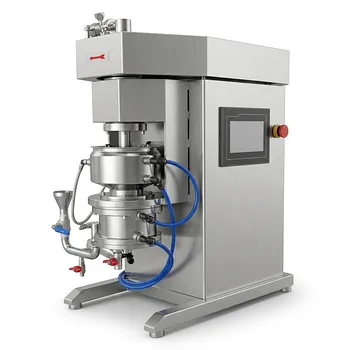
Small Ceramic Structure Laboratory Sand Mill Nanoscale Grinding Dispersion Equipment Seal-less Screen-less Design
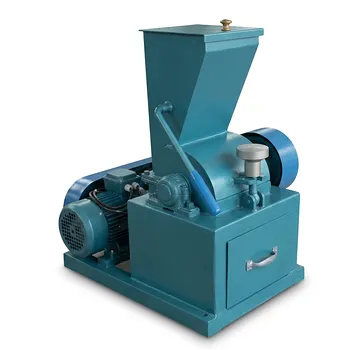
Small Hammer Crusher for Brittle Material Crushing in Mining Metallurgy and Lab Sample Preparation
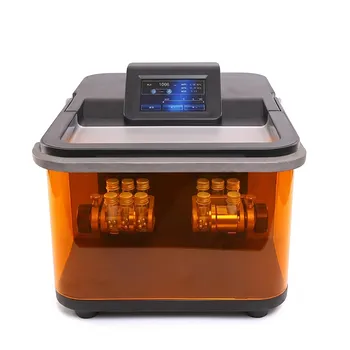
High Throughput Micro Ball Mill for Cryogenic Grinding and Laboratory Cell Disruption
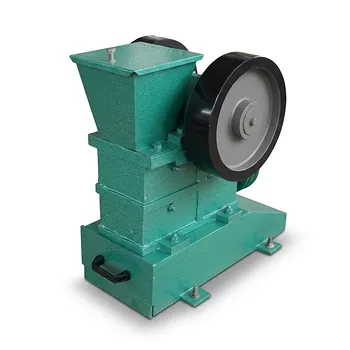
Laboratory Small Jaw Crusher 100x60mm
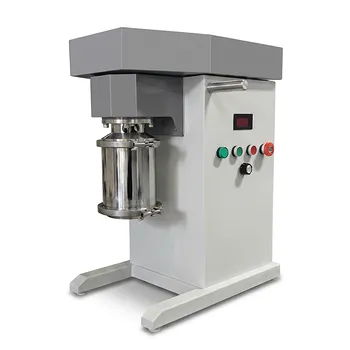
Nano Laboratory Bead Mill Desktop Sub Micron Sand Mill Screenless Seal Less Powder Grinder

High Energy Planetary Ball Mill for Nano Scale Grinding and Mechanical Alloying
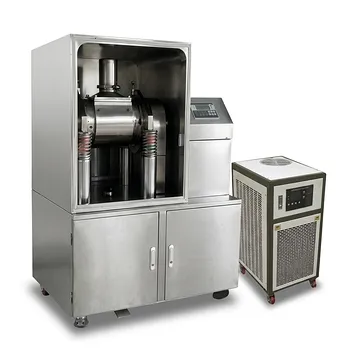
Small Vibrating Ultrafine Grinder for Traditional Chinese Medicine
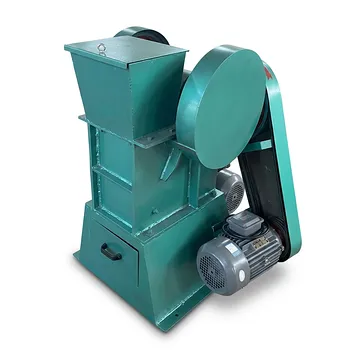
Small Laboratory Jaw Crusher 150x200mm Feed Opening for Sample Preparation and Medium Fine Crushing

High Energy Laboratory Planetary Ball Mill for Nano Grinding and Material Science Sample Preparation