What is the primary purpose of using a stainless steel mesh sieve after the preparation of conductive ink in an attritor mill?
Updated 4 months ago
Separating the finished conductive ink from grinding media is the primary purpose of using a stainless steel mesh sieve after processing in an attritor mill. This critical filtration step ensures the ink is free of large impurities and media fragments, which is essential for protecting downstream printing equipment and maintaining material quality.
The sieve serves as a mechanical gatekeeper, removing grinding media and oversized particles to transform a raw milled suspension into a print-ready conductive ink. By eliminating fragments that could clog printing meshes, it ensures both process reliability and final product performance.
The Role of Sieving in Ink Production
Separating Grinding Media
During the milling process, the attritor uses heavy media—such as 3mm diameter grinding balls—to disperse the conductive particles.
The stainless steel sieve allows the fluid ink to pass through while retaining the bulky media, effectively "harvesting" the product from the mill's mechanical components.
Removing Fragments and Impurities
Over time, grinding media can undergo wear and tear, shedding small fragments into the ink.
The sieve acts as a secondary quality control layer, filtering out these fragments and any large particle agglomerates that failed to disperse during milling.
Downstream Benefits and Equipment Protection
Preventing Screen Printing Failure
Conductive inks are often applied using fine-mesh screen printing, which is highly sensitive to oversized particles.
By removing contaminants early, the sieve prevents mesh clogging, which would otherwise cause print defects, line breaks, or expensive downtime in the production line.
Enhancing Particle Size Distribution
Effective sieving ensures that the material proceeding to the next stage has a consistent particle size distribution.
This consistency is vital for maintaining the electrical conductivity and rheological properties required for high-precision electronic applications.
Understanding the Trade-offs
Material Recovery and Adsorption
A common challenge during sieving is the physical adsorption of ink onto the surface of the grinding media and the sieve mesh itself.
Failure to properly rinse the media or use assisted sieving (like vibration) can lead to a lower yield of the finished conductive ink.
Sieve Wear and Contamination
While stainless steel is durable, the abrasive nature of conductive particles can eventually wear down the sieve mesh.
Regular inspection is required because a damaged sieve can introduce metallic contaminants into the ink, potentially altering its chemical or electrical properties.
How to Apply This to Your Process
Implementation Recommendations
- If your primary focus is Equipment Longevity: Use a high-precision sieve immediately after milling to ensure no media fragments reach your screen printing or dispensing hardware.
- If your primary focus is Maximizing Yield: Incorporate a vibrating sieve mechanism to minimize the ink's adsorption onto the grinding beads and speed up the filtration process.
- If your primary focus is Electrical Performance: Regularly calibrate your sieve mesh size to strictly control the particle cutoff, ensuring only the finest, most conductive particles remain in the suspension.
Correct sieving is the bridge between raw material processing and high-performance electronic manufacturing.
Summary Table:
| Key Role | Specific Function | Impact on Quality |
|---|---|---|
| Media Separation | Removes 3mm grinding balls from the ink | Enables product recovery and media reuse |
| Contaminant Removal | Filters media fragments and agglomerates | Prevents defects in fine electronic traces |
| Equipment Protection | Stops oversized particles from entering printers | Eliminates mesh clogging and production downtime |
| Consistency | Refines particle size distribution | Ensures stable electrical and rheological properties |
Optimize Your Material Preparation Process Today
Ensure the highest purity and performance for your conductive inks and advanced materials. At our core, we provide complete laboratory sample preparation solutions for material science, specializing in high-efficiency powder processing and compaction equipment.
From initial size reduction to final product formation, our extensive line includes:
- Milling & Grinding: Attritors, planetary ball mills, jet mills, and liquid nitrogen cryogenic grinders.
- Classification: Vibratory and air-jet sieve shakers with a full range of high-precision test sieves.
- Compaction: A full spectrum of hydraulic presses, including Cold/Warm Isostatic Presses (CIP/WIP), vacuum hot presses, and XRF pellet presses.
- Processing: Powder mixers and specialized defoaming mixers for air-free ink preparation.
Whether you are looking to maximize yield or protect sensitive downstream equipment, our experts are ready to assist. Contact us today to find the perfect solution for your lab!
References
- Lixin Liu, Zhigang Shen. CuCl2-doped graphene-based screen printing conductive inks. DOI: 10.1007/s40843-021-1980-7
Mentioned Products
- Stainless Steel Rotary Vibrating Sieve High Precision Circular Vibratory Separator Industrial Powder Grading Machine Multi Layer Sifting Equipment
- Small High-Speed Laboratory Grinder for Powder Processing
- Three Dimensional Rotary Vibrating Sieve
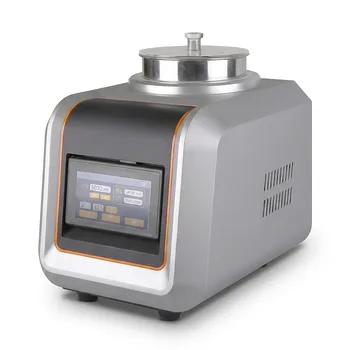
- Laboratory Air Jet Sieving Machine for Fine Powder Particle Size Analysis and Deagglomeration
People Also Ask
- What is the significance of high-precision vibratory sieve machines for SMA? Optimize Aggregate Gradation & Durability
- What is the role of a laboratory-grade high-precision sieve in CPC-PCL? Ensure uniform powder distribution and stability.
- Why is high-precision sieving equipment necessary for aviation-grade composites? Optimize Fiber Strength & Consistency
- What is the function of high-precision vibratory sieve shakers in the analysis of brown rice particle size distribution?
- Why is a high-precision vibratory sieve shaker necessary for wood-polystyrene particles? Maximize composite strength.

Tech Team · PowderPreparation
Last updated on Jun 03, 2026
Related Products
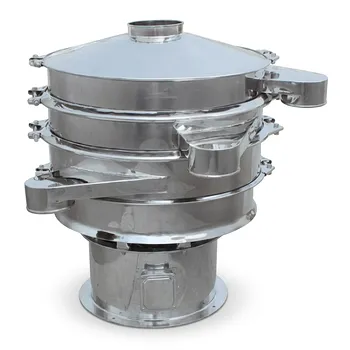
Stainless Steel Rotary Vibrating Sieve High Precision Circular Vibratory Separator Industrial Powder Grading Machine Multi Layer Sifting Equipment
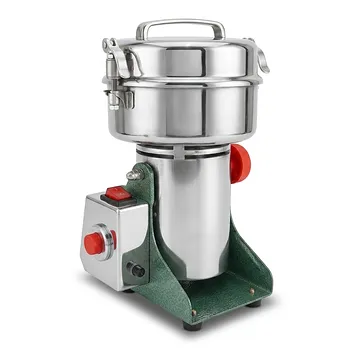
Small High-Speed Laboratory Grinder for Powder Processing
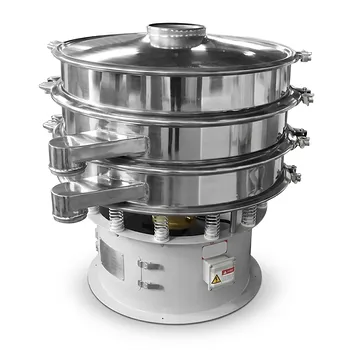
Three Dimensional Rotary Vibrating Sieve