What is the primary purpose of the wet ball milling process in preparing MnO2 and CeO2 doped CSZ? Guide to Homogeneity
Updated 4 months ago
The primary purpose of wet ball milling in preparing doped Calcia-Stabilized Zirconia (CSZ) is to break down powder aggregates and ensure a molecular-level uniform distribution of trace dopants. By utilizing high-energy collisions and shearing forces within an ethanol solvent, the process disperses Manganese Dioxide ($MnO_2$) and Cerium Oxide ($CeO_2$) evenly throughout the zirconia matrix. This degree of homogeneity is essential for allowing stabilizers to diffuse fully into the crystal lattice during sintering, resulting in a stable phase composition and a uniform microstructure.
Wet ball milling serves as the critical foundation for material synthesis by transforming raw powder clusters into a highly reactive, homogeneous mixture. This ensures that trace additives are perfectly dispersed, which is the primary requirement for achieving consistent mechanical properties and chemical stability in the final ceramic product.
Achieving Microstructural Homogeneity
Breaking Down Hard Aggregates
During the raw material mixing stage, powders often form clusters or "hard agglomerates" that can impede uniform reaction. Wet ball milling uses grinding media to provide high-energy impact and shear forces that physically break these aggregates into finer particles. This reduction in particle size is a prerequisite for creating a consistent feedstock.
Uniform Dispersion of Trace Dopants
Dopants like $MnO_2$ and $CeO_2$ are typically added in trace amounts, making them difficult to distribute evenly through manual mixing. The milling process ensures these additives achieve a molecular-level distribution within the zirconia matrix. Without this uniform dispersion, the final material would suffer from localized variations in phase and performance.
The Role of the Ethanol Solvent
The use of ethanol during wet ball milling helps to facilitate the shearing action and prevents the powders from re-agglomerating during the process. This liquid medium ensures that the grinding energy is transferred efficiently to the powder particles. It also assists in maintaining a clean environment for the chemical components to mix at a microscopic level.
Enhancing Sintering Kinetics and Phase Stability
Increasing Specific Surface Area
As the ball milling process refines the powder, it significantly increases the specific surface area of the raw materials. This higher surface area increases the total energy of the powder system, making it more chemically reactive. This increased reactivity provides the optimal kinetic conditions necessary for subsequent high-temperature solid-phase synthesis.
Facilitating Lattice Diffusion
The primary goal of achieving a homogeneous mixture is to prepare the material for the sintering stage. When dopants are perfectly distributed, they can diffuse more easily into the zirconia crystal lattice at high temperatures. This diffusion is what allows the calcia ($CaO$) and other oxides to stabilize the zirconia, preventing unwanted phase transitions during cooling.
Ensuring Consistent Mechanical Properties
A uniform distribution of $CeO_2$ and $MnO_2$ acts as a foundation for the consistency of the material’s mechanical properties. By preventing "clumping" of additives, the process ensures that the toughening mechanisms and structural integrity are the same throughout the entire volume of the ceramic. This reliability is critical for engineering applications where material failure is not an option.
Understanding the Trade-offs
Risk of Media Contamination
Extended milling times—often reaching 24 hours—can lead to the wear of the grinding media (the balls themselves). This wear can introduce impurities from the media into the ceramic powder, which may negatively alter the final material properties. Choosing media with a composition similar to the matrix (such as zirconia balls) is a common strategy to mitigate this risk.
Processing Time vs. Refinement
While longer milling times result in finer powders and better dispersion, there is a point of diminishing returns. Over-milling can lead to excessive energy consumption and potential "cold welding" of particles in certain environments. Balancing the milling duration is essential to maximize reactivity without introducing unnecessary contamination or processing costs.
How to Apply This to Your Project
If your primary focus is phase stability: Ensure a minimum milling duration of 24 hours to guarantee that $MnO_2$ and $CeO_2$ are distributed at a molecular level, allowing for full lattice diffusion.
If your primary focus is high sintering reactivity: Prioritize the refinement of particle size during the milling process to maximize specific surface area, which lowers the energy barrier for solid-state reactions.
If your primary focus is material purity: Utilize high-purity zirconia grinding media and carefully monitor the milling time to prevent the introduction of foreign contaminants into the doped matrix.
By mastering the wet ball milling process, you establish the precise chemical and physical environment necessary for the production of high-performance doped Calcia-Stabilized Zirconia.
Summary Table:
| Feature | Wet Ball Milling Mechanism | Impact on CSZ Material |
|---|---|---|
| Homogeneity | Breaks aggregates via high-energy impact & shear | Molecular-level distribution of MnO2 and CeO2 dopants |
| Reactivity | Increases specific surface area of powders | Lowers energy barriers for high-temp sintering kinetics |
| Microstructure | Uses ethanol solvent to prevent re-agglomeration | Ensures stable phase composition and uniform grain size |
| Performance | Facilitates diffusion into the crystal lattice | Consistent mechanical properties and chemical stability |
Elevate Your Material Research with Precision Engineering
Achieving the perfect doped Calcia-Stabilized Zirconia requires more than just a formula—it requires the right equipment. At [Your Brand Name], we provide complete laboratory sample preparation solutions for material science, specializing in high-performance powder processing and compaction.
Whether you need to refine trace dopant dispersion or achieve high-density sintering, our extensive line of equipment is designed for precision:
- Advanced Milling: Planetary ball mills, jet mills, and cryogenic grinders for perfect homogeneity.
- Precision Mixing: Powder and defoaming mixers to eliminate air and ensure uniform blends.
- Superior Compaction: A full spectrum of hydraulic presses, including Cold/Warm Isostatic Presses (CIP/WIP), vacuum hot presses, and standard lab presses for reliable pellet formation.
Ready to optimize your lab’s workflow? Contact our experts today to find the ideal solution for your material synthesis needs.
References
- Hwanseok Lee, Heesoo Lee. Phase Stability and Slag-Induced Destabilization in MnO2 and CeO2-Doped Calcia-Stabilized Zirconia. DOI: 10.3390/ma16227240
Mentioned Products
- Vertical Square Planetary Ball Mill for Laboratory Sample Preparation and Nanoscale Grinding
- Single Tank High Energy Vibratory Ball Mill for Laboratory Grinding and Mixing
- Miniature Planetary Ball Mill with Vacuum Grinding and High Efficiency for Laboratory Sample Preparation
- 8L Planetary Ball Mill for Laboratory Grinding and Sample Preparation
- Laboratory Horizontal Pin Nano Sand Mill
People Also Ask
- What is the function of a planetary ball mill in wollastonite ceramic prep? Achieve Molecular Homogenization & Reactivity
- How does a planetary ball mill contribute to the homogenization of trace elements? Achieve Sub-Micron Uniformity
- Why grind lime-pozzolan specimens for TG/DTA for 3 mins? Master sample prep for high-precision thermal analysis.
- What role does a planetary ball mill play in the synthesis of Li6PS5Cl (LPSCl)? Unlock High Ionic Conductivity
- What role does a planetary ball mill play in KNTO ceramic refinement? Optimize Homogeneity & Reactivity

Tech Team · PowderPreparation
Last updated on Jun 03, 2026
Related Products
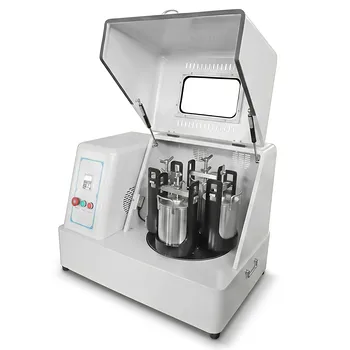
Vertical Square Planetary Ball Mill for Laboratory Sample Preparation and Nanoscale Grinding
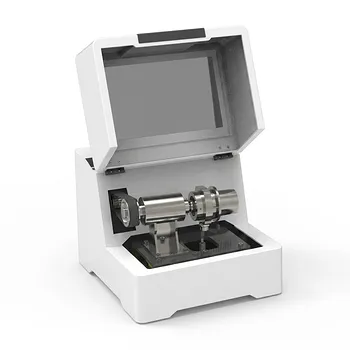
Single Tank High Energy Vibratory Ball Mill for Laboratory Grinding and Mixing
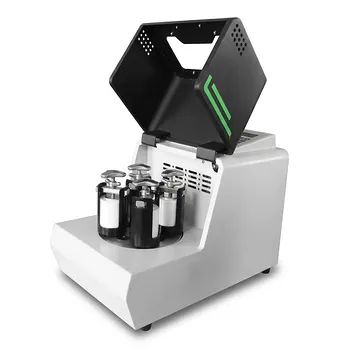
Miniature Planetary Ball Mill with Vacuum Grinding and High Efficiency for Laboratory Sample Preparation
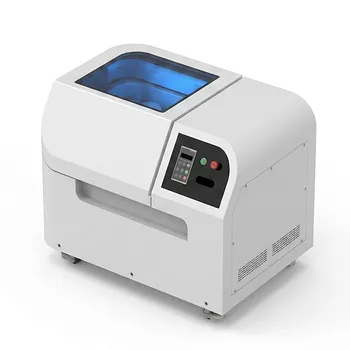
8L Planetary Ball Mill for Laboratory Grinding and Sample Preparation
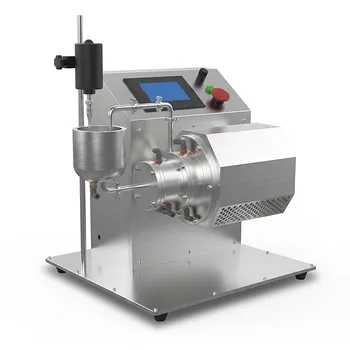
Laboratory Horizontal Pin Nano Sand Mill
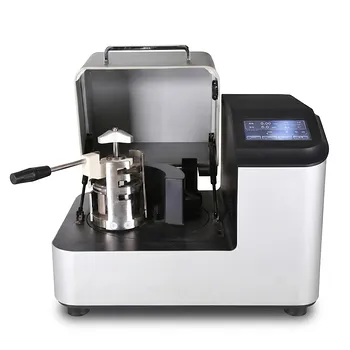
High Energy Laboratory Planetary Ball Mill for Nano Grinding and Material Science Sample Preparation
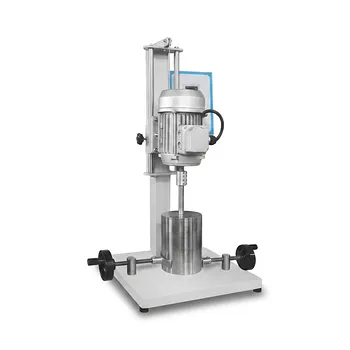
Laboratory Basket Sand Mill for Wet Grinding and Dispersion of Viscous Slurries
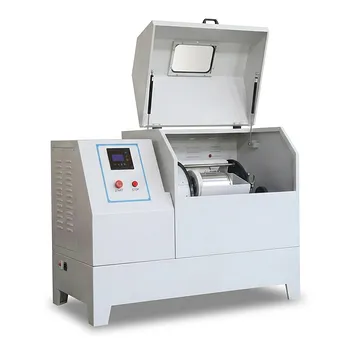
Heavy Duty Horizontal Planetary Ball Mill for Efficient Industrial Grinding and Sample Preparation
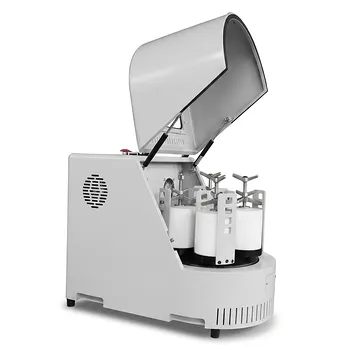
Vertical Semi Circular Planetary Ball Mill for Laboratory Precision Grinding
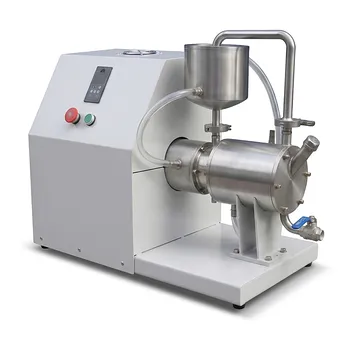
Laboratory Small Horizontal Sand Mill for Nano Materials Wet Grinding
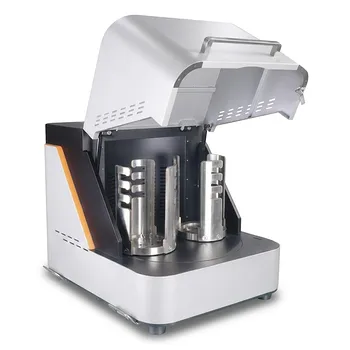
High Energy Laboratory Planetary Ball Mill for Nano Grinding and Colloidal Mixing of Hard and Brittle Materials
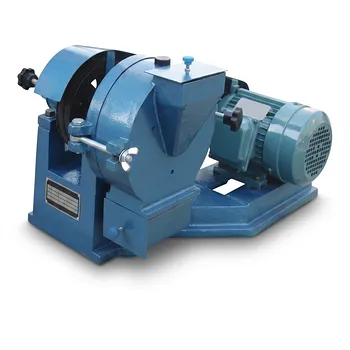
Laboratory Disc Mill for Ore and Mineral Sample Preparation
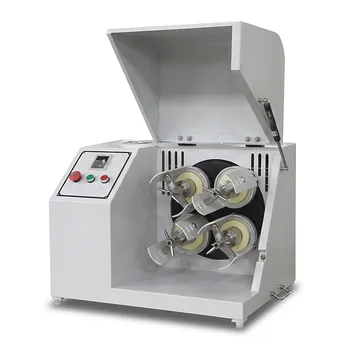
Horizontal Light Duty Planetary Ball Mill for Laboratory Sample Preparation
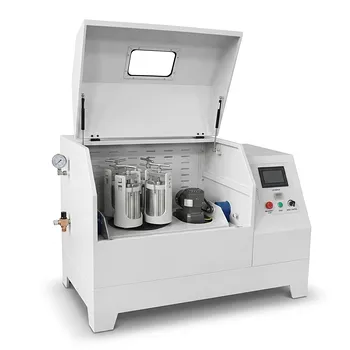
Vertical Production Planetary Ball Mill for High Throughput Powder Processing
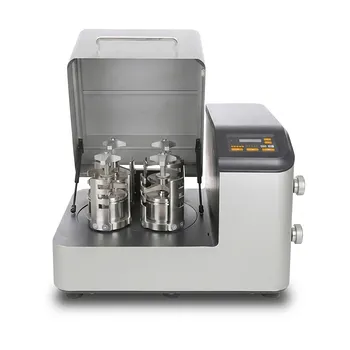
High Energy Planetary Ball Mill for Nano Scale Grinding and Colloidal Mixing in Material Science Research
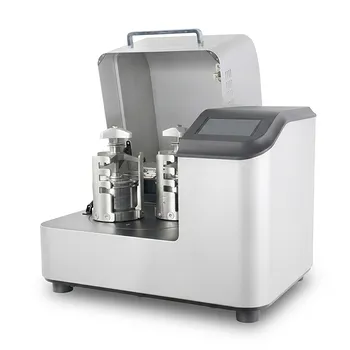
High Energy Planetary Ball Mill for Nano Scale Grinding and Mechanical Alloying
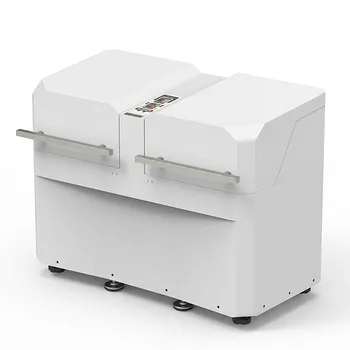
Dual Station Planetary Ball Mill 24L
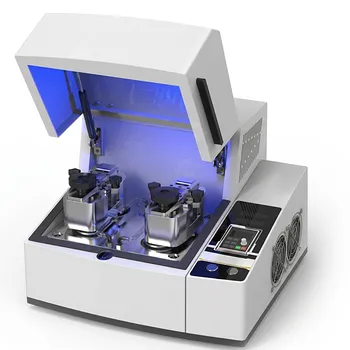
Laboratory Nano High Energy Ball Mill Ultrafine Grinding Mechanical Alloying
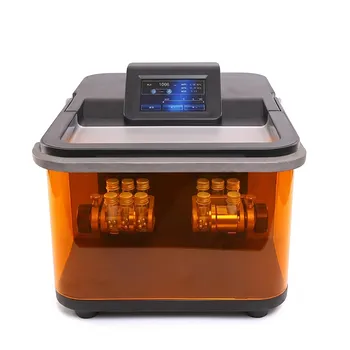
High Throughput Micro Ball Mill for Cryogenic Grinding and Laboratory Cell Disruption