What is the mechanism of action for YSZ grinding beads in nanonization? Achieve High-Precision Particle Size Reduction
Updated 5 months ago
The mechanism of action for high-density yttrium-stabilized zirconia (YSZ) grinding beads relies on the efficient conversion of mechanical motion into high-intensity kinetic energy. This energy is transferred to drug particles through a combination of high-energy impacts, shear forces, and compression, which overcomes intermolecular forces to fracture micrometer-sized crystals into the nanometer range.
High-density YSZ beads act as energy anchors that maximize collision force and frequency. Their unique combination of mass, hardness, and wear resistance allows for rapid particle size reduction while maintaining the strict purity standards required for pharmaceutical and chemical applications.
The Physics of Particle Fracture
The primary function of YSZ beads is to serve as the medium for energy transfer between the milling equipment and the target material.
Kinetic Energy and Mechanical Stress
Yttrium-stabilized zirconia beads possess a high density of approximately 6 g/mL. This mass is critical because kinetic energy is directly proportional to mass; under high acceleration, these beads generate the significant stress energy required to fracture primary particles.
Impact, Shear, and Compression
During the milling process, particles are subjected to three distinct forces. High-energy impacts provide the blunt force needed to crack crystals, while shear forces and mechanical friction grind down surfaces to achieve a uniform nanometer distribution.
Overcoming Intermolecular Forces
To achieve nanonization, the energy delivered must exceed the intermolecular forces holding the drug crystal together. The high frequency of collisions generated by YSZ beads ensures that these energy thresholds are met consistently throughout the batch.
Optimizing the Nanonization Environment
The effectiveness of the mechanism is not solely dependent on density, but also on the physical dimensions and durability of the media.
Specific Surface Area and Collision Frequency
Using beads with small diameters (typically 0.1 to 0.3 mm) significantly increases the specific surface area available for grinding. This increases the probability of collisions between the media and the drug particles, which is essential for refining materials from the micrometer to the nanometer scale.
Material Integrity and Wear Resistance
YSZ is characterized by extreme hardness and fracture toughness. These properties ensure that the beads do not deform or shatter under high-frequency stress, which maintains a consistent grinding environment and prevents the introduction of media fragments into the product.
Chemical Inertness and Purity
The low surface porosity and chemical stability of yttria-stabilized zirconia prevent chemical reactions with the sample. This ensures the purity and safety of the final formulation, which is a critical requirement for nano-pharmaceuticals and high-end optical films.
Understanding the Trade-offs and Pitfalls
While YSZ beads are highly efficient, their use involves specific technical considerations that can impact the final outcome.
Heat Generation
The high kinetic energy that makes YSZ beads effective also generates significant thermal energy. If the process is not cooled correctly, this heat can degrade heat-sensitive active pharmaceutical ingredients (APIs) or lead to particle re-aggregation.
Media Wear vs. Product Purity
Although YSZ has superior wear resistance, it is not "wear-free." Over extended milling cycles, trace amounts of zirconia may still enter the suspension; users must balance grinding time against the maximum allowable impurity levels for their specific application.
Cost and Density Matching
YSZ beads are a premium grinding media with a higher cost than glass or alumina. Furthermore, if the slurry viscosity is too high, even high-density beads may lose their momentum, leading to "float" and a significant drop in grinding efficiency.
How to Apply This to Your Project
Selecting the right bead configuration depends on your specific material properties and target particle size.
- If your primary focus is rapid size reduction: Use beads with the highest available density (~6 g/mL) and high-frequency milling equipment to maximize kinetic energy transfer.
- If your primary focus is reaching the sub-100nm range: Select small-diameter beads (0.1 mm) to maximize the specific surface area and increase collision frequency.
- If your primary focus is pharmaceutical purity: Prioritize YSZ beads with high fracture toughness and low surface porosity to minimize media-related contamination.
By leveraging the high density and hardness of yttrium-stabilized zirconia, you can achieve precise particle nanonization while ensuring the chemical and physical integrity of your final product.
Summary Table:
| Feature | Specification/Mechanism | Impact on Nanonization |
|---|---|---|
| Material Density | ~6.0 g/mL (High Mass) | Maximizes kinetic energy and collision stress |
| Primary Forces | Impact, Shear, & Compression | Fractures crystals and grinds surfaces to <100nm |
| Bead Diameter | 0.1 mm to 0.3 mm | Increases specific surface area and collision frequency |
| Durability | High Fracture Toughness | Ensures low wear and maintains product purity |
| Stability | Chemical Inertness | Prevents contamination in pharmaceutical formulations |
Elevate Your Material Research with Expert Nanonization Solutions
Achieving consistent sub-micron particle sizes requires the perfect synergy between high-performance media and precision engineering. At [Your Brand Name], we provide complete laboratory sample preparation solutions tailored for material science, specializing in advanced powder processing and compaction equipment.
Our extensive range is designed to meet the rigorous demands of pharmaceutical and chemical R&D:
- High-Efficiency Milling: From planetary ball mills and jet mills to liquid nitrogen cryogenic grinders, we offer the tools to leverage YSZ beads for maximum energy transfer.
- Sizing & Mixing: Precision sieve shakers (vibratory/air-jet) and high-homogeneity powder or defoaming mixers.
- Advanced Compaction: A full spectrum of hydraulic presses, including Cold/Warm Isostatic Presses (CIP/WIP), vacuum hot presses, and XRF pellet presses.
Whether you are refining nano-pharmaceuticals or developing high-end ceramics, our expertise ensures your process is efficient, repeatable, and pure. Contact our technical team today to discover how our specialized equipment can optimize your laboratory workflow!
References
- Ann-Cathrin Willmann, Karl Wagner. Itraconazole Nanosuspensions via Dual Centrifugation Media Milling: Impact of Formulation and Process Parameters on Particle Size and Solid-State Conversion as Well as Storage Stability. DOI: 10.3390/pharmaceutics14081528
Mentioned Products
- Horizontal Bead Mill for Nanoscale Grinding and Advanced Material Powder Processing
- Laboratory Horizontal Bead Mill for Nanomaterial Wet Grinding and Material Science Research
- Laboratory Small Horizontal Sand Mill for Nano Materials Wet Grinding
- Vertical Nano Bead Mill for Ceramic Materials with Permanent Magnet Motor and High Efficiency Grinding
- Nano Laboratory Bead Mill Desktop Sub Micron Sand Mill Screenless Seal Less Powder Grinder
People Also Ask
- How does the bead filling rate affect the grinding performance and equipment wear in a bead mill? Optimization Guide
- Why is it necessary to precisely control the grinding media loading ratio? Master Nanosuspension Yield & API Stability
- Why is a ceramic lining preferred over stainless steel for a bead mill? Protect Enzymes and Ensure Biomass Purity
- Why is an external cooling circulation system necessary during the high-speed operation of a bead mill? Protect Integrity
- Why is the filling rate of grinding beads strictly controlled during the material milling process? Optimize Efficiency.

Tech Team · PowderPreparation
Last updated on May 14, 2026
Related Products
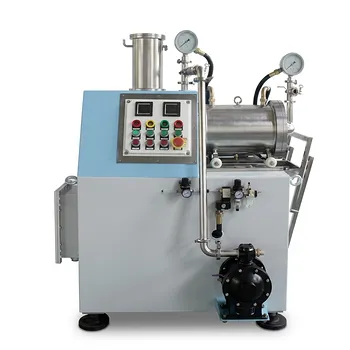
Horizontal Bead Mill for Nanoscale Grinding and Advanced Material Powder Processing
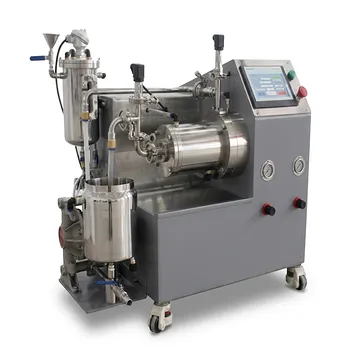
Laboratory Horizontal Bead Mill for Nanomaterial Wet Grinding and Material Science Research
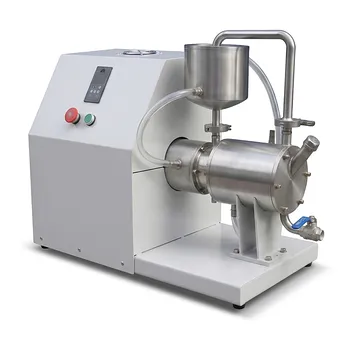
Laboratory Small Horizontal Sand Mill for Nano Materials Wet Grinding
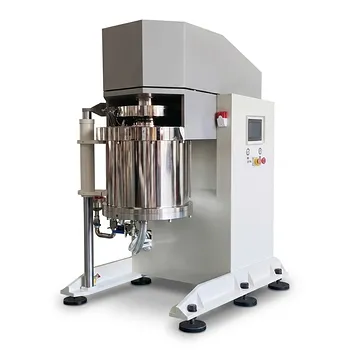
Vertical Nano Bead Mill for Ceramic Materials with Permanent Magnet Motor and High Efficiency Grinding
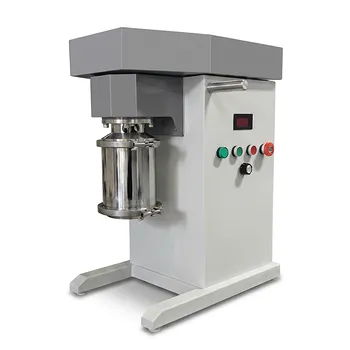
Nano Laboratory Bead Mill Desktop Sub Micron Sand Mill Screenless Seal Less Powder Grinder
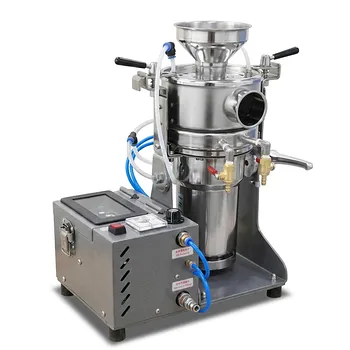
Water Cooled Pulse Jet Ultrafine Grinder
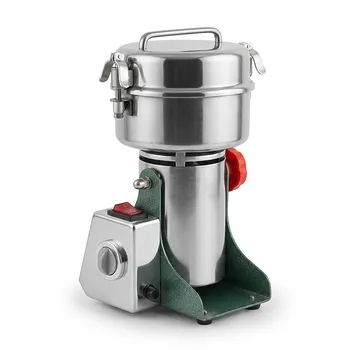
Small High-Speed Swing Grinder for Laboratory Sample Preparation
Micro Solid Sample Grinder High Speed Pulverizer for Laboratory Small Batch Grinding