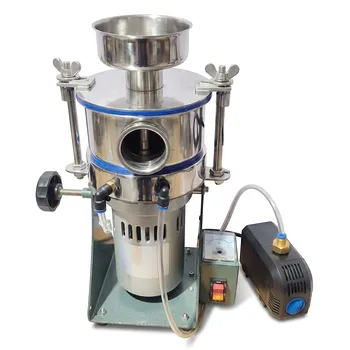
What is the function of porcelain glaze mills? Ensure Uniform Crystal Growth and Stability in Frit-Based Glazes
Updated 4 months ago
Porcelain glaze mills serve as the critical refinement stage in the production of frit-based crystalline glazes. They use mechanical wet grinding to reduce frits, additives, and coloring oxides into a homogenous slurry, ensuring that the resulting glaze is stable for application and produces predictable, uniform crystal growth during the firing process.
The primary function of a porcelain glaze mill is to achieve precise particle size reduction and chemical homogeneity. This process is essential for stabilizing the glaze suspension and ensuring the consistent development of crystals across the ceramic surface.
The Role of Mechanical Refinement
Processing Frit and Coloring Oxides
Crystalline glazes rely heavily on frits—pre-melted glass components—that must be ground to a specific micron size. The mill uses mechanical force to break these down, ensuring they will melt evenly and react predictably with coloring metal oxides during the firing cycle.
Integrating Chemical Additives
The milling process is used to thoroughly disperse additives like CMC (Carboxymethyl Cellulose) and STPP (Sodium Tripolyphosphate). These chemicals are vital for managing the rheology of the glaze, ensuring it maintains the correct viscosity and stays in suspension without settling.
Ensuring Glaze Stability and Performance
Achieving Homogeneity for Crystal Growth
Uniformity is the most critical factor for successful crystalline glazes. The mill creates a highly uniform mixed state, which ensures that nucleating agents are distributed evenly, preventing erratic or "patchy" crystal formations on the finished piece.
Improving Suspension and Application
By refining the raw materials into a fine, consistent slip, the mill improves the stability of the glaze during the application process. This consistency allows for a smooth, even coating on the porcelain body, which is necessary for the delicate thermal reactions that follow.
Understanding the Trade-offs
Particle Size vs. Surface Tension
While refinement is necessary, over-grinding can lead to an excessively fine particle size that increases the surface tension of the glaze. This can result in "crawling," where the glaze pulls away from the ceramic body during firing, leaving bare spots.
Milling Time and Contamination
Extended milling times required for high fineness can increase the risk of media wear. If the grinding balls or mill lining degrade, they can introduce impurities into the glaze, potentially shifting the color or inhibiting crystal growth.
How to Apply This to Your Project
When preparing frit-based crystalline glazes, your milling strategy should align with your specific production requirements and aesthetic goals.
- If your primary focus is consistent crystal distribution: Prioritize the milling of metal oxides and frits to a uniform particle size to ensure even nucleation sites.
- If your primary focus is application stability: Focus on the precise integration of CMC and STPP during the wet grinding phase to prevent glaze settling and ensure a smooth dip or spray.
- If your primary focus is color purity: Monitor mill lining wear and use high-alumina grinding media to prevent contamination from altering the transparency of the crystalline matrix.
Mastering the milling process transforms raw chemical components into a precision-engineered suspension capable of producing complex crystalline structures.
Summary Table:
| Key Function | Impact on Glaze Quality | Primary Benefit |
|---|---|---|
| Particle Size Reduction | Ensures frits & oxides melt evenly | Consistent, predictable crystal growth |
| Chemical Dispersion | Homogenizes additives like CMC/STPP | Improved rheology and suspension stability |
| Homogenization | Even distribution of nucleating agents | Prevents patchy or erratic crystal formations |
| Wet Grinding | Creates a fine, consistent slip | Smooth application and better surface adhesion |
Elevate Your Material Science Research with Precision Equipment
Achieving the perfect crystalline glaze requires uncompromising precision in particle size and homogeneity. At KinTek, we provide complete laboratory sample preparation solutions tailored for material science and advanced ceramics.
Our specialized powder processing equipment includes:
- Advanced Milling Solutions: Planetary ball mills, jet mills, and rotor mills for achieving micron-level fineness.
- Crushing & Sizing: Jaw and roll crushers, along with vibratory sieve shakers for precise fractioning.
- Compaction & Forming: A full spectrum of hydraulic presses, including Cold/Warm Isostatic Presses (CIP/WIP), vacuum hot presses, and XRF pellet presses.
- Mixing Excellence: High-performance powder and defoaming mixers for stable slurry preparation.
Whether you are refining frits or developing new ceramic composites, our equipment ensures repeatable results and superior material performance.
Ready to optimize your laboratory workflow? Contact our experts today to find the ideal solution for your specific application requirements!
References
- Keriman Pekkan, Yalçın Gün. EFFECT OF DIFFERENT METAL OXIDES ON VICKERS HARDNESS OF THE FRIT BASED CRYSTALLINE GLAZES. DOI: 10.17100/nevbiltek.368987
Mentioned Products
- Cross Beater Mill for Brittle Material Grinding and Continuous Fine Crushing Industrial Sample Preparation
- Small Ceramic Structure Laboratory Sand Mill Nanoscale Grinding Dispersion Equipment Seal-less Screen-less Design
- Laboratory Disc Mill for Fine Sample Preparation of Hard and Brittle Materials
- Ultra Centrifugal Mill High Speed Laboratory Grinder for Fibrous and Brittle Sample Preparation
- Small Laboratory Colloid Mill for Ultra-Fine Wet Grinding and Emulsification
People Also Ask
- Why use lab mills for corncob size reduction? Boost activated carbon surface area and activation efficiency.
- How does an industrial grinding mill contribute to groundnut shell powder preparation? Enhance Polymer Filler Performance
- What is the technical significance of the relative collision velocity of grinding media? Maximize Milling Efficiency
- What is the role of industrial crushers and grinding equipment in waste glass pretreatment for eco-friendly bricks?
- What Role Does Lab Grinding Play in Banana Fiber Thermal Coatings? Optimize Waste Into High-Performance Barriers

Tech Team · PowderPreparation
Last updated on May 14, 2026
Related Products
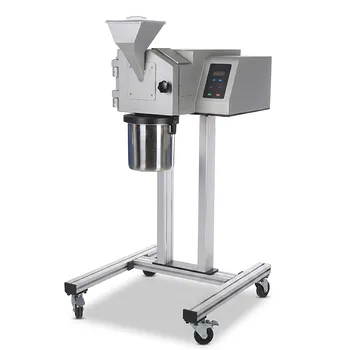
Cross Beater Mill for Brittle Material Grinding and Continuous Fine Crushing Industrial Sample Preparation
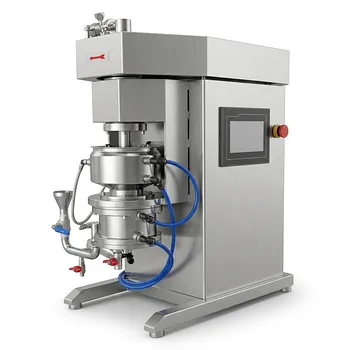
Small Ceramic Structure Laboratory Sand Mill Nanoscale Grinding Dispersion Equipment Seal-less Screen-less Design

Laboratory Disc Mill for Fine Sample Preparation of Hard and Brittle Materials

Ultra Centrifugal Mill High Speed Laboratory Grinder for Fibrous and Brittle Sample Preparation
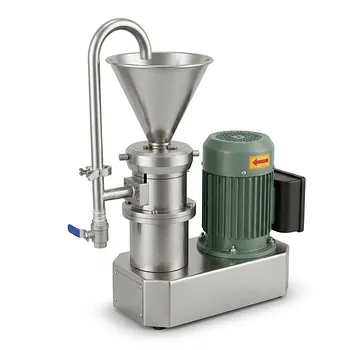
Small Laboratory Colloid Mill for Ultra-Fine Wet Grinding and Emulsification