Lab Crushing Equipment's Function in Rice Husk Prep for Catalytic Combustion: Maximizing Surface Area
Updated 5 months ago
Laboratory crushing equipment is the primary tool for transforming raw rice husk into a chemically reactive, micron-sized feedstock. These machines, including high-speed pulverizers and grinding mills, use mechanical force to reduce the particle size of biomass and catalysts. This physical reduction significantly increases the specific surface area, which ensures a uniform distribution of the catalyst and enhances the contact efficiency between reactants and oxygen during the combustion process.
The core function of crushing equipment is to maximize the interaction potential between the biomass and the catalyst by increasing surface area. This mechanical pretreatment is the foundation for achieving high reaction activity and consistent, reproducible results in catalytic combustion experiments.
Enhancing Reaction Kinetics through Surface Area Expansion
Breaking Down Fibrous Structures
Rice husk possesses a complex, fibrous physical construction that resists uniform chemical interaction in its raw state. Laboratory mills use mechanical force to break down these macroscopic structures, converting them into a standardized dust form. This process is a critical prerequisite for ensuring the material behaves predictably during thermal degradation.
Maximizing Specific Surface Area
The transition from raw husks to micron-sized particles exponentially increases the surface area available for chemical reactions. A higher surface area allows for more thorough contact between the rice husk components and oxidizing agents. This leads to an accelerated reaction rate and more efficient energy release during the combustion cycle.
Improving Catalyst Contact Efficiency
In experiments involving natural zeolite or other catalysts, the equipment processes both the biomass and the catalyst into fine powders. This ensures that the catalyst is not merely sitting alongside the fuel but is integrated into the biomass matrix. Such proximity is vital for the catalyst to effectively lower the activation energy required for combustion.
Achieving Uniformity and Consistency in Experiments
Ensuring a Homogeneous Mixture
One of the greatest challenges in waste-to-energy research is the irregular nature of raw waste. Mechanical crushing creates a consistent particle size distribution, which allows catalysts to be distributed evenly throughout the sample. Without this uniformity, combustion would be sporadic, leading to "cold spots" and unreliable data.
Facilitating Uniform Oxygen Diffusion
Fine particles allow for a more permeable and consistent fuel bed in laboratory reactors. This facilitates the diffusion of oxygen to the reactive sites of the rice husk particles. When oxygen can reach the fuel surface unimpeded, the resulting catalytic combustion is more complete and produces fewer unburned hydrocarbons.
Standardizing for Industrial Simulation
By grinding husks into a dust-like consistency, researchers can accurately simulate the dust deposits typically found in industrial environments. This standardization is essential for testing the flammability and explosive characteristics of biomass waste. It ensures that laboratory-scale findings can be reliably scaled to industrial power plant conditions.
Understanding the Trade-offs
Thermal Degradation During Grinding
The high-speed mechanical action of pulverizers can generate significant frictional heat. If not carefully managed, this heat can cause the premature release of volatile organic compounds (VOCs) from the rice husk. Researchers must often use intermittent grinding or cooling cycles to preserve the chemical integrity of the raw waste.
Risk of Material Contamination
Using heavy-duty grinding media, such as steel or ceramic balls, introduces a risk of cross-contamination. Small amounts of the grinding surface can wear off and integrate into the rice husk or catalyst powder. This can inadvertently introduce foreign elements that might skew the results of the catalytic combustion experiment.
How to Apply This to Your Research
Selecting the Right Approach for Your Goal
- If your primary focus is maximizing catalytic activity: Use a high-speed pulverizer to achieve the smallest possible micron-sized particles to increase the contact points between the rice husk and the catalyst.
- If your primary focus is industrial process simulation: Utilize a laboratory mill to achieve a standardized particle size distribution that mirrors the actual dust found in industrial waste-processing facilities.
- If your primary focus is post-combustion analysis: Ensure the rice husk ash is ground into an ultrafine powder to facilitate its reaction with cementitious materials or soil stabilizers.
Effective mechanical pretreatment through laboratory crushing is the non-negotiable first step in unlocking the full energy potential of rice husk waste through catalytic combustion.
Summary Table:
| Feature | Role in Rice Husk Preparation | Experimental Advantage |
|---|---|---|
| Size Reduction | Transforms fibrous husks into micron-sized particles | Exponentially increases specific surface area for reactions |
| Catalyst Integration | Blends biomass matrix with catalysts (e.g., zeolite) | Lowers activation energy and improves reaction kinetics |
| Homogenization | Creates consistent particle size distribution | Ensures stable combustion and eliminates "cold spots" |
| Standardization | Simulates industrial dust environments | Provides reliable data for scaling to industrial power plants |
Optimize Your Biomass Research with Precision Sample Preparation
At [Your Brand Name], we provide complete laboratory sample preparation solutions tailored for advanced material science and waste-to-energy research. Achieving reproducible results in catalytic combustion starts with the right feedstock consistency.
Our specialized equipment lines include:
- Crushing & Grinding: High-speed pulverizers, jaw/roll crushers, and liquid nitrogen cryogenic grinders to preserve chemical integrity.
- Advanced Milling: Planetary ball, jet, and rotor mills for achieving precise micron-sized particles.
- Sieving & Mixing: Vibratory sieve shakers and high-efficiency powder mixers for uniform catalyst distribution.
- Material Compaction: A full spectrum of hydraulic presses, including Cold/Warm Isostatic Presses (CIP/WIP), vacuum hot presses, and XRF pellet presses.
Unlock the full energy potential of your materials with our high-performance processing solutions.
Contact our experts today to find the perfect equipment for your lab!
References
- Nurkholis Hamidi, Naufal Muhammad Faiz. THERMOGRAVIMETRIC ANALYSIS OF PULVERIZED RICE HUSK WASTE CATALYTIC COMBUSTION WITH NATURAL ZEOLIT. DOI: 10.21776/mechta.2024.005.02.7
Mentioned Products
- Continuous Feeding Grinder High Efficiency Pulverizer for Lab Sample Preparation
- Water Cooled Pulse Jet Ultra Fine Pulverizer for Continuous Grinding
- Industrial High Speed Small Sample Pulverizer Swing Type Laboratory Grinder for Powder Processing
- High Speed Swing Type Laboratory Pulverizer for Fine Powder Grinding and Sample Preparation
- Laboratory Desktop Ultra Fine Powder Grinder High Speed Micronizing Pulverizer
People Also Ask
- Why must soil samples be ground before XRD or XRF analysis? Ensure Precision & Homogeneity in Lab Results
- What is the function of a laboratory blender for mixed fuels? Achieving Microscopic Uniformity for Accurate Analysis
- What is the function of a laboratory pulverizer in Boerhavia diffusa-based adsorbent prep? Maximize Surface Area
- What are the technical advantages of using a high-speed laboratory pulverizer for grinding tablets into powders? 20K RPM
- What is the function of laboratory-scale pulverizing equipment in bio-adsorptive film prep? Maximize Surface Area

Tech Team · PowderPreparation
Last updated on May 14, 2026
Related Products
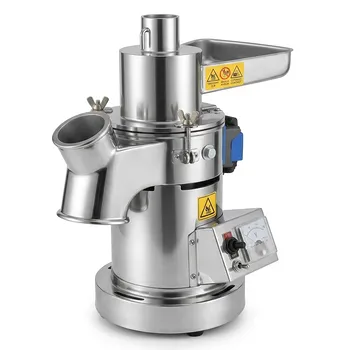
Continuous Feeding Grinder High Efficiency Pulverizer for Lab Sample Preparation
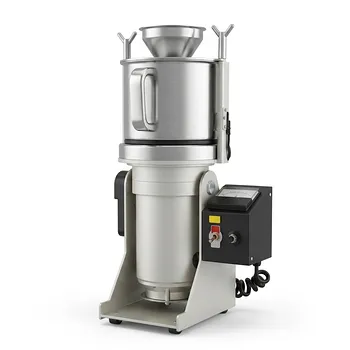
Water Cooled Pulse Jet Ultra Fine Pulverizer for Continuous Grinding
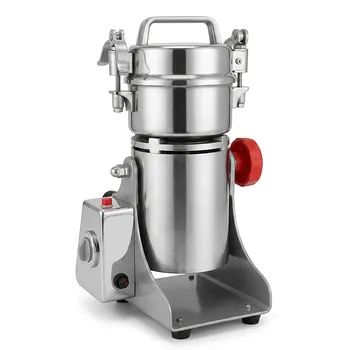
Industrial High Speed Small Sample Pulverizer Swing Type Laboratory Grinder for Powder Processing
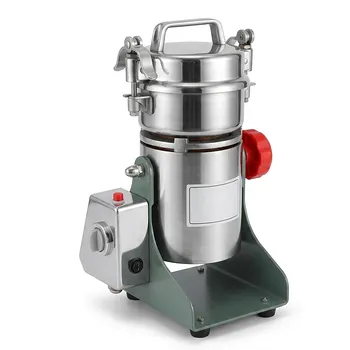
High Speed Swing Type Laboratory Pulverizer for Fine Powder Grinding and Sample Preparation
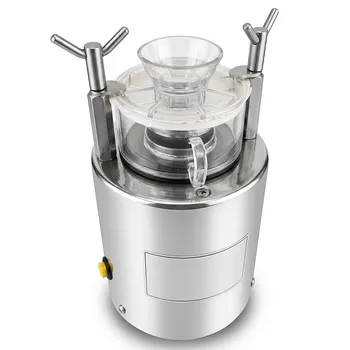
Laboratory Desktop Ultra Fine Powder Grinder High Speed Micronizing Pulverizer