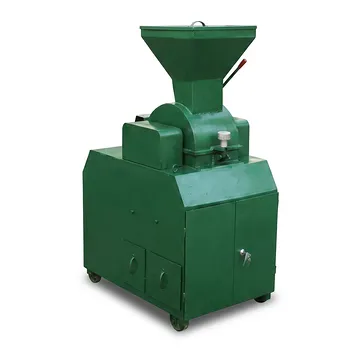
What is the function of industrial-grade crushing in APKS bio-filler prep? Optimize Surface Area & Matrix Bonding
Updated 5 months ago
Industrial-grade crushing equipment serves as the primary mechanical catalyst for size reduction in APKS production. This equipment utilizes high-intensity mechanical shear and impact forces to transform bulk palm kernel shells into micron-sized powders. This refinement process is critical for increasing the specific surface area, which optimizes the physical and chemical interaction between the bio-filler and polymer matrices like Carboxylated Nitrile Butadiene Rubber (XNBR).
Industrial crushing is the foundational step that dictates the reinforcement potential and processing efficiency of bio-fillers. By precisely controlling particle size and morphology, it transforms raw biomass into a high-performance functional additive.
The Role of Mechanical Refinement
Achieving Micron-Scale Particle Size
The primary function of the crusher is the physical transformation of large, irregular shells into a uniform micron-scale powder. This staged reduction ensures the material reaches a fineness suitable for integration into advanced composite structures.
Increasing Specific Surface Area
By breaking down bulk material, the equipment exponentially increases the specific surface area available for interaction. A higher surface area provides more contact sites for physical-mechanical interlocking and chemical cross-linking with the rubber matrix.
Establishing Material Uniformity
Industrial crushers ensure a controlled particle size distribution, which is essential for consistent batch quality. This uniformity allows for predictable behavior during subsequent processing steps, such as sieving or mixing with binders.
Impact on Material Performance
Enhancing Matrix Interlocking and Reinforcement
Refined APKS particles allow for tighter physical contact within the XNBR matrix. This intimate bonding significantly enhances the mechanical reinforcement effect, improving the tensile strength and durability of the resulting composite.
Facilitating Thermal and Chemical Processing
In the context of carbonization and pyrolysis, smaller particles ensure more efficient heat conduction. This leads to a more uniform reaction throughout the material, directly influencing the yield of intermediate char and the quality of the final activated carbon.
Optimizing Downstream Workflow
The crushing stage acts as a prerequisite for efficient sieving and grading. By reaching a specific feed size, the material can be processed continuously through vibratory shakers and reactors without clogging or uneven processing.
Understanding the Trade-offs
Energy Consumption vs. Particle Fineness
Achieving ultra-fine, micron-sized particles requires significantly higher mechanical energy input. Producers must balance the desired reinforcement properties against the escalating operational costs of deep pulverization.
Heat Generation and Material Integrity
High-speed mechanical impact generates substantial heat during the crushing process. If not managed, this localized thermal rise can cause surface oxidation or degradation of the organic components in the palm kernel shell, potentially affecting its chemical reactivity.
Equipment Wear and Maintenance
The high lignin content of palm kernel shells makes them abrasive to standard machinery. Using industrial-grade equipment is necessary, but it involves a commitment to regular maintenance cycles for shear blades and impact hammers to prevent particle size drift.
How to Apply This to Your Project
When selecting or operating crushing equipment for APKS preparation, align your mechanical parameters with your ultimate material goals.
- If your primary focus is Maximum Mechanical Reinforcement: Prioritize high-intensity pulverization to achieve the smallest possible micron size, as this maximizes the surface area for matrix bonding.
- If your primary focus is Chemical Activation and Pyrolysis: Focus on achieving a specific, uniform particle range (e.g., -6.70 mm to +2.00 mm) to ensure consistent heat transfer and predictable char yields.
- If your primary focus is Production Efficiency and Throughput: Utilize a staged crushing approach, starting with coarse primary crushing followed by fine grinding, to maintain material flow and reduce equipment fatigue.
The precision of your initial mechanical crushing determines the functional ceiling of your final APKS bio-filler.
Summary Table:
| Stage | Mechanical Function | Key Material Benefit |
|---|---|---|
| Size Reduction | Micron-scale pulverization | Increases specific surface area for bonding |
| Uniformity | Particle size distribution control | Ensures consistent reinforcement in matrices |
| Thermal Prep | Optimizing particle volume | Enhances heat conduction during carbonization |
| Morphology | Mechanical shear & impact | Improves physical-mechanical interlocking |
Elevate your material science research with precision-engineered sample preparation. At [Brand Name], we provide complete solutions for powder processing and compaction, specializing in transforming raw biomass into high-performance additives.
Whether you require robust jaw and roll crushers for primary reduction or advanced planetary ball, jet, and rotor mills for micron-scale refinement, our equipment is designed to maximize the reinforcement potential of your APKS bio-fillers. Our comprehensive line also includes vibratory sieve shakers for precise grading and a full spectrum of hydraulic presses—including Cold/Warm Isostatic Presses (CIP/WIP), XRF pellet presses, and vacuum hot presses—to support your entire workflow from raw material to final composite.
Ready to optimize your powder processing efficiency?
Contact our technical experts today to find the perfect equipment for your application.
References
- Siti Nur Liyana Mamauod, Hanafi Ismail. Possible Application of Activated Palm Kernel Shell (APKS) from Palm Oil Industry as Potential Filler in Carboxylated Nitrile Butadiene Rubber (XNBR). DOI: 10.21834/e-bpj.v9isi17.5452
Mentioned Products
- Heavy Duty Industrial Jaw Crusher for Primary Ore Crushing and High Capacity Mineral Material Size Reduction
- Versatile Industrial Crusher for Laboratory Crushing and Material Processing
- Heavy Duty Industrial Laboratory Jaw Crusher for Primary Sample Preparation and Hard Material Size Reduction
- Heavy-Duty Jaw Crusher for Medium-Hard Ore and Industrial Mineral Crushing
- Heavy-Duty Crusher for Laboratory and Industrial Material Size Reduction
People Also Ask
- What role does an industrial jaw crusher play in gangue slurry processing? Essential Primary Size Reduction Insights
- What is the function of an industrial jaw crusher in the primary processing of ironstone? Key to Efficient Reduction
- What is the role of industrial crushers and standard test sieves in biomass pyrolysis? Optimize Heat Transfer & Yield
- What is the function of a jaw crusher in reservoir sediment geopolymer synthesis? Primary Size Reduction Explained
- What is the role of jaw or roll crushers in the initial processing of copper ore samples? Essential Prep for Analysis

Tech Team · PowderPreparation
Last updated on May 14, 2026
Related Products
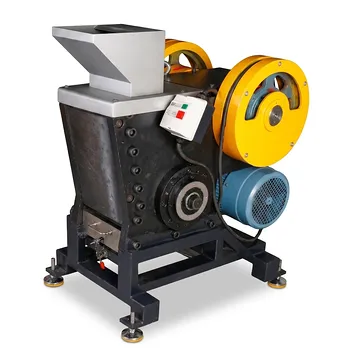
Heavy Duty Industrial Jaw Crusher for Primary Ore Crushing and High Capacity Mineral Material Size Reduction

Versatile Industrial Crusher for Laboratory Crushing and Material Processing
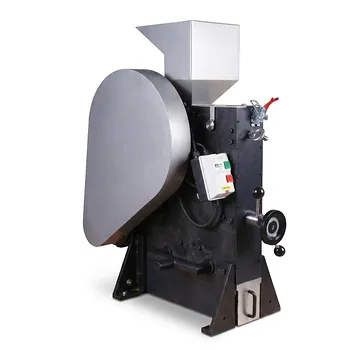
Heavy Duty Industrial Laboratory Jaw Crusher for Primary Sample Preparation and Hard Material Size Reduction
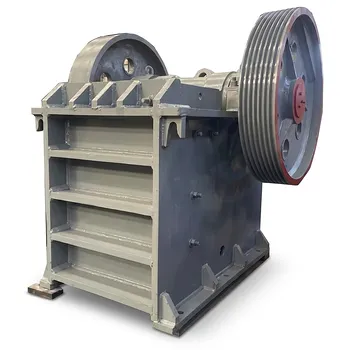
Heavy-Duty Jaw Crusher for Medium-Hard Ore and Industrial Mineral Crushing
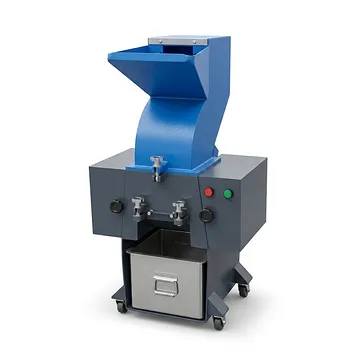
Heavy-Duty Crusher for Laboratory and Industrial Material Size Reduction
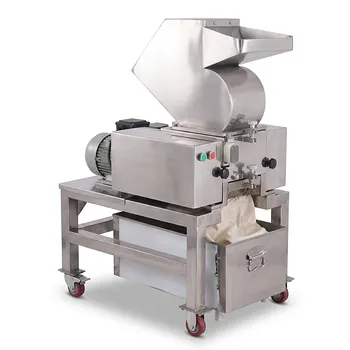
Stainless Steel Coarse Crusher for Pharmaceutical Food and Plastic Material Processing
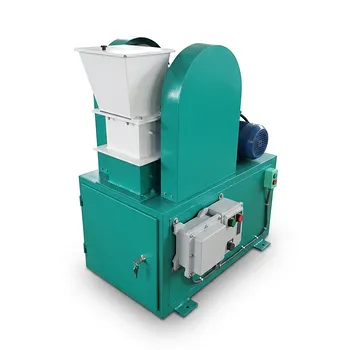
Custom Explosion-Proof Sealed Jaw Crusher for Laboratory and Industrial Sample Preparation