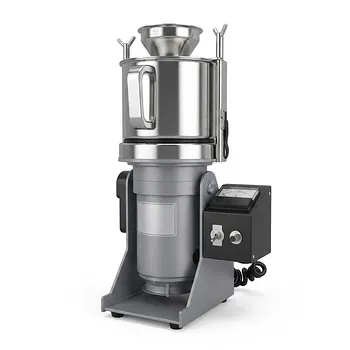
What is the function of an industrial laboratory mill in wood adhesive filler prep? Enhance Particle Size & Bond Strength
Updated 4 months ago
In wood adhesive preparation, the industrial laboratory mill serves as the critical mechanical bridge between raw organic material and a functional additive. Its primary function is to crush dried raw materials, such as oak bark or wood waste, into fine particles to drastically increase their specific surface area. This physical refinement ensures that the filler disperses uniformly within the resin matrix, facilitating the necessary chemical and physical interactions for a strong bond.
The industrial laboratory mill transforms coarse raw materials into high-surface-area powders, optimizing the filler's ability to integrate with resin systems. This process is essential for achieving a homogenous mixture and maximizing the mechanical performance of the final adhesive.
Achieving Particle Refinement and Morphology Control
Specific Surface Area Optimization
The mill uses high-energy mechanical impact or rotary grinding to reduce raw materials into fine powders. By decreasing particle size, the specific surface area of the filler increases exponentially. This larger surface area provides more contact points for the resin, which is vital for the stability of the adhesive.
Control of Physical Morphology
Laboratory mills allow for precise control over the shape and size of the particles. Pulverizing materials into discrete, granular forms ensures that the filler does not interfere with the flow characteristics of the liquid resin. Consistent morphology is required to achieve a predictable and repeatable manufacturing process.
Homogenization of Raw Samples
Industrial laboratory mills are designed to handle various material types, including fibrous and brittle substances. They ensure the final powder is homogenous, meaning the chemical properties of the raw material are evenly distributed throughout the filler. This prevents "weak spots" in the adhesive caused by inconsistent filler quality.
Enhancing the Resin-Filler Interface
Improving Dispersion Uniformity
Uniform dispersion is critical when mixing fillers into Melamine-Urea-Formaldehyde (MUF) resins. A fine, milled powder prevents clumping and ensures that the filler is suspended evenly throughout the matrix. Without this uniformity, the adhesive would suffer from localized failures and inconsistent bond strength.
Activation of Chemical Interactions
The milling process can increase fiber surface activity, making organic components like tannins more accessible. In materials like oak bark, this allows for better chemical bonding between the filler's natural extracts and the synthetic resin. This synergy transforms the filler from a passive "bulking agent" into an active structural component.
Physical Interlocking and Pore Filling
Finely milled "mill flour" can fill microscopic pores between the wood surfaces and the resin. This improved filling increases the density of the bond line and enhances mechanical interlocking. Similar to its role in concrete production, this density directly correlates to the compressive and shear strength of the final product.
Understanding the Trade-offs and Pitfalls
Thermal Degradation Risks
High-energy milling generates significant friction, which can lead to localized heat buildup. If the temperature is not managed, it may degrade the organic components of the wood or bark, potentially neutralizing the beneficial chemical properties of the tannins.
Energy Consumption vs. Fineness
There is a point of diminishing returns where the energy required to achieve submicron fineness outweighs the mechanical benefits. Over-processing can also lead to particles that are too fine to be easily wetted by the resin, leading to mixing difficulties.
Scalability Constraints
While laboratory mills offer extreme precision at the bench or pilot scale, replicating these exact particle morphologies in mass production can be challenging. Results obtained in the lab must be carefully calibrated against the capabilities of full-scale industrial grinders to ensure consistency.
How to Apply This to Your Project
When selecting a milling protocol for wood adhesive fillers, consider your primary performance requirements and material characteristics.
- If your primary focus is maximizing chemical bond strength: Prioritize high-energy milling to increase surface activity and expose natural tannins for better resin interaction.
- If your primary focus is improving adhesive spread and rheology: Focus on achieving a uniform, spherical particle morphology to ensure the resin maintains a consistent viscosity.
- If your primary focus is cost-effective gap filling: Aim for a "coarse powder" refinement level that fills microscopic voids without the excessive energy costs of submicron grinding.
By masterfully controlling the mechanical reduction of raw materials, the laboratory mill transforms simple wood waste into a high-performance engineering component.
Summary Table:
| Key Function | Impact on Wood Adhesive | Primary Benefit |
|---|---|---|
| Particle Refinement | Drastically increases specific surface area | Maximizes contact points for resin bonding |
| Morphology Control | Ensures consistent, granular particle shape | Maintains predictable resin flow and viscosity |
| Homogenization | Evenly distributes chemical properties | Prevents weak spots and inconsistent bond quality |
| Surface Activation | Exposes natural tannins and organic components | Enhances chemical synergy between filler and resin |
| Pore Filling | Creates dense microscopic interlocking | Increases compressive and shear strength of the bond |
Optimize Your Material Preparation Today
Elevate your research and production standards with our complete laboratory sample preparation solutions. At [Company Name], we specialize in high-precision powder processing and compaction equipment designed for material science.
Whether you are refining organic fillers or processing advanced ceramics, our extensive product lines have you covered:
- Advanced Milling: Planetary ball mills, jet mills, disc mills, rotor mills, and liquid nitrogen cryogenic grinders.
- Crushing & Sizing: Jaw/roll crushers and vibratory/air-jet sieve shakers with precision test sieves.
- Powder Mixing: High-efficiency powder mixers and vacuum defoaming mixers.
- Precision Pressing: A full spectrum of hydraulic presses, including Cold/Warm Isostatic Presses (CIP/WIP), XRF pellet presses, and vacuum hot presses.
Ready to achieve superior particle morphology and bond performance? Contact our technical experts today to find the perfect equipment solution for your lab’s unique requirements.
References
- Radosław Mirski, Marek Wieruszewski. The Application of Oak Bark Powder as a Filler for Melamine-Urea-Formaldehyde Adhesive in Plywood Manufacturing. DOI: 10.3390/f11121249
Mentioned Products
- Nano Laboratory Bead Mill Desktop Sub Micron Sand Mill Screenless Seal Less Powder Grinder
- Small Laboratory Colloid Mill for Ultra-Fine Wet Grinding and Emulsification
- Cross Beater Mill for Brittle Material Grinding and Continuous Fine Crushing Industrial Sample Preparation
- Laboratory Disperser and Sand Mill for Grinding Dispersing Emulsifying
- Industrial Knife Mill for Food and Biological Sample Preparation High Speed Laboratory Homogenizer
People Also Ask
- How does the bead filling rate affect the grinding performance and equipment wear in a bead mill? Optimization Guide
- Why is it necessary to precisely control the grinding media loading ratio? Master Nanosuspension Yield & API Stability
- What is the significance of the stirring speed in Budesonide nano-milling? Master Kinetic Energy for Drug Refinement
- What role does a laboratory mill play in the study of lignite coal co-combustion? Optimizing Fuel Blends and Reactivity
- What is the function of a laboratory mill in Cassia tora L. seed analysis? Master Precision Thermal Data Prep.

Tech Team · PowderPreparation
Last updated on Jun 03, 2026
Related Products
Nano Laboratory Bead Mill Desktop Sub Micron Sand Mill Screenless Seal Less Powder Grinder
Small Laboratory Colloid Mill for Ultra-Fine Wet Grinding and Emulsification
Cross Beater Mill for Brittle Material Grinding and Continuous Fine Crushing Industrial Sample Preparation
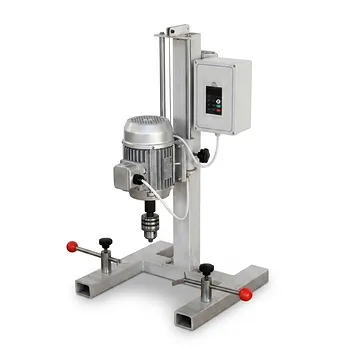
Laboratory Disperser and Sand Mill for Grinding Dispersing Emulsifying
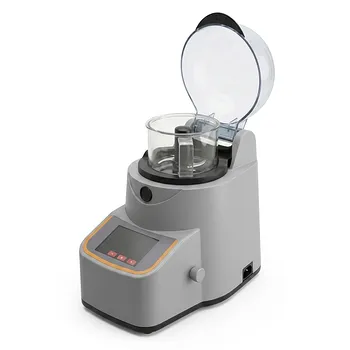
Industrial Knife Mill for Food and Biological Sample Preparation High Speed Laboratory Homogenizer
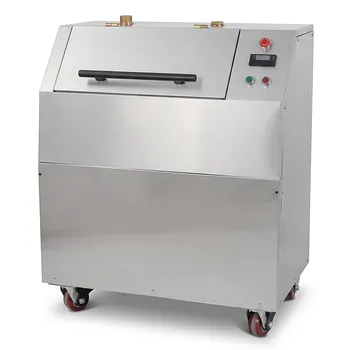
Vibratory Disc Mill for Rapid Fine Grinding and High Throughput Sample Preparation of Hard and Brittle Materials
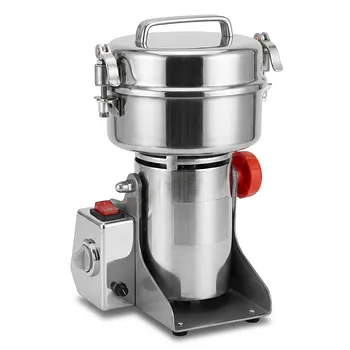
High Speed Laboratory Powder Grinder Small Batch Sample Preparation Mill
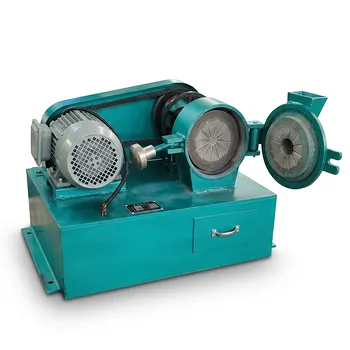
Laboratory Disc Mill Medium Hard Material Grinding Coal Coke Ore Pulverizer
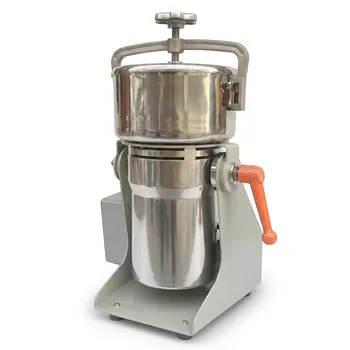
High Speed Laboratory Grinder Efficient Stainless Steel Powder Pulverizer Universal Material Science Mill for Sample Preparation
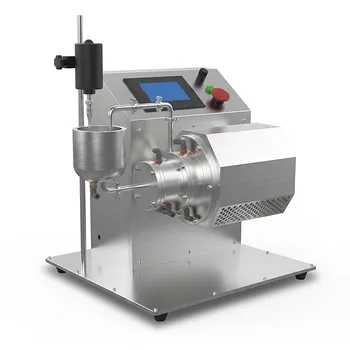
Laboratory Horizontal Pin Nano Sand Mill
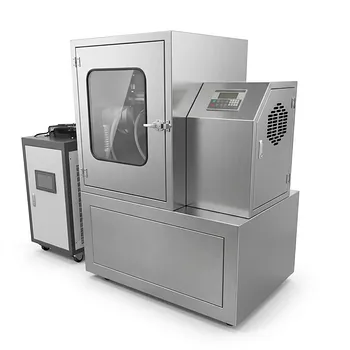
Vibratory Superfine Grinder for Ultra Fine Laboratory Powder Milling
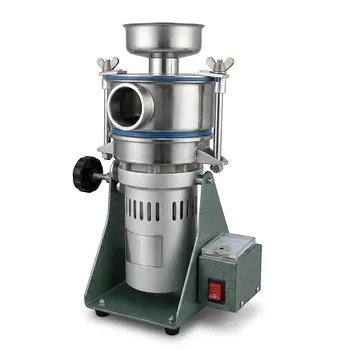
Small Airflow Ultra-Fine Grinder for Laboratory Sample Preparation
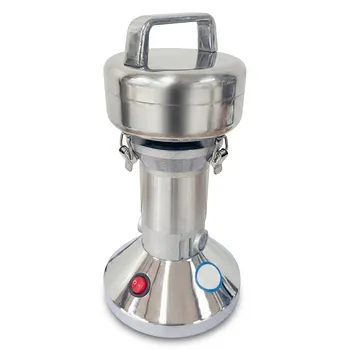
Small Trace Sample High Speed Pulverizer Grinder Laboratory Powder Mill
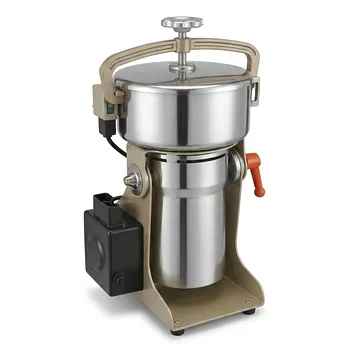
Multifunctional High Efficiency High Speed Laboratory Grinder
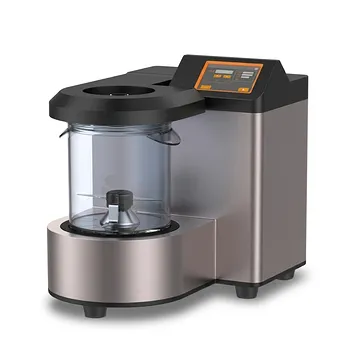
Laboratory Knife Mill for Large Volume Sample Homogenization and Food Preparation
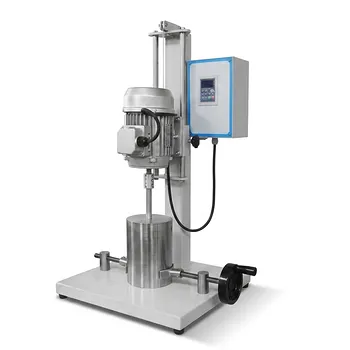
Laboratory Sand Mill Grinding Dispersing Machine for Wet Particle Size Reduction
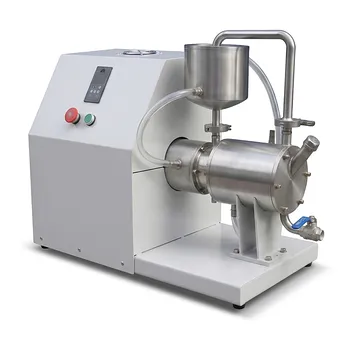
Laboratory Small Horizontal Sand Mill for Nano Materials Wet Grinding
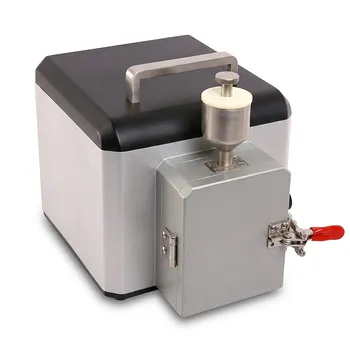
Portable Cutting Mill for Laboratory Sample Preparation and RoHS WEEE Compliance Testing
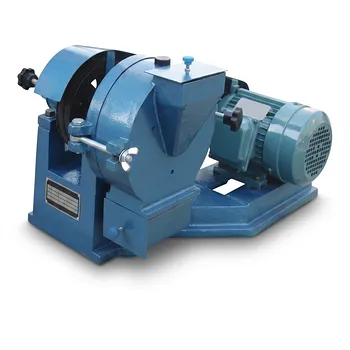
Laboratory Disc Mill for Ore and Mineral Sample Preparation