What is the function of a tumbling roller mixer in the preparation of alumina platelet suspensions? Master Dispersion
Updated 5 months ago
The primary function of a tumbling roller mixer is to achieve molecular-level dissolution of binders and ensure the uniform dispersion of ceramic particles. In the preparation of alumina platelet suspensions, this equipment is first used to thoroughly dissolve polyvinyl butyral (PVB) into ethanol solvents over a continuous 24-hour cycle. This process creates a stable, homogenized matrix solution that prevents the alumina platelets from settling, ensuring material consistency throughout the manufacturing process.
A tumbling roller mixer provides the necessary continuous kinetic energy to transition raw components into a stable, sediment-free suspension. By achieving molecular-level uniformity in the binder and solvent matrix, it establishes the fundamental conditions required for high-precision ceramic shaping.
Achieving Molecular-Level Dissolution
The Role of Long-Duration Rolling
The tumbling roller mixer is utilized for extended periods, often up to 24 hours, to ensure that polymer chains achieve total dispersion. This duration is critical for dissolving polyvinyl butyral (PVB) powder into ethanol solvents completely.
The continuous motion prevents the "clumping" of polymer particles that can occur with high-shear manual mixing. It allows the solvent to interact with the polymer at a steady rate, reaching every molecular chain.
Creating a Stable Polymer Matrix
Once the PVB is fully dissolved, it forms a stable matrix solution. This matrix acts as the carrier for the ceramic particles added in subsequent stages.
Without this molecular-level uniformity, the resulting suspension would have "weak spots" or inconsistent viscosity. A uniform matrix is the first line of defense against manufacturing defects in the final ceramic part.
Ensuring Particle Homogeneity and Stability
Preventing Alumina Sedimentation
Alumina platelets are prone to settling due to gravity, which can ruin the consistency of a suspension. The continuous rotation of the slurry containers keeps the particles in constant motion, effectively eliminating sedimentation.
By keeping the alumina platelets suspended, the mixer ensures that the material remains consistent across every layer of the container. This is particularly vital when the suspension is stored for a period before use.
Critical Importance for SLA Printing
For processes like Stereolithography (SLA), the uniformity of the alumina slurry is non-negotiable. The rolling mixer ensures that the fuel-to-oxidant ratio and particle density are identical at the top, middle, and bottom of the vat.
Properly mixed slurries lead to the production of high-precision, defect-free ceramic green bodies. Inconsistent mixing often results in structural weaknesses or geometric inaccuracies in the final sintered ceramic.
Understanding the Trade-offs
The Bottleneck of Extended Cycle Times
The primary trade-off of using a tumbling roller mixer is the significant time investment. Requiring 24 hours for binder dissolution can create a bottleneck in high-throughput production environments.
While the process is "set and forget," it requires forward planning and a large inventory of mixers if multiple batches are needed simultaneously. Rapid mixing alternatives exist but often fail to achieve the same level of molecular dispersion.
Potential for Over-Processing
While continuous rolling is generally gentle, excessive rolling after the suspension is fully stabilized can lead to mechanical degradation of certain sensitive additives.
Operators must balance the need for homogeneity with the physical limits of the organic components in the slurry. It is essential to establish standardized durations for specific alumina platelet geometries to avoid unnecessary material fatigue.
How to Optimize Your Mixing Strategy
Making the Right Choice for Your Goal
To achieve the best results with your alumina platelet suspension, consider the specific stage of your preparation process:
- If your primary focus is binder preparation: Utilize a full 24-hour rolling cycle to ensure PVB chains are fully extended and dissolved within the ethanol.
- If your primary focus is preventing sedimentation during storage: Maintain a low-speed continuous roll to keep particles suspended without introducing excess heat or mechanical stress.
- If your primary focus is SLA printing precision: Ensure the slurry is rolled immediately prior to the printing process to guarantee total material homogeneity throughout the vat.
A disciplined approach to tumbling roller mixing transforms raw powders and solvents into a high-performance engineering fluid capable of producing complex ceramic geometries.
Summary Table:
| Process Stage | Primary Function | Key Outcome |
|---|---|---|
| Binder Dissolution | 24-hour continuous rolling of PVB | Molecular-level uniformity and clumping prevention |
| Particle Mixing | Maintaining constant kinetic energy | Uniform dispersion of alumina platelets |
| Suspension Storage | Low-speed continuous motion | Prevention of sedimentation and gravity-induced settling |
| SLA Preparation | Homogenizing the slurry matrix | Defect-free, high-precision ceramic green bodies |
Elevate Your Material Preparation with Precision Equipment
Achieving the perfect suspension requires more than just a recipe—it demands reliable, high-performance equipment. At [Brand Name], we provide complete laboratory sample preparation solutions tailored for material science professionals.
Our extensive product lines specialize in powder processing and compaction, ensuring your research or production meets the highest standards of homogeneity and density. Our offerings include:
- Size Reduction: Jaw/roll crushers and liquid nitrogen cryogenic grinders.
- Milling & Grinding: Planetary ball, jet, sand/bead, disc, and rotor mills.
- Particle Analysis: Vibratory and air-jet sieve shakers with a full range of test sieves.
- Mixing & De-aeration: Tumbling roller mixers, powder mixers, and vacuum defoaming mixers.
- Compaction Excellence: A full spectrum of hydraulic presses, including Cold/Warm Isostatic Presses (CIP/WIP), XRF pellet presses, and vacuum hot presses.
Whether you are refining alumina suspensions or developing advanced composites, our experts are ready to support your workflow. Contact us today to find the ideal solution for your lab!
References
- Sebastian Behr, Gerold A. Schneider. Large-scale parallel alignment of platelet-shaped particles through gravitational sedimentation. DOI: 10.1038/srep09984
Mentioned Products
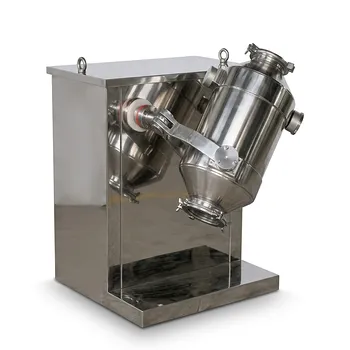
- Three-Dimensional Motion Mixer for Laboratory Powder and Granule Blending
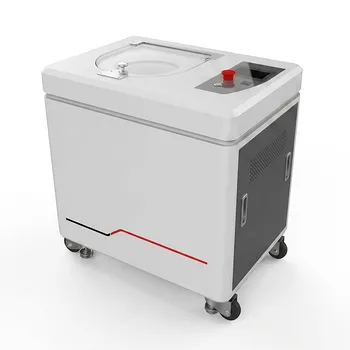
- 非介入式材料均质机真空脱泡行星搅拌高粘度混合设备
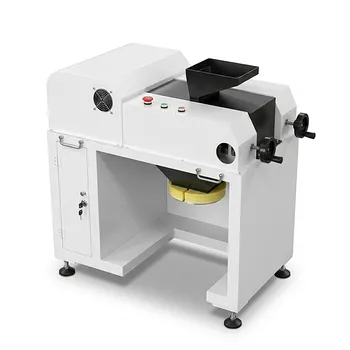
- Precision Toothed Roll Crusher for Laboratory Coal and Mineral Sample Preparation
People Also Ask
- Why is a 3D Motion Mixer employed when preparing binary powder mixtures for tableting? Achieve Superior Homogeneity
- What role does an industrial 3D mixer play in the preparation of diamond tool segment raw materials? Achieve Homogeneity
- What is the role of a 3D mixer in Ti2SnC synthesis? Optimize Precursor Homogeneity for High-Purity MAX Phases
- How does a 3D mixer with tungsten balls contribute to magnesium composite mixing? Achieve Superior Macro-Homogeneity
- What are the advantages of using a 3D powder mixer? Boost Tablet Consistency with Advanced Mixing Technology

Tech Team · PowderPreparation
Last updated on May 14, 2026