What is the function of a small-scale bead mill in the production of PlantCrystals? Achieve Nano-Scale Bioavailability
Updated 5 months ago
The small-scale bead mill functions as the critical mechanical engine for transforming black tea waste into PlantCrystals by reducing particle sizes to the sub-micron level. Through high-energy grinding, the mill applies intense shear and impact forces to break down particles to below 300 nanometers, effectively obliterating the structural barriers of the plant material.
Core Takeaway: By physically dismantling plant cell walls and organelles, the bead mill transitions black tea waste from a bulk byproduct into a high-surface-area "PlantCrystal" format, fully liberating insoluble bioactive compounds for maximum antioxidant activity.
Mechanical Disruption of Cellular Barriers
The Role of High-Energy Shear and Impact
The bead mill operates by agitating grinding media at high speeds to generate intense mechanical stress. These forces are necessary to overcome the rigid structural integrity of plant cell walls that standard grinding cannot penetrate.
Achieving Sub-300nm Particle Sizes
The primary objective of the milling process is to reach a nanoscale dimension. Reducing the waste powder to under 300 nanometers ensures that the material behaves as "PlantCrystals," which are significantly more reactive than raw powder.
Destruction of Plant Organelles
Beyond simple size reduction, the mill’s energy is sufficient to rupture internal organelles. This total cellular disruption is the key mechanism for releasing compounds that are normally sequestered within the plant’s internal architecture.
Maximizing Bioavailability and Extraction Efficiency
Liberation of Insoluble Bioactive Molecules
Many of the most valuable compounds in tea, such as polyphenols, flavonoids, and carotenoids, are often insoluble or trapped. The bead mill’s mechanical action forces these molecules out of the cellular matrix, making them available for immediate use.
The Impact of Increased Surface Area
As particle size decreases to the nanoscale, the total surface area of the material increases exponentially. This massive surface area allows for much more efficient interaction with solvents or biological systems, significantly boosting antioxidant activity.
Improving Extraction Yields
Because the cell walls are completely disrupted, extraction processes no longer need to rely on slow diffusion through plant tissue. This makes the recovery of active ingredients faster and more complete than traditional methods.
Understanding the Trade-offs
Heat Generation and Thermal Degradation
High-energy milling inherently generates significant thermal energy through friction. If temperatures are not strictly controlled, the very polyphenols and flavonoids being released can be degraded by the heat.
Equipment Wear and Potential Contamination
Bead mills rely on grinding media (beads) that experience mechanical wear over time. In high-purity applications, it is essential to monitor for potential contamination from the bead material and to manage the costs of replacing media.
Energy Consumption for Nano-Scale Milling
Reaching the sub-300nm threshold requires a high input of specific energy. Operators must balance the duration of the milling cycle with the desired particle size to ensure the process remains economically viable for waste upcycling.
Strategic Implementation for PlantCrystal Production
To successfully utilize a bead mill for tea waste processing, consider your specific production goals:
- If your primary focus is maximizing antioxidant potency: Ensure the milling duration is sufficient to consistently reach the sub-300nm range, as this is the threshold for full cellular liberation.
- If your primary focus is protecting heat-sensitive compounds: Implement active cooling systems or pulsed milling cycles to prevent the internal temperature from exceeding the degradation point of tea polyphenols.
- If your primary focus is industrial scalability: Optimize the bead size and material density to achieve the fastest particle size reduction with the lowest possible energy expenditure.
The small-scale bead mill is the essential technological bridge that converts agricultural waste into high-potency, bioavailable functional ingredients.
Summary Table:
| Feature | Function in PlantCrystal Production | Key Benefit |
|---|---|---|
| Mechanical Stress | High-energy shear & impact forces | Breaks rigid plant cell walls and organelles |
| Size Reduction | Achieves sub-300nm particle dimensions | Transitions bulk waste to reactive PlantCrystals |
| Surface Area | Exponential increase in total surface area | Significantly boosts antioxidant activity |
| Bioactive Release | Liberates insoluble polyphenols & flavonoids | Enhances extraction yield and bioavailability |
| Temperature Control | Manages friction-induced thermal energy | Protects heat-sensitive compounds from degradation |
Elevate Your Material Research with Precision Nano-Milling
At [Brand Name], we provide complete laboratory sample preparation solutions tailored for material science and advanced waste upcycling. Whether you are producing PlantCrystals or developing novel nanomaterials, our specialized powder processing equipment ensures consistent, sub-micron results.
Our comprehensive product line includes:
- Advanced Mills: Bead mills (sand/bead), planetary ball mills, jet mills, and rotor mills for achieving precise nanoscale particle sizes.
- Sample Preparation: High-performance crushers (jaw/roll), liquid nitrogen cryogenic grinders, and vibratory sieve shakers.
- Compaction & Pressing: A full spectrum of hydraulic presses, including Cold/Warm Isostatic Presses (CIP/WIP), vacuum hot presses, and XRF pellet presses.
- Mixing Solutions: High-efficiency powder mixers and vacuum defoaming mixers for uniform material distribution.
Ready to optimize your extraction efficiency and material potency? Our experts are here to help you select the ideal equipment for your specific application.
Contact Our Engineering Team Today
References
- Abraham M. Abraham, Cornelia M. Keck. Improved Antioxidant Capacity of Black Tea Waste Utilizing PlantCrystals. DOI: 10.3390/molecules26030592
Mentioned Products
- Horizontal Bead Mill for Nanoscale Grinding and Advanced Material Powder Processing
- Small Laboratory Colloid Mill for Ultra-Fine Wet Grinding and Emulsification
- Laboratory Small Horizontal Sand Mill for Nano Materials Wet Grinding
- Laboratory Horizontal Bead Mill for Nanomaterial Wet Grinding and Material Science Research
- Vertical Nano Bead Mill for Ceramic Materials with Permanent Magnet Motor and High Efficiency Grinding
People Also Ask
- How does the bead filling rate affect the grinding performance and equipment wear in a bead mill? Optimization Guide
- Why is it necessary to precisely control the grinding media loading ratio? Master Nanosuspension Yield & API Stability
- Why is a ceramic lining preferred over stainless steel for a bead mill? Protect Enzymes and Ensure Biomass Purity
- Why is an external cooling circulation system necessary during the high-speed operation of a bead mill? Protect Integrity
- Why is the filling rate of grinding beads strictly controlled during the material milling process? Optimize Efficiency.

Tech Team · PowderPreparation
Last updated on May 14, 2026
Related Products
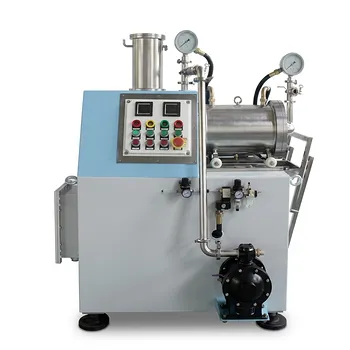
Horizontal Bead Mill for Nanoscale Grinding and Advanced Material Powder Processing
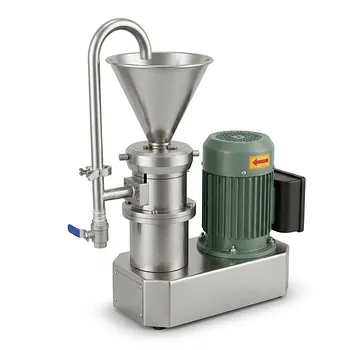
Small Laboratory Colloid Mill for Ultra-Fine Wet Grinding and Emulsification
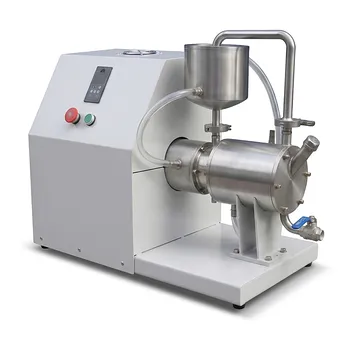
Laboratory Small Horizontal Sand Mill for Nano Materials Wet Grinding
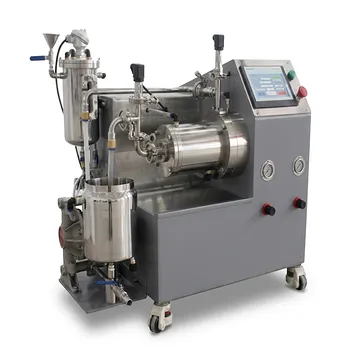
Laboratory Horizontal Bead Mill for Nanomaterial Wet Grinding and Material Science Research
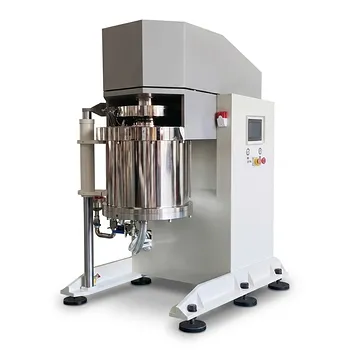
Vertical Nano Bead Mill for Ceramic Materials with Permanent Magnet Motor and High Efficiency Grinding
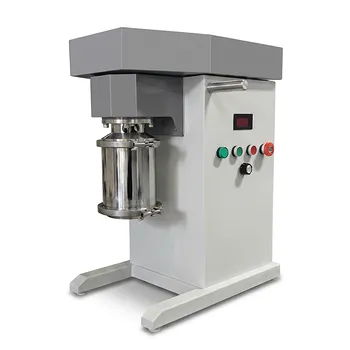
Nano Laboratory Bead Mill Desktop Sub Micron Sand Mill Screenless Seal Less Powder Grinder
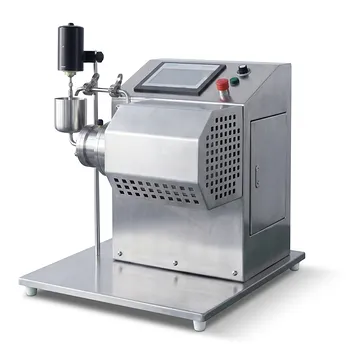
High Efficiency Laboratory Bead Mill Nano Powder Dispersion Sand Mill for Material Science Research