What is the function of a planetary ball mill in fly ash treatment? Optimize Mechanical Activation & Material Strength
Updated 3 months ago
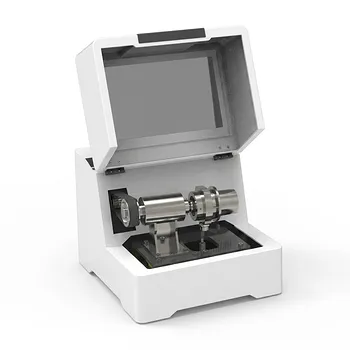
The high-efficiency planetary ball mill serves as the primary mechanical activation engine for transforming fly ash into a high-performance additive. Through intense impact and shear forces, it reduces particle size, increases specific surface area, and alters the chemical reactivity of the ash. This process is essential for ensuring that fly ash can bond effectively with various matrices, ranging from polymers to cementitious systems.
Core Takeaway: A planetary ball mill functions by applying high-energy mechanical forces to refine fly ash particles and induce lattice defects. This transformation enhances the filler's reactivity and surface morphology, which is critical for achieving superior interfacial bonding and structural integrity in composite materials.
Mechanical Activation and Size Reduction
Breaking Down Particle Size
The primary function of the mill is the deep refinement of raw fly ash from micro-scale particles to the nanometer scale (20–50 nm). High-speed rotation generates powerful collisions between the grinding media and the ash, effectively crushing large powder particles.
Increasing Specific Surface Area
By breaking down these particles, the mill significantly increases the geometric specific surface area. This expanded surface provides more contact points for the surrounding matrix, which is a prerequisite for creating a high-activity reinforcing additive.
Plastic Deformation of Particles
Unlike standard grinding, high-energy planetary milling causes significant plastic deformation of the fly ash. This mechanical stress does not just break the particles but reshapes them, preparing them for better integration into composite structures.
Enhancing Matrix Compatibility
Roughening Surface Morphology
The milling process roughens the particle surfaces, creating a more complex texture. This physical change is vital because it increases the mechanical interlocking between the fly ash and the matrix material, such as a polyurethane or epoxy resin.
Improving Interfacial Adhesion
Enhanced surface roughness and increased area lead to superior interfacial adhesion. By optimizing how the filler and matrix meet, the mill ensures that the final composite material can withstand higher stress and resist delamination.
Uniform Dispersion and De-agglomeration
High-energy milling is used to disperse particle agglomerates that naturally form in raw materials. This ensures that the inorganic particles are distributed uniformly throughout the matrix, preventing weak spots and ensuring consistent material properties.
Chemical and Structural Transformation
Lattice Disruption and Reactive Defects
The mill provides enough energy to break the lattice structure on the particle surfaces. This process increases the number of structural defects, which fundamentally changes the chemical behavior of the ash.
Boosting Pozzolanic Reactivity
For cement-based and geopolymer applications, the mill increases the pozzolanic reactivity of the fly ash. By exposing a greater number of active sites, it promotes the hydration reaction and the formation of mineral phases that contribute to the strength of the composite.
Activating Mineral Phases
In specialized applications like CO2 sequestration or geopolymer production, the mill promotes the contact reaction between mineral phases and gases or liquids. This makes the fly ash a more "active" raw material rather than a passive filler.
Understanding the Trade-offs
Energy Intensity vs. Material Gain
High-efficiency planetary milling is an energy-intensive process that requires careful calibration of milling time and speed. Excessive milling can lead to "over-grinding," where particles begin to re-agglomerate due to high surface energy, potentially negating the benefits of size reduction.
Contamination Risks
The high-frequency collisions can lead to wear on the grinding jars and balls. If the milling media material is not compatible with the fly ash or the final composite, it can introduce impurities that may alter the chemical or electrical properties of the material.
Heat Generation
The mechanical energy converted during milling generates significant heat. For certain heat-sensitive additives or specific polymer matrices, this temperature rise must be managed—often through wet milling or interval cooling—to prevent the degradation of the materials.
How to Apply This to Your Project
When utilizing a planetary ball mill for fly ash treatment, your approach should vary based on your technical objectives:
- If your primary focus is Nano-Scale Reinforcement: Operate at high speeds (e.g., 300+ rpm) for extended durations to ensure particles reach the 20-50 nm range.
- If your primary focus is Chemical Reactivity: Prioritize the "mechanical activation" phase to intentionally create lattice defects and break surface bonds for better hydration in cementitious composites.
- If your primary focus is Interfacial Strength: Focus on the roughening of the particle surface to improve the mechanical "grip" between the ash and resin-based matrices like epoxy or polyurethane.
- If your primary focus is Homogeneous Distribution: Use wet milling techniques within the planetary mill to prevent agglomeration and ensure the particles remain dissociated before the coating or polymerization process.
Ultimately, the planetary ball mill is the bridge that converts a low-value industrial byproduct into a highly engineered, reactive component for the next generation of composite materials.
Summary Table:
| Function | Physical/Chemical Impact | Benefit to Composite Materials |
|---|---|---|
| Size Reduction | Refines particles to nano-scale (20–50 nm) | Enhances filler density and reinforcement |
| Surface Modification | Increases surface area and roughness | Improves interfacial bonding and stress resistance |
| Mechanical Activation | Induces lattice defects and structural stress | Boosts chemical reactivity and pozzolanic activity |
| De-agglomeration | Breaks down inorganic particle clusters | Ensures uniform dispersion and prevents weak spots |
Elevate Your Material Research with Precision Powder Solutions
At KINTEK, we provide complete laboratory sample preparation solutions tailored for advanced material science. Whether you are transforming industrial byproducts like fly ash or developing next-generation polymers, our equipment ensures the highest levels of consistency and reactivity.
Our extensive product line includes:
- High-Energy Milling: Planetary ball mills, jet mills, and cryogenic grinders for nano-scale refinement.
- Sample Compaction: A full spectrum of hydraulic presses, including Cold/Warm Isostatic Presses (CIP/WIP), hot presses, and vacuum hot presses.
- Processing & Analysis: Jaw crushers, powder mixers, defoaming mixers, and precision sieve shakers (vibratory/air-jet).
Ready to optimize your composite performance? Contact our technical experts today to find the perfect equipment configuration for your laboratory or production needs.
References
- Asra Ali Hussein, Dhey Jawad Mohammed. The influence of midfield applying fly ash for the mechanical arts, and flame resistance of polymer composite. DOI: 10.58915/ijneam.v18i2.2065
Mentioned Products
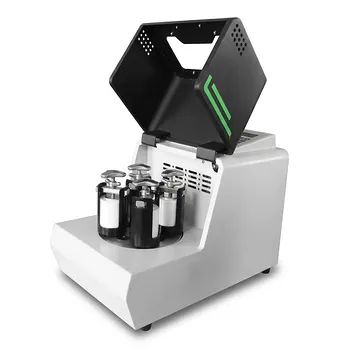
- Miniature Planetary Ball Mill with Vacuum Grinding and High Efficiency for Laboratory Sample Preparation
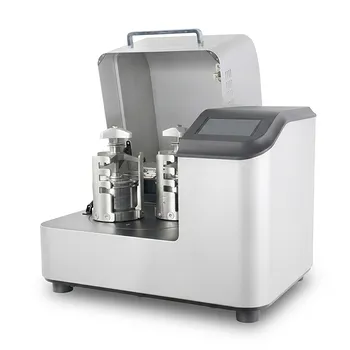
- High Energy Planetary Ball Mill for Nano Scale Grinding and Mechanical Alloying
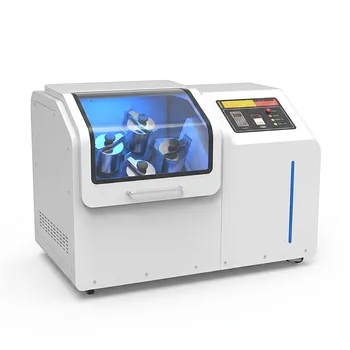
- High Energy Omnidirectional Planetary Ball Mill 16L
- High Energy Laboratory Planetary Ball Mill for Nano Grinding and Colloidal Mixing of Hard and Brittle Materials
- High Energy Omnidirectional Planetary Ball Mill 20L
People Also Ask
- Why is a planetary ball mill essential for SiBCN-rGO wet-spinning? Achieve Superior Dispersion and Spinnability
- What role does a planetary ball mill play in the preparation of forsterite (Mg2SiO4) ceramic raw materials? Key Insights
- How does a planetary ball mill contribute to the top-down size reduction of silica particles? Achieve Nano-Scale Precision
- Why is a benchtop planetary ball mill used for eggshell microparticles? Optimize Flame Retardant Grinding Efficiency
- Why grind lime-pozzolan specimens for TG/DTA for 3 mins? Master sample prep for high-precision thermal analysis.

Tech Team · PowderPreparation
Last updated on Jun 03, 2026
Related Products
Miniature Planetary Ball Mill with Vacuum Grinding and High Efficiency for Laboratory Sample Preparation
High Energy Planetary Ball Mill for Nano Scale Grinding and Mechanical Alloying
High Energy Omnidirectional Planetary Ball Mill 16L
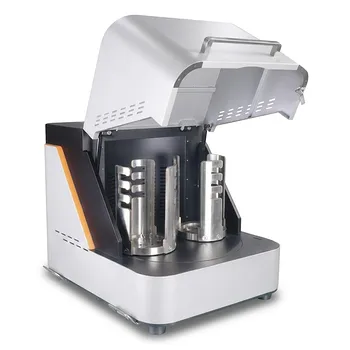
High Energy Laboratory Planetary Ball Mill for Nano Grinding and Colloidal Mixing of Hard and Brittle Materials
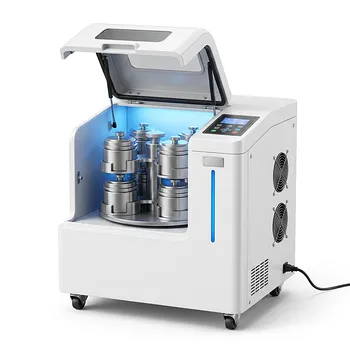
High Energy Omnidirectional Planetary Ball Mill 20L
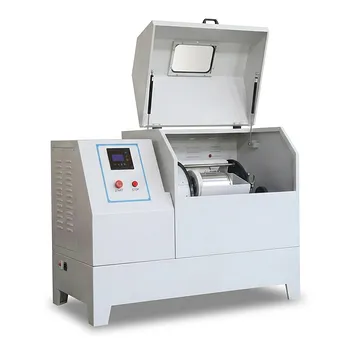
Heavy Duty Horizontal Planetary Ball Mill for Efficient Industrial Grinding and Sample Preparation
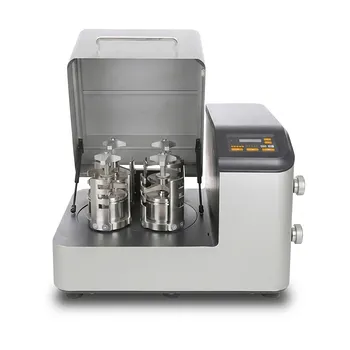
High Energy Planetary Ball Mill for Nano Scale Grinding and Colloidal Mixing in Material Science Research
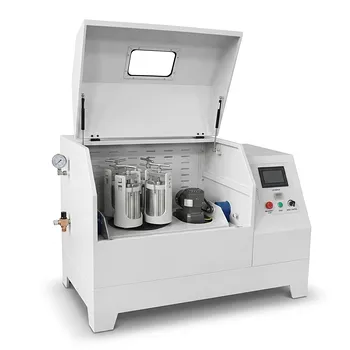
Vertical Production Planetary Ball Mill for High Throughput Powder Processing
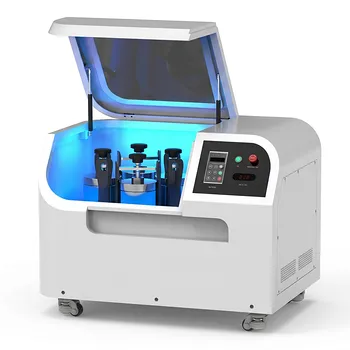
Planetary Ball Mill 12L

High Energy Laboratory Planetary Ball Mill for Nano Grinding and Material Science Sample Preparation
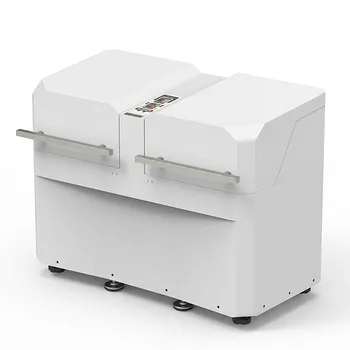
Dual Station Planetary Ball Mill 24L

8L Planetary Ball Mill for Laboratory Grinding and Sample Preparation
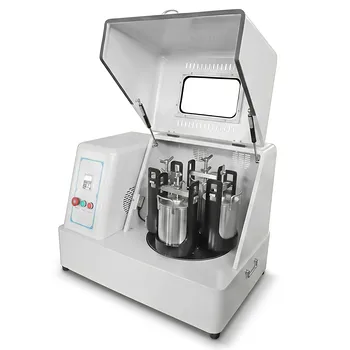
Vertical Square Planetary Ball Mill for Laboratory Sample Preparation and Nanoscale Grinding
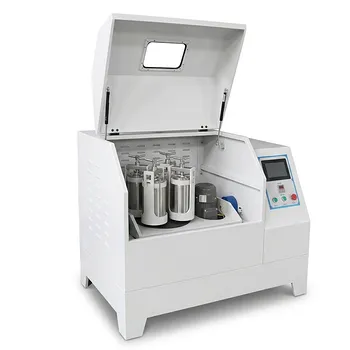
360° Rotating Omnidirectional Laboratory Planetary Ball Mill for Homogeneous Ultra-Fine Grinding and Mixing
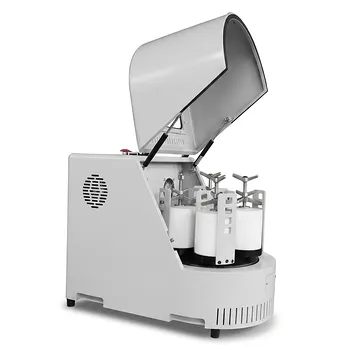
Vertical Semi Circular Planetary Ball Mill for Laboratory Precision Grinding

High Efficiency Vacuum Planetary Centrifugal Mixer and Defoaming Machine for Industrial Material Research and Precise Laboratory Powder Dispersion
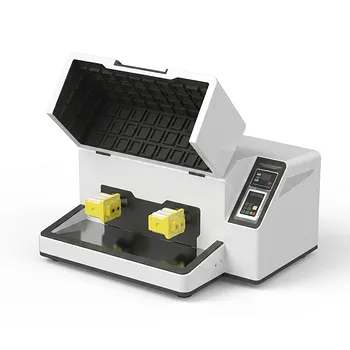
Multi-Platform Nanoscale High-Energy Vibratory Ball Mill
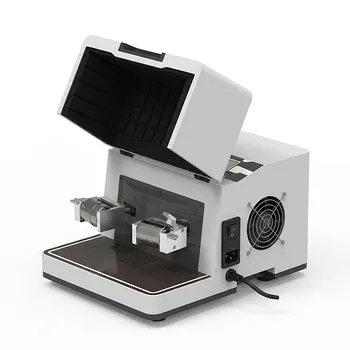
High Energy Hybrid Vibratory Ball Mill for Grinding Mixing and Cell Disruption
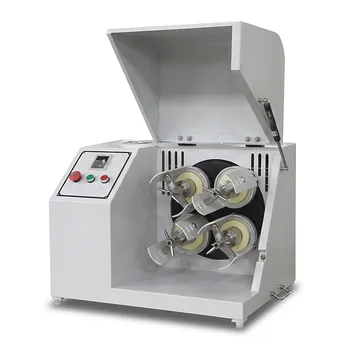
Horizontal Light Duty Planetary Ball Mill for Laboratory Sample Preparation