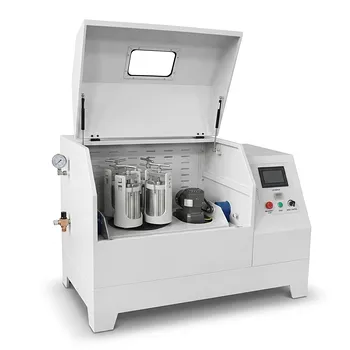
What is the function of a Disc Mill in processing rice and wheat husk ash? Create high-reactivity ultrafine powder.
Updated 5 months ago
A Disc Mill is the primary mechanical tool used to pulverize incinerated rice and wheat husk ash into a reactive, ultrafine powder. By applying high-intensity impact and shear forces, it significantly reduces particle size and maximizes the specific surface area of the ash. This process is essential for transforming a porous waste byproduct into a high-performance mineral additive for construction and soil enhancement.
The Disc Mill converts coarse, macroscopic biomass ash into a refined micro-material by breaking down its internal structure, thereby increasing its chemical reactivity and physical filling capacity within cementitious or soil-based systems.
Mechanical Pulverization and Size Reduction
The Role of High-Speed Rotating Impactors
A Disc Mill utilizes high-speed rotating impactors to apply consistent punches and pressure to the incinerated material. As the ash enters the reaction chamber, it undergoes high-velocity collisions with the internal components and the reactor walls.
Breaking Down Macroscopic Structures
The mechanical force effectively shatters the skeletal framework of the rice and wheat husk ash. This transformation from a coarse residue to an ultrafine powder is necessary to unlock the material's latent chemical and physical properties.
Achieving Uniform Particle Size
For industrial applications like gasification, a Disc Mill provides preliminary crushing to ensure a uniform particle size (often around 1000 µm). This uniformity ensures that the material is heated evenly during thermal treatment, improving the stability of the entire process.
Enhancing Material Performance and Reactivity
Increasing Specific Surface Area
By pulverizing the ash, the Disc Mill dramatically increases the specific surface area available for chemical interaction. This makes the silica naturally present within the ash much more accessible to external reagents.
Accelerating Pozzolanic Reactions
The increased surface area enhances the reaction efficiency between the ash’s silica and cement hydration products. This results in the faster formation of cementitious substances, leading to a more robust and durable material.
Improving Soil Enhancement
In soil stabilization projects, ultrafine ash processed by a Disc Mill exhibits higher chemical reactivity when mixed with lateritic soils. This allows for effective soil hardening and stabilization even at lower additive ratios.
Improving Structural Density and Homogeneity
The Micro-Filling Effect
Refined ash particles act as a micro-filler that occupies the microscopic pores within concrete or mortar structures. This physical filling, combined with chemical reactions, results in a significantly denser mortar structure and improved mechanical strength.
Mechanical Homogenization
The Disc Mill is utilized for mechanical homogenization, establishing a uniform slurry or powder base. By applying high-intensity shear, it effectively disperses fibers and particles, which is critical for subsequent membrane preparation or advanced milling.
Understanding the Trade-offs
Energy Consumption vs. Particle Fineness
Achieving extreme levels of ultrafine grinding requires significant energy input, which can increase operational costs. Engineers must balance the required chemical reactivity for their specific project against the economic cost of extended milling times.
Material Agglomeration Risks
Over-processing ash in a Disc Mill can sometimes lead to agglomeration, where particles begin to clump together due to electrostatic forces. If not managed, this can decrease the effective surface area and negate the benefits of the grinding process.
Equipment Wear and Tear
Processing highly abrasive materials like rice husk ash—which is rich in silica—causes significant abrasive wear on the mill's internal components. Frequent maintenance and the use of wear-resistant materials are necessary to ensure consistent output quality.
Making the Right Choice for Your Goal
When integrating a Disc Mill into your processing workflow, your specific objective should dictate the grinding parameters:
- If your primary focus is Concrete Strength: Maximize the grinding duration to achieve an ultrafine powder, which optimizes the pozzolanic reaction and pore-filling effect.
- If your primary focus is Soil Stabilization: Prioritize increasing the specific surface area to ensure the ash reacts effectively with soil minerals at low concentration levels.
- If your primary focus is Thermal Processing (Gasification): Use the mill to achieve a uniform particle size of approximately 1000 µm to ensure stable and even heating within the reactor.
By precisely controlling the mechanical pulverization of biomass ash, you can transform a low-value byproduct into a critical component for high-performance engineering applications.
Summary Table:
| Application Focus | Disc Mill Function | Key Performance Benefit |
|---|---|---|
| Concrete Strength | Ultrafine Grinding | Optimizes pozzolanic reaction & micro-filling effect |
| Soil Stabilization | Increasing Surface Area | Enhances chemical reactivity with soil minerals |
| Thermal Processing | Preliminary Crushing | Ensures uniform 1000 µm particles for even heating |
| Material Homogeneity | High-Intensity Shear | Disperses fibers and particles for uniform slurry/bases |
| Waste Valorization | Mechanical Pulverization | Transforms porous ash into high-performance additives |
Transform Your Biomass Ash into High-Performance Materials
Ready to optimize your material processing? We specialize in providing complete laboratory sample preparation solutions for material science. Our high-efficiency Disc Mills and Rotor Mills are engineered to handle abrasive materials like rice and wheat husk ash, ensuring you achieve the exact fineness and reactivity required for superior construction and soil stabilization.
Our expertise extends across the entire powder processing and compaction workflow, offering specialized equipment including:
- Size Reduction: Jaw/roll crushers, liquid nitrogen cryogenic grinders, and advanced mills (planetary ball, jet, sand/bead, disc, rotor).
- Classification & Mixing: Vibratory/air-jet sieve shakers and high-precision powder/defoaming mixers.
- Compaction & Forming: A full spectrum of hydraulic presses, including Cold/Warm Isostatic Presses (CIP/WIP), standard lab presses, XRF pellet presses, and vacuum hot presses.
Partner with us to enhance your lab's efficiency and material performance.
Contact our technical team today to find the right solution for your application!
References
- Damas Nangi Masanja, Patrice Nyangi. Characteristics of Combined Rice and Wheat Husk Ashes as a Partial Replacement for Cement in Mortar. DOI: 10.28991/cej-2022-08-04-04
Mentioned Products
- Laboratory Disc Mill for Fine Sample Preparation of Hard and Brittle Materials
- Vibratory Disc Mill for Rapid Fine Grinding and High Throughput Sample Preparation of Hard and Brittle Materials
- Precision Soil Disc Mill for Laboratory Fine Grinding and Environmental Sample Preparation
- Laboratory Disc Mill for Ore and Mineral Sample Preparation
- High Speed Vibratory Disc Mill for Spectral Analysis Sample Preparation and Rapid Powder Grinding
People Also Ask
- What is the primary function of a laboratory disc mill for oyster shells? Boost Reactivity & Analytical Precision
- What is the purpose of using a laboratory mill to grind dried precipitates? Optimize TiO2/AuNRs Catalyst Homogeneity
- What role does a laboratory mill play in the study of lignite coal co-combustion? Optimizing Fuel Blends and Reactivity
- What is the function of a laboratory mill in Cassia tora L. seed analysis? Master Precision Thermal Data Prep.
- What function does a laboratory mill serve in corn starch saccharification experiments? Optimize Surface Area & Reactions

Tech Team · PowderPreparation
Last updated on May 14, 2026
Related Products
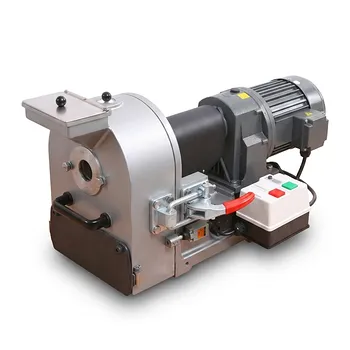
Laboratory Disc Mill for Fine Sample Preparation of Hard and Brittle Materials
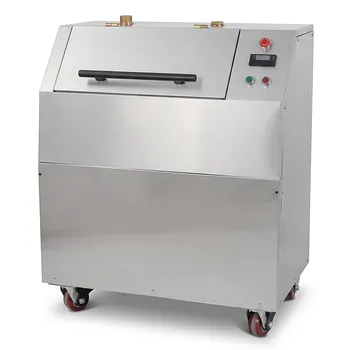
Vibratory Disc Mill for Rapid Fine Grinding and High Throughput Sample Preparation of Hard and Brittle Materials
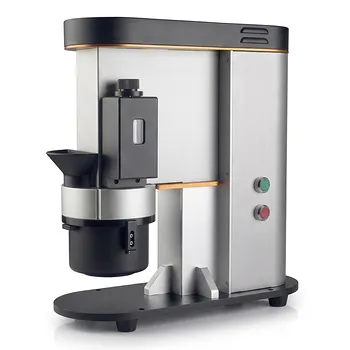
Precision Soil Disc Mill for Laboratory Fine Grinding and Environmental Sample Preparation
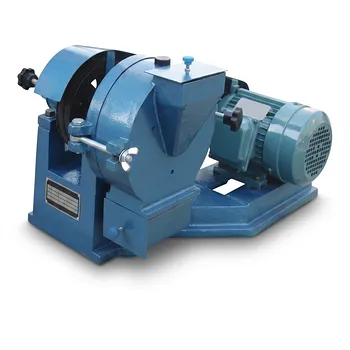
Laboratory Disc Mill for Ore and Mineral Sample Preparation
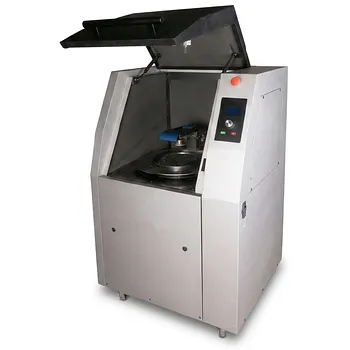
High Speed Vibratory Disc Mill for Spectral Analysis Sample Preparation and Rapid Powder Grinding
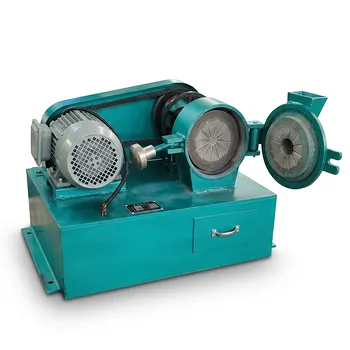
Laboratory Disc Mill Medium Hard Material Grinding Coal Coke Ore Pulverizer
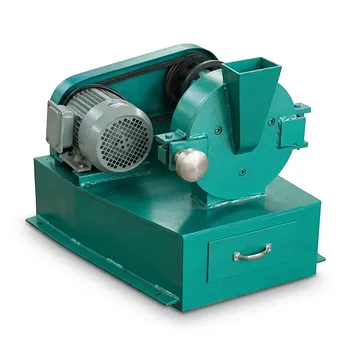
Medium Hardness Material Disc Pulverizer for Coal Ore Sample Preparation
Sealed Disc Pulverizer Customized Model
Laboratory Disc Pulverizer for Coal Coke Ore and Medium Hard Materials Sample Preparation
Small Laboratory Colloid Mill for Ultra-Fine Wet Grinding and Emulsification
Industrial Knife Mill for Food and Biological Sample Preparation High Speed Laboratory Homogenizer