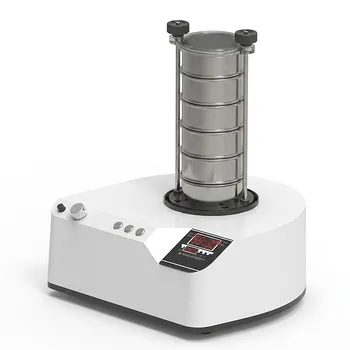
What is the function of a 75μm standard test sieve in detecting fly ash? Optimize Your Pre-mixed Mortar Quality
Updated 4 months ago
The 75μm standard test sieve is a critical tool for quantifying fly ash content via particle size classification. By isolating particles smaller than 75 microns, technicians can distinguish between the added fly ash and the larger fine aggregates. This physical separation allows for an accurate calculation of the fly ash mixing ratio by subtracting the inherent microparticles of the original sand from the total mass passing through the sieve.
The 75μm sieve provides a reliable, real-time method for verifying mortar proportions by exploiting the size difference between fly ash and aggregate. It ensures both the correct material dosage and the optimal specific surface area required for long-term structural integrity.
The Mechanics of Fly Ash Detection
Exploiting Material Gradation
Fly ash particles are significantly smaller than the majority of fine aggregates used in pre-mixed mortar. The 75μm mesh acts as a physical cutoff point, allowing the finer fly ash to pass through while retaining the bulk of the sand.
The Subtraction Methodology
To find the actual fly ash content, you must first establish the percentage of "natural fines" in the raw sand that are already smaller than 75μm. By measuring the total weight of material that passes the sieve and subtracting this aggregate baseline, the precise weight of the added fly ash is revealed.
Real-Time Quality Monitoring
This method is favored at construction sites because it offers a simple and reliable technical means for inspection. It allows quality control officers to verify that the pre-mixed mortar matches the specified proportions without waiting for complex chemical analysis.
Improving Mortar Quality Through Fineness
Accelerating the Pozzolanic Reaction
Controlling fineness at the 75μm (200 mesh) level significantly increases the specific surface area of the ash. This higher surface area allows the fly ash to react more rapidly with calcium hydroxide, forming the calcium silicate hydrate (C-S-H) gel necessary for long-term strength.
Optimizing Structural Density
The sieve ensures that the particles achieve a micronized physical size suitable for the "filling effect." These fine particles occupy the microscopic voids between cement and sand, which results in a denser mortar matrix with improved cohesion and lower permeability.
Ensuring Consistency and Uniformity
By removing coarse particles that could compromise the integrity of the concrete matrix, the sieve ensures a rational skeleton structure. This uniformity is essential for maintaining consistent dry density across different batches of pre-mixed mortar.
Understanding the Trade-offs
Limitations of Physical Separation
While highly effective, the 75μm sieve method assumes a consistent baseline of fines in the aggregate. If the silt content or the fine-particle ratio of the sand fluctuates significantly between batches, the calculated fly ash content may become less accurate.
Mechanical Wear and Mesh Blinding
Standard test sieves are precision instruments that can degrade with heavy use or improper cleaning. Mesh deformation or "blinding" (particles getting stuck in the openings) can lead to incorrect grading, requiring regular calibration to maintain objective results.
Making the Right Choice for Your Project
The use of a 75μm sieve is a foundational practice for ensuring the chemical and physical performance of cementitious materials.
- If your primary focus is real-time ratio verification: Use the sieving method to quickly check that the fly ash dosage meets the design specifications before the mortar is applied.
- If your primary focus is long-term structural strength: Utilize the 75μm sieve to ensure the fineness of the fly ash is sufficient to trigger a robust pozzolanic reaction and C-S-H gel formation.
- If your primary focus is material consistency: Implement regular sieve analysis on both raw aggregates and the final mix to account for fluctuations in natural fine content.
Mastering the use of the 75μm sieve transforms a simple physical test into a powerful diagnostic tool for mortar integrity.
Summary Table:
| Feature/Function | Benefit to Pre-mixed Mortar |
|---|---|
| Particle Cutoff (75μm) | Distinguishes fine fly ash from larger sand aggregates. |
| Subtraction Methodology | Precisely calculates fly ash ratio by accounting for aggregate fines. |
| Fineness Control | Accelerates pozzolanic reactions to form C-S-H gel for strength. |
| Filling Effect | Occupies microscopic voids to increase structural density. |
| Real-time Monitoring | Provides immediate site verification of material dosages. |
Precision Tools for Superior Material Analysis
Ensuring the integrity of pre-mixed mortar requires accurate particle size analysis and consistent sample preparation. We provide complete laboratory sample preparation solutions for material science, specializing in high-precision sieve shakers (vibratory/air-jet) and a wide range of standard test sieves and meshes designed for rigorous QC standards.
Beyond sieving, our expertise extends to powder processing and compaction. Our extensive line includes:
- Milling & Grinding: Planetary ball mills, jet mills, and cryogenic grinders for achieving ideal fineness.
- Mixing: High-performance powder mixers and defoaming mixers for uniform blends.
- Compaction: A full spectrum of hydraulic presses, including Cold/Warm Isostatic Presses (CIP/WIP), hot presses, and XRF pellet presses.
Ready to enhance your lab's diagnostic accuracy and material performance? Contact us today to discuss how our specialized equipment can streamline your quality control process!
References
- Kazuto Fukudome, Mamoru Sakamoto. Study on the Feasibility of Sand Pre-Mixed with Fly-Ash. DOI: 10.2472/jsms.59.733
Mentioned Products
- Stainless Steel Laboratory Vibratory Test Sieve Shaker
- Laboratory Vibratory Test Sieve Shaker for Precision Particle Size Analysis and Powder Grading
- Small Laboratory Vibrating Sieve Shaker for Precise Particle Size Analysis
- Small Laboratory Vibratory Sieve Shaker for Powder Gradation and Particle Size Analysis
- 三维电磁微量振动筛分仪
People Also Ask
- What function does a laboratory vibratory sieve shaker serve in the production process of metakaolin? Optimize Reactivity
- Why is a precision laboratory vibratory sieve shaker necessary for particle size control? Optimize Biomass Carbonization
- What is the function of a laboratory vibratory sieve shaker? Enhance Coal Particle Size Distribution (PSD) Analysis
- What role do laboratory vibratory sieve shakers and test sieves play before the molding of Nb-Cu composite powders?
- What is the primary function of a laboratory vibratory sieve shaker in the evaluation of sand liquefaction potential?

Tech Team · PowderPreparation
Last updated on Jun 03, 2026
Related Products
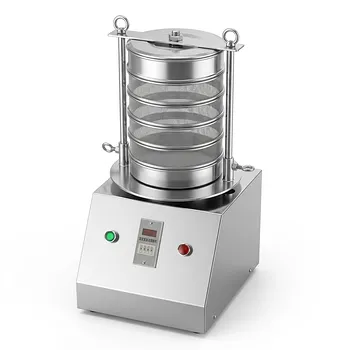
Stainless Steel Laboratory Vibratory Test Sieve Shaker

Laboratory Vibratory Test Sieve Shaker for Precision Particle Size Analysis and Powder Grading

Small Laboratory Vibrating Sieve Shaker for Precise Particle Size Analysis

Small Laboratory Vibratory Sieve Shaker for Powder Gradation and Particle Size Analysis