What core transformation tasks does a vacuum hot press perform during the preparation of Graphenic Glass? Phase Evolution Guide
Updated 5 months ago
The vacuum hot press acts as the primary catalyst for phase evolution in Graphenic Glass. It performs three critical transformation tasks: the thermal reduction of graphene oxide, the mechanical densification of layers, and the formation of an isotropic glassy carbon structure. By simultaneously applying high heat (such as 800°C) and axial pressure, it converts loosely packed precursor sheets into a high-hardness, non-crystalline material.
Core Takeaway: The vacuum hot press provides a synchronized thermal-mechanical environment that suppresses layer expansion during gas release, forcing graphene oxide sheets to consolidate into a dense, isotropic glassy carbon structure that lacks long-range ordered alignment.
Driving Thermal Reduction and Chemical Stability
Eliminating Oxygen Groups through Heat
The vacuum hot press provides the necessary thermodynamic energy to drive the thermal reduction of graphene oxide (GO) sheets. At elevated temperatures, oxygen-containing functional groups are removed from the GO precursor, initiating the transition toward a pure carbon framework.
Preventing Oxidative Degradation
Operating within a vacuum or inert atmosphere is essential to protect the carbon material at high temperatures. This environment prevents the oxidative loss of the carbon structure, ensuring the material does not burn away while it undergoes chemical transformation.
Mechanical Densification and Porosity Control
Inhibiting Layer Expansion
As GO undergoes reduction, it releases gases that naturally cause the layers to expand or "puff up." The continuous axial pressure of the hot press inhibits this expansion, forcing the layers to stay in close contact despite the internal gas pressure.
Achieving High Density and Hardness
By promoting diffusion creep and eliminating closed pores, the press drives the material toward its near-theoretical density. This mechanical consolidation is what transforms a soft, layered precursor into a high-hardness glassy carbon structure.
Engineering the Isotropic Glassy Structure
Breaking Van der Waals Forces
The coupled action of high temperature and pressure provides the energy required to overcome Van der Waals forces between the original sheets. This allows the carbon atoms to move beyond their original layered constraints.
Promoting Disordered Atomic Rearrangement
Unlike traditional graphite, Graphenic Glass requires a lack of long-range ordered alignment. The vacuum hot press facilitates a rearrangement into an isotropic structure, where the carbon layers are tightly packed but intentionally disordered, resulting in its unique "glassy" properties.
Understanding the Trade-offs
Temperature vs. Structural Integrity
While higher temperatures promote faster reduction, excessive heat can lead to abnormal grain growth or unwanted crystallization. Finding the "sweet spot" (such as 800°C) is critical to maintaining the amorphous, glassy nature of the glass rather than turning it into standard graphite.
Pressure Limits and Material Stress
Applying extreme axial pressure is necessary for densification, but it increases the wear on tooling and molds. Furthermore, if pressure is not synchronized perfectly with the gas release phase of reduction, internal micro-cracks can form as trapped gases struggle to escape the densifying matrix.
How to Apply This to Your Process
When configuring a vacuum hot press for Graphenic Glass production, your settings should reflect your specific material requirements:
- If your primary focus is Maximum Material Hardness: Prioritize higher axial pressure during the peak reduction phase to ensure the highest possible density and structural isotropy.
- If your primary focus is Preventing Structural Defects: Use a controlled heating ramp that allows for steady gas evolution before reaching maximum pressure, preventing the formation of internal voids.
- If your primary focus is Chemical Purity: Ensure the vacuum system maintains a high-quality inert environment to prevent any trace oxidation that could weaken the carbon-to-carbon bonds.
The precision of a vacuum hot press ensures that Graphenic Glass achieves the structural density and isotropic hardness required for demanding technical applications.
Summary Table:
| Transformation Task | Mechanism | Key Outcome |
|---|---|---|
| Thermal Reduction | Heat-driven removal of oxygen functional groups in a vacuum | Chemically stable carbon framework |
| Mechanical Densification | Axial pressure inhibits gas-induced layer expansion | Near-theoretical density and high hardness |
| Structural Engineering | Disordered atomic rearrangement via energy coupling | Isotropic, non-crystalline glassy structure |
| Environment Control | Inert/Vacuum atmosphere maintenance | Prevention of oxidative degradation at high temps |
Elevate Your Material Synthesis with Precision Engineering
Are you looking to master the complex transformation of graphene-based materials? At [Company Name], we provide complete laboratory sample preparation solutions for material science, specializing in high-performance powder processing and compaction equipment.
Our extensive product lines are designed to meet the rigorous demands of advanced carbon research:
- Advanced Pressing: A full spectrum of hydraulic presses, including Vacuum Hot Presses, Hot Presses, Cold/Warm Isostatic Presses (CIP/WIP), and XRF pellet presses.
- Powder Processing: High-efficiency crushers (jaw/roll), liquid nitrogen cryogenic grinders, and various mills (planetary ball, jet, sand/bead, disc, rotor).
- Analysis & Mixing: Vibratory/air-jet sieve shakers, precision powder mixers, and defoaming mixers.
Whether you need to achieve maximum material hardness or ensure structural purity, our equipment provides the synchronized control required for professional-grade results. Contact us today to discover how our specialized solutions can optimize your Graphenic Glass production and material research.
References
- Che-Ning Yeh, Jiaxing Huang. Binder-free graphene oxide doughs. DOI: 10.1038/s41467-019-08389-6
Mentioned Products
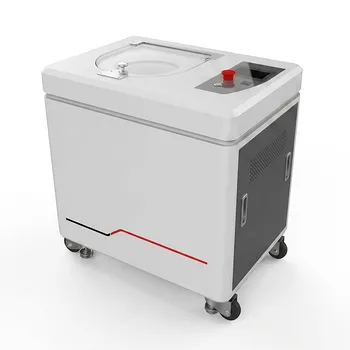
- 非介入式材料均质机真空脱泡行星搅拌高粘度混合设备
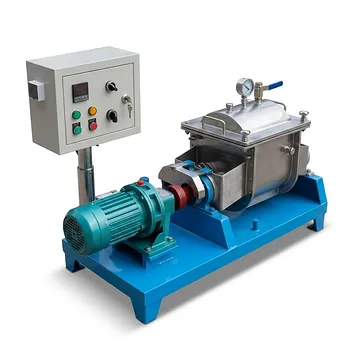
- Industrial Vacuum Kneader for High-Viscosity Silicone, Rubber, and Compound Mixing
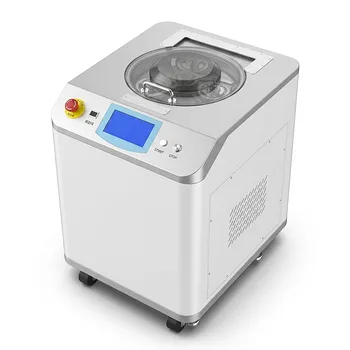
- Dual Cup Vacuum Centrifugal Mixer Planetary Paste Defoaming Machine Industrial Material Processor
- High Efficiency Vacuum Planetary Centrifugal Mixer and Defoaming Machine for Industrial Material Research and Precise Laboratory Powder Dispersion
- High Speed Vacuum Planetary Centrifugal Mixer and Defoamer for Industrial Paste Processing
People Also Ask
- How does a planetary vacuum defoaming mixer help magnesium calcium phosphate slurries? Achieve Flawless 3D Printed Bone
- Why is vacuum defoaming necessary for PDMS mixtures before microwave irradiation curing? Key to Structural Integrity
- What role does a vacuum defoaming mixer play in BNT MLCC slurry? Ensure High Dielectric Strength & Pinhole-Free Prep
- Why is a vacuum defoaming mixer essential for DLP 3D printing ceramic slurries? Key to Structural Integrity
- What is the purpose of using a high-vacuum defoaming mixer for SiC/Cf composites? Optimize Density and Strength

Tech Team · PowderPreparation
Last updated on May 14, 2026
Related Products
非介入式材料均质机真空脱泡行星搅拌高粘度混合设备
Industrial Vacuum Kneader for High-Viscosity Silicone, Rubber, and Compound Mixing
Dual Cup Vacuum Centrifugal Mixer Planetary Paste Defoaming Machine Industrial Material Processor
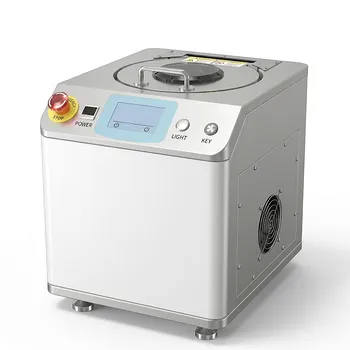
High Efficiency Vacuum Planetary Centrifugal Mixer and Defoaming Machine for Industrial Material Research and Precise Laboratory Powder Dispersion
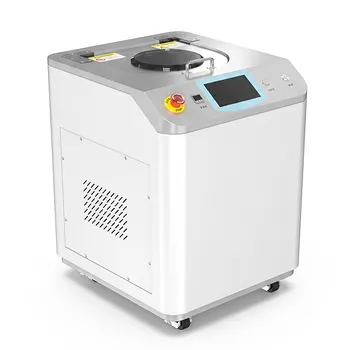
High Speed Vacuum Planetary Centrifugal Mixer and Defoamer for Industrial Paste Processing
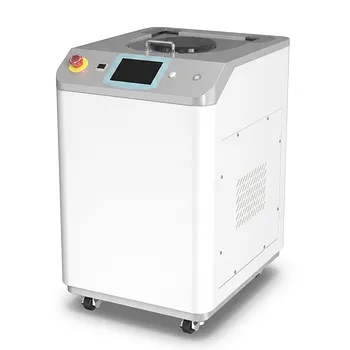
High Viscosity Planetary Centrifugal Mixing and Vacuum Defoaming Machine for Laboratory Material Preparation
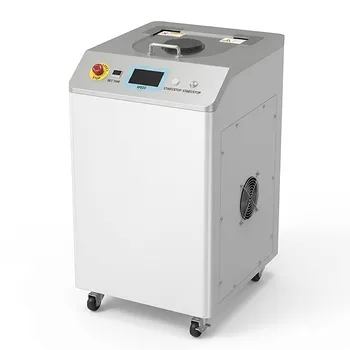
High Viscosity Planetary Centrifugal Vacuum Mixer for Material Defoaming and Uniform Mixing
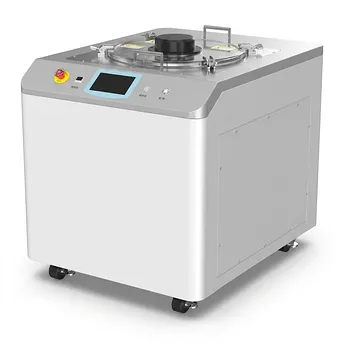
Industrial Planetary Centrifugal Vacuum Defoaming Mixer for High Viscosity Paste and Powder Homogenization