Why Use Stainless Steel for ZnO Synthesis? Technical Advantages for High-Energy Nanopowder Milling
Updated 3 months ago
Stainless steel grinding components are the preferred choice for Zinc Oxide (ZnO) nanopowder synthesis due to their superior hardness and high density, which maximize the transfer of mechanical kinetic energy. This high-energy environment is essential for breaking chemical bonds and inducing the mechanochemical reactions required to refine particles to the nanometer scale.
Core Takeaway: Stainless steel media acts as a high-efficiency energy transducer that facilitates low-temperature phase transformations and precise atomic-level mixing, ensuring a uniform and structurally sound nanopowder.
Maximizing Kinetic Energy and Impact Efficiency
High-Density Energy Transfer
The high density of stainless steel grinding balls allows them to generate significant momentum during high-speed planetary milling. This kinetic energy is transferred directly to the raw materials, providing the physical force necessary to crush particles beyond the limits of softer materials.
Breaking Chemical Bonds
Under high-frequency impacts, the collision pressure generated by stainless steel media is sufficient to break the chemical bonds within precursor materials. This capability is critical for triggering the micro-scale reactions that lead to the formation of Zinc Oxide at a molecular level.
Achieving Nanometer Refinement
The rigid surfaces of high-strength stainless steel ensure that energy is not lost to deformation of the media itself. This efficiency is the foundation for achieving particle refinement down to the nanometer scale, which is the primary goal of nanopowder synthesis.
Inducing Mechanochemical Transformations
Lowering Synthesis Temperatures
By providing intense mechanical energy, stainless steel media allows for phase transformations to occur at significantly lower temperatures than traditional thermal methods. This mechanochemical approach reduces energy consumption and prevents unwanted grain growth that can occur in high-heat environments.
Atomic-Level Solid Solution
The high-intensity impact of stainless steel components facilitates atomic-level solid solutioning, ensuring that dopants or secondary components (like Magnesium or Copper) are uniformly distributed within the Zinc Oxide matrix. This results in a highly homogenous composite powder.
Precise Crystal Structure Control
The consistent application of mechanical force allows researchers to induce specific crystal structure transformations. This precision is vital for tailoring the electronic and optical properties of the ZnO nanopowders for specific industrial applications.
Structural Integrity and Process Reliability
Resistance to High-Frequency Impact
Stainless steel jars and balls are designed to withstand long-duration, high-frequency impacts without sustaining structural damage. This durability ensures that the grinding environment remains stable throughout the entire synthesis cycle.
Maintaining High-Pressure Airtightness
In advanced synthesis stages, stainless steel containers can maintain strict airtightness under high-pressure atmospheres (up to 0.3 MPa). This allows for controlled atmosphere milling, which is often necessary to prevent oxidation or to induce specific gas-solid reactions.
Wear Resistance and Longevity
The superior wear resistance of high-grade stainless steel minimizes the degradation of the media over time. While all media experiences some wear, the high hardness of stainless steel ensures a consistent energy output over many processing hours.
Understanding the Trade-offs
The Risk of Metallic Contamination
The primary disadvantage of stainless steel is the potential introduction of iron-based impurities into the Zinc Oxide powder. In high-purity applications, these metallic traces can alter the semi-conductive properties of the ZnO, necessitating a post-processing purification step or the consideration of ceramic alternatives.
Heat Generation
The intense friction and impact energy inherent to stainless steel milling can lead to significant heat buildup within the grinding jar. If the temperature is not monitored, it may lead to unintended thermal reactions or the sintering of the nanoparticles.
Material Weight Considerations
The high density that makes stainless steel effective also places a higher mechanical load on the ball mill motor. Operators must ensure that the equipment is rated for the weight of stainless steel media to avoid premature mechanical failure of the milling machine.
Making the Right Choice for Your Goal
Synthesizing Zinc Oxide requires a balance between energy input and purity requirements. Your choice of media should align with the specific performance characteristics required for your final product.
- If your primary focus is rapid particle size reduction: Use high-strength stainless steel media to maximize kinetic energy and minimize processing time.
- If your primary focus is low-temperature phase transformation: Leverage the high impact pressure of stainless steel to trigger mechanochemical reactions without the need for external heating.
- If your primary focus is extreme chemical purity: Consider using zirconia media, which offers high hardness with a lower risk of metallic contamination, even if it provides slightly lower impact energy.
By selecting stainless steel for its mechanical advantages, you ensure a high-energy synthesis environment capable of producing sophisticated, nanostructured Zinc Oxide powders.
Summary Table:
| Feature | Technical Advantage | Impact on ZnO Synthesis |
|---|---|---|
| High Density | Maximizes kinetic energy transfer | Efficient particle refinement to nanometer scale |
| Rigid Surface | Minimizes energy loss from deformation | Breaks chemical bonds for molecular-level reactions |
| Mechanochemical | Facilitates low-temperature transformation | Prevents grain growth and reduces energy use |
| Structural Integrity | High-pressure airtightness (0.3 MPa) | Enables controlled atmosphere milling & gas reactions |
| Wear Resistance | Long-duration impact stability | Ensures consistent energy output and process reliability |
Elevate Your Material Research with Expert Sample Prep Solutions
Achieving precise nanometer refinement requires high-performance equipment designed for extreme mechanical energy. We provide complete laboratory sample preparation solutions for material science, specializing in advanced powder processing and compaction.
Whether you are synthesizing Zinc Oxide nanopowders or developing new composites, our extensive product line supports every stage of your workflow:
- Advanced Milling: Planetary ball mills, jet mills, liquid nitrogen cryogenic grinders, and rotor mills.
- Precision Compaction: A full spectrum of hydraulic presses, including Cold/Warm Isostatic Presses (CIP/WIP), hot presses, and vacuum hot presses.
- Processing & Sizing: Jaw/roll crushers, powder/defoaming mixers, and vibratory/air-jet sieve shakers.
Maximize your lab's efficiency and ensure structural integrity in every sample. Contact our technical team today to find the ideal equipment for your synthesis goals!
References
- L. Rodríguez‐López, Laura Lorena Díaz Flores. Enhancement of rheological and filtration properties of water-based drilling fluids through zinc oxide nanoparticles addition. DOI: 10.24275/rmiq/ia25505
Mentioned Products
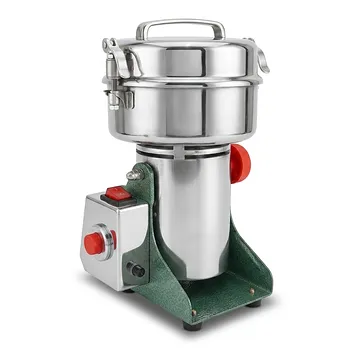
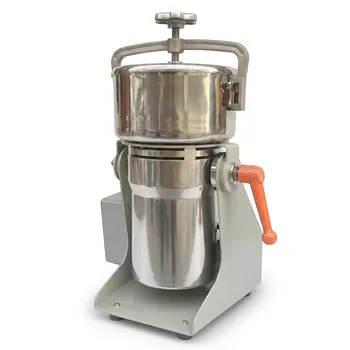
- Small High-Speed Laboratory Grinder for Powder Processing
- High Speed Laboratory Grinder Efficient Stainless Steel Powder Pulverizer Universal Material Science Mill for Sample Preparation
People Also Ask
- What role does a laboratory grinder play in the pretreatment of sunflower seed shell-based adsorbents? Boost Efficiency.
- How does a laboratory grinder or mill enhance the adsorption performance of agricultural waste materials? Boost Surface Area
- How does laboratory grinding or pulverizing equipment influence eggshell-derived adsorbents? Maximize Surface Area.
- Why is grinding equipment necessary for SnO2-Sb2O3 xerogels? Maximize surface area and photocatalytic activity.
- What is the primary role of grinding equipment in BLA preparation? Enhance Reactivity & Material Uniformity

Tech Team · PowderPreparation
Last updated on Jun 03, 2026