What are the technical advantages of using drum mixers with directional thin-layer flow? Boost Homogeneity & Speed
Updated 5 months ago
Drum mixers utilizing directional thin-layer flow provide a high-intensity mixing environment that significantly outperforms standard gravity mixing in terms of homogeneity and processing speed. By implementing pre-set circulation loops, these mixers achieve superior "smoothing" of material variations and reduced component wear per unit of throughput. This configuration is specifically engineered to handle diverse bulk powders that possess varying physical characteristics, which often cause segregation in simpler systems.
Core Takeaway: Directional thin-layer flow transforms the drum mixer from a simple tumbling vessel into a high-intensity processor. It bridges the gap between low-energy gravity mixing and high-wear centrifugal systems by optimizing particle motion to achieve maximum uniformity with controlled energy expenditure.
Enhancing Mixing Intensity and Material Homogeneity
Overcoming the Limitations of Laminar Flow
Standard gravity mixers often suffer from laminar flow, where materials slide in layers rather than intermingling. Directional thin-layer flow overcomes this by forcibly altering the motion trajectories of particles, ensuring that materials with different masses and friction coefficients are integrated thoroughly.
Achieving Superior "Smoothing" Capabilities
The use of pre-set circulation loops creates a predictable and repeatable flow pattern that "smooths" out inconsistencies in the feed material. This high-intensity process ensures that the final output meets strict inhomogeneity coefficients, preventing the internal structural defects often found in less rigorous mixing methods.
Improving Particle Contact Efficiency
High-intensity flow increases the contact efficiency between fine powders, fluxes, and moisture. This is critical for processes like sintering, where uniform moisture distribution improves the quality of pseudo-particles and enhances the permeability of the material bed.
Optimizing Resource Efficiency and Equipment Longevity
Balancing Energy Consumption and Throughput
While gravity mixers consume nearly zero energy during the mixing phase, they often require much longer processing times to achieve mediocre results. Directional thin-layer mixers offer lower energy consumption per unit of material when compared to the total cycle time and intensity required to reach high uniformity standards.
Reducing Mechanical Wear and Tear
By optimizing the flow into a "thin-layer" state, the mixer reduces the heavy, localized impact of bulk material against the drum walls. This results in reduced metal wear per unit of material processed, extending the operational life of the equipment compared to high-speed centrifugal alternatives.
Increasing Unit Throughput
The directional force field enhances the inertial movement of particles along the mixing surface. This increased velocity allows the equipment to process a higher volume of material in a smaller footprint, effectively maximizing the throughput density of the production line.
Understanding the Trade-offs
Mechanical Complexity vs. Static Simplicity
The primary trade-off when moving from gravity mixing to directional thin-layer flow is hardware complexity. Gravity mixers eliminate the need for high-power motors, gearboxes, and complex bearing supports, which significantly lowers initial capital expenditure and simplifies basic maintenance.
Energy Baseline Shifts
A directional thin-layer mixer requires a constant input of mechanical energy to maintain the flow loops, whereas a gravity mixer is essentially passive. If your process does not require high homogeneity or involves extremely abrasive materials that don't benefit from thin-layer dynamics, the added energy cost may not be justified.
Processing Time vs. Intensity
While thin-layer drum mixers are efficient, they may still be slower than high-speed centrifugal mixers in certain applications. If a 6-minute cycle time is required instead of an hour-long drum cycle, centrifugal equipment might be the better choice despite its higher localized energy intensity.
Making the Right Choice for Your Goal
How to Apply This to Your Project
Choosing between these technologies depends on your specific requirements for material integrity and operational scale.
- If your primary focus is maximum simplicity and low maintenance: Stick with standard gravity mixing to minimize mechanical failure points and eliminate energy costs during the mixing phase.
- If your primary focus is high homogeneity in complex powder blends: Use drum mixers with directional thin-layer flow to ensure consistent "smoothing" and to overcome material segregation.
- If your primary focus is increasing sintering productivity or particle quality: Implement intensive thin-layer mixing to improve component distribution and the physical characteristics of the bulk material.
- If your primary focus is reducing long-term replacement costs: Opt for thin-layer technology to distribute wear across the mixing surface more evenly than traditional high-impact mechanical mixers.
By aligning your mixing technology with the physical demands of your bulk materials, you can achieve a balance between processing speed, energy efficiency, and final product consistency.
Summary Table:
| Feature | Standard Gravity Mixing | Directional Thin-Layer Flow |
|---|---|---|
| Flow Dynamics | Passive laminar flow (sliding layers) | Forced circulation & thin-layer loops |
| Homogeneity | Moderate; prone to segregation | High; superior "smoothing" of variations |
| Mixing Intensity | Low energy expenditure | High-intensity particle interaction |
| Equipment Wear | Low localized impact | Reduced wear per unit of throughput |
| Ideal Application | Simple blends & low-cost setups | Complex powders & sintering processes |
Elevate Your Material Processing with Advanced Mixing Solutions
Achieving perfect homogeneity in bulk powders requires more than just tumbling; it demands precision engineering. At [Your Brand Name], we provide complete laboratory sample preparation solutions for material science, specializing in high-performance powder processing and compaction equipment.
Whether you need to "smooth" complex blends with advanced mixers or prepare samples using our extensive equipment lines, we have the solution:
- Milling & Grinding: Planetary ball mills, jet mills, and liquid nitrogen cryogenic grinders.
- Sieving & Mixing: Sieve shakers (vibratory/air-jet), powder mixers, and defoaming mixers.
- Compaction Excellence: A full spectrum of hydraulic presses, including Cold/Warm Isostatic Presses (CIP/WIP), XRF pellet presses, and vacuum hot presses.
Our expertise ensures your materials meet strict quality standards while optimizing equipment longevity and throughput. Contact us today to consult with our experts and find the perfect fit for your laboratory or production requirements!
References
- Д. М. Бородулин, С А Ратников. Simulation of Mixing Process in Drum Mixer with Different Topology of Material Flows. DOI: 10.2991/agrosmart-18.2018.128
Mentioned Products
- Three-Dimensional Motion Mixer for Laboratory Powder and Granule Blending
- Industrial Double Cone Mixer for Powder Blending and Homogeneous Mixing
- Inclined Mixer for Homogeneous Powder Blending and Grinding
- Horizontal Trough Mixer for Uniform Powder and Paste Blending
- Horizontal Ribbon Mixer for Uniform Powder and Slurry Mixing
People Also Ask
- Why is a 3D Motion Mixer employed when preparing binary powder mixtures for tableting? Achieve Superior Homogeneity
- What role does an industrial 3D mixer play in the preparation of diamond tool segment raw materials? Achieve Homogeneity
- What is the role of a 3D mixer in Ti2SnC synthesis? Optimize Precursor Homogeneity for High-Purity MAX Phases
- How does a 3D mixer with tungsten balls contribute to magnesium composite mixing? Achieve Superior Macro-Homogeneity
- What are the advantages of using a 3D powder mixer? Boost Tablet Consistency with Advanced Mixing Technology

Tech Team · PowderPreparation
Last updated on May 14, 2026
Related Products
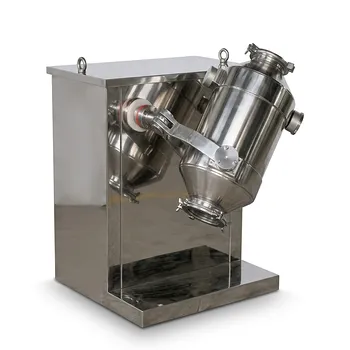
Three-Dimensional Motion Mixer for Laboratory Powder and Granule Blending
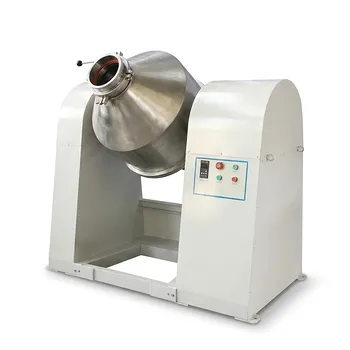
Industrial Double Cone Mixer for Powder Blending and Homogeneous Mixing
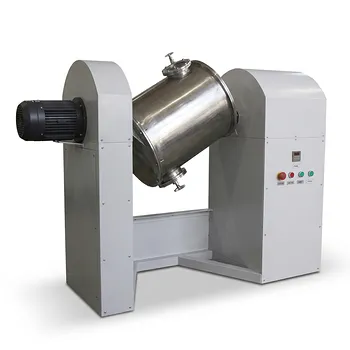
Inclined Mixer for Homogeneous Powder Blending and Grinding
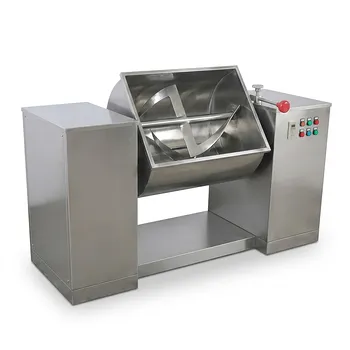
Horizontal Trough Mixer for Uniform Powder and Paste Blending
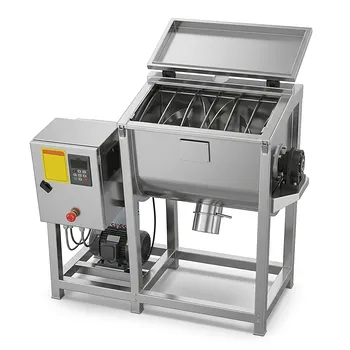
Horizontal Ribbon Mixer for Uniform Powder and Slurry Mixing
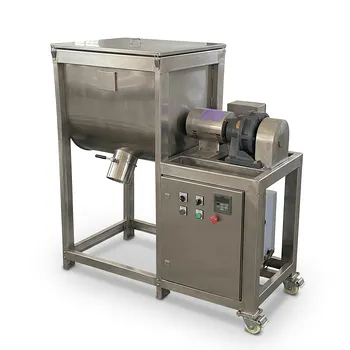
Horizontal Ribbon Mixer for Dry Powder and Slurry Blending
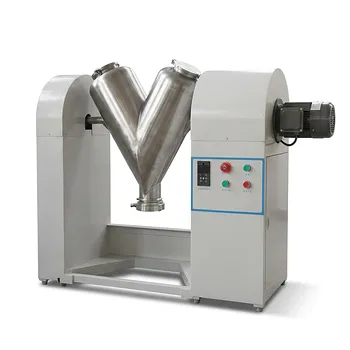
V-Type Powder Mixer for Uniform Blending of Dry Powders and Granules
Multi Dimensional Universal Mixer for High Uniformity Powder Blending