Advantages of Multi-Layer Vertical Sieve Stacks for Urea Screening: Achieve Precision and Full-Spectrum Grading
Updated 3 months ago
A multi-layer vertical stack arrangement allows for the full-spectrum grading of urea granules in a single, simultaneous operation. By layering sieves from the largest aperture at the top to the smallest at the bottom, the system uses the synergy of gravity and mechanical vibration to process particles stage-by-stage. This technical configuration significantly improves testing efficiency and provides a high-resolution view of the continuous distribution from coarse granules down to micron-level fines.
The core advantage of a multi-layer stack is the ability to map the complete particle size distribution of urea in one pass. This holistic data is essential for calibrating fertilizer machinery and ensuring consistent material flow during broadcasting.
Maximizing Operational Efficiency and Throughput
Continuous Full-Spectrum Separation
Traditional single-sieve methods require multiple runs to categorize different granule sizes, which is time-consuming and prone to human error. A vertical stack enables the simultaneous separation of all grades, allowing for an immediate "snapshot" of the material’s composition.
Synergy of Gravity and Vibration
The vertical orientation leverages gravitational force to move urea downward through the apertures as vibration keeps the particles in motion. This dual-action mechanism prevents material stagnation and ensures that every particle has a high probability of encountering an opening that matches its size.
Precision Collection of Fine Particles
The bottom receiving pan captures micron-level fines that are often lost or ignored in less sophisticated setups. Quantifying these low-energy components is vital for identifying material degradation or "dusting" that can occur during urea transport and storage.
Data-Driven Optimization for Fertilizer Machinery
Improving Metering and Broadcasting Accuracy
Urea application relies on precise metering units that are calibrated for specific granule sizes. By providing a complete distribution profile, the multi-layer stack allows engineers to optimize these units for the actual physical characteristics of the fertilizer.
Predicting Material Behavior in the Field
Understanding the ratio of coarse to fine particles helps predict how urea will behave when discharged from broadcasting machinery. A consistent distribution ensures a uniform spread pattern, preventing "hot spots" or areas of nutrient deficiency in the soil.
Understanding the Trade-offs and Technical Limitations
Risk of Sieve Blinding and Overloading
If the top sieves are overloaded with a high volume of material, they can become blinded, meaning particles clog the apertures. This prevents smaller granules from reaching the lower stages, which can lead to skewed data and inaccurate grading.
Mechanical Wear and Maintenance Requirements
The vibration intensity required to move material through a tall stack can increase mechanical fatigue on the sieve frames and mesh. Regular inspection of the tension and integrity of the finest meshes is necessary to maintain the accuracy of the grading process.
Vertical Height and Stability Constraints
As the number of layers increases, the center of gravity of the stack rises, which can lead to instability if not properly anchored. This may limit the total number of fractions that can be measured in a single vertical column without specialized support equipment.
Making the Right Choice for Your Goal
To implement a multi-layer stacking strategy effectively, consider your primary objective for the urea screening process.
- If your primary focus is maximizing testing speed: Use a standard stack of 5–7 sieves to capture the most common granule ranges in a single five-minute vibratory cycle.
- If your primary focus is machinery calibration: Prioritize a stack with narrow aperture increments near the "target size" to ensure the metering units are tuned to the exact granule peak.
- If your primary focus is quality control and dust reduction: Ensure the stack includes a high-precision bottom pan and ultra-fine mesh sieves to quantify the percentage of "fines" that cause clogging and waste.
By mastering the vertical stack arrangement, you transform urea screening from a simple filtering task into a powerful diagnostic tool for material performance.
Summary Table:
| Feature | Technical Advantage | Impact on Process |
|---|---|---|
| Vertical Stacking | Simultaneous full-spectrum grading | Reduces testing time and human error |
| Gravity & Vibration | Enhanced particle movement | Prevents stagnation and improves aperture encounter |
| Bottom Pan Collection | High-precision fines capture | Identifies material degradation and dusting risks |
| Data Mapping | Complete distribution profile | Optimizes fertilizer metering and spread accuracy |
Optimize Your Material Science Workflows with Our Professional Lab Solutions
Precision in particle size distribution is the backbone of fertilizer quality and machinery performance. We provide complete laboratory sample preparation solutions tailored for material science and industrial quality control.
Our specialized equipment line includes:
- Sieving & Analysis: Vibratory and air-jet sieve shakers with a full range of test sieves and meshes for precise urea grading.
- Powder Processing: Crushers (jaw/roll), cryogenic grinders, and advanced mills (planetary ball, jet, sand/bead, disc, rotor).
- Compaction Equipment: A full spectrum of hydraulic presses, including Cold/Warm Isostatic Presses (CIP/WIP), XRF pellet presses, and vacuum hot presses.
- Mixing & Dispersion: High-efficiency powder mixers and defoaming mixers.
Whether you are calibrating broadcasting machinery or ensuring product consistency, our technical team is ready to assist you. Contact us today to enhance your lab’s efficiency and throughput!
References
- Vasu Kumar, SA Kanade. Comparative study of particle size distribution in Commercial urea fertilizers from India. DOI: 10.33545/2618060x.2025.v8.i7sa.3189
Mentioned Products
- Stainless Steel Rotary Vibrating Sieve High Precision Circular Vibratory Separator Industrial Powder Grading Machine Multi Layer Sifting Equipment
- Three Dimensional Rotary Vibrating Sieve
- Versatile Industrial Crusher for Laboratory Crushing and Material Processing
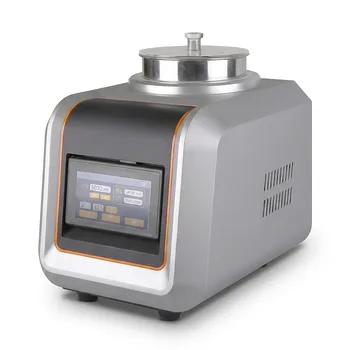
- 三维电磁微量振动筛分仪
- High Frequency Cabinet Type Three-Dimensional Rotary Vibrating Sieve Shaker for Dry Sieving and Particle Classification
People Also Ask
- What is the significance of high-precision vibratory sieve machines for SMA? Optimize Aggregate Gradation & Durability
- What is the role of a laboratory-grade high-precision sieve in CPC-PCL? Ensure uniform powder distribution and stability.
- Why is high-precision sieving equipment necessary for aviation-grade composites? Optimize Fiber Strength & Consistency
- What is the function of high-precision vibratory sieve shakers in the analysis of brown rice particle size distribution?
- Why is a high-precision vibratory sieve shaker necessary for wood-polystyrene particles? Maximize composite strength.

Tech Team · PowderPreparation
Last updated on Jun 03, 2026
Related Products
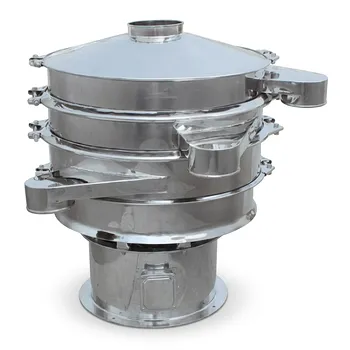
Stainless Steel Rotary Vibrating Sieve High Precision Circular Vibratory Separator Industrial Powder Grading Machine Multi Layer Sifting Equipment
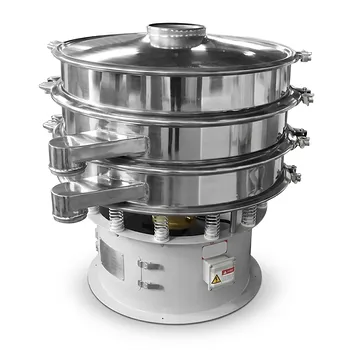
Three Dimensional Rotary Vibrating Sieve
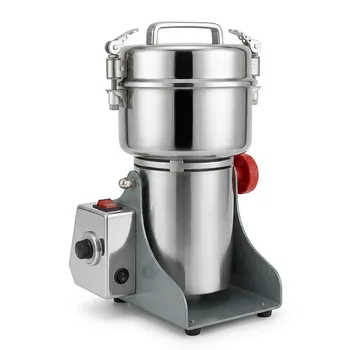
Versatile Industrial Crusher for Laboratory Crushing and Material Processing
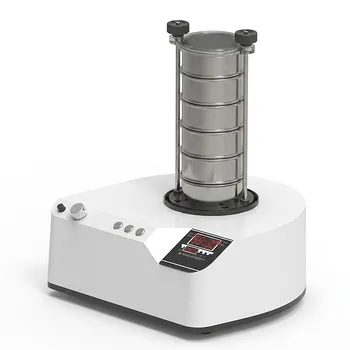
三维电磁微量振动筛分仪
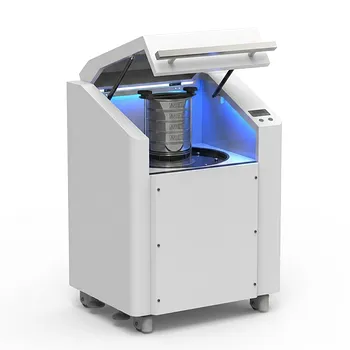
High Frequency Cabinet Type Three-Dimensional Rotary Vibrating Sieve Shaker for Dry Sieving and Particle Classification